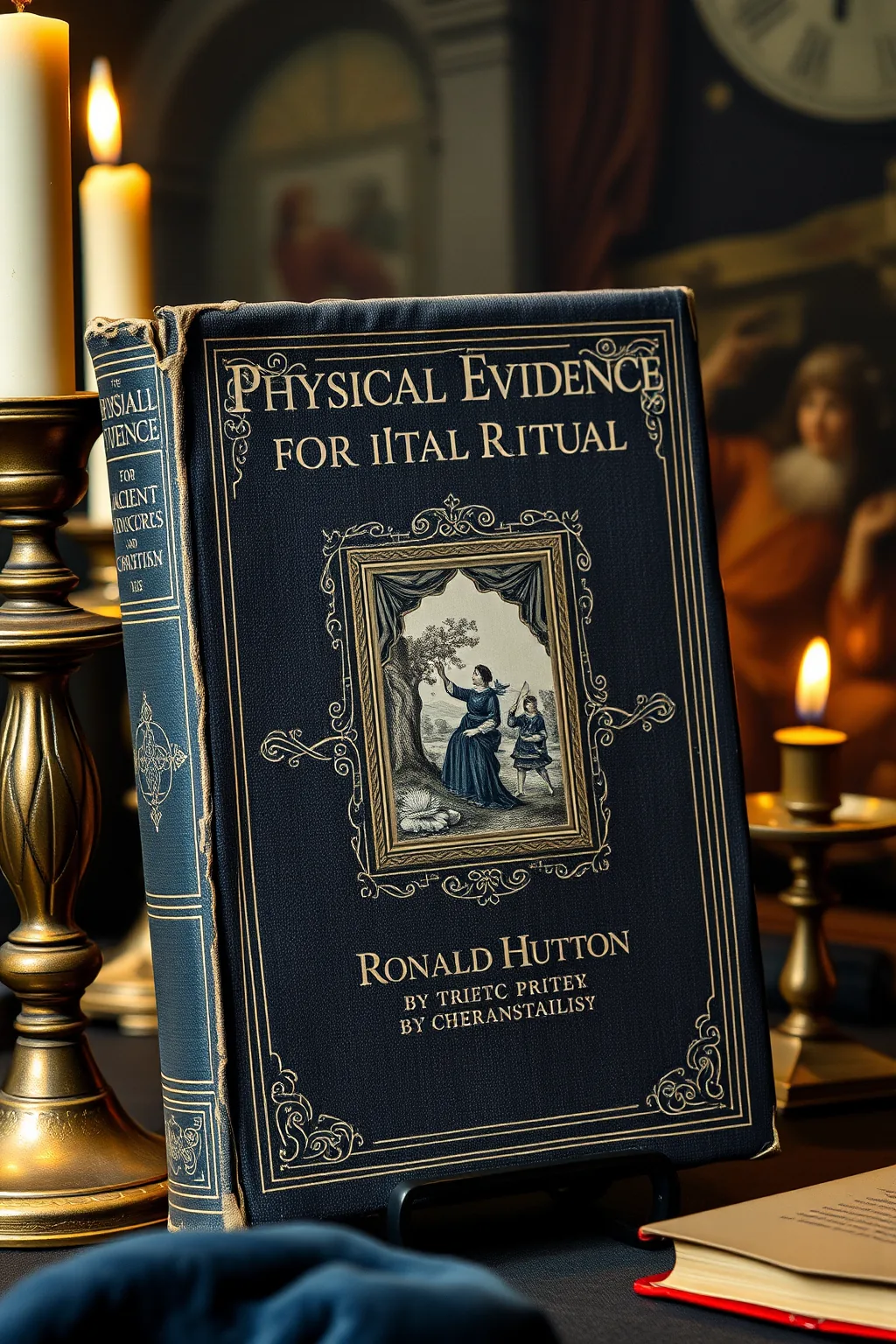
Physical Evidence for Ritual Acts, Sorcery and Witchcraft in Christian Britain
 64
64

Physical Evidence for Ritual Acts, Sorcery and Witchcraft in Christian Britain

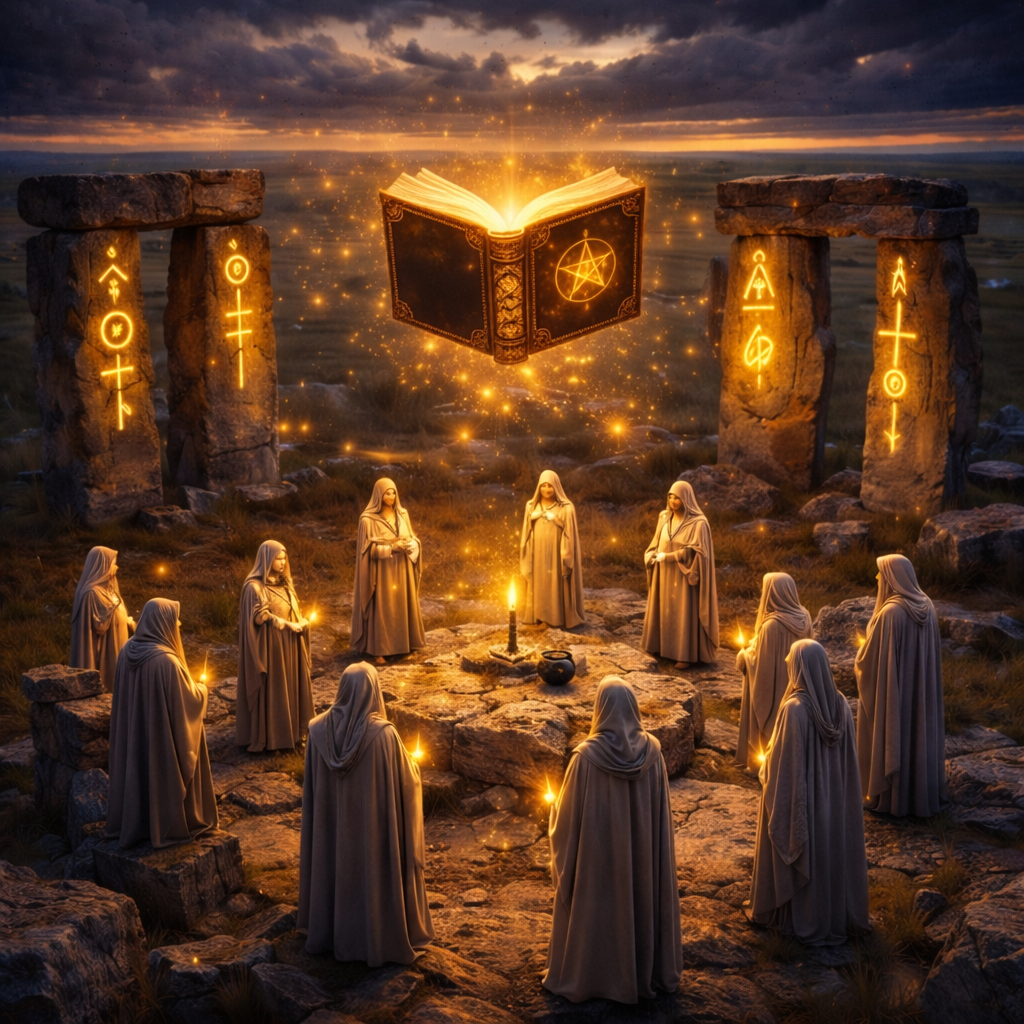

Ophelia Vance, Mystical Literature Reviewer — Ronald Hutton masterfully excavates the archaeological and textual bedrock of ritual practice in Christian Britain. This is not a book of speculative fancy, but a rigorous examination of tangible artifacts and documented accounts that reveal the pervasive, often clandestine, nature of sorcery and witchcraft. Hutton's scholarship provides crucial insights into how these potent traditions interacted with, and sometimes subverted, mainstream Christian belief. Essential reading for serious students of Western esotericism and anyone seeking to understand the material manifestation of deeply held magical beliefs. A profound contribution to our understanding of historical occultism.
📝 Description
64
Ronald Hutton's 1999 book examines physical artifacts connected to magic in Christian Britain.
In 'Physical Evidence for Ritual Acts, Sorcery and Witchcraft in Christian Britain,' Ronald Hutton analyzes the material culture associated with magical practices in Britain from the medieval period through the early modern era. He moves beyond written accounts to investigate tangible objects and actions that indicate the continued existence of sorcery and witchcraft even as Christianity became dominant. The book scrutinizes items such as amulets, inscribed bones used for incantations, and ritual deposits found in archaeological contexts.
Hutton looks at how these physical traces reveal the persistence of folk magic and darker arts. He discusses the symbolism embedded in everyday objects and the human desire to influence events through unseen powers. This work is for those interested in the historical reality of magic, its relationship with established religion, and the archaeological evidence that supports its practice.
This book fits within the study of Western esotericism by focusing on the practical, materialized aspects of magical belief and practice in a specific historical and cultural context. Rather than concentrating on theoretical systems or philosophical treatises, Hutton examines the concrete evidence left behind by individuals who engaged in ritual acts, sorcery, and witchcraft. It situates these activities within a predominantly Christian society, highlighting the complex interplay between orthodox religion and marginalized magical traditions. The work contributes to understanding how esoteric practices were embedded in everyday life and left traces that can be recovered through historical and archaeological investigation.
💡 Why Read This Book?
This book is essential for anyone seeking concrete proof of historical magical practices. It bridges the gap between myth and reality, offering scholars, practitioners, and curious minds a tangible connection to ancient beliefs. Discover how the mundane became imbued with the mystical, and how ritual left its indelible mark on the material world of Britain.
⭐ Reader Reviews
Honest opinions from readers who have explored this book.
❓ Frequently Asked Questions
What kind of 'physical evidence' does the book examine?
The book scrutinizes a wide array of material artifacts, including charms, amulets, inscribed objects, and archaeological findings related to ritual sites and practices, linking them directly to sorcery and witchcraft.
Does the book focus on specific time periods?
Yes, it primarily covers the period from the Roman occupation through the medieval and early modern eras in Britain, tracing the evolution and persistence of these practices.
Is this book suitable for beginners in occult studies?
While scholarly, the book's clear presentation of evidence makes it accessible to dedicated beginners interested in the historical roots of magic and witchcraft.
How does the presence of Christianity affect the rituals discussed?
The book explores the complex interplay between pagan, folk magic, and Christian beliefs, showing how sorcery and witchcraft often adapted, coexisted with, or were perceived as threats to Christianity.
What is the primary argument of the book?
Hutton argues that physical evidence demonstrates the enduring presence and impact of ritual acts, sorcery, and witchcraft in Christian Britain, challenging notions that these were merely superstitions.
🔮 Key Themes & Symbolism
The Materiality of Magic
This theme explores how magical beliefs and practices were not confined to the field of thought but manifested physically in the objects people created, used, and buried. It looks at the symbolism embedded within amulets, charms, and ritual tools, demonstrating their function as conduits of power or protective wards. By examining these tangible remnants, the book illustrates the deep human need to interact with and influence the unseen world through concrete actions and crafted artifacts, revealing a profound connection between the spiritual and the material.
Christianity and Folk Magic
A central focus is the intricate and often contentious relationship between the dominant Christian faith and persistent folk magical traditions in Britain. The book investigates how sorcery and witchcraft often operated in the liminal spaces, sometimes coexisting with, sometimes challenging, and sometimes being reinterpreted through a Christian lens. It reveals how everyday people navigated these overlapping belief systems, utilizing both Christian prayers and magical rites to address life's challenges, demonstrating a complex cultural collection where the sacred and the occult were not always mutually exclusive.
Archaeology of the Esoteric
This theme highlights the crucial role of archaeology in substantiating historical claims about ritualistic practices. By analyzing excavated sites, burial customs, and found objects, the book provides empirical data that supports the existence of sorcery and witchcraft. It demonstrates how the careful study of material culture can illuminate the hidden lives and beliefs of past populations, offering a unique perspective on the 'esoteric' as something tangible and archaeologically recoverable, rather than purely theoretical or anecdotal.
💬 Memorable Quotes
Direct passages from the work, attributed to the author.
“Sorcery persisted in the shadow of the cathedral.”
— This evocative phrase captures the theme of coexistence and tension between folk magic and official religion, highlighting how magical practices continued to thrive even within a predominantly Christian society.
“Objects imbued with intent became anchors for belief.”
— This points to the symbolic power of crafted items in magical traditions, suggesting that physical objects served as focal points and materializations of the practitioner's will and the desired outcome.
“The earth remembers what the texts forget.”
— This poetic statement underscores the importance of archaeological findings, implying that the soil and its contents hold a more enduring and unbiased record of human activity than written histories, which can be selective or lost.
💡 Key Ideas
Editorial paraphrase of the work's core concepts — not direct quotes.
The tangible remains of ritual are often more eloquent than written accounts.
This quote emphasizes the book's core methodology, suggesting that physical artifacts offer direct, irrefutable evidence of past magical practices, speaking volumes where written records might be biased or incomplete.
Ritual was not just belief; it was action, etched in matter.
This quote expresses the book's central argument: that ritualistic acts, including sorcery and witchcraft, were not mere abstract concepts but tangible, physical engagements with the world and its unseen forces.
🌙 Esoteric Significance
Tradition
This work looks at the wide range of Western folk magic, a tradition often overshadowed by more formalized occult systems. It connects to enduring strands of animism, sympathetic magic, and the potent use of natural forces and objects for personal efficacy. The book grounds these practices in observable behavior and material culture, offering a starkly realistic perspective on how esoteric principles were applied in everyday life, bridging the gap between theory and lived experience in a pre-modern context.
Symbolism
The book illuminates the profound symbolism inherent in seemingly mundane objects and actions. Amulets weren't just jewelry; they were carriers of protective symbols, talismans designed to ward off malevolent forces or attract good fortune. The act of burying specific items, casting spells on objects, or creating effigies all carried potent symbolic weight, acting as a form of material language to communicate with and manipulate the spiritual realm.
Modern Relevance
In an era increasingly seeking authenticity and connection to ancestral wisdom, Hutton's work offers a grounded perspective on the enduring human impulse for ritual and the belief in unseen forces. It provides a historical foundation for understanding contemporary paganism, witchcraft revival movements, and the philosophical exploration of consciousness. By revealing the tangible manifestations of ancient magical thought, it encourages modern practitioners and seekers to consider the deep roots of their practices and the universal human desire to effect change through focused intent.
👥 Who Should Read This Book
This book is a vital resource for several audiences. **Scholars of history, anthropology, and religious studies** will find its rigorous methodology and extensive evidence indispensable for understanding British social and cultural history. **Practitioners of modern witchcraft and magical arts** will gain profound historical context and tangible examples of how their predecessors worked. **Seekers of esoteric knowledge** will discover the material reality behind historical claims of sorcery and witchcraft, offering a mix of academic rigor and occult fascination. Even **curious general readers** interested in the hidden aspects of British history will find it a compelling and eye-opening exploration of human belief and practice.
📜 Historical Context
Ronald Hutton's 'Physical Evidence for Ritual Acts, Sorcery and Witchcraft in Christian Britain' emerges from a period of intense scholarly re-evaluation of popular belief and practice in medieval and early modern Europe. The mid to late 20th century saw historians move beyond purely theological or elite-focused narratives to explore the lives and beliefs of ordinary people. This work is a product of that shift, meticulously sifting through archaeological finds and overlooked archival material to reconstruct a picture of magic and witchcraft that was deeply embedded in the fabric of daily life. It challenges the simplistic notion of a unified Christian worldview, revealing a complex, syncretic spiritual landscape where folk traditions and formal religion often intertwined, and where the desire to influence events through supernatural means remained a powerful, tangible force.
📔 Journal Prompts
Consider an everyday object you own. How could it be imbued with symbolic meaning or ritualistic purpose in a historical magical context?
Reflect on a time you sought to influence an outcome through focused intent. What parallels, if any, can you draw to the historical practices discussed?
How does the interaction between Christianity and folk magic in the book challenge your perceptions of religious and magical systems?
Imagine you are an archaeologist unearthing a medieval site. What 'physical evidence' of ritual or magic would you hope to find and what would it signify?
Discuss the ethical considerations of studying and interpreting historical magical practices. What responsibilities do we have to the people whose beliefs we examine?
🗂️ Glossary
Amulet
An object believed to possess magical properties, typically worn or carried to protect against evil, harm, or misfortune.
Charm
A spoken spell or a small object believed to have magical powers to protect or influence events, often used for good luck or warding off spirits.
Sympathetic Magic
A type of magic based on the belief that like produces like, or that a circle of causation can be established by means of a voluntary likeness of the subject.
Talisman
An object considered to be endowed with magical powers, often inscribed with symbols or sigils, intended to attract good fortune or bring about a specific outcome.
Ritual
A set of actions performed according to a prescribed order, often for religious or mystical purposes, intended to achieve a specific spiritual or material effect.
This book appears in 3 collections
🔮 Readers Also Liked
Browse all →



More by Ronald Hutton
All books →





From the “Ritual Magic” Collection
View all →





More Free Magic & Ritual Books
View all →