Meister Eckhart, teacher and preacher

 75
75

Meister Eckhart, teacher and preacher
The collaboration between McGinn and Tobin in presenting Meister Eckhart’s vernacular sermons is a significant scholarly undertaking. Their dedication to translating Eckhart’s German texts, rather than relying solely on Latinate scholastic frameworks, allows the raw power of his mystical theology to emerge. The sheer audacity of Eckhart’s pronouncements, particularly his concept of the "birth of God in the soul," remains striking. While the translations are generally lucid, the sheer density of Eckhart’s thought, even when presented directly, can be demanding. A reader might wish for more extensive annotations on specific scriptural or philosophical allusions within the sermons, though the accompanying scholarly apparatus provides a solid foundation. The work serves as an indispensable resource for understanding a pivotal figure in Western esotericism.
Verdict: An essential, albeit challenging, gateway to Eckhart's radical mystical vision.
📝 Description
75
Published in 1986, Meister Eckhart: Teacher and Preacher offers direct access to the 13th/14th-century mystic's original German writings.
This volume presents a collection of sermons and treatises by the German theologian and mystic Meister Eckhart. First published in 1986 through the work of Bernard McGinn and Frank Tobin, it allows readers to engage directly with Eckhart's original German texts, bypassing secondary interpretations. The collection aims to make his complex theological ideas accessible to a contemporary audience.
This work is intended for students of Christian mysticism, medieval philosophy, and related esoteric traditions. Academics, theologians, and practitioners seeking to understand the primary sources of a thinker who challenged contemporary religious thought will find it valuable. Readers who appreciate detailed theological examination and direct engagement with primary material will benefit from this edition.
Meister Eckhart wrote and preached in the Rhineland during a time of significant intellectual and spiritual change in late medieval Europe. His work engaged with scholasticism but also pushed its limits, reflecting a region known for its mystical currents. Despite facing scrutiny from ecclesiastical authorities, Eckhart's teachings influenced later mystics and thinkers across various traditions, marking a distinct development in Christian mystical discourse.
💡 Why Read This Book?
• Gain direct insight into Meister Eckhart's concept of "noble poverty" (edele Armut), understanding how he advocated for spiritual detachment as a means to achieve divine union, a stark contrast to materialist philosophies. • Explore Eckhart's radical notion of the "birth of God in the soul," a core tenet that suggests an immanent divine presence accessible through inner contemplation, as detailed in his sermons. • Appreciate the historical significance of Eckhart's vernacular German writings, published here, which democratized theological discourse and influenced subsequent generations of mystics and philosophers.
⭐ Reader Reviews
Honest opinions from readers who have explored this book.
❓ Frequently Asked Questions
When did Meister Eckhart live and write his influential sermons?
Meister Eckhart lived from approximately 1260 to 1328. His sermons and treatises, including those presented in this volume, were primarily written and delivered during the late 13th and early 14th centuries.
What is the "Godhead" (Gottheit) according to Eckhart?
For Eckhart, the Godhead (Gottheit) refers to the absolute, unknowable, and transcendent aspect of God, beyond all being, form, and concept. It is the ultimate ground of reality from which the personal God emanates.
Who were Bernard McGinn and Frank Tobin in relation to this book?
Bernard McGinn and Frank Tobin are the scholars responsible for translating and editing this collection of Meister Eckhart's works, making them accessible in English for the first time in this 1986 publication.
How does Eckhart's "noble poverty" differ from simple lack of wealth?
Eckhart's "noble poverty" (edele Armut) is not merely material destitution but a profound spiritual detachment from all created things, including one's own ego and will, to be utterly open to God's presence.
What makes Eckhart's theological approach considered "esoteric"?
Eckhart's approach is considered esoteric due to his emphasis on direct, experiential knowledge of God, his use of paradoxical language to describe the ineffable, and his focus on interior transformation rather than solely external religious observance.
What was the reception of Meister Eckhart's ideas during his lifetime?
Eckhart's teachings were controversial and faced scrutiny from ecclesiastical authorities. Some of his propositions were later condemned posthumously by Pope John XXII in 1329, reflecting the challenges his radical ideas posed to established doctrine.
🔮 Key Themes & Symbolism
The Birth of God in the Soul
This central theme posits that the divine essence is not merely external but is born within the deepest ground of the human soul. Eckhart uses vivid imagery, often drawing from the Nativity, to describe this inner event. It signifies a direct, experiential union where the soul becomes a locus for God's manifestation, transcending the need for intermediaries. This concept challenges conventional notions of divine transcendence, emphasizing immanence and the soul's inherent capacity for divinity.
Noble Poverty (Edle Armut)
Eckhart's concept of 'noble poverty' denotes a state of radical detachment, not from possessions, but from the self and its desires. It is an emptying of the soul, a willingness to be nothing, in order to become receptive to the divine. This isn't asceticism for its own sake but a necessary condition for the 'birth of God.' True poverty, for Eckhart, is the state of being completely free from self-will and creaturely attachments, allowing God alone to fill the void.
The Godhead vs. God
Eckhart distinguishes between 'God' (Got) as the personal, emanated deity understood through traditional theology, and the 'Godhead' (Gottheit), which he describes as a pure, undifferentiated abyss beyond being and knowing. This abstract concept represents the ultimate ground of all existence, a silence from which all forms arise. Engaging with the Godhead requires moving beyond intellectual concepts and conventional religious piety into a direct, often paradoxical, apprehension of the Absolute.
Detachment and the 'I'
The essence of Eckhart's mystical path lies in detachment from the ego, the 'I' (Ich), which he saw as the primary obstacle to union with God. True spiritual freedom is achieved when the 'I' relinquishes its claims to self-will and separate existence. This process involves understanding the soul's divine origin and realizing that the 'I' is ultimately a divine outflow. Eckhart's exploration of the self's dissolution into the divine is a hallmark of his radical mysticism.
💬 Memorable Quotes
Direct passages from the work, attributed to the author.
“All that the Father ever gave, he gave in this eternal birth.”
— This statement captures Eckhart's core doctrine of the divine birth within the soul. It suggests that the fundamental creative act of God, the giving of His essence, is not a past event but an ongoing, interior happening accessible to the contemplative.
“If I were to serve God, I would renounce the knowledge of God.”
— This provocative assertion highlights Eckhart's emphasis on direct experience over conceptual knowledge. He implies that true service and union with the divine require moving beyond intellectual understanding or devotional concepts of God.
“God is still working the creation of the world, and still bringing forth His Son.”
— This interpretation of divine activity emphasizes God's continuous creative process. The 'bringing forth of His Son' refers to the ongoing birth of the divine within the receptive soul, a dynamic, ever-present reality.
💡 Key Ideas
Editorial paraphrase of the work's core concepts — not direct quotes.
The soul has a birth-place where it was born of the Father, ere it was born of its mother.
This quote points to the eternal, pre-temporal origin of the soul within the divine essence. It suggests an aspect of the soul that exists independently of its temporal manifestation, a divine spark ready to be rekindled.
He who wants to have God must give up everything.
A direct expression of the principle of 'noble poverty,' this quote stresses that acquiring the divine requires a radical letting go of all attachments, including the attachment to one's own self and its desires.
🌙 Esoteric Significance
Tradition
Eckhart's work is foundational to Christian mysticism and, by extension, Western esotericism. While deeply rooted in Catholic theology, his emphasis on direct, unmediated experience of the divine, his use of apophatic language to describe the Godhead, and his focus on interior transformation align with Gnostic and Neoplatonic currents. He represents a significant departure from purely scholastic approaches, paving the way for later mystical and esoteric interpretations of Christian doctrine.
Symbolism
Key symbols in Eckhart's work include the "birth of God in the soul," often depicted using imagery of Christ's Nativity, symbolizing the divine becoming manifest within the individual. "Noble poverty" (edele Armut) symbolizes the soul's radical detachment from all created things, including the self, as a vessel prepared for divine indwelling. The "ground of the soul" signifies the deepest, most essential part of the human being, where direct contact with the Godhead is possible.
Modern Relevance
Eckhart's thought continues to influence contemporary spiritual seekers, comparative religion scholars, and philosophers. Thinkers in existentialism and phenomenology have engaged with his concepts of selfhood and being. Modern mindfulness and contemplative practices often draw implicitly or explicitly on his teachings about inner stillness and detachment. His radical propositions remain a touchstone for those exploring the limits of language and conceptual thought in approaching ultimate reality.
👥 Who Should Read This Book
• Students of medieval Christian mysticism seeking primary source material on one of its most radical thinkers, offering direct access to Eckhart's vernacular sermons. • Practitioners of contemplative prayer and meditation interested in understanding the theological underpinnings of detachment and inner divine experience, as articulated by Eckhart. • Scholars of comparative theology and esoteric traditions looking to analyze the unique position of Eckhart's thought within the broader field of Western spirituality.
📜 Historical Context
Meister Eckhart's theological and mystical writings emerged in the late 13th and early 14th centuries, a period marked by scholastic rigor and burgeoning lay devotional movements across Europe. He was a Dominican friar deeply engaged with Aristotelian philosophy as mediated by thinkers like Thomas Aquinas, yet his vernacular sermons pushed beyond orthodox scholasticism. Eckhart operated within the Rhineland region, a hub for German mysticism alongside figures like Johannes Tauler and Henry Suso, who were influenced by him. His radical ideas, particularly regarding the direct union of the soul with the Godhead and the concept of "noble poverty," drew the attention of ecclesiastical authorities, leading to posthumous accusations of heresy by Pope John XXII in 1329, a stark example of the intellectual and spiritual tensions of the era.
📔 Journal Prompts
The concept of the 'birth of God in the soul': how does this inner divine manifestation challenge conventional views of God's presence?
Reflect on Eckhart's notion of 'noble poverty' (edele Armut) – what does it mean to be spiritually detached from all things?
The distinction between 'God' and the 'Godhead': explore the implications of an unknowable, absolute ground of being.
Eckhart's idea of the 'I' (Ich) and its dissolution: what are the spiritual implications of transcending the ego?
Consider the paradoxes in Eckhart's language: how can seemingly contradictory statements illuminate ultimate reality?
🗂️ Glossary
Godhead (Gottheit)
Eckhart's term for the absolute, undifferentiated, unknowable essence of God, beyond all being, concept, and form. It is the ultimate ground from which the personal God emanates.
Noble Poverty (Edle Armut)
A state of profound spiritual detachment from all created things, including one's own will and ego, enabling the soul to be fully receptive to God's presence.
Birth of God in the Soul
The central mystical experience in Eckhart's theology, where the divine essence is eternally born within the deepest ground of the human soul, leading to union with God.
Ground of the Soul
The innermost, essential core of the human being, considered by Eckhart to be the point of direct contact with the divine, untouched by created forms.
Detachment
The process of relinquishing attachment to external things and internal egoic structures, seen by Eckhart as essential for spiritual freedom and divine union.
Vernacular Sermons
Sermons preached and written by Eckhart in Middle High German, rather than Latin, making his theological ideas accessible to a wider, non-scholarly audience.
Apophatic Theology
A theological approach that describes God by negation, emphasizing what God is not, rather than what God is, due to God's ineffable and transcendent nature.
🔮 Readers Also Liked
Browse all →






More by Meister Eckhart, Bernard McGinn, Frank Tobin
All books →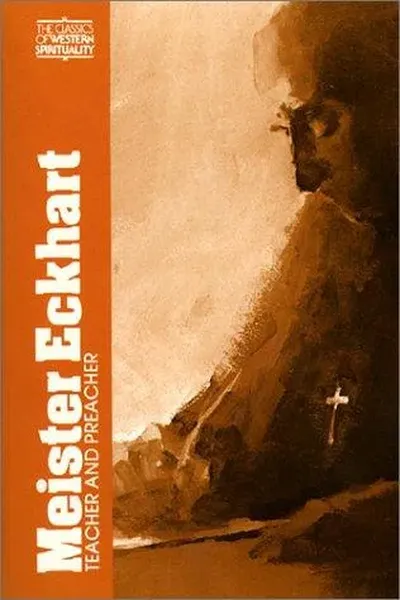
More Free Mysticism & Contemplation Books
View all →