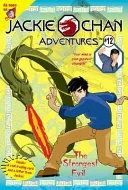
The Strongest Evil
 82
82

The Strongest Evil
Jacqueline Carrol’s "The Strongest Evil" plunges headfirst into a familiar trope: the villain who isn't truly gone. The premise of Shendu returning to unleash seven sorcerers is a potent hook, immediately establishing the stakes. Carrol effectively builds tension as the narrative progresses, particularly in scenes detailing Shendu’s machinations. However, the character of Jackie, while central, sometimes feels underdeveloped, making his personal struggle less impactful than the cosmic threat he faces. The portrayal of the "seven deadly sorcerers" themselves, while menacing in concept, could benefit from more distinct characterization to elevate them beyond mere plot devices. The work explores the cyclical nature of good and evil, suggesting that certain battles are never truly won, only postponed. Ultimately, "The Strongest Evil" delivers a serviceable dark fantasy tale for those seeking a straightforward confrontation with supernatural malevolence.
📝 Description
82
Jacqueline Carrol's 2003 novel, The Strongest Evil, pits a lone protagonist against a returning ancient spirit and his seven summoned sorcerers.
The Strongest Evil centers on Jackie, a character who must face the consequences of past actions when the malevolent spirit Shendu returns.
Shendu, once thought defeated, prepares to unleash seven deadly sorcerers upon the world. This sets the stage for a high-stakes conflict between supernatural forces. The narrative explores the idea that vanquished evils can resurface and the catastrophic potential when such entities are released.
This dark fantasy addresses themes of occult struggles and the battle against ancient evils. It delves into lore surrounding demonic entities and the ramifications of spiritual battles left unfinished.
Published in 2003, The Strongest Evil taps into enduring esoteric preoccupations with cosmic struggle and the cyclical resurgence of ancient powers. Its exploration of demonic entities and the return of defeated evils aligns with traditions that examine the persistence of malevolent forces and the consequences of spiritual imbalance across epochs. The narrative reflects a perennial interest in the confrontation between humanity and primal, often supernatural, antagonistic forces.
💡 Why Read This Book?
• Gain insight into the cyclical nature of spiritual warfare, as depicted in the narrative's core conflict stemming from Shendu's return, a concept explored in various esoteric traditions. • Understand the narrative consequences of underestimating ancient evils, a theme exemplified by Jackie's initial belief that Shendu was permanently defeated in 2003. • Experience a direct confrontation with the concept of "deadly sorcerers" being unleashed, offering a specific narrative exploration of malevolent forces gaining dominion.
⭐ Reader Reviews
Honest opinions from readers who have explored this book.
❓ Frequently Asked Questions
When was "The Strongest Evil" first published?
"The Strongest Evil" by Jacqueline Carrol was first published in May 2003. This places its initial release at the dawn of the 21st century, a period when occult and dark fantasy themes were gaining significant traction in popular literature.
What is the central conflict in "The Strongest Evil"?
The central conflict involves the resurrection of an evil spirit named Shendu, who was previously thought to be destroyed. Shendu's return threatens to unleash seven deadly sorcerers, initiating a battle against these supernatural forces.
Who is the antagonist in the book?
The primary antagonist is Shendu, an ancient evil spirit. The book also features the "seven deadly sorcerers" who are slated for release by Shendu, serving as secondary antagonists.
Does "The Strongest Evil" have a sequel?
Information regarding a direct sequel to "The Strongest Evil" is not readily available in standard bibliographic records. The book is generally considered a standalone narrative focusing on the immediate threat of Shendu's return.
What kind of themes does "The Strongest Evil" explore?
The book explores themes of good versus evil, the consequences of underestimating supernatural threats, and the idea that vanquished evils can persist and return. It touches on the concept of spiritual warfare and the struggle against ancient malevolence.
Is "The Strongest Evil" part of a larger series by Jacqueline Carrol?
Based on available publishing data, "The Strongest Evil" appears to be a standalone work by Jacqueline Carrol. There is no widely documented indication that it is part of an ongoing series.
🔮 Key Themes & Symbolism
Resurgence of Ancient Evil
The narrative hinges on the concept that evil, once seemingly defeated, can return with amplified power. Shendu's reappearance after being "destroyed" highlights the esoteric idea that spiritual entities are not always permanently eradicated. This theme suggests that vigilance is perpetual and that past victories may only be temporary reprieves from ongoing cosmic struggles, a notion present in many mythologies and occult traditions where cyclical destruction and rebirth are prevalent.
The Seven Deadly Sorcerers
The impending release of seven "deadly sorcerers" serves as a potent symbolic threat. These figures represent archetypal destructive forces, possibly mirroring concepts of the seven deadly sins or other sephirothic/qabalistic corruptions. Their introduction signifies a catastrophic escalation, where individual malevolent actors, empowered by a greater dark force (Shendu), are poised to inflict widespread chaos and spiritual decay upon the world.
Consequences of Underestimation
A central theme is the grave danger of underestimating or prematurely declaring victory over powerful, malevolent entities. Jackie's initial success in defeating Shendu is revealed as incomplete, leading to dire consequences. This underscores the esoteric principle that spiritual battles require absolute finality and that any lingering influence from dark forces can fester and re-emerge, often with greater ferocity than before.
Spiritual Warfare and Protagonist's Role
The book frames its conflict as a form of spiritual warfare, pitting the protagonist, Jackie, against supernatural adversaries. His prior actions directly led to the current crisis, emphasizing personal responsibility in the face of cosmic threats. This narrative structure explores the burden of knowledge and action when confronting malevolent forces, suggesting that the fight against evil is not abstract but deeply personal and consequential.
💬 Memorable Quotes
Direct passages from the work, attributed to the author.
“Shendu is back, and he's about to release seven deadly sorcerers into the world.”
— This statement from the original blurb expresses the core inciting incident of the narrative. It immediately establishes the primary antagonist, Shendu, and the escalating threat posed by the impending release of powerful, malevolent figures, setting the stage for conflict.
“Jackie thinks he destroyed the evil spirit of Shendu.”
— This highlights the initial flawed assumption of the protagonist. It sets up dramatic irony and foreshadows the narrative's central conflict: the devastating consequences of believing an ancient evil has been permanently vanquished.
“The strongest evil is the one you thought you defeated.”
— This is a conceptual interpretation of the book's premise. It suggests that the most dangerous threats are those that resurface after a perceived victory, implying that complacency and incomplete vanquishing of dark forces lead to greater peril.
“Seven sorcerers mean seven paths to ruin.”
— This phrase, interpreting the threat of the seven sorcerers, emphasizes their individual capacity for destruction and the multiplicative nature of the danger they represent. It suggests a complex assault on order and well-being.
“Victory is not final; vigilance is eternal.”
— This interpretive statement reflects the underlying esoteric lesson of the book. It posits that true security against malevolent forces requires continuous awareness and effort, as no victory over such powers can be considered absolute or permanent.
🌙 Esoteric Significance
Tradition
While not explicitly tied to a single esoteric lineage, "The Strongest Evil" engages with archetypal themes common across Gnostic, Hermetic, and general occult traditions. The concept of an "evil spirit" like Shendu and the subsequent unleashing of destructive agents can be seen as a modern narrative interpretation of dualistic cosmologies, where primal forces of chaos and corruption are in constant opposition to order. The work explores the perpetual struggle against malevolent entities that is a hallmark of many spiritual paths seeking balance or transcendence.
Symbolism
The primary symbolic elements are Shendu, representing a resurgent primal evil or a powerful demonic entity, and the "seven deadly sorcerers." The number seven often carries significant esoteric weight, potentially symbolizing corruption of divine or natural orders (e.g., seven heavens, seven planets, seven deadly sins). The sorcerers act as agents of destruction, each embodying a specific facet of malevolent influence poised to disrupt the world's equilibrium.
Modern Relevance
Contemporary practitioners of occult fiction and dark fantasy continue to explore narratives of ancient evils returning, echoing themes found in "The Strongest Evil." Authors and readers interested in the dynamics of spiritual warfare, the consequences of incomplete spiritual victories, and the symbolic representation of destructive forces find resonance in such stories. It serves as a narrative example for those studying how perennial esoteric concepts of good versus evil are adapted into modern storytelling mediums.
👥 Who Should Read This Book
• Readers of dark fantasy and occult thrillers seeking a direct confrontation with supernatural malevolence. • Individuals interested in narratives exploring the cyclical nature of evil and the consequences of underestimating ancient threats. • Fans of stories featuring archetypal battles between protagonists and powerful demonic or sorcerous antagonists.
📜 Historical Context
Published in May 2003, Jacqueline Carrol's "The Strongest Evil" emerged in an era marked by a robust market for dark fantasy and supernatural thrillers. The early 2000s saw a proliferation of narratives exploring demonic entities, ancient curses, and the precarious balance between good and evil, often drawing from established mythologies and occult lore. While not directly aligned with a specific intellectual movement like the earlier Theosophical Society's surge in the late 19th century, the book tapped into a persistent cultural fascination with these themes. Contemporary authors like Neil Gaiman and early works by Brandon Sanderson were shaping the fantasy landscape, though Carrol's focus appears more squarely on direct supernatural conflict. The reception of "The Strongest Evil" within critical circles or academic discourse is not widely documented, suggesting it operated more within popular genre fiction than the more scrutinized domains of esoteric academia.
📔 Journal Prompts
The return of Shendu after Jackie believed him vanquished.
Reflect on the symbolic meaning of the "seven deadly sorcerers."
The narrative's implication that victory over evil is never permanent.
Jackie's role as the one responsible for Shendu's initial defeat and subsequent return.
Consider the concept of "strongest evil" as presented in the book.
🗂️ Glossary
Shendu
The primary antagonist in "The Strongest Evil." An evil spirit believed to have been destroyed, whose return threatens to unleash further malevolent forces upon the world.
Evil Spirit
A supernatural entity embodying malevolence and destructive intent. In the context of the book, Shendu represents such a force, capable of influencing or commanding others.
Deadly Sorcerers
Seven powerful magic-users who are poised to be released by Shendu. They represent significant agents of chaos and destruction within the narrative's conflict.
Vanquished
To be defeated or overcome completely. The book explores the precariousness of this state when applied to powerful supernatural entities like Shendu.
Spiritual Warfare
A conflict fought on a metaphysical or spiritual plane, often involving the struggle between forces of good and evil, light and darkness, or order and chaos.
Protagonist
The main character of a story. In "The Strongest Evil," Jackie is the protagonist who must confront the consequences of his past actions.
Antagonist
A character or force that opposes the protagonist. Shendu and the seven deadly sorcerers serve as the primary antagonists.
This book appears in 1 collection
🔮 Readers Also Liked
Browse all →









From the “Talismans” Collection
View all →





More Free Occult Philosophy Books
View all →