The Spirit Book
 81
81

The Spirit Book
Buckland's "The Spirit Book" offers a commendably broad survey of the history and methodologies of spirit communication, a subject often mired in sensationalism. Its strength lies in its encyclopedic approach, meticulously cataloging figures and techniques from Spiritualism's peak to more contemporary manifestations. For instance, the detailed examination of various trance states employed by mediums provides a concrete historical anchor. However, the sheer volume of information can sometimes feel encyclopedic rather than deeply analytical, occasionally skimming over the psychological or sociological implications of these beliefs. While it covers much ground, a more critical engagement with the phenomena, beyond mere description, would have elevated its status. Nonetheless, it serves as a valuable, if sometimes dry, compendium for those seeking to understand the historical landscape of interacting with the departed.
📝 Description
81
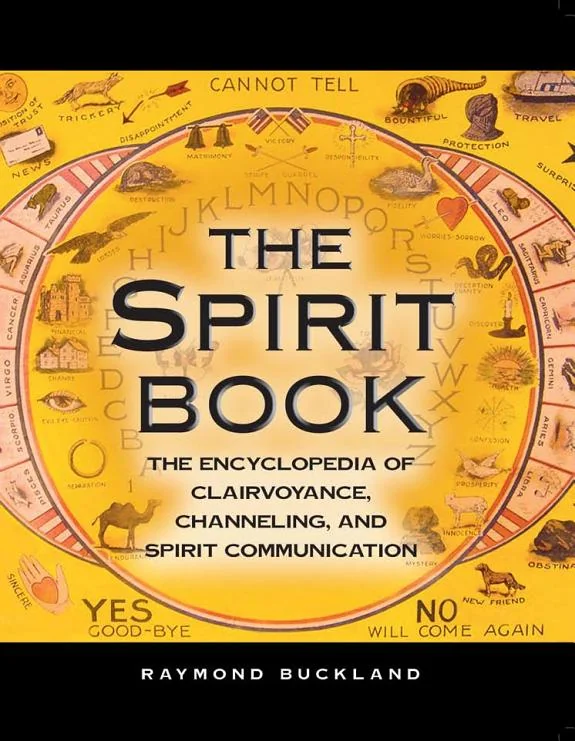
Raymond Buckland's 2005 "The Spirit Book" details methods of spirit communication.
Raymond Buckland's "The Spirit Book" is an encyclopedia of spirit communication. Published in 2005, it covers many methods, historical figures, and movements related to contacting unseen entities. The book examines practices like clairvoyance and channeling, showing their history and impact over time. It is written for anyone interested in Spiritualism, the afterlife, and how people have tried to connect with the deceased.
The work places the search for spirit communication in historical context, focusing on 19th-century Spiritualism and its changes. It looks at the social and cultural conditions that supported these beliefs and practices, and how they have continued and changed. The book recognizes the long-held human wish to communicate with those who have passed on.
Central to Buckland's work is the examination of historical attempts to communicate with spirits. This includes the role of mediums, specific techniques such as automatic writing or trance states, and the philosophical ideas behind them. The book suggests that the drive for such communication is a constant part of human experience.
This book fits within the tradition of Spiritualism, which gained prominence in the 19th century. This movement centered on the belief that spirits of the dead could communicate with the living, often through mediums. Buckland's work documents this history, cataloging the various methods and philosophies that arose from this belief system. It acknowledges a persistent human interest in the afterlife and the possibility of contact beyond physical death, placing it within a broader context of religious and philosophical inquiry into consciousness and existence.
💡 Why Read This Book?
• Gain specific knowledge about the development of Spiritualism, particularly its resurgence in the mid-19th century, a period Buckland details with historical accuracy. • Understand the mechanics and historical context of various communication methods, such as the different forms of trance channeling explored by mediums in the early 20th century. • Discover the lineage of prominent figures in spirit communication, referencing individuals like Allan Kardec and his influence on Spiritism as presented in the text.
⭐ Reader Reviews
Honest opinions from readers who have explored this book.
❓ Frequently Asked Questions
When was Raymond Buckland's 'The Spirit Book' first published?
Raymond Buckland's "The Spirit Book" was first published on September 1, 2005. This edition serves as a comprehensive reference for the study of spirit communication.
What are the main subjects covered in 'The Spirit Book'?
The book primarily covers clairvoyance, channeling, and the broader history of spirit communication. It explores various methods and historical figures involved in these practices over centuries.
Does 'The Spirit Book' focus on a specific historical period of Spiritualism?
While it touches upon various eras, "The Spirit Book" significantly explores the history of Spiritualism, particularly its development and prominent figures throughout the past three hundred years.
Who is Raymond Buckland, the author of 'The Spirit Book'?
Raymond Buckland was a notable author and practitioner in the fields of witchcraft and the occult. "The Spirit Book" is one of his extensive works cataloging esoteric practices and beliefs.
Is 'The Spirit Book' a practical guide for contacting spirits?
While it details methods and history, "The Spirit Book" functions more as an encyclopedic reference to understand the phenomena of spirit communication rather than a step-by-step manual for practice.
What historical movements are discussed in relation to spirit communication in this book?
The book discusses the history of Spiritualism extensively, examining its roots and evolution. It also touches upon related movements and the individuals who shaped them over time.
🔮 Key Themes & Symbolism
History of Spiritualism
The work provides an extensive historical overview of the Spiritualist movement, tracing its origins and development over several centuries. It highlights key periods, such as the 19th-century boom, and examines the societal conditions that fostered belief in spirit communication. Buckland details the evolution of mediums and their practices, offering insights into how Spiritualism adapted and persisted through different cultural landscapes and intellectual currents.
Methods of Spirit Communication
A core focus is the cataloging of diverse techniques employed to communicate with spirits. This includes clairvoyance, channeling, automatic writing, and mediumistic trances. Buckland systematically presents these methods, often discussing their historical application and the theoretical frameworks proposed by practitioners. The intent is to offer a comprehensive understanding of the various approaches humans have devised to bridge the veil.
Key Figures in Mediumship
The book profiles numerous influential individuals who played significant roles in the history of spirit communication and Spiritualism. From early pioneers to prominent mediums of later eras, Buckland documents their contributions, beliefs, and the impact they had on shaping public perception and practice. These biographical sketches offer context and historical depth to the broader subject matter.
The Enduring Quest
Underlying the entire work is the exploration of humanity's persistent fascination with and desire for communication with the deceased. Buckland frames this quest as an eternal human endeavor, examining the motivations and philosophical underpinnings that drive individuals and movements dedicated to proving the continuity of consciousness beyond physical death.
💬 Memorable Quotes
Direct passages from the work, attributed to the author.
“The quest to speak with the dead spans centuries.”
— This sentiment captures the book's overarching theme, highlighting that the human desire for contact with the afterlife is not a modern phenomenon but an enduring aspect of our history and psychology.
“Methods of communication include clairvoyance and channeling.”
— This statement directly addresses the encyclopedic nature of the work, indicating its function as a catalog of diverse techniques used to establish contact with spiritual entities, as explored throughout the text.
“Spiritualism saw significant growth in the 19th century.”
— This observation points to a key historical period detailed in the book, emphasizing the societal impact and widespread interest in spirit communication that characterized the Victorian era.
“The book examines personalities involved in this eternal quest.”
— This highlights the biographical component of the encyclopedia, focusing on the individuals whose lives and work have been central to the historical development and practice of spirit communication.
“Belief in spirits being constantly about us is widespread.”
— This interpretation reflects the foundational premise explored in the book, acknowledging the common belief systems that underpin the entire field of spirit communication and Spiritualism.
🌙 Esoteric Significance
Tradition
While Buckland is widely known for his extensive work in modern Wicca and Neo-Paganism, "The Spirit Book" explores the broader tradition of Spiritualism, which has roots in earlier esoteric and religious movements emphasizing direct communication with the divine or departed. It doesn't strictly adhere to a single lineage like Hermeticism or Gnosticism but acts as a historical compendium of a distinct spiritual path focused on mediumship and the afterlife.
Symbolism
The book's symbolism is less about specific esoteric symbols and more about the symbolic representation of the veil between worlds. Concepts like 'channeling' itself symbolize a conduit or bridge, while 'clairvoyance' represents the opening of inner sight beyond the mundane. The very act of communication with spirits symbolizes the belief in the persistence of consciousness and the interconnectedness of all existence beyond physical form.
Modern Relevance
Contemporary spiritual practitioners, particularly those involved in mediumship circles, psychic development groups, and some branches of Neo-Paganism, draw upon the historical understanding provided by works like Buckland's. It serves as a foundational text for understanding the evolution of practices that continue to be explored in modern spiritual communities and in popular media's fascination with ghosts and the paranormal.
👥 Who Should Read This Book
• Students of comparative religion and occult history seeking a structured overview of Spiritualism and its development. • Aspiring mediums or those interested in the history of psychic phenomena who want to understand the techniques and figures of the past. • Skeptics and researchers looking for a comprehensive catalog of historical claims and methodologies in spirit communication for critical analysis.
📜 Historical Context
Published in 2005, "The Spirit Book" arrived at a time when interest in paranormal phenomena, including mediumship and spirit communication, had seen resurgences, often fueled by popular culture and accessible media. The work situates itself within the long lineage of Spiritualism, a movement that gained considerable traction in the mid-19th century, particularly in the United States and Britain, following figures like the Fox sisters. Buckland's encyclopedia implicitly engages with the ongoing discourse surrounding parapsychology and consciousness studies, areas that have their own academic traditions and skeptics. While not directly engaging with contemporaries in a polemical fashion, the book serves as a historical reference point for those exploring fields that also attracted attention from figures like Arthur Conan Doyle, a fervent believer and promoter of Spiritualism, who published extensively on the subject.
📔 Journal Prompts
The historical prevalence of belief in spirits.
The evolution of channeling techniques.
Key figures in the Spiritualist movement.
Methods of clairvoyance documented.
The perceived continuity of consciousness.
🗂️ Glossary
Clairvoyance
The purported psychic ability to perceive events, objects, or persons beyond the normal range of the senses, often involving visions or inner sight related to the spiritual realm.
Channeling
A form of mediumship where an individual acts as a conduit, purportedly allowing a spirit or entity to communicate through them, often speaking or writing messages.
Spiritualism
A religious movement that asserts the belief that the spirits of the dead can communicate with the living, gaining widespread popularity in the 19th century.
Medium
A person believed to be able to communicate with the spirits of the dead or to act as a conduit for spirits, often through trance or other altered states of consciousness.
Automatic Writing
A purported psychic phenomenon where a spiritual entity guides a person's hand to write messages, often without conscious thought from the writer.
Trance
An altered state of consciousness characterized by deep relaxation, detachment from surroundings, and potential receptivity to spiritual communication or influence.
Spirit Communication
The broad practice or belief in the ability to exchange information or interact with discarnate entities or spirits.
This book appears in 1 collection
🔮 Readers Also Liked
Browse all →








From the “Spirit Communication” Collection
View all →





More Free Occult Philosophy Books
View all →