Tao te ching
 81
81

Tao te ching
The Tao Te Ching, in its elemental brevity, offers a stark contrast to the verbose spiritual manuals often found today. Its power lies in its epigrammatic style, presenting profound observations on existence that feel both ancient and immediate. The enduring appeal of its 81 chapters, particularly those discussing *wu wei* (effortless action), is undeniable, providing a blueprint for navigating life with less friction. However, the sheer abstractness can, at times, feel opaque to the modern reader uninitiated in Taoist cosmology; some passages require significant contemplation or secondary commentary to fully grasp their implications. A specific example of this is the concept of the 'uncarved block' (pu), which, while evocative, demands a deep understanding of Taoist aesthetics and philosophy.
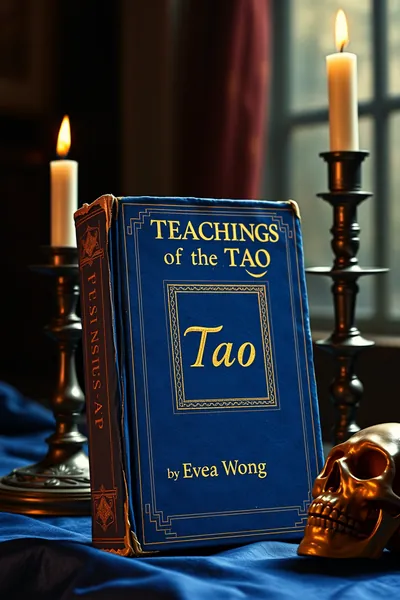
This edition's inclusion of elegant Chinese iconography, as noted in the blurb, is a significant asset, visually reinforcing the text's origins and aesthetic principles. Despite the occasional conceptual barrier, the Tao Te Ching remains a vital text for anyone seeking a different perspective on personal conduct and universal harmony.
📝 Description
81
Lao-tzu's Tao Te Ching, written around the 6th century BCE, presents a philosophy of living in accord with the Tao.
This collection of 81 short chapters offers a guide to understanding and aligning with the Tao, the fundamental principle that governs the universe. Lao-tzu's aphoristic style imparts wisdom on how to conduct oneself in personal life and in governance. The text suggests that true understanding comes not from striving, but from a state of naturalness and spontaneity. It questions conventional notions of power and control, advocating instead for a path of simplicity and non-interference.
The Tao Te Ching contrasts with other philosophical currents of its time by emphasizing a return to natural order rather than adherence to rigid social structures. Its teachings touch on the balance of opposing forces and the strength found in yielding. This work provides a framework for a life lived with integrity and in harmony with the natural flow of existence.
Attributed to Lao-tzu, the Tao Te Ching is a central text in Taoism, an ancient Chinese tradition. It emerged during the Spring and Autumn period, a time of intellectual ferment, alongside Confucianism. While Confucianism focused on social order and ethics, the Tao Te Ching proposed a path based on naturalness, spontaneity, and alignment with the fundamental principle of the universe, the Tao. Its ideas influenced later thinkers like Zhuangzi and became a cornerstone for various schools of Taoist philosophy and practice.
💡 Why Read This Book?
• Learn the principle of *wu wei* (effortless action), a core Taoist concept, to understand how acting in accordance with natural flow can reduce personal struggle, as articulated in chapters like the first one concerning the ineffable Tao. • Grasp the significance of *de* (virtue/power) as an intrinsic quality of being, not an acquired skill, as explored throughout the text's 81 precepts, offering a path to authentic selfhood. • Understand the symbolic importance of natural imagery, such as water, in the Tao Te Ching, learning how its yielding nature exemplifies the ideal state of being, a recurring motif in the text's wisdom.
⭐ Reader Reviews
Honest opinions from readers who have explored this book.
❓ Frequently Asked Questions
When was the Tao Te Ching first published?
While traditionally attributed to Lao-tzu around the 6th century BCE, the earliest extant versions of the Tao Te Ching date to the Warring States period (475–221 BCE). Modern editions, like this one, are interpretations of these ancient texts.
Who is Lao-tzu?
Lao-tzu is the traditional author of the Tao Te Ching. He is considered a semi-legendary figure, believed to be a philosopher and poet who lived during the Zhou Dynasty in ancient China, though his historicity is debated by scholars.
What is the Tao?
The Tao, or 'the Way,' is the central concept of Taoism. It refers to the ineffable, fundamental principle that underlies all existence, the natural order of the universe. It is considered the source and sustainer of everything, yet it is beyond human comprehension and description.
What does 'wu wei' mean in the Tao Te Ching?
'Wu wei' is a key principle in the Tao Te Ching, often translated as 'non-action' or 'effortless action.' It signifies acting in accordance with the natural flow of the Tao, without forcing or striving, achieving results through minimal intervention.
How many chapters does the Tao Te Ching have?
The Tao Te Ching is traditionally divided into 81 chapters or verses. These short, aphoristic passages offer guidance on philosophy, ethics, and spirituality.
Is the Tao Te Ching a religious text?
The Tao Te Ching is considered a foundational text for Taoism, which is both a philosophy and a religion. While it contains profound philosophical insights, it also functions as a scripture for religious Taoists, guiding their practices and beliefs.
🔮 Key Themes & Symbolism
The Nature of the Tao
The Tao Te Ching posits the Tao as the ultimate reality, the unnamable source from which all things arise and to which they return. It is described as formless, eternal, and the governing principle of the universe. Understanding the Tao is central to achieving harmony, emphasizing that true wisdom lies not in grasping for control but in yielding to this natural order. The text uses paradoxes and negations to point towards its ineffable nature, suggesting that intellectual pursuit alone cannot fully comprehend it.
Wu Wei: Effortless Action
Central to Taoist practice is the concept of *wu wei*, often translated as 'non-action' or 'effortless action.' This does not mean passivity but rather acting in accordance with the natural flow of events, without forcing or striving. It is about recognizing the opportune moment and acting with minimal effort, much like water shapes rock over time. The Tao Te Ching suggests that by practicing *wu wei*, one can achieve greater effectiveness and maintain inner peace, avoiding the exhaustion that comes from constant struggle.
The Wisdom of Simplicity and Humility
The text advocates for a return to a state of primal simplicity, often symbolized by the 'uncarved block' (*pu*). It champions humility, non-contention, and the avoidance of excessive desires, ambition, and worldly attachments. By embracing these qualities, individuals can cultivate inner peace and align themselves with the Tao. The Tao Te Ching contrasts the perceived strength of hardness and assertion with the greater power of yielding and softness, finding profound strength in vulnerability and acceptance.
Balance and the Interplay of Opposites
The Tao Te Ching frequently explores the concept of yin and yang, the complementary and interdependent forces that shape reality. It teaches that opposites are not in conflict but are two aspects of a single whole, each defining the other. Recognizing this dynamic interplay, such as the relationship between existence and non-existence, or strength and weakness, allows for a more nuanced understanding of the world and a more balanced approach to life. This perspective encourages acceptance of change and the cyclical nature of all things.
💬 Memorable Quotes
Direct passages from the work, attributed to the author.
“The Tao that can be told is not the eternal Tao.”
— This opening statement immediately establishes the ineffable nature of the Tao. It suggests that any attempt to define or capture the ultimate reality in words is inherently limited, pointing towards a deeper, experiential understanding beyond language.
“To know does not require speaking; to speak does not know.”
— This aphorism reflects the Taoist emphasis on intuitive understanding and direct experience over intellectualization or superficial knowledge. True wisdom, it suggests, often resides in silence and observation rather than in verbal expression.
“The sage stays behind, and thus is ahead. He is content with his lot, and thus is complete.”
— This points to the virtue of humility and detachment from ego. By not seeking recognition or advancement, the 'sage' (or wise person) paradoxically gains a higher position and achieves a state of contentment and wholeness.
“When people see some things as beautiful, other things acquire ugliness.”
— This illustrates the relativity of concepts and the way human judgment creates artificial divisions. The text implies that by recognizing the interconnectedness of opposites, one can transcend such dualistic thinking and appreciate the inherent balance in all things.
💡 Key Ideas
Editorial paraphrase of the work's core concepts — not direct quotes.
Nature does not hurry, yet everything is accomplished.
This quote expresses the principle of *wu wei*. It highlights the efficiency and harmony found in natural processes, contrasting it with human impatience and striving. It implies that by aligning with natural rhythms, one can achieve goals with less effort and more grace.
🌙 Esoteric Significance
Tradition
While primarily the foundational text of philosophical and religious Taoism, the Tao Te Ching holds significant resonance within broader esoteric traditions. Its emphasis on an ineffable, universal principle (the Tao) aligns with concepts found in Hermeticism and Neoplatonism. The pursuit of harmony with natural law and the cultivation of inner virtue (*de*) echo alchemical principles of transformation and the attainment of a balanced inner state, moving towards a state of unity with the divine or cosmic order.
Symbolism
Key symbols include water, representing adaptability, yielding strength, and purity – embodying the principle of *wu wei*. The 'uncarved block' (*pu*) symbolizes a state of primordial innocence and potential, before societal conditioning and artificial distinctions obscure true nature. The concept of the 'valley spirit' signifies receptivity and the feminine principle (yin), suggesting that emptiness and stillness are potent sources of power and wisdom, essential for aligning with the Tao's flow.
Modern Relevance
Contemporary thinkers and practitioners across various disciplines draw upon the Tao Te Ching. Its principles inform modern interpretations of psychology, particularly in areas related to mindfulness and stress reduction. Environmental activists find resonance in its ecological awareness and emphasis on natural cycles. Furthermore, martial artists and contemplative practitioners continue to study its teachings on effortless action, balance, and the cultivation of internal energy (qi), adapting its ancient wisdom to contemporary life.
👥 Who Should Read This Book
• Students of Eastern philosophy and comparative religion seeking a primary source on Taoist thought and its historical context. • Individuals interested in practical ethics and personal development who wish to explore concepts like *wu wei* for managing stress and enhancing effectiveness. • Seekers of spiritual wisdom drawn to non-dualistic perspectives and the exploration of natural law as a guide to life's challenges.
📜 Historical Context
The Tao Te Ching emerged from the fertile intellectual soil of China's Spring and Autumn period (771–476 BCE), a time marked by political fragmentation and the flourishing of philosophical inquiry, often referred to as the 'Hundred Schools of Thought'. This era saw the rise of Confucianism, with its emphasis on social order, ritual, and ethical governance. The Tao Te Ching offered a distinct, counter-cultural perspective, advocating for naturalness, spontaneity, and a retreat from the complexities of social and political life. While traditionally attributed to Lao-tzu, a contemporary of Confucius, scholarly consensus places its compilation later, possibly during the Warring States period (475–221 BCE). Its ideas were profoundly influential on later Taoist philosophy and practice, and its reception has been global, impacting thinkers from Herbert Spencer to modern environmentalists.
📔 Journal Prompts
The Tao's ineffability: Reflect on a concept or truth you find difficult to articulate.
Wu wei in practice: How can 'effortless action' be applied to a current challenge?
The 'uncarved block' (*pu*): Consider a time you felt unburdened by external expectations.
Water as a symbol: Analyze how yielding can demonstrate strength in a personal situation.
The sage's humility: Explore the potential benefits of non-contention in daily interactions.
🗂️ Glossary
Tao (Dao)
The fundamental, ineffable principle underlying all existence in Taoism. It is the natural order of the universe, the source and guide of all things, often translated as 'the Way'.
De (Te)
Often translated as 'virtue,' 'power,' or 'integrity.' It represents the inherent quality or essence of a thing, its manifestation of the Tao, and the power derived from aligning with the natural way.
Wu Wei
A core Taoist principle meaning 'non-action' or 'effortless action.' It signifies acting in harmony with the natural flow of the Tao, without force or excessive striving.
Pu
Literally 'uncarved wood' or 'plain wood.' It symbolizes the natural, primordial state of being—simple, unadulterated, and full of potential before societal conditioning.
Yin and Yang
Two complementary, interdependent forces or principles that shape the universe. Yin is typically associated with passive, dark, and feminine qualities, while Yang is associated with active, light, and masculine qualities.
Lao-tzu
The traditional author of the Tao Te Ching. A semi-legendary ancient Chinese philosopher credited with founding Taoism, though his historical existence is debated.
Spring and Autumn period
An era in Chinese history (c. 771–476 BCE) characterized by political decentralization and intellectual ferment, during which many philosophical schools, including Taoism and Confucianism, emerged.