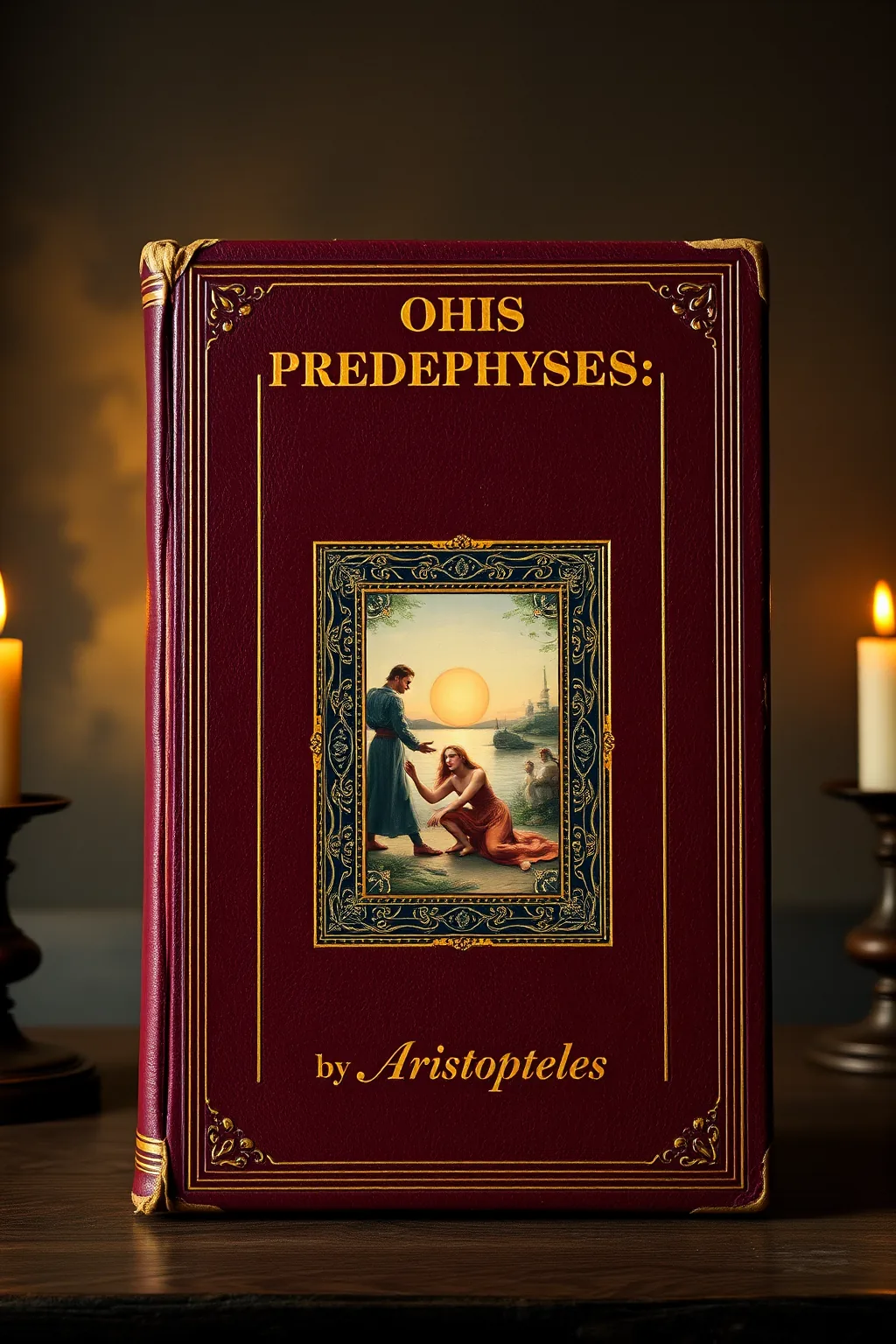
Aristotle on His Predecessors: Being the First Book of His Metaphysics
 83
83

Aristotle on His Predecessors: Being the First Book of His Metaphysics



Aristotle's "Aristotle on His Predecessors" is a foundational text for anyone delving into the esoteric and occult aspects of philosophy. This 1907 edition, digitized from the University of Michigan's library, provides a rich and detailed exploration of Aristotle's metaphysical inquiries. The book is particularly valuable for modern esoteric seekers, as it offers insights into the philosophical traditions that have influenced occult thought. Aristotle's reflections on his predecessors shed light on the development of metaphysical concepts, making this text a treasure trove for those interested in the deeper, more mysterious aspects of philosophy. The writing is dense and scholarly, but the insights are profound and worth the effort. For those willing to engage with the text, it offers a rewarding journey into the esoteric dimensions of metaphysics. Rating:
📝 Description
83
Aristotle’s first book of the Metaphysics examines the philosophical views that preceded him.
Aristotle's Metaphysics, Book I, begins by surveying the thinkers who came before him, starting with the Pythagoreans and Xenophanes. He then turns to the Eleatics, particularly Parmenides and his student Zeno. Aristotle recounts their ideas about the nature of reality, the One, and the problem of change. He also discusses Heraclitus and his doctrine of constant flux. The text then moves to Empedocles, Anaxagoras, and the atomists, Leucippus and Democritus. Aristotle critiques their theories of causes and principles, especially their attempts to explain the fundamental constituents of the universe and the mechanisms of change. He lays out his own framework for understanding these issues, setting the stage for the rest of the Metaphysics.
The primary goal of this initial book is to establish the historical context for Aristotle's own philosophical project. By reviewing and critiquing his predecessors, Aristotle aims to show the limitations and inconsistencies in their accounts. He highlights what they achieved and where they fell short, thereby justifying the need for his own more comprehensive system. This historical survey serves as a critical examination of earlier attempts to grasp the ultimate nature of being, or metaphysics.
While Aristotle's Metaphysics is a cornerstone of Western philosophy, Book I's focus on tracing philosophical lineages and their ideas about ultimate reality can be seen as aligning with certain esoteric traditions. Esoteric thought often involves seeking deeper, hidden meanings behind exoteric teachings and historical accounts. By meticulously dissecting the theories of earlier thinkers, Aristotle uncovers their underlying assumptions and their attempts to describe a fundamental, often unified, reality. This critical engagement with historical philosophical systems resonates with esoteric practices that seek to understand the evolution of ideas and their connection to hidden cosmic principles or a divine order.
💡 Why Read This Book?
Reading "Aristotle on His Predecessors" today offers a unique opportunity to explore the esoteric roots of Western philosophy. This text provides valuable insights into the metaphysical thoughts of Aristotle and his predecessors, helping readers understand the foundational principles of occult philosophy. By engaging with this book, readers can gain a deeper appreciation for the esoteric traditions that have shaped modern thought, enriching their understanding of both philosophy and the occult.
⭐ Reader Reviews
Honest opinions from readers who have explored this book.
❓ Frequently Asked Questions
What is the historical significance of this book?
This book is significant because it provides a detailed look into Aristotle's metaphysical thoughts and his reflections on his predecessors, offering insights into the development of Western philosophy and its esoteric dimensions.
Who should read this book?
This book is ideal for scholars, philosophers, and anyone interested in the occult and esoteric traditions. It is particularly valuable for those seeking to understand the metaphysical foundations of Western thought.
Is this book suitable for beginners in philosophy?
While this book is a valuable resource, it is quite dense and scholarly. Beginners in philosophy might find it challenging but rewarding with careful study and perhaps some background reading.
🔮 Key Themes & Symbolism
The Theory of Forms
Aristotle's critique of Plato's Theory of Forms reveals the hidden knowledge behind the idea of ideal objects. This theme examines the mystical concept of forms as the ultimate reality, challenging readers to consider the esoteric dimensions of existence.
Metaphysical Foundations
The book explores the metaphysical foundations of reality, offering insights into the interconnectedness of all things. This theme is crucial for understanding the esoteric underpinnings of our understanding of the cosmos.
Symbolism and Hidden Knowledge
Aristotle's analysis of his predecessors' ideas highlights the symbolism and hidden knowledge that shape our perception of reality. This theme invites readers to uncover the mystical dimensions of ancient wisdom.
💬 Memorable Quotes
Direct passages from the work, attributed to the author.
“There is a science which investigates being as being and the attributes which belong to this in virtue of its own nature.”
— Aristotle's definition of metaphysics highlights its esoteric nature, exploring the fundamental nature of existence.
“The Pythagoreans suppose the elements of numbers to be the elements of all things.”
— Aristotle's critique of the Pythagoreans reveals the mystical belief in the power of numbers to shape reality.
💡 Key Ideas
Editorial paraphrase of the work's core concepts — not direct quotes.
The soul is in some sense all existing things.
This quote underscores the interconnectedness of all things, suggesting a mystical unity underlying reality.
We must in each case get hold of the definitions of the objects.
This quote emphasizes the importance of understanding the essence of things, a key aspect of esoteric philosophy.
For the forms are causes of the substances.
This quote highlights the esoteric belief in the primacy of forms as the ultimate reality, shaping our understanding of the cosmos.
🌙 Esoteric Significance
Tradition
This book belongs to the Hermetic tradition, which emphasizes the interconnectedness of all things and the mystical dimensions of reality. It draws on ancient wisdom to provide insights into the hidden knowledge that shapes our understanding of the cosmos.
Symbolism
Key symbols in this work include the Theory of Forms, which represents the idea of ideal objects as the ultimate reality. Other symbols include the concept of the soul as a unifying principle and the mystical power of numbers.
Modern Relevance
This book remains relevant today for modern practitioners of esoteric arts, who use its insights to explore the mystical dimensions of existence. It provides a philosophical foundation for understanding the interconnectedness of all things, making it an essential read for contemporary seekers of truth.
👥 Who Should Read This Book
Beginners in occult philosophy will find this book a valuable introduction to the mystical foundations of reality. Scholars of philosophy will appreciate Aristotle's meticulous analysis of his predecessors' ideas. Spiritual seekers will be drawn to the esoteric insights and hidden knowledge revealed in the text. Practitioners of esoteric arts will benefit from the philosophical framework provided, which can be applied to their spiritual practices.
📜 Historical Context
Written during the classical period of ancient Greece, 'Aristotle on His Predecessors' is a foundational work in the development of Western philosophy. It reflects Aristotle's engagement with the ideas of his predecessors, particularly Plato, and his attempt to synthesize and critique their contributions. The book was important in its time for establishing the principles of metaphysics and for shaping the philosophical discourse that followed. Its influence can be seen in the works of medieval scholars and Renaissance thinkers, who continued to explore the mystical and esoteric dimensions of Aristotle's ideas.
📔 Journal Prompts
How does Aristotle's critique of Plato's Theory of Forms challenge your understanding of reality?
In what ways do the esoteric insights in this book influence your spiritual practices?
How does the concept of the soul as a unifying principle resonate with your own beliefs?
How do the mystical dimensions of Aristotle's philosophy compare to other esoteric traditions?
How can you apply the principles of metaphysics to your daily life?
🗂️ Glossary
Theory of Forms
Plato's idea that non-material (but substantial) aspects of things, like goodness, exist independently of the things themselves.
Metaphysics
The branch of philosophy that explores the fundamental nature of reality, existence, and being.
Esoteric
Relating to knowledge that is understood by only a small number of people with special knowledge or interest.
Hermetic Tradition
A spiritual and philosophical tradition based on the writings of Hermes Trismegistus, emphasizing the interconnectedness of all things.
Symbolism
The use of symbols to represent ideas or qualities, often in a mystical or esoteric context.
This book appears in 3 collections
🔮 Readers Also Liked
Browse all →









From the “Occultism” Collection
View all →






More Free Occult Philosophy Books
View all →