Jung in Contexts
 76
76

Jung in Contexts
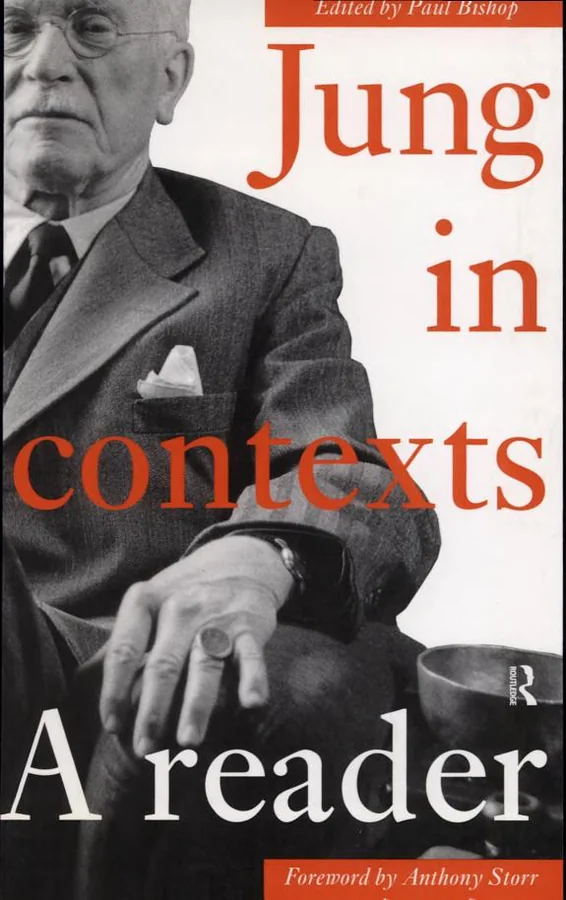
Paul Bishop's *Jung in Contexts* performs a valuable service by anchoring the sprawling edifice of Jungian thought to its historical and intellectual soil. Rather than presenting Jung as an isolated genius, Bishop’s collection situates him firmly within the intellectual currents of his time. The strength of this volume lies in its disciplined approach; the essays consistently avoid hagiography, instead offering critical perspectives on Jung’s engagement with Gnosticism, alchemy, and his contemporaries. A particular highlight is the exploration of Jung's literary connections, which often gets overlooked in purely psychological analyses. If there's a limitation, it's that the collection, by design, assumes a degree of familiarity with Jungian terminology, which might present a slight barrier to absolute beginners. The introduction, however, offers a solid grounding. The work compellingly argues that understanding the context is crucial for grasping the psychology itself. *Jung in Contexts* offers a necessary scholarly counterpoint to uncritical acceptance or outright dismissal of Jung's expansive, often controversial, legacy.
📝 Description
76
Published in 1999, Jung in Contexts examines Carl Jung's analytical psychology within its historical and intellectual setting.
This 1999 collection gathers essays that examine Carl Gustav Jung's work and its influence. The volume situates his analytical psychology within its intellectual and historical milieu, avoiding simple praise or dismissal. The introduction provides a substantial overview of analytical psychology's development and institutional history. Subsequent essays are organized into three thematic sections: historical, literary, and intellectual contexts, giving a broad view of Jung's contributions.
The book is for anyone seeking a rigorous, contextual understanding of Carl Jung and the field he founded. It appeals to scholars of psychology, intellectual history, and literature, as well as practitioners of analytical psychology interested in the foundational debates surrounding its origins. It is for those who prefer critical analysis to unexamined acceptance of psychological theories.
*Jung in Contexts* appeared in 1999, a time of renewed international scrutiny of Jung's legacy, particularly concerning the origins and potential biases within analytical psychology. The late 20th century saw growing academic interest in the history of psychology and critical re-evaluation of its key figures. This book responded to ongoing controversies by situating Jung’s ideas within the broader intellectual atmosphere of the early to mid-20th century, alongside thinkers like Sigmund Freud and the existentialists.
The book places Jung's analytical psychology within a tradition that often draws on mythology, comparative religion, and philosophy. While not strictly an esoteric text itself, *Jung in Contexts* addresses the historical and intellectual currents that informed Jung's own engagement with these subjects. It looks at how Jung's ideas developed alongside other movements and thinkers of his time, including those exploring non-rational or symbolic ways of understanding the human psyche. The essays consider Jung's work not in isolation, but as part of a broader cultural and intellectual ferment that included interest in ancient wisdom and symbolic systems.
💡 Why Read This Book?
• Gain a nuanced understanding of Carl Jung's analytical psychology by examining its roots in early 20th-century intellectual history, moving beyond simplistic interpretations. • Appreciate the specific influence of philosophical and literary movements on Jung’s theories, particularly through the essays focusing on his intellectual context. • Develop a critical perspective on the origins of analytical psychology, understanding its historical development and institutional formation as presented in the 1999 collection.
⭐ Reader Reviews
Honest opinions from readers who have explored this book.
❓ Frequently Asked Questions
When was Jung in Contexts first published?
Jung in Contexts was first published in 1999, aiming to contextualize the work of Carl Jung during a period of significant scholarly re-evaluation.
What are the main contexts explored in the book?
The book explores Carl Jung's work within historical, literary, and intellectual contexts, providing a multi-faceted view of his contributions beyond purely psychological analysis.
Who is the author of Jung in Contexts?
The collection was edited by Paul Bishop, who also penned the comprehensive introduction tracing the growth of analytical psychology.
What does the introduction to Jung in Contexts cover?
The introduction provides a thorough overview of the development of analytical psychology and its associated institutions, setting the stage for the essays that follow.
Does Jung in Contexts discuss Jung's relationship with Freud?
While the book focuses on broader contexts, it implicitly addresses the intellectual landscape shaped by figures like Freud by examining Jung's distinct contributions and divergences.
What is the primary goal of the essays in Jung in Contexts?
The primary goal is to place Carl Jung, the man and his work, within specific historical, literary, and intellectual frameworks, fostering a deeper, contextual understanding.
🔮 Key Themes & Symbolism
Analytical Psychology's Genesis
This theme examines the foundational period of analytical psychology, tracing its development from its inception through the early to mid-20th century. It investigates the institutional structures that supported and shaped Jung's theories, moving beyond a purely biographical account to understand the collective effort and intellectual environment that fostered this new school of thought. The focus is on how external academic and societal pressures influenced the very formulation of concepts like the collective unconscious and archetypes.
Jung and Esoteric Traditions
The volume explores Jung's deep engagement with various esoteric traditions, including Gnosticism and alchemy. It analyzes how these ancient symbolic systems provided frameworks and imagery that informed his psychological theories. Rather than treating these as mere historical curiosities, the essays assess their functional role in Jung's conceptualization of the psyche, particularly in understanding archetypal patterns and the process of individuation through symbolic transformation.
Literary and Philosophical Intersections
This theme highlights the profound connections between Jung’s psychological work and the literary and philosophical landscapes of his era. It investigates how Jung drew inspiration from and influenced contemporary literature and philosophical discourse. The essays reveal how literary motifs and philosophical debates provided a fertile ground for the development and expression of his ideas about the unconscious, myth, and human experience.
Critical Re-evaluation of Jung
Central to the collection is a spirit of critical inquiry into Carl Jung's legacy. It addresses controversies surrounding analytical psychology and aims to provide a balanced perspective by situating Jung's work within its specific historical and intellectual constraints. The essays encourage readers to engage with Jung's ideas through a lens of historical consciousness, acknowledging both his innovations and the limitations inherent in his time and context.
💬 Memorable Quotes
Direct passages from the work, attributed to the author.
“The essays place Jung, the man and his work, in three important contexts: historical, literary and intellectual.”
— This statement succinctly outlines the book's methodological approach, emphasizing that a comprehensive understanding of Jung requires examining his theories not in isolation, but as products of and participants in specific historical, literary, and intellectual currents.
“The current interest in Jung shows no sign of abating, with international controversy surrounding the origins of analytical psychology.”
— This observation from the original blurb highlights the ongoing relevance and debate surrounding Jung's work, underscoring the need for scholarly analysis that addresses controversies and historical origins.
“A comprehensive introduction traces the growth and development of analytical psychology and its institutions.”
— This points to the volume's foundational element: a detailed overview of how analytical psychology evolved as a field and the organizational structures that underpinned its progress and dissemination.
“The collection gathers the most important essays on Jung and analytical psychology over the past two decades.”
— This suggests the book's value as a curated selection, offering readers access to significant scholarly contributions that have shaped the discourse on Jungian psychology since its inception.
💡 Key Ideas
Editorial paraphrase of the work's core concepts — not direct quotes.
The work explores the intellectual currents and philosophical debates that shaped Jung's thought.
This paraphrase indicates the depth of analysis provided, focusing on how external philosophical movements and ongoing debates provided the intellectual scaffolding upon which Jung built his unique psychological system.
🌙 Esoteric Significance
Tradition
While not strictly an esoteric text itself, *Jung in Contexts* is vital for understanding the esoteric dimensions within analytical psychology. It bridges the gap between academic psychology and traditions such as Gnosticism and alchemy, which Jung extensively studied and incorporated into his theoretical framework. The work positions Jungian psychology as a modern manifestation of ancient symbolic quests for meaning and transformation, aligning it with broader currents of Western esotericism that explore the psyche's relationship with the cosmos and the divine.
Symbolism
The book frequently engages with archetypal symbols that carry profound esoteric weight. Concepts like the 'shadow' represent the repressed, often darker, aspects of the psyche, echoing alchemical notions of prima materia or the dissolution of form. The 'anima' and 'animus' reflect the integration of contrasexual principles, a theme found in Hermeticism's emphasis on the union of opposites. Archetypes themselves, as universal patterns of the unconscious, can be seen as a psychological interpretation of divine blueprints or cosmic intelligences present in various esoteric cosmologies.
Modern Relevance
Contemporary practitioners of depth psychology, transpersonal psychology, and even certain strands of philosophical inquiry continue to draw heavily on Jung's contextualized ideas. Thinkers exploring the intersection of mythology, religion, and psychology, as well as artists and writers seeking to understand universal human narratives, find value in this approach. The work's emphasis on historical and intellectual grounding remains relevant for anyone seeking to critically engage with the enduring influence of Jungian thought in the 21st century.
👥 Who Should Read This Book
• Students of Jungian psychology and psychoanalysis seeking a deeper historical and intellectual context for foundational concepts like archetypes and the collective unconscious. • Scholars of intellectual history and the history of psychology interested in the development of 20th-century thought and the reception of major psychological figures. • Literary critics and comparative literature scholars examining the influence of psychological theories on modern literature and the symbolic language of narrative.
📜 Historical Context
Published in 1999, *Jung in Contexts* emerged as a crucial intervention in the ongoing scholarly dialogue surrounding Carl Jung. The late 20th century witnessed a significant re-evaluation of psychology's foundational figures, moving beyond the confines of clinical practice to examine their intellectual and historical embeddedness. This period saw a rise in critical biographies and historical analyses of psychological movements, challenging earlier, often uncritical, accounts. The book addressed international controversies regarding the origins of analytical psychology, a field that had branched significantly from its psychoanalytic roots established by Sigmund Freud. Contemporaries like literary critics and historians of science were increasingly engaging with Jung's work, and this collection provided a focused academic response, situating Jung within the fertile intellectual soil of early 20th-century European thought, a milieu influenced by burgeoning modernism and existential philosophy.
📔 Journal Prompts
The historical context of analytical psychology's emergence in the early 20th century.
Carl Jung's engagement with Gnosticism and alchemy as explored in the essays.
The specific literary influences on Jung's psychological theories.
The institutional development of analytical psychology as detailed in the introduction.
The controversies surrounding the origins of analytical psychology discussed in the volume.
🗂️ Glossary
Analytical Psychology
The school of psychology founded by Carl Gustav Jung, distinct from Freudian psychoanalysis, emphasizing archetypes, the collective unconscious, and the process of individuation.
Archetype
Universal, archaic patterns and images that derive from the collective unconscious and are the psychic counterpart of instinct. They manifest in myths, dreams, and art.
Collective Unconscious
A layer of the unconscious psyche common to all humankind, containing inherited structures and archetypes, distinct from the personal unconscious.
Individuation
The lifelong psychological process of differentiation of the self, by which one integrates the conscious and unconscious aspects of personality to become a whole individual.
Gnosticism
A complex set of religious and philosophical ideas and systems that emerged in the first century CE, emphasizing personal spiritual knowledge (gnosis) for salvation.
Alchemy
An ancient tradition blending philosophical, mystical, and practical pursuits, often involving the symbolic transformation of base metals into gold, interpreted by Jung as a metaphor for psychological transformation.
Analytical Psychology Institutions
The organizations, societies, and training programs established to support and disseminate the theories and practices of analytical psychology founded by Jung.
This book appears in 1 collection
🔮 Readers Also Liked
Browse all →









From the “Jungian Psychology” Collection
View all →





More Free Occult Philosophy Books
View all →