Dream Yoga
 76
76

Dream Yoga
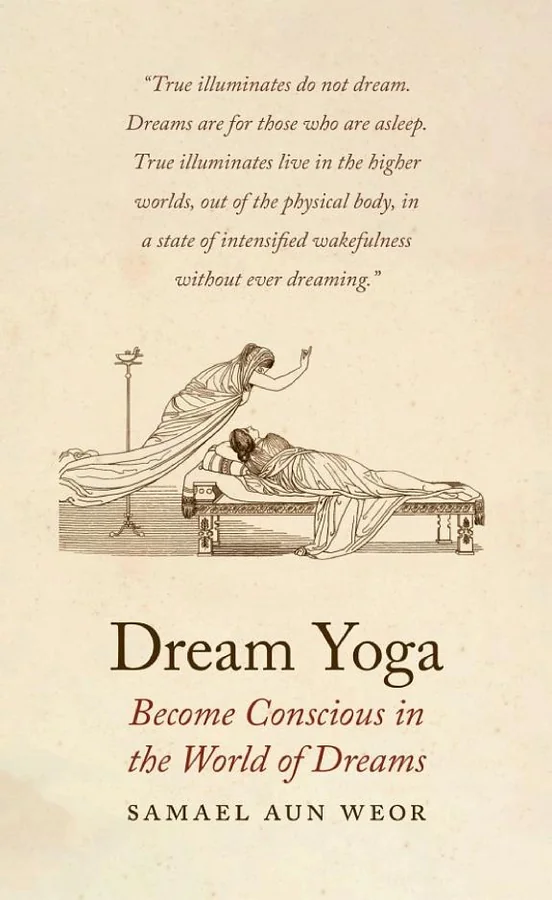
Samael Aun Weor’s *Dream Yoga* challenges the conventional view of sleep as mere unconsciousness, positing it instead as a prime opportunity for heightened spiritual awareness. The author’s insistence on the practical, actionable nature of his techniques distinguishes this work. He doesn't merely theorize about astral projection; he provides specific, repeatable exercises for achieving it. A particularly compelling section details the mechanics of leaving the physical body, offering a step-by-step approach that, while demanding, feels remarkably concrete. The limitation lies in the dense Gnostic terminology, which may require prior familiarity or supplementary reading for complete comprehension. Weor’s assertion that “True illuminates do not dream” sets a high bar, framing dreaming not as a passive experience but as a critical arena for spiritual discipline. It's a potent call to action for the aspiring mystic.
📝 Description
76
In 1952, Samael Aun Weor published Dream Yoga, detailing methods for conscious dreaming.
Dream Yoga presents Samael Aun Weor's practical methods for achieving conscious wakefulness within the dream state. This work focuses on transforming the passive experience of dreaming into an active, lucid period of spiritual exploration and learning. It offers techniques designed to detach consciousness from the physical body during sleep, allowing for astral projection and direct experience of higher dimensions. This book targets individuals seeking to transcend the limitations of ordinary consciousness, particularly those interested in esoteric psychology and spiritual development. It is for practitioners who understand dreams not merely as psychological phenomena but as gateways to other realities and sources of inner wisdom. Those aiming for direct spiritual contact and self-realization will find the teachings applicable. Weor introduces practices to retain awareness upon falling asleep, thereby enabling the practitioner to control dream environments and interact consciously with the astral plane. This process is presented as a method for spiritual growth, allowing access to esoteric knowledge and direct communion with spiritual guides outside the physical realm.
Samael Aun Weor published this work in the mid-20th century, a period marked by significant interest in Gnosticism and practical occultism. His teachings emerged alongside figures like Alice Bailey and Rudolf Steiner, though Weor developed a distinct Gnostic synthesis. This book addresses themes common in mystical traditions worldwide, which have often emphasized the importance of dream states for prophecy and divine guidance throughout history.
💡 Why Read This Book?
• Learn concrete techniques for astral projection, specifically the "awakening" exercises described by Samael Aun Weor to achieve conscious awareness in the dream state. • Gain understanding of the Gnostic perspective on the dream world as a tangible plane of existence accessible for spiritual learning and self-discovery. • Explore the concept of the "Inner Master" and how to receive guidance and wisdom directly through conscious dream experiences, as detailed in the text.
⭐ Reader Reviews
Honest opinions from readers who have explored this book.
❓ Frequently Asked Questions
What is Samael Aun Weor's definition of 'true illumination' regarding dreams?
Samael Aun Weor posits that 'true illuminates' exist in a state of intensified wakefulness in higher worlds, beyond the limitations of physical body consciousness and ordinary dreaming. They achieve a form of perpetual lucidity.
How does Dream Yoga differ from regular dreaming?
Regular dreaming is an unconscious state. Dream Yoga teaches methods to retain full consciousness while asleep, transforming dreams into lucid, controllable experiences for spiritual work and exploration of the astral plane.
Can this book help with astral projection?
Yes, the core of Dream Yoga is dedicated to practical exercises designed to facilitate astral projection, enabling the practitioner to consciously leave the physical body during sleep.
What is the spiritual importance of dreams according to this book?
The book emphasizes that dreams have always been crucial for mystics and prophets, serving as a primary channel for acquiring wisdom, divine guidance, and spiritual understanding outside the physical realm.
Is Dream Yoga suitable for beginners in esoteric studies?
While the concepts are profound, the book provides practical steps. Beginners interested in advanced consciousness states and Gnostic teachings will find it a challenging but rewarding introduction to dream work.
When was Dream Yoga first published?
Dream Yoga by Samael Aun Weor was first published on February 1, 2025, though the author's prolific output began much earlier in the mid-20th century.
🔮 Key Themes & Symbolism
Conscious Dreaming (Lucidity)
The primary focus is on achieving conscious control and awareness within the dream state, moving beyond passive dreaming. This involves specific meditative and mnemonic techniques taught by Weor to recognize the dream state as distinct from physical reality while still within it. The goal is to transform sleep into an active period of spiritual practice and self-observation, rather than a lapse into unconsciousness.
Astral Projection
The book provides practical instructions for astral projection, the ability to consciously travel outside the physical body using the subtle body (astral body). Weor details exercises designed to help practitioners disengage from the physical form during sleep, enabling exploration of the astral plane and other dimensions with full awareness.
Gnostic Self-Realization
Dream Yoga is presented as a vital tool within the broader Gnostic path of self-realization. By mastering the dream state, practitioners gain direct access to inner knowledge, confront their psychological aggregates (ego structures), and connect with their 'Inner Master,' facilitating spiritual awakening and liberation from the cycle of rebirth.
The Nature of Reality
Weor challenges the reader's perception of reality, suggesting that the dream world is as real, if not more so, than the physical world. He argues that by achieving lucidity in dreams, one can gain useful insights into the fundamental nature of consciousness and existence, transcending materialist limitations.
💬 Memorable Quotes
Direct passages from the work, attributed to the author.
“True illuminates do not dream. Dreams are for those who are asleep.”
— This statement distinguishes between ordinary, unconscious dreaming and the state of conscious wakefulness Weor advocates for, even within the dream state itself. It implies a higher level of spiritual attainment.
“True illuminates live in the higher worlds, out of the physical body, in a state of intensified wakefulness without ever dreaming.”
— This elaborates on the initial quote, defining spiritual illumination as a state of continuous conscious presence in non-physical realms, free from the limitations and unconsciousness associated with normal sleep.
“Learn the ancient practical methods to awaken consciousness in the world of dreams.”
— This highlights the book's core purpose: providing actionable techniques derived from ancient wisdom traditions to achieve lucidity and conscious activity during sleep.
“Scriptures describe how prophets and mystics always acquired wisdom and guidance in dreams.”
— This references the historical and scriptural basis for the importance of dreams in spiritual traditions, validating dream work as a legitimate path for divine communication and insight.
“Consciousness in dreams has always been of the utmost spiritual and psychological importance.”
— This underscores the value Weor places on the dream state, not just for spiritual growth but also for psychological understanding and integration, positioning it as a crucial area of human experience.
🌙 Esoteric Significance
Tradition
This work is firmly rooted in the Gnostic tradition, particularly drawing from its emphasis on achieving gnosis (direct, experiential knowledge of the divine) and liberation from material illusion. Weor synthesizes elements from various esoteric lineages, including Hermeticism and Kabbalah, but frames them within a distinctly Gnostic cosmology focused on the fallen state of consciousness and the path of return to the divine.
Symbolism
Key symbols include the 'physical body' as a vessel for consciousness, the 'astral body' as the vehicle for dream travel, and the concept of 'sleep' as a state of unconsciousness to be overcome. The 'higher worlds' represent planes of existence accessible through conscious projection, and the 'Inner Master' symbolizes the divine spark within each individual, a guide on the path to self-realization.
Modern Relevance
Contemporary practitioners of lucid dreaming, astral projection, and various forms of Western Esotericism continue to engage with Weor's teachings. His emphasis on practical, disciplined techniques speaks to modern communities seeking verifiable methods for consciousness expansion and spiritual development outside conventional religious or psychological frameworks.
👥 Who Should Read This Book
['• Aspiring practitioners of lucid dreaming seeking concrete, actionable techniques to gain awareness and control within their dream states.', "• Students of Gnosticism interested in Samael Aun Weor's unique synthesis and practical applications of Gnostic principles for spiritual transformation.", '• Individuals exploring esoteric psychology and consciousness studies who wish to understand the dream state as a gateway to higher realities and inner wisdom.']
📜 Historical Context
Samael Aun Weor's *Dream Yoga* emerged in the mid-20th century, a fertile period for esoteric thought influenced by Gnosticism, Theosophy, and earlier occult traditions. Weor, a prolific writer and founder of the Universal Christian Gnostic Movement, synthesized various mystical streams into his own Gnostic system. This era saw widespread interest in consciousness studies and alternative spiritual paths, with figures like Aldous Huxley exploring psychedelic states and Carl Jung exploring the psyche's symbolic language. Weor's work, however, focused specifically on practical, disciplined methods for achieving states of higher consciousness, particularly through dream work and astral projection. Unlike some contemporary spiritual movements that might focus more on theoretical aspects or psychological analysis, Weor emphasized direct experience and the rigorous application of specific techniques, positioning his Gnosticism as a practical science for transformation.
📔 Journal Prompts
The distinction between ordinary dreaming and conscious wakefulness in the dream state.
Methods for retaining awareness upon entering sleep.
Experiences of astral projection or conscious travel outside the physical body.
The role of the 'Inner Master' in receiving guidance during dreams.
Practical exercises for transforming passive dream experiences into active spiritual practice.
🗂️ Glossary
Astral Projection
The conscious, voluntary separation of the subtle body (astral body) from the physical body, allowing for travel and exploration in non-physical dimensions, particularly the astral plane.
Lucid Dreaming
The state of being aware that one is dreaming while the dream is occurring, often allowing for some degree of control over the dream narrative or environment.
Gnosis
Direct, intuitive, experiential knowledge of spiritual truths and the divine, often contrasted with intellectual or faith-based belief.
Physical Body
In Weor's system, the dense, material body that serves as the vehicle for consciousness in the physical world, but which can be temporarily left during states of deep sleep or specific practices.
Astral Body
A subtle, energetic body composed of finer matter, which serves as the vehicle for consciousness during dreams and astral projection.
Inner Master
The divine aspect or true spiritual self within an individual, considered a source of wisdom and guidance accessible through direct inner connection.
Aggregates (Psychological)
The various components of the ego or personality, which Weor taught must be understood and dissolved to achieve true self-realization.
This book appears in 1 collection
🔮 Readers Also Liked
Browse all →








From the “Dream Yoga” Collection
View all →








More Free Occult Philosophy Books
View all →