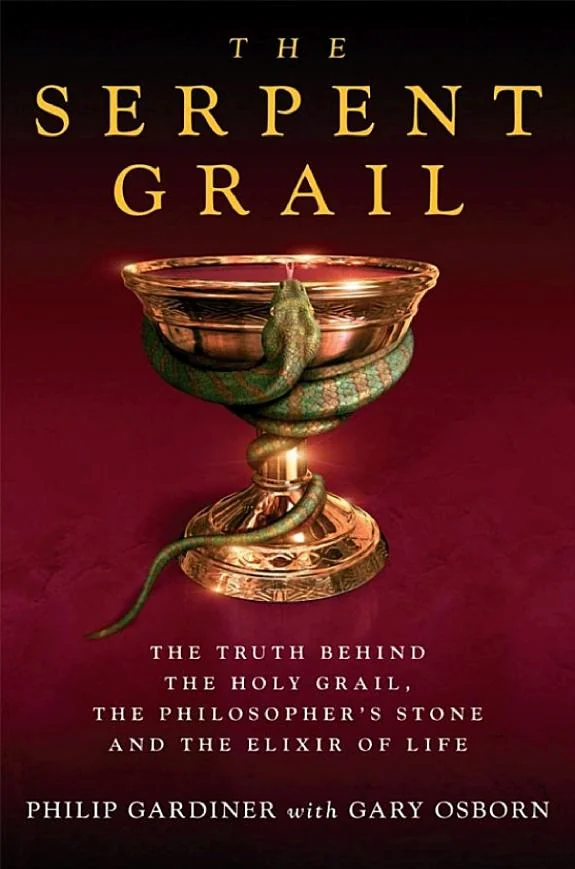
The Serpent Grail - The Truth Behind The Holy Grail, The Philosopher's Stone and The Elixir of Life
 76
76

The Serpent Grail - The Truth Behind The Holy Grail, The Philosopher's Stone and The Elixir of Life
Philip Gardiner and Gary Osborn's exploration of the Serpent Grail offers a radical reinterpretation of foundational Western esoteric symbols. Their core argument—that the Holy Grail, Philosopher's Stone, and Elixir of Life share a common origin in ancient snake cult rituals involving a venom-and-blood mixture—is audacious and meticulously researched. The strength of the book lies in its extensive cross-cultural analysis, drawing parallels between disparate ancient traditions. However, the sheer scope of the claim sometimes strains credulity, and a more direct engagement with scholarly critiques of Grail mythology might have strengthened its academic footing. A particularly compelling section details the symbolic metamorphosis of the serpent from a chthonic deity to a symbol of Christ's transformative power. While ambitious, The Serpent Grail provides a provocative lens through which to view perennial spiritual quests.
📝 Description
76
Philip Gardiner and Gary Osborn propose a unified origin for the Holy Grail in ancient snake cults.
Philip Gardiner and Gary Osborn's The Serpent Grail investigates the historical and symbolic roots of the Holy Grail, the Philosopher's Stone, and the Elixir of Life. They propose that these concepts share a common origin in ancient snake cults. The authors argue that a ritual involving the ceremonial mixing of snake blood and venom in a vessel, termed 'the grail,' formed the basis for many religious rites, including the Christian Eucharist. This practice was intended to produce a potent healing elixir with both physical and spiritual effects.
The book challenges conventional historical narratives by tracing the influence of snake cults across cultures, from ancient Egypt and Mesopotamia to Mesoamerica. It examines how these pre-Christian traditions may have shaped later religious and alchemical symbolism. The authors suggest that elements of these ancient rites, particularly those involving potent natural substances and symbolic transformation, were adapted and reinterpreted over millennia. This adaptation influenced the development of concepts like the Philosopher's Stone and the Elixir of Life. Central to their thesis is the idea of the 'Serpent Grail' as a ritualistic vessel for a concoction derived from snake venom and blood, presented as the primordial grail.
This work sits within the tradition of alternative interpretations of religious history and esoteric lore, particularly concerning alchemy and Hermeticism. It connects ancient serpent worship with the development of Western mysticism and the symbolic evolution of sacred artifacts and rituals. The book seeks to uncover unconventional theories on foundational spiritual narratives, suggesting a shared root for disparate legends and alchemical pursuits.
💡 Why Read This Book?
• Gain an alternative perspective on the origins of the Holy Grail legend, understanding how Gardiner and Osborn link it to ancient snake cults and their ritualistic use of serpent venom. • Explore the proposed connection between these ancient rites and the alchemical pursuit of the Philosopher's Stone, learning how primal life forces were symbolically harnessed. • Understand the symbolic evolution of the serpent motif across cultures, examining its transformation from ancient deity to esoteric symbol of healing and rebirth.
⭐ Reader Reviews
Honest opinions from readers who have explored this book.
❓ Frequently Asked Questions
What is the central theory presented in The Serpent Grail regarding the Holy Grail?
The book proposes that the Holy Grail, Philosopher's Stone, and Elixir of Life originate from ancient snake cult rituals. A key rite involved mixing snake venom and blood in a ceremonial bowl, believed to create a potent healing elixir.
Who are the authors of The Serpent Grail?
The book is authored by Philip Gardiner and co-authored by Gary Osborn. It was first published in 2012.
What ancient traditions does The Serpent Grail connect to the Grail legend?
Gardiner and Osborn connect the Grail legend to ancient serpent cults prevalent globally, including those in Egypt, Mesopotamia, and Mesoamerica, suggesting a shared ritualistic origin.
How does the book explain the Philosopher's Stone and Elixir of Life?
It posits that these alchemical concepts are symbolic descendants of the healing elixir derived from snake venom and blood rituals, representing a quest for transformation and longevity.
What is the symbolic meaning of the serpent in this context?
In The Serpent Grail, the serpent symbolizes primal life force, wisdom, and cyclical regeneration. Its venom and blood were seen as potent substances capable of profound healing and spiritual metamorphosis.
Does the book suggest a link between these rituals and the Christian Eucharist?
Yes, the authors suggest that the Christian Eucharist ritual, particularly the consumption of wine and bread symbolizing blood and body, may have evolved from or shares symbolic roots with these ancient 'grail' ceremonies.
🔮 Key Themes & Symbolism
The Serpent as Primordial Source
The work posits the serpent as a central figure in ancient cosmologies, representing the primal life force and regenerative power. Gardiner and Osborn argue that snake cults worldwide utilized the potent biochemical properties of serpent venom and blood in sacred rituals. This practice, they contend, formed the basis for later esoteric traditions, with the serpent's symbolism evolving from a direct source of life to an emblem of wisdom and transformation. The book traces this ancient reverence through various cultures, highlighting its fundamental role in early spiritual understanding.
The Grail as Ritualistic Vessel
Challenging the traditional image of the Grail, the authors present it primarily as a ceremonial vessel for a potent elixir. This 'Serpent Grail' was created by mixing snake blood and venom, intended for physical healing and spiritual initiation. The book explores how this concept of a sacred chalice containing a life-giving substance permeated global mythology and religious practices. It suggests that the ritual's transformative properties, both literal and symbolic, laid the groundwork for concepts like the Elixir of Life and the Eucharist.
Alchemy and Serpent Venom
The Serpent Grail intricately connects ancient serpent cult practices to the development of alchemy. It proposes that the alchemical quest for the Philosopher's Stone and the Elixir of Life is a continuation of ancient attempts to harness the potent, life-altering properties of snake venom. The symbolic associations of serpents with rebirth, shedding skin, and immortality are explored as direct antecedents to alchemical goals of transmutation and eternal life. The book argues for a direct lineage from primal rituals to sophisticated alchemical theories.
Cross-Cultural Esoteric Connections
A significant theme is the demonstration of a unifying esoteric thread connecting seemingly disparate ancient civilizations. Gardiner and Osborn highlight how snake symbolism and rituals involving potent natural substances appear universally. They argue that these common elements point to a shared ancient wisdom tradition that influenced global religious and mystical development. The book aims to reveal these deep connections, suggesting that the quest for spiritual enlightenment and physical immortality has followed remarkably similar paths across diverse cultures.
💬 Memorable Quotes
Direct passages from the work, attributed to the author.
“The grail was not a cup but a ceremonial mixing bowl for snake blood and venom.”
— This statement captures the book's core thesis, reframing the iconic Grail legend. It suggests a physical, ritualistic origin rooted in ancient serpent cults rather than a purely spiritual or Arthurian quest object.
“Snake venom was seen as the ultimate healing elixir and means of transformation.”
— This highlights the perceived power of serpent venom in ancient societies. The authors argue it was central to rituals aimed at achieving physical health, spiritual insight, and even immortality.
“The serpent cults were the foundation upon which many later religious rites were built.”
— This assertion positions ancient serpent worship as a foundational element of global spirituality. It implies that elements of these practices were adapted and incorporated into subsequent religious and mystical traditions.
“The Philosopher's Stone and Elixir of Life are symbolic continuations of this ancient ritual.”
— This links the alchemical pursuits directly to the serpent ritual. It suggests that the alchemists' quest was a reinterpretation or continuation of the ancient desire for potent, transformative substances derived from nature.
“The Eucharist ritual shares symbolic roots with ancient grail ceremonies.”
— This proposes a direct, albeit symbolic, link between early Christian practices and the ancient serpent rituals. It suggests the symbolism of sacred consumption and transformation carries over from the older tradition.
🌙 Esoteric Significance
Tradition
The work aligns with syncretic esoteric traditions that seek unifying principles across diverse spiritual systems. It draws heavily on Gnostic themes of primal wisdom and transformative substances, Hermetic principles of correspondence (as above, so below), and ancient shamanic practices. While not strictly adhering to any single lineage, it positions itself as uncovering a universal, ancient 'serpent wisdom' that predates organized religions and informs later alchemical and mystical pursuits.
Symbolism
The serpent is the paramount symbol, representing primal life force, cyclical renewal (shedding skin), and potent, hidden knowledge (venom). The 'grail' itself, as a ritual vessel, symbolizes the container of transformation, holding the potential for healing and enlightenment. The mixing of blood (life essence) and venom (potent transformative agent) signifies the alchemical union of opposites, necessary for achieving the Elixir of Life or spiritual rebirth.
Modern Relevance
Contemporary practitioners of Neo-Paganism, certain Hermetic orders, and alternative spiritual researchers may find Gardiner and Osborn's work relevant. It offers a framework for understanding the serpent as a powerful deity and symbol of healing, distinct from Abrahamic interpretations. The book's exploration of ancient bio-alchemy and potent natural substances also appeals to modern interests in holistic health and the re-evaluation of indigenous medicinal knowledge.
👥 Who Should Read This Book
• Students of comparative religion and mythology interested in alternative origins for foundational spiritual symbols like the Holy Grail. • Researchers of ancient cults and esoteric traditions seeking to understand the role of serpent worship and its potential influence on later mystical practices. • Alchemical enthusiasts and practitioners exploring the historical and symbolic roots of the Philosopher's Stone and the Elixir of Life beyond traditional European contexts.
📜 Historical Context
Published in 2012, The Serpent Grail emerged during a period of renewed interest in alternative historical narratives and esoteric interpretations of ancient religions. Philip Gardiner and Gary Osborn's work engages with a long tradition of Grail scholarship, which has debated its origins from archaeological sites to theological symbolism since the late 19th century. Their thesis, however, places them in dialogue with researchers exploring pre-Christian mystery cults and shamanic traditions, such as those studied by Mircea Eliade. While their emphasis on snake cults as the *primary* source for the Grail, Stone, and Elixir is a bold departure, it appeals to earlier fringe theories that sought pre-Christian roots for Christian symbolism. The book's reception within mainstream academia is likely limited, as its cross-cultural syntheses and direct causal links between serpent venom rituals and later esoteric concepts may be viewed as speculative, contrasting with more conservative historical-linguistic approaches to Grail studies.
📔 Journal Prompts
The Serpent Grail's proposed connection between ancient snake rituals and the Eucharist.
Symbolic transformations of the serpent motif across cultures discussed in the book.
The concept of the 'grail' as a ritualistic vessel for a potent elixir.
How the authors link serpent venom's properties to alchemical goals.
Personal reflections on the serpent as a symbol of life force and wisdom.
🗂️ Glossary
Serpent Grail
The authors' term for the ceremonial vessel used in ancient snake cults to mix snake blood and venom, believed to produce a potent healing elixir, distinct from the traditional cup image.
Snake Cults
Ancient religious groups or traditions that venerated snakes, often associating them with healing, fertility, wisdom, and the underworld or primal forces.
Elixir of Life
A mythical potion believed to grant immortality or significantly prolong life, explored by the authors as a symbolic continuation of ancient serpent-derived healing elixirs.
Philosopher's Stone
The legendary alchemical substance capable of transmuting base metals into gold and potentially granting eternal life, linked by the authors to ancient serpent rituals.
Eucharist
The Christian sacrament commemorating the Last Supper, involving the consumption of consecrated bread and wine, which the book suggests may share symbolic roots with ancient grail ceremonies.
Primal Life Force
The fundamental, generative energy of existence, often symbolized by the serpent in ancient traditions, which the authors argue was central to early spiritual practices.
Ritualistic Mixing Bowl
A ceremonial container used for sacred purposes, specifically identified by Gardiner and Osborn as the true form of the 'grail' in ancient snake cult rites.
This book appears in 1 collection
🔮 Readers Also Liked
Browse all →









From the “Holy Grail” Collection
View all →








More Free Occult Philosophy Books
View all →