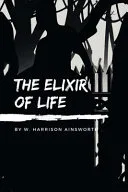
The Elixir of Life
 77
77

The Elixir of Life
Ainsworth's "The Elixir of Life" presents an intriguing premise: a man who discovers an immortality draught just as the 17th century begins. The immediate, violent act of killing his grandfather for the potion is a stark, unforgettable opening. The conceit of Auriol Darcy persisting through centuries offers ample opportunity for exploring the psychological toll of endless existence. However, the narrative falters in its later stages, particularly with what the original blurb describes as a "ridiculous schoolboy conclusion." While the initial setup and the exploration of Darcy's prolonged life hold merit, the resolution feels unearned and detracts from the more compelling philosophical questions raised earlier. The work offers an interesting, if flawed, contemplation on the desire for eternal life and its potential burdens.
📝 Description
77
W. Harrison Ainsworth's 2017 novel follows Auriol Darcy's centuries-long existence after drinking an immortality potion.
First published in 2017, The Elixir of Life begins in the early 17th century with Auriol Darcy. He inherits a potion that grants immortality from his grandfather, Dr. Lamb. After a mortal injury, Darcy consumes the elixir, initiating a saga that unfolds over many lifetimes. The narrative then follows Darcy as he experiences the world across vast stretches of time.
The story appeals to readers who enjoy speculative fiction grounded in historical settings. It examines the philosophical questions surrounding extreme longevity. Those interested in how an extended lifespan might alter a person's perspective on time, human connection, and their place in the world will find this work engaging. It is a tale that mixes historical detail with supernatural concepts.
Ainsworth's novel engages with the age-old alchemical quest for the elixir vitae, a substance believed to grant long life or eternal youth. This pursuit was central to Renaissance Hermeticism and Rosicrucian thought, where alchemists sought not only to transmute metals but also to achieve spiritual perfection and physical longevity. The narrative extrapolates the psychological and societal effects of achieving such a state, moving beyond the purely material or spiritual aims of historical alchemy into its implications for the individual consciousness.
💡 Why Read This Book?
• Grasp the alchemical pursuit of immortality through the specific narrative of Auriol Darcy obtaining the "Elixir of Life" at the dawn of the 17th century. • Contemplate the psychological ramifications of extreme longevity by examining how Darcy's character might evolve over hundreds of years. • Engage with a narrative that, while published in 2017, harkens back to the esoteric and scientific curiosities prevalent around the year 1600.
⭐ Reader Reviews
Honest opinions from readers who have explored this book.
❓ Frequently Asked Questions
What is the primary subject matter of 'The Elixir of Life'?
The book centers on Auriol Darcy's discovery of an immortality potion from his grandfather, Dr. Lamb, at the beginning of the 17th century, and his subsequent centuries-long existence.
When was 'The Elixir of Life' originally published?
W. Harrison Ainsworth's 'The Elixir of Life' was first published on June 16, 2017.
What historical period does the story begin in?
The narrative commences at the dawn of the 17th century, around the year 1600.
Who are the main characters introduced at the start of the book?
The principal characters at the outset are Auriol Darcy, the recipient of the elixir, and his grandfather, the mysterious Dr. Lamb.
What is the core conflict or premise of the story?
The core premise involves the acquisition and consumption of an elixir granting eternal life, and the subsequent experiences of the immortal protagonist across vast periods of time.
Does the book explore the philosophical implications of living forever?
Yes, the narrative explores the potential psychological and existential consequences of Auriol Darcy's extended existence across centuries.
🔮 Key Themes & Symbolism
The Burden of Immortality
The narrative grapples with the profound existential weight of Auriol Darcy's unnaturally extended life. Surviving centuries, as initiated by his consumption of the elixir shortly after the 17th century began, forces a contemplation of human connection, societal change, and the potential for profound detachment from the transient world. The work explores whether unending existence is a gift or a curse, examining the psychological toll of outliving generations and witnessing epochs unfold.
Alchemical Quest and its Consequences
At its heart, the story is a modern take on the ancient alchemical pursuit of the elixir vitae. The discovery by Dr. Lamb and subsequent appropriation by his grandson, Auriol Darcy, serves as the catalyst. This theme studies the dangerous allure of forbidden knowledge and the often unforeseen and dire consequences that accompany tampering with natural laws, especially when the quest for life extension leads to violence at its inception around 1600.
Perception of Time and History
Living across centuries fundamentally alters one's perception of time and historical progression. Auriol Darcy's perspective, spanning from the early 17th century to the present day (as of the 2017 publication), offers a unique vantage point on human history. The work examines how memory, identity, and understanding of the world warp when one is a constant observer of change, out of sync with the natural rhythm of life and death.
The Nature of Humanity
By extending Auriol Darcy's life far beyond natural limits, the novel invites an examination of what it truly means to be human. Does immortality erode empathy, alter moral compasses, or lead to a philosophical detachment from the struggles and joys of mortal life? The narrative probes whether the essence of humanity is tied to its finitude, and what becomes of the soul when the body endures indefinitely.
💬 Memorable Quotes
Direct passages from the work, attributed to the author.
“Auriol Darcy found himself still alive, centuries later.”
— This expresses the core premise: the protagonist's continued existence across vast spans of time, a direct consequence of consuming the elixir he obtained around the year 1600.
“The elixir granted life, but at what cost?”
— This rhetorical question highlights the central thematic tension of the work, questioning whether the benefits of eternal life outweigh the potential psychological and existential burdens.
“The 17th Century was just the beginning of his long watch.”
— This positions the initial setting not as an endpoint, but as the starting point for an unimaginably protracted existence, framing Darcy's immortality as a long, potentially isolating, vigil.
“Dr. Lamb's mysterious discovery promised more than mere longevity.”
— This suggests that the elixir's properties may extend beyond simple life extension, hinting at deeper, perhaps esoteric, powers or implications tied to Dr. Lamb's alchemical work.
💡 Key Ideas
Editorial paraphrase of the work's core concepts — not direct quotes.
He killed his grandfather, Dr. Lamb, and drank the elixir.
This stark paraphrase captures the violent genesis of Auriol Darcy's immortality, establishing a dark precedent for his unnatural longevity initiated at the dawn of the 17th century.
🌙 Esoteric Significance
Tradition
The work engages with the Hermetic tradition's long-standing interest in the elixir vitae, a concept central to alchemy. While not a direct treatise on Hermetic principles, it fictionalizes the ultimate alchemical goal: the attainment of immortality. It departs from strict Hermetic doctrine by focusing on the narrative consequences rather than the spiritual or philosophical path to achieving such a state, presenting it as a tangible substance obtained through discovery rather than inner transformation.
Symbolism
The "Elixir of Life" itself is the primary symbol, representing not just physical immortality but also the ultimate desire for control over one's destiny and the natural order. Dr. Lamb, the grandfather, can be seen as a symbolic figure of the alchemist or wise elder who possesses hidden knowledge, while Auriol Darcy embodies the seeker who violently appropriates this power. The transition from the 17th century to later eras symbolizes the passage of time and the changing world against which immortality is measured.
Modern Relevance
In contemporary esoteric circles, "The Elixir of Life" speaks to modern interpretations of alchemy and longevity practices. Thinkers exploring biohacking, transhumanism, and the philosophical implications of life extension find parallels in Ainsworth's exploration of an individual grappling with centuries of existence. The narrative serves as a fictional case study for discussions on consciousness, memory, and the potential psychological impact of overcoming biological limitations, relevant to both philosophical inquiry and emerging spiritual technologies.
👥 Who Should Read This Book
• Students of speculative fiction who appreciate narratives blending historical settings with fantastical elements, particularly those interested in the concept of immortality. • Readers exploring philosophical themes of time, consciousness, and the human condition, who are drawn to thought experiments about extended lifespans. • Individuals with an interest in the historical context of alchemy and esoteric pursuits around the 17th century, seeking fictionalized explorations of such themes.
📜 Historical Context
W. Harrison Ainsworth's "The Elixir of Life" (2017) taps into enduring fascinations with longevity that echo through centuries of Western thought. Its initial setting around the turn of the 17th century places it within a period of intense alchemical and proto-scientific exploration. Thinkers like Giordano Bruno were active, and the Rosicrucian manifestos began appearing in the early 1600s, fueling public interest in secret knowledge and transformative substances. This era was a fertile ground for ideas about life extension, mirroring the alchemical quests for the Philosopher's Stone. While Ainsworth's narrative is fictional, it engages with the historical milieu where such speculative ideas about life-giving elixirs were not entirely confined to fantasy. It's worth noting that contemporaries like Robert Fludd were deeply involved in esoteric philosophy and the sciences, providing a conceptual backdrop for such discoveries, though they did not produce narratives of this specific kind.
📔 Journal Prompts
Auriol Darcy's violent acquisition of the elixir.
The psychological toll of centuries of existence.
Dr. Lamb's role as the originator of the elixir.
Perception of time for an immortal being.
The contrast between the 17th century and later eras.
🗂️ Glossary
Elixir of Life
A mythical or legendary potion, often associated with alchemy, believed to grant longevity or immortality to whoever drinks it. In the book, it is the substance discovered by Dr. Lamb.
Auriol Darcy
The protagonist of the novel who consumes the Elixir of Life, thereby achieving unnaturally extended longevity from the early 17th century onwards.
Dr. Lamb
The grandfather of Auriol Darcy and the discoverer of the Elixir of Life. His fate is directly tied to the protagonist's acquisition of the potion.
17th Century
The historical period beginning in 1601 and ending in 1700, serving as the initial setting for the story and the era in which the Elixir of Life is discovered and first used.
Longevity
The condition of having a long life. In the context of the book, it refers to the unnatural, extended lifespan granted by the Elixir of Life.
Alchemy
An ancient practice involving the transmutation of matter, often associated with the search for the Philosopher's Stone and the Elixir of Life. The discovery in the book is framed within this tradition.
Protagonist
The main character of a story. In this novel, Auriol Darcy is the central figure whose journey through centuries of life is chronicled.