You Are a Medium
 73
73

You Are a Medium
Sherrie Dillard's "You Are a Medium" attempts to democratize spiritual communication, a noble goal. Her central concept of "medium types," while potentially simplifying complex individual abilities, offers a concrete starting point for novices. The quiz, a key element, effectively guides readers to identify their primary psychic channel, which is a strength. However, the book sometimes leans towards a generalized, almost self-help tone, which may not satisfy those seeking deeper esoteric theory. A passage discussing the "clairs" (clairvoyance, clairaudience, etc.) as distinct yet interconnected aspects of mediumship is particularly well-explained for beginners. Ultimately, "You Are a Medium" serves as a functional primer for nascent mediums.
📝 Description
73
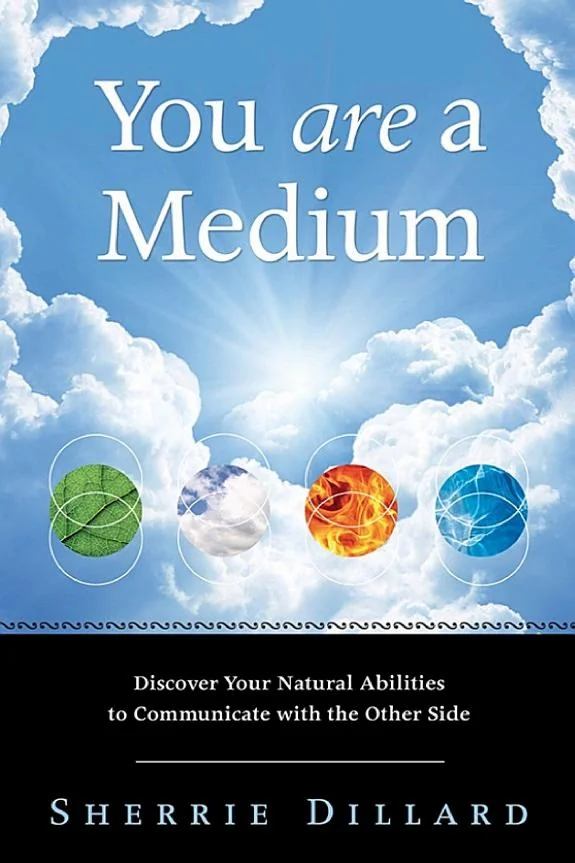
Sherrie Dillard published 'You Are a Medium' in 2013 to demystify spirit communication.
Sherrie Dillard's 2013 book, 'You Are a Medium,' presents a structured method for developing psychic and mediumistic abilities. Dillard frames spirit communication as a natural human capacity, accessible to anyone, rather than an extraordinary talent. Drawing on her own extensive experience, she guides readers through a process of self-discovery and practical skill-building. The book is intended for individuals drawn to spiritual communication but uncertain about their specific gifts or how to nurture them. It offers clarity for those new to psychic phenomena and provides methods for people who have experienced intuition to use it more effectively. Anyone interested in exploring their own mediumistic potential, regardless of their background, can find practical advice within its pages. The exercises are designed for consistent practice and mindful attention to subtle energies, fostering gradual development.
Published in 2013, 'You Are a Medium' entered a period of sustained public interest in spirituality and personal growth. Dillard's approach offers a practical, accessible guide to mediumship, distinguishing itself from more academic or formal spiritualist teachings. It caters to a contemporary interest in direct spiritual experience and personal psychic development, providing a framework for understanding innate abilities within a spiritual context.
💡 Why Read This Book?
• You will learn to identify your unique "medium type" using Dillard's specialized quiz, gaining clarity on how your personal psychic abilities manifest, a concept introduced early in the book. • You will discover practical, type-specific exercises designed to hone your intuitive and spiritual communication skills, moving beyond abstract notions to tangible practice. • You will gain confidence in your natural psychic capacity by understanding the foundational principles Dillard outlines, fostering a belief in your inherent ability to connect with the Other Side.
⭐ Reader Reviews
Honest opinions from readers who have explored this book.
❓ Frequently Asked Questions
What is a medium type according to Sherrie Dillard?
Sherrie Dillard categorizes individuals into distinct "medium types" based on their primary psychic senses, such as clairvoyance or clairaudience. The book provides a quiz to help readers identify their dominant type.
How does "You Are a Medium" help develop psychic abilities?
The book offers specific exercises and techniques tailored to each identified "medium type." These are designed to strengthen a reader's natural intuitive and mediumistic capacities through focused practice.
Is this book suitable for absolute beginners in mediumship?
Yes, "You Are a Medium" is written for those new to psychic development and spiritual communication. It aims to demystify the process and provide a clear, step-by-step guide to understanding one's abilities.
What is the core message of "You Are a Medium"?
The core message is that everyone possesses natural psychic abilities and the capacity for mediumship. Dillard's aim is to empower readers to discover, understand, and develop these innate gifts.
When was "You Are a Medium" first published?
Sherrie Dillard's "You Are a Medium" was first published on December 8, 2013.
What is the difference between psychic ability and mediumship as presented in the book?
While related, the book suggests psychic ability is broader, involving intuition and inner knowing. Mediumship specifically refers to the ability to communicate with spirits or the Other Side, often utilizing one's psychic senses.
🔮 Key Themes & Symbolism
Identifying Your Medium Type
The central premise is that individuals receive spiritual guidance through specific primary channels, termed "medium types." Dillard's quiz helps readers pinpoint whether they are primarily clairvoyant, clairaudient, clairsentient, or claircognizant. This categorization aims to explain the often-vague experience of psychic impressions, offering a framework for understanding how one naturally interacts with non-physical information and spirits.
Developing Natural Psychic Abilities
Rather than presenting mediumship as an extraordinary talent, the book emphasizes it as an inherent human capacity. It provides a series of exercises and techniques, specifically designed to nurture and strengthen the reader's identified "medium type." The focus is on consistent practice and mindful awareness to cultivate these subtle skills effectively.
Communication with the Other Side
The work guides readers on how to establish and maintain contact with loved ones and guides on the "Other Side." It offers practical advice on interpreting messages, discerning authentic spiritual contact from imagination, and building confidence in one's ability to communicate across the veil.
Self-Awareness and Intuition
A significant aspect of the book involves cultivating self-awareness regarding one's intuitive processes. By understanding how psychic information is received and processed through their specific "medium type," readers are encouraged to trust their inner knowing and develop a more profound connection with their own intuition.
💬 Memorable Quotes
Direct passages from the work, attributed to the author.
“Your psychic abilities are natural gifts, not something you have to develop from scratch.”
— This statement underscores Dillard's core philosophy: mediumship is an inherent human trait. It encourages readers to validate their existing intuitive experiences and approach development with confidence, seeing it as refinement rather than creation.
“Understanding your medium type is the first step to effective communication.”
— This highlights the importance of self-knowledge within Dillard's framework. By identifying how one primarily receives spiritual information, the path to clearer communication with the Other Side becomes more focused and manageable.
“The quiz in this book will help you discover how you naturally receive spiritual information.”
— This directly points to a key tool within the book. It promises a practical, diagnostic element that serves as the foundation for the subsequent guidance and exercises offered to the reader.
“Spiritual communication requires practice, just like any other skill.”
— This interpretation emphasizes the practical, disciplined approach advocated by Dillard. It frames mediumship not as passive reception but as an active skill that can be improved through dedicated effort and consistent application.
“You can learn to discern messages from spirit guides and loved ones.”
— This provides reassurance and a practical goal for the reader. It suggests that the book offers methods for distinguishing genuine spiritual communication from other mental phenomena, fostering trust in the process.
🌙 Esoteric Significance
Tradition
While not strictly adhering to a single esoteric lineage, "You Are a Medium" draws heavily from the modern popularization of mediumship, which has roots in 19th-century Spiritualism. It aligns with a broader contemporary esoteric current focused on personal empowerment and direct experience of the divine or spiritual realms, often integrating psychological concepts with metaphysical ideas. It departs from more ritualistic or dogmatic traditions by emphasizing innate ability and accessible self-development.
Symbolism
The primary symbolic motif is the "medium type" itself, representing the unique energetic signature and perceptual channel of an individual's spiritual interaction. The "Other Side" functions as a symbolic representation of a non-physical reality or consciousness accessible through specific means. The quiz acts as a symbolic key, unlocking the reader's personal pathway to this realm, representing self-discovery.
Modern Relevance
This work remains relevant to contemporary practices in intuitive development, energy healing, and modern witchcraft, which often incorporate elements of psychic perception and spiritual communication. Thinkers and practitioners focused on "psychic hygiene" and the practical application of intuition in daily life often find Dillard's foundational approach valuable for beginners seeking structure.
👥 Who Should Read This Book
• Individuals curious about their own intuitive or psychic potential who feel uncertain where to begin their exploration. • Seekers who have experienced unexplained intuitive flashes or premonitions and want to understand and harness these abilities more consciously. • Those interested in communicating with deceased loved ones or spirit guides but prefer practical, self-guided methods over formal séances or established spiritualist churches.
📜 Historical Context
Sherrie Dillard's "You Are a Medium" emerged in 2013, a period characterized by a broad public engagement with spirituality and personal development, often outside traditional religious structures. The rise of the internet facilitated the dissemination of such ideas, making accessible guides like Dillard's popular. This era saw a continuation of trends from the late 20th century, where figures like Sylvia Browne and James Van Praagh had already popularized mediumship for a mass audience. Dillard’s approach, focusing on classifying individuals into "medium types" via a quiz, offered a self-help oriented framework that distinguished itself from the more formal séances and evidential mediumship practices associated with the Spiritualist movement that gained prominence in the mid-19th century. While not directly engaging with academic spiritualism, the book reflects a broader cultural interest in bridging the material and spiritual realms, a theme explored by thinkers like Carl Jung in his work on synchronicity and archetypes.
📔 Journal Prompts
Reflect on your dominant "medium type" and how it manifests in everyday intuition.
Analyze the specific exercises for your identified medium type and their impact on your practice.
Consider the concept of "the Other Side" as presented by Dillard and its personal significance.
Explore the difference between generic intuition and direct spiritual communication as described in the book.
Identify one concrete step you can take this week to develop your psychic abilities based on Dillard's advice.
🗂️ Glossary
Medium Type
A categorization of an individual's primary psychic sense or channel through which they receive spiritual information, such as clairvoyance or clairaudience.
The Other Side
A term used to describe the non-physical realm or dimension inhabited by spirits, guides, and deceased loved ones, accessible through mediumship.
Clairvoyance
The psychic ability to see visions, images, or symbols that represent information from the spirit world or future events.
Clairaudience
The psychic ability to hear sounds, voices, or messages from the spirit world or inner guidance.
Clairsentience
The psychic ability to feel emotions, physical sensations, or energetic impressions from spirits or the environment.
Claircognizance
The psychic ability to simply know information without a clear sensory input, often perceived as a strong gut feeling or sudden understanding.
Spirit Guides
Non-physical beings who offer guidance, support, and wisdom to individuals throughout their lives, often communicating through intuition or psychic means.
This book appears in 1 collection
🔮 Readers Also Liked
Browse all →









From the “Intuition Development” Collection
View all →

More Free Occult Philosophy Books
View all →