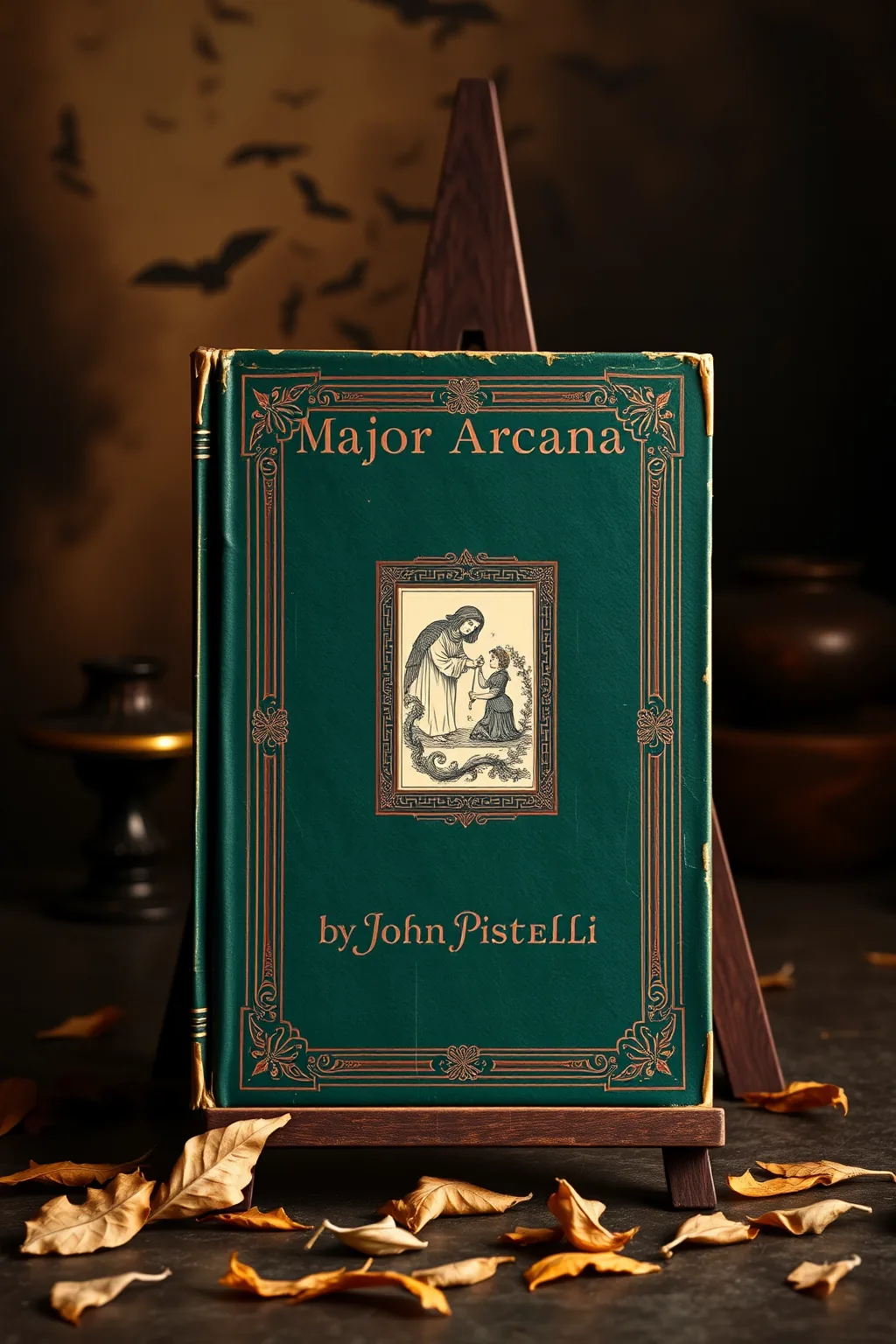
Major Arcana
 79
79

Major Arcana
John Pistelli’s "Major Arcana" opens with a stark, unforgettable image: a student’s public suicide on a university campus in 2025, a detonation of despair whose ripples expand across fifty years of American life. The novel’s ambition is evident in its dual protagonists: Simon Magnus, a comic-book writer turned gender activist and linguistic innovator, and Ash del Greco, an online occultist whose youthful precocity hints at deeper engagements with the arcane. Pistelli’s prose, particularly in its exploration of Simon’s linguistic deconstructions, possesses a virtuosic quality, demonstrating a keen ear for the cadences of cultural transformation. However, the narrative’s sheer scope occasionally threatens to overwhelm its emotional core. The passage detailing Ash’s early occult studies, while intellectually stimulating, sometimes feels detached from the immediate human drama. Nevertheless, "Major Arcana" is a significant, if demanding, work that grapples with the defining anxieties of our recent past and present.
Verdict: A challenging yet rewarding exploration of culture, identity, and belief in late 20th and early 21st century America.
📝 Description
79
John Pistelli's 2025 novel begins with a student's public suicide.
John Pistelli's "Major Arcana" starts in 2025 with a university student's public suicide. This event triggers a sweeping look at fifty years of American history, following the lives of two fictional characters. Their personal paths and their effect on culture and awareness frame a generation's experience. The book is for readers who like dense prose and ambitious stories. It appeals to those interested in literary fiction that examines American history, culture, and the occult. Readers looking for character-focused stories that wrestle with identity, belief, and social change will find "Major Arcana" especially worthwhile.
The narrative covers roughly 1975 to 2025, a time of major changes in technology, politics, and public discussion. It touches on the internet's growth, the development of identity politics, and shifts in media and popular culture. The book fits into a contemporary literary vein that questions American identity and its problems, showing how individual lives connect with larger historical trends and technological advances.
The novel engages with occult traditions, particularly through the concept of 'transfiguration.' This idea suggests a fundamental shift in personal or cultural being, achievable through various means like art, activism, or actual occult practice. The book traces how these forces, often operating outside mainstream recognition, shape individual lives and broader societal movements. It positions these esoteric currents as significant factors in understanding contemporary American experience.
💡 Why Read This Book?
• Gain insight into the transformative power of language and activism through the character of Simon Magnus, exploring how individuals shape cultural narratives in the late 20th century. • Understand the influence of online occultism and digital subcultures on contemporary belief systems, as depicted through Ash del Greco’s character arc. • Experience a literary examination of American history from 1975 to 2025, witnessing how personal lives intersect with major societal shifts and technological advancements.
⭐ Reader Reviews
Honest opinions from readers who have explored this book.
❓ Frequently Asked Questions
What is the central event that triggers the narrative in John Pistelli's Major Arcana?
The narrative is initiated by a student's public suicide on a university campus in 2025. This tragic event serves as the catalyst that expands the story's scope to encompass five decades of American history and the lives of its central characters.
Who are the two main characters in Major Arcana?
The two principal characters are Simon Magnus, a comic-book writer who evolves into a gender activist and linguistic innovator, and Ash del Greco, an online occultist who demonstrates a profound early engagement with esoteric practices.
What historical period does Major Arcana cover?
The novel's narrative spans approximately fifty years of American history, roughly from 1975 to the present day (2025), examining the cultural and social transformations within this timeframe.
What does the title Major Arcana refer to in the context of the book?
The title "Major Arcana" likely alludes to the Major Arcana cards of the Tarot, suggesting themes of significant life events, archetypal journeys, and profound spiritual or psychological transformations experienced by the characters.
What kind of literary style can readers expect from John Pistelli's Major Arcana?
Readers can expect a dense, layered, and ambitious literary style. Pistelli's prose is noted for its intellectual rigor, its engagement with complex themes, and its ability to capture the nuances of cultural and personal change.
Does Major Arcana explore occult or esoteric themes?
Yes, the book prominently features an online occultist character, Ash del Greco, and explores themes related to belief, spirituality, and esoteric practices within the context of contemporary culture and history.
🔮 Key Themes & Symbolism
Cultural Transfiguration
The novel examines how cultural landscapes are reshaped by influential figures and movements. It tracks the journey of Simon Magnus from comic-book creator to a figure transfiguring popular culture and language through his activism. This theme explores the mechanisms of cultural evolution, how ideas gain traction, and how individuals can become agents of significant societal change, reflecting broader shifts in media and identity politics from the late 20th century onwards.
Digital Occultism and Belief
"Major Arcana" examines the world of online occultism through the character of Ash del Greco. It investigates how individuals engage with esoteric knowledge and practices in the digital age, questioning the nature of belief, community formation, and spiritual seeking in an increasingly interconnected yet fragmented world. This theme contrasts traditional occult lineages with contemporary online manifestations, highlighting how technology shapes spiritual expression and the search for meaning.
Narrative and Identity Construction
The book explores how personal and collective identities are constructed through narratives, both fictional and historical. The protagonists, Simon and Ash, actively shape their own stories and influence how others perceive reality. This theme is central to understanding the novel's engagement with media, activism, and esoteric thought, showing how storytelling becomes a tool for self-definition and cultural commentary across fifty years of American experience.
The Impact of Catastrophe
Initiated by a student's public suicide in 2025, the novel uses this catastrophic event as a lens to examine fifty years of history. It investigates the ripple effects of tragedy, both personal and societal, and how such moments can expose underlying cultural tensions or catalyze profound change. This theme connects the individual act of despair to broader historical narratives and psychological undercurrents within American society.
💬 Memorable Quotes
Direct passages from the work, attributed to the author.
“A student's public suicide on a university campus.”
— This opening line establishes the novel's inciting incident, a stark act of despair that serves as the narrative's catalyst, immediately signaling a focus on profound societal and personal crisis.
“Simon Magnus, a comic-book writer who transfigured popular culture turned gender activist who transfigures the English language.”
— This description highlights Simon's evolution and impact, portraying him as a force of change who reshapes not only cultural norms but the very fabric of communication through his activism and linguistic innovation.
“Ash del Greco, an online occultist who by the age of 20 has seen to...”
— This introduces Ash, emphasizing his precocious engagement with occultism in the digital sphere, suggesting a character deeply involved with esoteric knowledge and its modern manifestations before reaching full adulthood.
“The blast radius of this tragic explosion expands to encompass 50 years of our history.”
— This metaphor illustrates the novel's expansive scope, indicating that the initial tragic event has far-reaching consequences, connecting individual tragedy to the collective historical experience of half a century.
“Perhaps the elusive great American novel for the twenty-first century.”
— This appraisal suggests the book's ambition to capture the zeitgeist of contemporary America, aiming for a comprehensive and insightful portrayal of the nation's cultural and psychological landscape in the 21st century.
🌙 Esoteric Significance
Tradition
The work engages implicitly with Hermetic and Gnostic traditions, particularly through its exploration of hidden knowledge, symbolic language, and the potential for personal gnosis. The title itself, "Major Arcana," directly references the archetypal cards of the Tarot, a key tool in Western esoteric practice. Pistelli's novel can be seen as a contemporary fictional exploration of these archetypes, mapping them onto modern American life and the digital age, departing from traditional divinatory or purely ritualistic applications to examine their psychological and cultural resonance.
Symbolism
The "Major Arcana" cards themselves serve as potent symbols, representing significant life lessons, spiritual initiations, and archetypal forces. The novel likely employs motifs associated with these cards—such as The Fool, The Magician, or The High Priestess—to signify character development, key moments, or underlying spiritual dynamics. The act of "transfiguration," applied to both language and culture, functions symbolically as a alchemical process of transformation, mirroring esoteric quests for enlightenment or radical change.
Modern Relevance
Contemporary thinkers and practitioners in fields like digital humanities, critical theory, and modern occultism can draw parallels from "Major Arcana." The novel's examination of online communities, identity formation, and the intersection of technology with esoteric belief appeals to current discussions on the future of spirituality and the impact of the internet on human consciousness. It provides a fictional framework for understanding how ancient symbolic systems are reinterpreted and practiced in the 21st century.
👥 Who Should Read This Book
• Readers interested in contemporary American literature that engages with cultural critique and historical sweep, particularly those who appreciate ambitious, character-driven narratives. • Individuals exploring the intersection of identity, activism, and linguistic theory, as exemplified by the character Simon Magnus. • Those curious about the evolution of occultism and belief systems in the digital age, as depicted through the character Ash del Greco and his online practices.
📜 Historical Context
Published in 2025, John Pistelli's "Major Arcana" arrives during a period characterized by intense digital saturation, identity politics, and a questioning of established narratives. The novel's fifty-year span, from roughly 1975 to 2025, encompasses the decline of analog culture, the rise of the internet, and the subsequent reshaping of communication, community, and belief. It engages with the intellectual currents of postmodernism, queer theory, and the burgeoning interest in esoteric traditions as counterpoints to secular materialism. The work situates itself within a literary landscape where authors like Don DeLillo explored media saturation and Thomas Pynchon experimented with complex, often conspiratorial, narratives. "Major Arcana" grapples with the legacy of these concerns, offering a unique perspective on how cultural forces and individual lives intertwine in the late 20th and early 21st centuries, particularly concerning the evolving understanding of gender and spirituality.
📔 Journal Prompts
Simon Magnus's transfiguration of the English language.
Ash del Greco's engagement with online occultism by age 20.
The fifty-year historical arc initiated by the 2025 campus suicide.
The concept of a "blast radius" in relation to cultural impact.
The dual nature of Simon Magnus as cultural and linguistic transformer.
🗂️ Glossary
Major Arcana
The set of 22 trump cards in a Tarot deck, representing significant archetypal figures and life lessons. In the novel's context, it suggests themes of profound personal and cultural transformation.
Transfiguration
A profound change in form or appearance. In the novel, it applies to cultural influence, linguistic structures, and personal identity, suggesting a radical metamorphosis driven by individuals or movements.
Online Occultist
An individual who practices or studies occult traditions primarily through digital platforms and communities, engaging with esoteric knowledge via the internet.
Gender Activist
An individual who advocates for the rights and social acceptance of diverse gender identities, often challenging traditional norms and promoting equality.
Linguistic Innovation
The creation or significant alteration of language, including vocabulary, grammar, or semantic usage. The novel explores this through a character who actively reshapes communication.
University Campus Suicide (2025)
The specific, public act of self-harm by a student on a university campus in the year 2025, serving as the narrative's initiating event and point of historical divergence.
Blast Radius
The area affected by an explosion. Metaphorically used in the book to describe the far-reaching consequences of a tragic event, extending across fifty years of history.