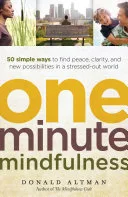
One-Minute Mindfulness
 72
72

One-Minute Mindfulness
Donald Altman’s "One-Minute Mindfulness" attempts to distill the potent practice of present-moment awareness into bite-sized, actionable units, a commendable goal for our perpetually distracted age. Its primary strength lies in its radical accessibility; the "one-minute" framing genuinely lowers the barrier to entry for those intimidated by longer meditation sessions. Altman’s focus on integrating these micro-practices into mundane moments—dealing with a difficult coworker, managing parental frustration—is particularly effective. However, the book occasionally risks oversimplification. While the intent is to make mindfulness practical, some sections could benefit from a deeper exploration of the psychological underpinnings, rather than relying solely on the assertion that brief practice yields profound results. For instance, the discussion around "bad habits" feels somewhat superficial without a more thorough examination of habit formation and the cognitive processes involved. Despite this limitation, the work offers a valuable entry point for beginners seeking immediate stress relief.
📝 Description
72
Donald Altman's 2011 book, "One-Minute Mindfulness," offers brief, actionable techniques for daily awareness.
Donald Altman's "One-Minute Mindfulness" presents practical methods for integrating awareness into everyday moments. Unlike intensive retreats, this book focuses on micro-practices that can be used during times of stress or distraction. Altman aims to make mindfulness accessible to everyone, regardless of prior experience with meditation or Buddhist psychology. The strategies require little time but can lead to noticeable changes in perception and emotional control.
This guide is for people facing the pressures of modern life, including demanding jobs, family duties, or ingrained personal habits. It caters to those who find traditional meditation too time-consuming or abstract. Anyone looking for a straightforward, secular way to reduce stress, improve focus, and achieve better emotional balance will find "One-Minute Mindfulness" a useful tool. It is especially suitable for newcomers or those hesitant about starting a mindfulness practice.
Published in 2011, "One-Minute Mindfulness" appeared as mindfulness practices gained wider acceptance in the West. While Vipassanā meditation and its Buddhist psychological roots had been studied for years, Altman's work contributed to the secularization of these methods. It entered a field already shaped by figures like Jon Kabat-Zinn, who popularized secular mindfulness starting in the late 1970s. Altman’s specific focus on "one-minute" applications, emphasizing extreme brevity and immediate, situational use, distinguishes his contribution.
💡 Why Read This Book?
• Gain practical, actionable techniques for immediate stress reduction, specifically through the "micro-practices" highlighted in Donald Altman's 2011 book, allowing you to cultivate calm in just sixty seconds during your workday. • Learn to reframe everyday challenges, such as dealing with "difficult coworkers" or "parenting challenges," as opportunities for mindfulness, directly applying concepts presented in specific sections of the text. • Develop a sustainable mindfulness habit without requiring extensive time commitments, making present-moment awareness achievable even for the busiest individuals, as demonstrated by the book's core "one-minute" philosophy.
⭐ Reader Reviews
Honest opinions from readers who have explored this book.
❓ Frequently Asked Questions
How does "One-Minute Mindfulness" differ from traditional meditation practices?
Unlike traditional meditation that often requires dedicated blocks of time (e.g., 20-30 minutes), "One-Minute Mindfulness" focuses on "micro-practices"—very short exercises designed to be integrated into everyday activities and completed in approximately 60 seconds.
What are some examples of "micro-practices" mentioned in the book?
The book offers techniques like mindful breathing for one minute, focusing on bodily sensations during a simple task like drinking water, or consciously noticing one's surroundings for a brief period to interrupt autopilot thinking.
Is "One-Minute Mindfulness" suitable for absolute beginners?
Yes, the book is explicitly designed for beginners and those who feel overwhelmed by traditional meditation. Its short, practical exercises are intended to be easily understood and implemented without prior experience.
What are the main benefits claimed by Donald Altman for practicing one-minute mindfulness?
Altman suggests benefits such as reduced stress, improved focus, greater emotional regulation, enhanced appreciation for daily life, and a pathway to more consistent mindfulness, even amidst a busy schedule.
Does the book require a specific philosophical or religious background?
No, "One-Minute Mindfulness" presents a secular approach, drawing from Buddhist psychology but making the techniques accessible to people of all backgrounds, focusing on practical application rather than specific doctrines.
When was "One-Minute Mindfulness" first published?
"One-Minute Mindfulness" by Donald Altman was first published on July 20, 2011.
🔮 Key Themes & Symbolism
Micro-Practices for Daily Life
The central theme is the efficacy of extremely brief mindfulness exercises, termed "micro-practices." Donald Altman argues that even sixty seconds of focused awareness can significantly alter one's mental state, offering an antidote to the constant distractions of modern existence. This approach clarifies mindfulness, making it less intimidating than traditional, longer meditation sessions. The book provides concrete examples of how to combine these short practices into mundane activities, transforming routine moments into opportunities for presence and calm. It emphasizes that consistency, even in small doses, is key to cultivating lasting benefits.
Mindfulness as Stress Reduction
Altman positions mindfulness not just as a spiritual path but as a practical tool for managing everyday stress. The book directly addresses common sources of anxiety, such as workplace pressures and family demands, offering specific one-minute interventions. By focusing on present-moment awareness, individuals can learn to detach from ruminative thoughts about the past or future, which often fuel stress. The work suggests that these brief pauses allow for a more balanced emotional response, preventing overwhelm and fostering a sense of control over one's reactions to challenging situations.
Accessible Buddhist Psychology
While rooted in Buddhist psychology, "One-Minute Mindfulness" secularizes and simplifies core concepts for a broad audience. It presents the essence of present-moment awareness, a key component of Buddhist teachings on enlightenment, in a highly accessible format. The book avoids complex philosophical jargon, focusing instead on the practical application of principles like non-judgmental observation and attention training. This secular interpretation allows individuals from diverse backgrounds to benefit from ancient wisdom without needing to adhere to any religious doctrine, making the clear insights of Buddhist meditation widely available.
Overcoming Habitual Patterns
A significant aspect of the book involves using mindfulness to break free from detrimental "bad habits" and automatic thought patterns. Altman explains how our minds often operate on autopilot, leading to repetitive, unhelpful behaviors and anxieties. By practicing brief moments of focused attention, individuals can interrupt these cycles. The "one-minute" interventions serve as "mental resets," allowing for conscious choice rather than reactive behavior. This theme empowers readers to gain greater agency over their habitual responses, fostering self-awareness and facilitating positive behavioral change.
💬 Memorable Quotes
Direct passages from the work, attributed to the author.
“Being fully in the moment is harder than it sounds.”
— This opening sentiment acknowledges the inherent difficulty many face in achieving present-moment awareness, validating the reader's potential struggles with meditation and focus.
“Mindfulness is considered a path to enlightenment in Buddhist psychology.”
— This highlights the profound spiritual potential of mindfulness, framing the practice not merely as stress relief but as a significant element within a larger framework of spiritual development.
“What about the mundane thorns in that path, things like difficult coworkers, parenting challenges, and bad habits?”
— This rhetorical question directly addresses the reader's real-world problems, signaling that the book offers tangible solutions for these specific, common stressors.
“Yet the rewards of present-moment awareness... are so great.”
— This emphasizes the significant positive outcomes achievable through mindfulness, serving as motivation for the reader to engage with the techniques presented in the book.
💡 Key Ideas
Editorial paraphrase of the work's core concepts — not direct quotes.
Donald Altman brings the benefits of mindfulness down to earth and into everyday life.
This paraphrased concept emphasizes the book's core mission: to make the powerful effects of mindfulness practical and applicable to the mundane challenges everyone encounters daily.
🌙 Esoteric Significance
Tradition
While not strictly adhering to a single esoteric lineage, "One-Minute Mindfulness" draws heavily from the practical application of Buddhist psychology, particularly the concept of Vipassanā (insight meditation). It secularizes these ancient techniques, removing them from their religious context to make them universally accessible. This aligns with modern esoteric trends that often deconstruct and re-contextualize traditional spiritual practices for contemporary, often secular, audiences seeking personal growth and psychological well-being.
Symbolism
The primary symbolic element is the "minute" itself – a unit of time representing the immediate present moment. It symbolizes the accessible nature of the practice, suggesting that profound shifts can occur within the smallest increments of our experience. The "thorns" mentioned in the blurb can be interpreted as the obstacles or attachments (to past/future, desires/aversions) that hinder present-moment awareness, which mindfulness techniques aim to gently address and overcome.
Modern Relevance
Altman's work is highly relevant today, resonating with the proliferation of mindfulness apps and corporate wellness programs. Thinkers and practitioners focused on cognitive behavioral therapy (CBT), acceptance and commitment therapy (ACT), and positive psychology often incorporate similar principles of present-moment awareness and emotional regulation. The emphasis on brief, accessible interventions aligns perfectly with the demands of contemporary life, making it a foundational text for anyone seeking practical, secular methods for mental clarity and stress reduction.
👥 Who Should Read This Book
• Busy professionals seeking immediate stress-relief techniques that can be practiced during short breaks or transitions, directly benefiting from the "one-minute" micro-practices. • Parents juggling multiple responsibilities who need simple, effective ways to stay present and manage frustration, applying the book's strategies to "parenting challenges." • Individuals curious about mindfulness but intimidated by traditional meditation, who will find the accessible, secular approach and focus on everyday application highly encouraging.
📜 Historical Context
Published in July 2011, Donald Altman's "One-Minute Mindfulness" arrived amidst a burgeoning popular interest in secular mindfulness practices. This period saw mindfulness, heavily influenced by Buddhist traditions, becoming increasingly integrated into Western psychology and wellness culture. Key figures like Jon Kabat-Zinn had already established mindfulness-based stress reduction (MBSR) programs since the late 1970s, making the concept more mainstream. However, Altman’s work distinguished itself by focusing on extreme brevity – "one-minute" interventions – targeting individuals who felt traditional meditation was too time-consuming. This approach contrasted with the more intensive, longer-form practices often advocated in contemporary wellness circles. The book tapped into a growing demand for quick, accessible stress-management techniques, reflecting a cultural shift towards micro-solutions for complex problems. Its reception was generally positive, aligning with the widespread adoption of mindfulness apps and techniques that began to proliferate in the early 2010s.
📔 Journal Prompts
The "mundane thorns" of daily life and how one-minute mindfulness can address them.
Cultivating present-moment awareness during the "difficult coworker" scenario.
Integrating a sixty-second pause into a routine "bad habit" cycle.
Reflecting on the rewards of present-moment awareness gained from a single minute of practice.
Identifying opportunities for "micro-practices" within a typical day.
🗂️ Glossary
Mindfulness
The practice of paying attention in a particular way: on purpose, in the present moment, and non-judgmentally. It involves cultivating awareness of one's thoughts, feelings, bodily sensations, and surrounding environment.
Present-Moment Awareness
The state of being fully conscious and attentive to what is happening right now, rather than dwelling on the past or worrying about the future.
Micro-Practices
Short, highly focused mindfulness exercises designed to be completed in a very brief period, typically around one minute, and integrated seamlessly into daily activities.
Buddhist Psychology
A field that explores the principles and practices of Buddhism, such as mindfulness, meditation, and compassion, and their application to understanding the human mind and alleviating suffering.
Enlightenment
In Buddhist traditions, a state of profound spiritual realization, wisdom, and liberation from suffering, often associated with deep understanding and equanimity.
Autopilot Thinking
A state of mind where thoughts and actions occur automatically, without conscious awareness or intention, often leading to habitual patterns and reduced engagement with the present.
Emotional Regulation
The ability to understand and manage one's own emotional experiences and expressions in ways that are adaptive and constructive.