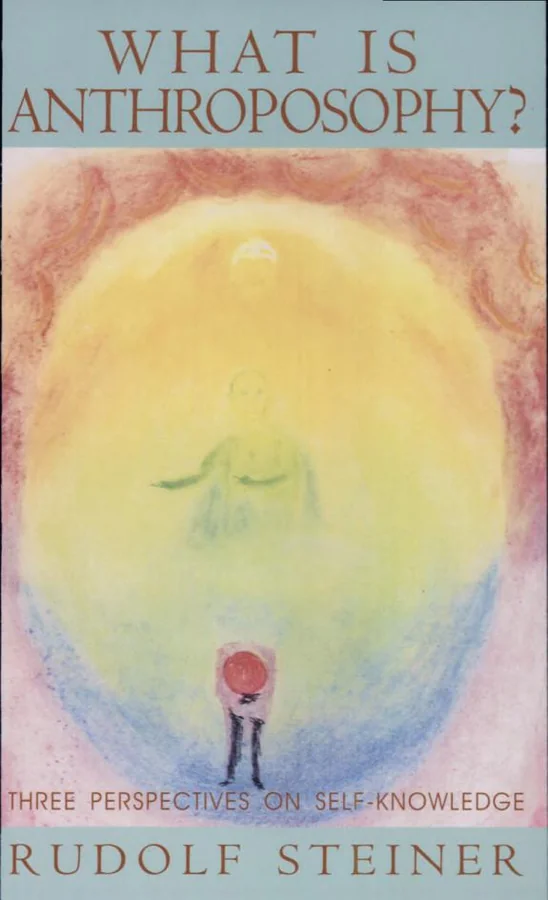
What is Anthroposophy?
 77
77

What is Anthroposophy?
Rudolf Steiner's "What is Anthroposophy?" offers a direct, if demanding, portal into his unique spiritual science. Unlike more polished introductions, these three lectures from 1922 possess an unvarnished directness. Steiner addresses his audience not as neophytes, but as individuals capable of engaging with complex spiritual realities. A notable strength is the clarity with which he defines Anthroposophy as a path of knowledge, accessible through disciplined inner work, rather than a belief system. The conceptual density, however, presents a significant hurdle; readers unfamiliar with Steiner's extensive terminology may find themselves adrift. For instance, the detailed descriptions of the etheric and astral bodies, while central to his cosmology, require considerable effort to grasp without prior exposure. This volume excels at showcasing Steiner's intellectual rigor and his ambition to bridge the spiritual and material worlds, but it is not a gentle introduction. It is a challenging, rewarding encounter for the dedicated student of esoteric thought.
📝 Description
77
Rudolf Steiner delivered three lectures in 1922 that form the basis of "What is Anthroposophy?"
Rudolf Steiner's "What is Anthroposophy?" compiles three lectures given in Dornach, Switzerland, in 1922. These talks lay out the fundamental ideas of his spiritual scientific worldview. Steiner sought to move beyond purely materialist explanations of existence, proposing instead a cosmos rich with psychic and spiritual qualities. He presents humanity as a spiritual being undergoing a developmental process. This work is directed toward individuals looking for a deeper comprehension of human nature and our place in the universe. It addresses those who find traditional scientific or religious frameworks insufficient to answer fundamental questions about life, death, and consciousness. The lectures advocate for a spiritual science accessible through focused inner development rather than solely through faith or established doctrine.
Anthroposophy, as articulated by Rudolf Steiner, emerged in the early 20th century. It developed partly as a reaction to the era's dominant scientific materialism and partly as a divergence from Theosophy. Steiner's lectures in this volume detail his unique path of spiritual research, aiming to establish a connection between the spiritual and physical worlds. He sought to make the spiritual dimension available for conscious investigation, proposing methods of inner development and meditation to achieve this.
💡 Why Read This Book?
• Gain insight into Rudolf Steiner's concept of the 'etheric body,' understanding its role in living processes and how Anthroposophy proposes its investigation, a concept central to his 1922 lectures. • Grasp the Anthroposophical view of karma and reincarnation as developmental forces shaping human destiny, as presented in these foundational talks. • Explore Steiner's vision of a 'spiritual science' capable of objectively studying the supersensible, offering a distinct alternative to purely materialistic or faith-based worldviews.
⭐ Reader Reviews
Honest opinions from readers who have explored this book.
❓ Frequently Asked Questions
What is the primary goal of Anthroposophy as presented by Rudolf Steiner?
The primary goal is to develop a spiritual science that allows for the objective investigation of supersensible realities, fostering human spiritual development and understanding of the cosmos.
When were the lectures in 'What is Anthroposophy?' originally delivered?
The three lectures compiled in this volume were originally delivered by Rudolf Steiner in 1922.
What distinguishes Anthroposophy from Theosophy according to Steiner?
Anthroposophy, as articulated by Steiner, emphasizes a path of individual cognitive development and spiritual research, moving away from some of the more organizational and mythological aspects of Theosophy he previously engaged with.
Does 'What is Anthroposophy?' require prior knowledge of Steiner's work?
While prior knowledge is not strictly mandatory, the book presents complex concepts. Familiarity with Steiner's basic ideas on the human constitution (physical, etheric, astral bodies) can enhance comprehension.
What is the 'spiritual-scientific' method Steiner advocates?
It involves rigorous inner training, meditation, and the cultivation of higher cognitive faculties to perceive and understand spiritual realms and beings objectively.
Where can one find more lectures by Rudolf Steiner from this period?
Many of Steiner's lectures from the early 1920s, including those delivered in Dornach, Switzerland, are available through dedicated Anthroposophical archives and publishers.
🔮 Key Themes & Symbolism
The Human Being as a Spiritual Entity
Steiner posits that humans are not merely physical beings but possess intricate spiritual and soul components. This includes the physical body, the etheric (life) body, the astral (consciousness) body, and the ego (spirit). The lectures explore how these elements interact and evolve through earthly life and subsequent incarnations, emphasizing the spiritual potential inherent in each individual.
Spiritual Science as a Path of Knowledge
Anthroposophy is presented not as dogma but as a rigorous method for investigating the spiritual world. Steiner outlines the necessity of developing specific faculties of perception and cognition through disciplined inner work, akin to scientific training but applied to the supersensible. This 'spiritual science' aims to provide verifiable knowledge of spiritual realities.
Cosmic and Human Evolution
The work touches upon the Anthroposophical understanding of cosmic and human evolution, viewing history as a process driven by spiritual forces and guided by spiritual beings. It introduces concepts like reincarnation and karma as fundamental laws governing this evolutionary unfolding, shaping both individual lives and the trajectory of humanity.
The Nature of the Material World
Steiner challenges a purely materialistic worldview, asserting that the physical world is only one aspect of reality. He discusses how spiritual forces and beings are active within and behind the phenomena we perceive, and how understanding these hidden realities is crucial for a complete picture of existence.
💬 Memorable Quotes
Direct passages from the work, attributed to the author.
“The human being is not only a physical being, but also a being of soul and spirit.”
— This statement captures the core Anthroposophical view of humanity, asserting that our existence transcends the purely biological and material, encompassing higher, non-physical dimensions accessible to conscious awareness.
“Anthroposophy seeks to bring clarity to the spiritual worlds.”
— This highlights Anthroposophy's aim as a knowledge-based discipline, intending to illuminate the nature and workings of the spiritual realms through systematic investigation, rather than relying on blind faith.
“The evolution of humanity is a spiritual process.”
— This interpretation emphasizes Steiner's view that human development is not solely a biological or social phenomenon, but is fundamentally driven by spiritual forces and guided by a cosmic plan.
“We must learn to perceive the spiritual through disciplined inner work.”
— This points to the practical aspect of Anthroposophy, suggesting that accessing spiritual realities requires dedicated effort in developing inner capacities and faculties, similar to scientific training.
“Karma and reincarnation are laws of spiritual development.”
— This frames karma and reincarnation not as mere beliefs, but as fundamental principles governing the continuous unfolding of the human soul across multiple lifetimes.
🌙 Esoteric Significance
Tradition
Anthroposophy, as articulated by Rudolf Steiner, emerges from the Western esoteric tradition, drawing threads from Gnosticism, Hermeticism, and Kabbalah, but forging a distinct path. It positions itself as a 'spiritual science,' aiming for objective, verifiable knowledge of supersensible realms, moving beyond earlier esoteric systems that relied more heavily on initiation, allegory, or mystical experience alone.
Symbolism
While these specific lectures may not delve deeply into overt symbolism, the broader Anthroposophical framework utilizes concepts like the threefold human being (physical, etheric, astral bodies) and the fourfold constitution (including the ego) as symbolic representations of spiritual realities. The idea of cosmic evolution itself functions as a grand symbolic narrative of spiritual descent and ascent.
Modern Relevance
Contemporary thinkers and practitioners in fields ranging from Waldorf education and biodynamic agriculture to integral psychology and consciousness studies draw directly from Steiner's work. His emphasis on the spiritual nature of the human being and the cosmos continues to inform alternative approaches to medicine, art, and social renewal, offering a holistic perspective in an increasingly fragmented world.
👥 Who Should Read This Book
• Students of Western Esotericism seeking to understand a major 20th-century spiritual movement distinct from Theosophy or traditional occult orders. • Individuals interested in Rudolf Steiner's philosophy and its practical applications in education, agriculture, and social renewal. • Philosophers and spiritual seekers questioning purely materialistic explanations of reality and looking for a structured approach to exploring consciousness and the cosmos.
📜 Historical Context
Delivered in Dornach, Switzerland, these three lectures from 1922 represent Rudolf Steiner solidifying his independent spiritual-scientific movement, Anthroposophy, after his departure from the Theosophical Society in 1913. The early 20th century was a period of intense spiritual seeking, with movements like Theosophy gaining significant traction among intellectuals grappling with the perceived limitations of scientific materialism. Steiner's work offered a distinct path, emphasizing rigorous inner development and a phenomenological approach to the supersensible, differentiating it from the more esoteric and mythological orientations of many contemporaries. While the broader reception of Anthroposophy was varied, with some embracing it as a profound spiritual science and others viewing it with skepticism, its influence grew steadily, particularly in educational (Waldorf schools) and agricultural (biodynamic farming) circles, demonstrating its practical application beyond pure theory.
📔 Journal Prompts
Reflect on the distinction between 'physical body' and 'etheric body' as presented in Steiner's lectures.
Consider the implications of viewing human evolution as a spiritual process rather than purely biological.
How does Steiner's concept of 'spiritual science' differ from traditional religious or scientific inquiry?
Explore the role of karma and reincarnation in shaping individual destiny according to Anthroposophy.
What are the potential benefits of developing faculties for perceiving spiritual realities, as suggested by Steiner?
🗂️ Glossary
Anthroposophy
A spiritual philosophy founded by Rudolf Steiner, aiming to understand the human being and the universe through a 'spiritual-scientific' approach, accessible via disciplined inner development.
Etheric Body
In Anthroposophy, the life-force or formative forces that organize the physical body and are responsible for growth, reproduction, and vitality. It is considered the first spiritual body.
Astral Body
The vehicle of consciousness, feeling, and sensation in Anthroposophy. It is considered the second spiritual body, enabling subjective experience and connection to the wider soul-world.
Ego
The core spiritual principle of individuality and self-awareness in Anthroposophy, often referred to as the 'I' or spirit, responsible for conscious moral action and spiritual development.
Karma
The law of cause and effect in Anthroposophy, understood not as fatalistic punishment but as a dynamic principle guiding the soul's evolution through the consequences of past actions across lifetimes.
Reincarnation
The Anthroposophical concept of the soul's repeated earthly lives, through which it learns, develops, and evolves spiritually, guided by the law of karma.
Spiritual Science
Steiner's term for Anthroposophy, emphasizing its basis in rigorous research and verifiable experience of supersensible realities, analogous to natural science but applied to the spiritual realm.