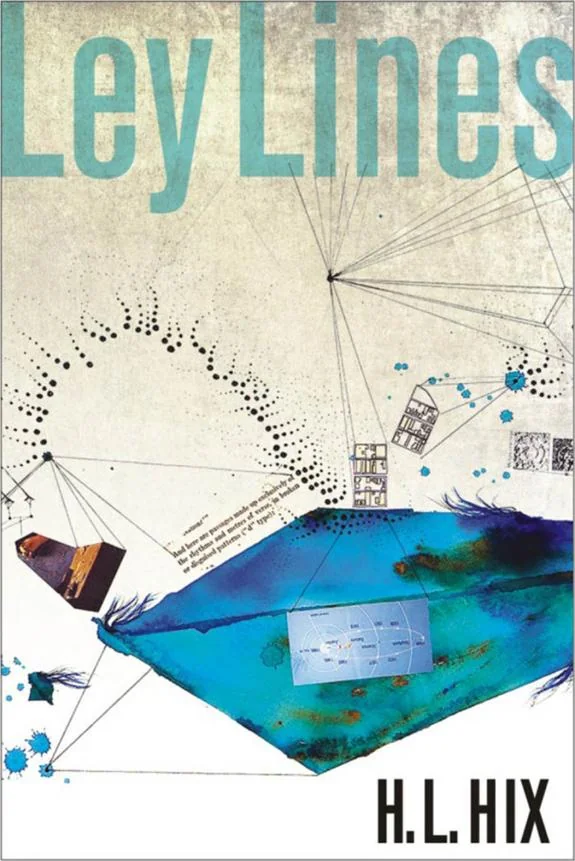
Ley Lines
 83
83

Ley Lines
H. L. Hix's "Ley Lines" attempts a fascinating re-contextualization of ancient geodetic theories into the realm of contemporary art and poetry. The strength of the collection lies in its innovative structure, facilitating direct engagement with creators about their recent works. Witnessing a painter respond to a poet's questions, or vice versa, offers a rare glimpse into the often-insular creative process. However, the metaphor, while intriguing, occasionally strains under the weight of its application. The mapping of 'sacred sites' onto individual artworks can feel more like an imposed framework than an organic discovery. A particularly compelling section involves poet C.D. Wright discussing her book *One With Others* (2010), where her reflections on the marginalized voices in her work, and how they connect to broader social narratives, exemplify the book's potential. Ultimately, "Ley Lines" provides a unique, albeit sometimes uneven, lens through which to view the interconnectedness of modern artistic expression.
📝 Description
83
H. L. Hix's "Ley Lines" maps creative connections between contemporary art and poetry, using an ancient charting concept.
Published in 2014, H. L. Hix's "Ley Lines" reimagines the ancient practice of mapping ley lines. Instead of charting sacred sites or megaliths, Hix identifies contemporary artworks and poems as nodes in a network of creative energy. The book presents dialogues and exchanges between writers and visual artists, drawing unique perspectives from the intersections of different creative disciplines. It appeals to readers interested in the confluence of art, poetry, and the creative process. Those who appreciate contemporary art and literature will find value in understanding how different artistic forms influence one another. The work is also for individuals curious about the mechanisms of creativity and the dialogue between disparate art forms.
This approach reinterprets Alfred Watkins' mid-20th century idea of invisible energy pathways connecting ancient sites. Hix applies this framework to modern art and poetry, a move that aligns with a period of increasing interdisciplinary studies and blended artistic mediums. The book's structure, which includes artists' statements and poets' responses, echoes earlier anthologies that explored the creative process. Hix's specific focus on mapping these connections through the lens of ley lines offers a novel conceptualization of artistic relationships.
The concept of ley lines, popularized by Alfred Watkins, describes invisible energy pathways connecting ancient geographical sites. Hix adapts this framework, applying it metaphorically to the connections found within contemporary artistic and poetic creation. This reinterpretation shifts the focus from terrestrial alignments to conceptual and aesthetic relationships between artworks and verses. It positions creative works as nodes in a network, similar to how ancient sites were seen as points of energetic significance, thus placing the book within a tradition of esoteric thought that seeks hidden patterns and connections in the world.
💡 Why Read This Book?
• Gain insight into the creative process by examining direct dialogues between poets and visual artists, as seen in the exchanges concerning contemporary artworks and recent poetry collections. • Understand how abstract concepts, like the ley line metaphor, can be applied to map connections within contemporary culture, drawing parallels to Hix's 2014 publication. • Explore the intersection of different art forms through specific examples, moving beyond theory to the practical application of artists' statements and poets' responses to their own books.
⭐ Reader Reviews
Honest opinions from readers who have explored this book.
❓ Frequently Asked Questions
What is the core concept behind H. L. Hix's 'Ley Lines'?
The book applies the ancient concept of ley lines, which connect sacred sites, to contemporary art and poetry. It maps conceptual pathways between artworks and poems, using creators' dialogues as the connections.
When was 'Ley Lines' by H. L. Hix first published?
H. L. Hix's 'Ley Lines' was first published on October 22, 2014.
What kind of exchanges does 'Ley Lines' feature?
It includes exchanges between writers and visual artists, featuring poets responding to questions about their books and artists offering statements about their work.
How does 'Ley Lines' differ from traditional ley line studies?
Unlike traditional studies that focus on geographical alignments of ancient monuments, Hix's work uses artworks and poems as 'sacred sites' and creative dialogues as the 'pathways'.
Who is H. L. Hix?
H. L. Hix is an author and educator whose work often explores the intersection of art, poetry, and philosophy. 'Ley Lines' is one of his contributions to contemporary literary and artistic discourse.
What is the primary subject matter of 'Ley Lines'?
The book's primary subject is the exploration of contemporary art and poetry through the lens of interconnectedness, using the ley line metaphor to trace relationships between creative works and their creators.
🔮 Key Themes & Symbolism
Artistic Interconnectivity
The central thesis of 'Ley Lines' posits that contemporary artworks and poems function as nodes within a network, much like ancient sacred sites. Hix draws parallels between geographical alignments and conceptual resonances. The book explores how the dialogue between poets and visual artists, a key feature since its 2014 publication, reveals these hidden pathways. It suggests that understanding these connections offers unique access to the creative process and the underlying currents that link disparate artistic expressions in the modern era.
The Creative Process Unveiled
This anthology offers an intimate look at how artists and poets engage with their own creations and with each other's work. Through direct questioning and reflective statements, the book clarifies the genesis and development of artistic output. It highlights the personal investment and intellectual labor involved, moving beyond abstract appreciation to concrete understanding. The emphasis is on the exchange, demonstrating how external prompts and internal reflection, as evidenced in the dialogues presented, shape the final artistic product.
Reinterpreting Ancient Frameworks
H. L. Hix repurposes the historical concept of ley lines, traditionally associated with earth energies and ancient sites, for a contemporary cultural landscape. This reinterpretation, evident in the 2014 publication, is not about literal geographical paths but about the energetic and conceptual links between modern creative works. It challenges readers to see familiar structures, like the ley line theory, in new contexts, suggesting that ancient wisdom can offer fresh perspectives on current artistic and intellectual endeavors.
Dialogue Across Disciplines
A core element of 'Ley Lines' is the structured conversation between practitioners of different artistic disciplines. The book facilitates a unique form of comparative art studies, where poets dissect their books for visual artists and vice versa. This cross-disciplinary dialogue is crucial for understanding how ideas and aesthetics migrate, influence, and transform across various media, offering a richer appreciation of the complex nature of contemporary creative output.
💬 Memorable Quotes
Direct passages from the work, attributed to the author.
“Ley lines mark alignments of sacred sites... and create pathways between them. This book too marks alignments and creates pathways, but its sacred sites are not monuments, they’re artworks and poems.”
— This foundational statement from the original blurb sets the conceptual stage for the entire book, drawing a direct, yet metaphorical, link between ancient geographical patterns and contemporary artistic connections.
“Its various forms of exchange between writers and artists offer unique access to contemporary art, poetry, and the creative process.”
— This highlights the book's primary value proposition: providing an intimate and direct look into how art is made and understood through the voices of its creators.
“Its various forms of exchange between writers and artists offer unique access to contemporary art, poetry, and the creative process.”
— This emphasizes the book's function as a conduit, offering readers privileged insight into the making of art and verse, grounded in the specific interactions it documents.
“Its various forms of exchange between writers and artists offer unique access to contemporary art, poetry, and the creative process.”
— This succinctly captures the book's innovative approach, framing artistic creations as points on a map and the dialogues as the lines that connect them.
“In this unique anthology, working poets respond to questions about their recent books, painters and other artists offer statements”
— This describes the concrete structure of the book, detailing the specific types of contributions readers can expect from the participating artists and writers.
🌙 Esoteric Significance
Tradition
While not explicitly tied to a singular esoteric lineage like Hermeticism or Kabbalah, 'Ley Lines' engages with a broader tradition of seeking hidden patterns and correspondences in the world. It carries the Gnostic pursuit of hidden knowledge and the Neoplatonic idea of a unified, interconnected reality. The book's approach to mapping connections between seemingly disparate phenomena aligns with esoteric methodologies that seek underlying structures and energetic flows, reinterpreting ancient concepts for a modern, secularized context.
Symbolism
The primary symbolic act in 'Ley Lines' is the repurposing of the 'ley line' itself. Traditionally a symbol of earth energy and ancient sacred geography, here it symbolizes conceptual pathways and aesthetic resonance between modern creative works. The 'sacred sites' are transformed from megaliths into artworks and poems, symbolizing cultural artifacts imbued with creative energy. These symbols represent a shift from the terrestrial and ancient to the intellectual and contemporary, mapping the unseen connections within human creativity.
Modern Relevance
Contemporary thinkers exploring network theory, digital humanities, and interconnectedness in culture draw parallels to Hix's approach. The book's emphasis on dialogue and exchange appeals to current practices in collaborative art and interdisciplinary studies. It speaks to a modern desire to understand how ideas and influences spread in an increasingly complex and mediated world, offering a framework for analyzing cultural production beyond isolated masterpieces, relevant to fields like comparative literature and art criticism.
👥 Who Should Read This Book
• Students of contemporary art and poetry seeking to understand the interconnections between different creative disciplines. • Readers interested in the creative process who want to explore how artists and writers reflect on and discuss their own work. • Individuals fascinated by conceptual frameworks and metaphorical applications, particularly those interested in how ancient ideas can be reinterpreted for modern contexts.
📜 Historical Context
Published in 2014, H. L. Hix's "Ley Lines" emerged in an era of increasing interdisciplinary dialogue within the arts and humanities. The mid-20th century saw a resurgence of interest in ley lines, notably through Alfred Watkins's work, which Hix recontextualizes for contemporary art. This period also featured numerous art and literary anthologies, such as those exploring the Beats or specific artistic movements, aiming to capture the zeitgeist. While Hix's conceptual framework is novel, the practice of artists and writers reflecting on their own work was common, exemplified by figures like John Berger whose essays often bridged visual art and social commentary. The book's reception would have occurred within a landscape where digital platforms were beginning to facilitate more direct artist-audience interaction, making Hix's structured approach to mapping these connections particularly relevant.
📔 Journal Prompts
The concept of 'sacred sites' as artworks and poems.
Mapping the pathways between a poem you've read and a painting you've seen.
Reflecting on the 'alignments' between your own creative interests.
Analyzing the creative process behind a specific piece of art or literature.
The function of 'exchange' in fostering artistic connections.
🗂️ Glossary
Ley Lines
In the context of H. L. Hix's book, these are not literal geographical lines but metaphorical pathways connecting contemporary artworks and poems, representing conceptual or aesthetic relationships.
Sacred Sites
Within this book, the term refers to individual artworks and poems that serve as focal points or nodes within the conceptual network being mapped, analogous to ancient monuments.
Alignment
Represents a connection or resonance between different creative works, identified through the dialogues and statements presented in the anthology, similar to how ancient sites were believed to align.
Exchange
Refers to the dialogues and interactions between writers and artists featured in the book, which form the 'pathways' or connections between the 'sacred sites' (artworks/poems).
Creative Process
The subject of inquiry within the book, explored through the direct reflections and responses of artists and poets regarding their recent works and their creative methodologies.
Anthology
A collection of selected literary works or writings, in this case, focusing on contemporary art and poetry through the lens of interconnectedness.
Contemporary Art
Art produced at the present period, encompassing a wide range of styles and media, which serves as one of the primary 'sites' explored in the book.
This book appears in 1 collection
🔮 Readers Also Liked
Browse all →









From the “Ley Lines” Collection
View all →







More Free Occult Philosophy Books
View all →