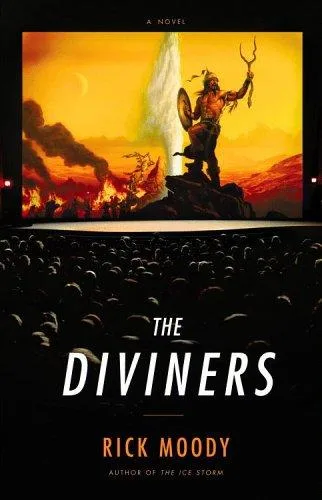
El Arte de La Adivinacion
 72
72

El Arte de La Adivinacion
Scott Cunningham’s "El Arte de La Adivinacion" offers a refreshingly straightforward approach to a subject often shrouded in esotericism. Unlike many contemporary works that lean heavily on complex symbolism or arcane ritual, Cunningham grounds divination in accessible language and practical application. His strength lies in demystifying tools like tarot and runes, presenting them not as oracles of immutable destiny but as mirrors reflecting inner states and potential outcomes. The book’s clarity is particularly evident when discussing the ethical implications of divinatory work, urging readers to approach it with responsibility and self-awareness. However, for those seeking deep dives into the historical or philosophical underpinnings of specific systems, the book might feel somewhat superficial. While it covers a range of methods, it primarily focuses on their utility as personal development tools. The core message is that divination is a dialogue with oneself and the universe, a perspective that, while valuable, may not satisfy the scholar of ancient oracles. Ultimately, it's a valuable primer for the introspective seeker.
📝 Description
72
Scott Cunningham's "El Arte de La Adivinacion" was first published in Spanish in 1993.
This Spanish translation of Scott Cunningham's "The Art of Divination" offers a practical introduction to various fortune-telling methods. Published in 1993, the book frames divination not as a means of predicting a fixed future, but as a tool for self-understanding and spiritual growth.
Cunningham guides readers through historical and practical aspects of divination, making techniques like tarot and runes accessible to newcomers. Experienced practitioners can find a grounded perspective on how these practices can foster personal development and enhance intuition. The work encourages a personal connection with divinatory tools, prioritizing intuitive insight over strict adherence to memorized meanings.
Emphasis is placed on the ethical use of divination and the importance of conscious intention. Cunningham positions these practices as aids to living a more aware life, rather than as systems of rigid fate.
Published in the early 1990s, "El Arte de La Adivinacion" emerged during a period of renewed interest in esoteric subjects and New Age thought. It contributed to a broader movement that sought to demystify occult practices for a wider audience. Unlike more dogmatic approaches, Cunningham offered an accessible method for engaging with spiritual tools. This work appeared alongside popularizations of angelic communication and ceremonial magic, yet it carved its own niche by focusing on personal intuition and grounded spiritual growth through divination.
💡 Why Read This Book?
• Learn to view divination as a tool for self-reflection and personal growth, moving beyond simple fortune-telling, as exemplified by Cunningham's emphasis on intuitive development. • Gain practical, step-by-step guidance on using various divinatory tools, such as tarot and runes, making complex systems approachable for beginners since 1993. • Understand the ethical framework for divination, ensuring responsible practice by recognizing its role in conscious decision-making and personal awareness.
⭐ Reader Reviews
Honest opinions from readers who have explored this book.
❓ Frequently Asked Questions
When was Scott Cunningham's "The Art of Divination" first published?
Scott Cunningham's "The Art of Divination" was first published in 1993, making it a contemporary classic in accessible esoteric literature.
What are the main divination methods discussed in El Arte de La Adivinacion?
The book covers several methods, including tarot, runes, and astrology, explaining their fundamental principles and practical application for personal insight.
Does El Arte de La Adivinacion focus on predicting the future?
No, Cunningham frames divination more as a tool for self-discovery and understanding present energies, rather than a strict prediction of fixed future events.
Is this book suitable for beginners in divination?
Yes, "El Arte de La Adivinacion" is highly recommended for beginners due to its clear language and practical, step-by-step guidance on various techniques.
What is Scott Cunningham's perspective on the ethics of divination?
Cunningham stresses ethical considerations, advocating for responsible use of divination as a means to foster self-awareness and conscious decision-making, not to manipulate or control.
What is the original language of The Art of Divination?
The original work, "The Art of Divination," was written in English. "El Arte de La Adivinacion" is its Spanish translation.
🔮 Key Themes & Symbolism
Intuition as a Primary Tool
Cunningham posits that the most potent aspect of divination lies not in memorized meanings but in the practitioner's intuitive connection with the symbols and energies at play. He encourages readers to develop a personal relationship with their chosen divination tools, suggesting that the 'correct' interpretation often arises from inner knowing rather than strict adherence to external dogma. This perspective is crucial for understanding how practices like tarot reading can evolve from rote learning to a dynamic dialogue with the subconscious and the universe.
Divination for Personal Development
Moving away from fatalistic interpretations, this work frames divination as a pathway to self-awareness and personal growth. The techniques discussed, such as rune casting or astrological interpretation, are presented as methods for understanding current life patterns, identifying challenges, and exploring potential future trajectories. The emphasis is on empowerment, using the insights gained to make more conscious choices and navigate life's complexities with greater understanding and intention.
Ethical Practice in Divination
A significant facet of Cunningham's approach involves the ethical considerations surrounding divinatory practices. He advocates for a responsible stance, urging practitioners to use their insights for constructive purposes and to avoid imposing their will or insights onto others without consent. This ethical framework underscores the idea that divination is a sacred trust, meant to illuminate and guide, not to control or dictate, fostering a respectful engagement with both the tools and the querent.
Accessible Esoteric Knowledge
Scott Cunningham’s writing style is characterized by its clarity and accessibility, a hallmark evident since his earlier works. "El Arte de La Adivinacion" breaks down complex divinatory systems into understandable components, making them approachable for those new to esoteric studies. This democratizing of knowledge, making practices like rune interpretation or basic astrology available to a wider audience, was a significant contribution to the New Age movement of the late 20th century.
💬 Memorable Quotes
Direct passages from the work, attributed to the author.
“Divination is not a tool for seeing the future, but for understanding the present.”
— This highlights Cunningham's core philosophy: that divinatory practices offer insight into current energies and circumstances, enabling informed decisions rather than dictating a fixed destiny.
“The most important divinatory tool is your own intuition.”
— This emphasizes the personal and subjective nature of divination, suggesting that inner guidance is paramount and that learned meanings should be augmented by individual perception.
“Use divination to empower yourself, not to seek permission.”
— This speaks to the ethical use of divination, promoting self-reliance and conscious choice-making based on insights gained, rather than passively waiting for external validation.
“Every symbol has a thousand meanings; choose the one that speaks to you.”
— This encourages a personalized approach to understanding divinatory symbols, valuing individual resonance and intuitive interpretation over rigid, universal definitions.
“Approach divination with respect and a clear intention.”
— This underscores the importance of mindset and purpose when engaging in divinatory practices, advocating for a focused and reverent attitude.
🌙 Esoteric Significance
Tradition
Cunningham's work draws implicitly from a broad stream of Western Esotericism, particularly its modern manifestations influenced by psychological approaches and a focus on personal empowerment. While not strictly adhering to a single lineage like Hermeticism or Kabbalah, it carries the Hermetic principle of 'As Above, So Below' by linking cosmic patterns or symbolic systems to the individual's inner world. It departs from older, more rigid divinatory systems by prioritizing intuitive interpretation and psychological insight over strict adherence to ancient texts or practices.
Symbolism
Within "El Arte de La Adivinacion," symbols from systems like the Tarot and Runes are central. For instance, the Tarot's Major Arcana cards, such as The Fool or The Magician, are presented not just as archetypal figures but as representations of stages in personal development and inner potential. Similarly, Runes, ancient Germanic symbols, are discussed in terms of their elemental and psychological associations, serving as focal points for introspection and understanding life's forces.
Modern Relevance
Cunningham's emphasis on accessible, psychologically informed divination remains highly relevant today. Contemporary practitioners and online communities often cite his work as an entry point into tarot reading, rune casting, and astrology. His approach aligns with modern trends in self-help and mindfulness, where tools for introspection and personal growth are sought. Thinkers and platforms focusing on intuitive development and the integration of spiritual practices into daily life continue to draw upon the foundational principles he laid out.
👥 Who Should Read This Book
• Aspiring practitioners of divination seeking clear, foundational knowledge of methods like tarot and runes, presented without excessive jargon. • Individuals interested in using esoteric tools for personal growth and self-understanding, rather than solely for predictive purposes. • Readers exploring the history and practice of modern esoteric movements who appreciate a grounded, psychologically oriented perspective.
📜 Historical Context
Published in 1993, "El Arte de La Adivinacion" emerged during a period of significant popular engagement with esoteric subjects, often termed the 'New Age' movement. This era saw a proliferation of books aiming to explain practices like astrology, tarot, and Wicca for a broader audience. Cunningham's work fit squarely within this trend, offering a more grounded and psychologically oriented perspective compared to the more ceremonial or dogmatic approaches found in older occult traditions. He published alongside authors like Doreen Virtue, who also focused on accessible spiritual guidance. While not facing overt censorship, the work contributed to a secularization of occult practices, emphasizing personal empowerment over adherence to specific religious doctrines or historical magical lineages. Its reception was largely positive among those seeking practical spiritual tools, contrasting with the more academic or traditionalist occult circles.
📔 Journal Prompts
Reflect on the concept of 'divination as a dialogue with oneself' as presented in the book.
Consider how the ethical framework for divination impacts your personal practice.
Explore the role of intuition versus memorized meanings when interpreting a specific rune or tarot card.
How can the 'As Above, So Below' principle, as applied to divination, inform your understanding of your current life situation?
Analyze the potential of symbols, like those found in the Tarot's Major Arcana, to represent stages of personal development.
🗂️ Glossary
Divination
The practice of seeking knowledge of the future or the unknown by supernatural means. In Cunningham's work, it's framed as a tool for insight and self-discovery.
Tarot
A deck of cards, typically consisting of 78 cards, used for divination. It includes Major Arcana (representing significant life themes) and Minor Arcana (representing everyday events).
Runes
Letters of an ancient Germanic alphabet, also used for divination. Each rune carries symbolic meanings related to natural forces, human experience, and spiritual concepts.
Astrology
The study of the movements and relative positions of celestial bodies interpreted as having an influence on human affairs and the natural world. Cunningham discusses its use for insight.
Intuition
The ability to understand something immediately, without the need for conscious reasoning. Cunningham highlights it as a primary tool in divination.
Querent
The person for whom a divination reading is performed. The relationship between the diviner and the querent is important for ethical practice.
Major Arcana
The 22 trump cards of a Tarot deck, representing significant archetypal themes and life lessons. They are considered the core of the Tarot's wisdom.
🔮 Readers Also Liked
Browse all →








More by Scott Cunningham
All books →



More Free Divination & Tarot Books
View all →