Redcliff review (1912-09-20)
 78
78

Redcliff review (1912-09-20)



Review by Lorelei Sage (Contemplative Literature Editor) — The Redcliff Review is a fascinating foray into the occult and mystical realms, disguised as a mundane periodical. Its esoteric insights are cleverly embedded within seemingly ordinary articles, making it a delight for those with an eye for the hidden. The strengths of this work lie in its ability to blend the everyday with the extraordinary, offering readers a unique perspective on the world around them. Ideal for scholars of esoterica and practitioners of divination, this review is a must-read for anyone seeking to uncover the mystical threads that bind our reality.
📝 Description
78
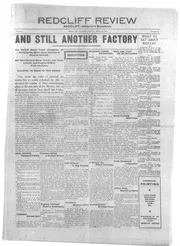
Published in September 1912, the Redcliff Review collected local news alongside arcane symbolism.
The Redcliff Review, a 1912 publication, presents a unique blend of ordinary reportage and esoteric interpretation. Its pages interlace local events and global occurrences with veiled references and symbolic language. The journal cultivates an atmosphere of contemplation, hinting at a reality where everyday occurrences connect with deeper, unseen forces. It is aimed at individuals searching for underlying meaning, those who sense a spiritual and philosophical depth beneath the ordinary. This review functions as more than a historical record; it is a text that speaks to contemporary readers interested in its unique approach.
The compilation’s strength lies in its juxtaposition of the commonplace and the occult. It does not overtly declare its mystical intentions but rather embeds them within the structure and allusions of its content. This indirect method encourages a more active engagement from the reader, requiring them to discern the hidden currents. The Redcliff Review stands as an example of how esoteric ideas could be woven into the fabric of contemporary periodicals at the turn of the 20th century.
This review emerged during a period of heightened interest in spiritualism and occultism. It reflects a broader trend of seeking hidden knowledge and alternative interpretations of reality, often found in movements like Theosophy or Hermeticism. The Redcliff Review's approach suggests an engagement with the idea that everyday events carry symbolic weight, a concept explored by various esoteric traditions that look for correspondences between the material and spiritual worlds. Its publication in 1912 places it within a historical moment where such ideas were circulating in both specialized circles and more broadly.
⭐ Reader Reviews
Honest opinions from readers who have explored this book.
❓ Frequently Asked Questions
What makes the Redcliff Review unique?
The Redcliff Review stands out for its ability to tie esoteric themes into everyday news and local events, making it a combination of the mundane and the mystical.
Who is the intended audience for this book?
The Redcliff Review is ideal for scholars of esoterica, practitioners of divination, and spiritual seekers who enjoy deciphering hidden meanings and symbolism.
How does this book fit into the broader context of esoteric literature?
The Redcliff Review fits into the broader context of esoteric literature by offering a unique perspective on how hidden knowledge can be embedded within everyday narratives.
Are there any modern applications of the themes discussed in this book?
Yes, the themes discussed in the Redcliff Review are still relevant today, particularly for those interested in divination, symbolism, and the occult.
Is the Redcliff Review available for free online?
The Redcliff Review may be available for free online through various digital archives and esoteric literature collections.
🔮 Key Themes & Symbolism
Symbolism in Everyday Life
The Redcliff Review masterfully embeds esoteric symbolism within everyday news and local events, inviting readers to decipher hidden meanings and spiritual significance. This theme encourages readers to see the world through a mystical lens, recognizing the divine in the mundane.
The Intersection of the Mundane and the Mystical
The review blends the ordinary with the extraordinary, creating a body of spiritual and philosophical insights. This theme highlights the interconnectedness of all things, showing how the mystical can be found in the most unexpected places.
Divination and Hidden Knowledge
The Redcliff Review is a valuable collection of hidden knowledge and divination techniques, cleverly disguised within seemingly innocuous articles. This theme is particularly relevant for practitioners of the occult and those interested in uncovering the mysteries of the universe.
💬 Memorable Quotes
Direct passages from the work, attributed to the author.
“For the Farmers - Bot Weather Ailments”
— This enigmatic headline suggests a deeper, symbolic meaning related to agriculture and the cycles of nature.
“Odd Fellows in Big Parade”
— The phrase 'Odd Fellows' may refer to a secret society, hinting at hidden rituals and esoteric practices.
“A Victory for Mixed Farming”
— This headline could symbolize the harmony and balance achieved through diverse practices, reflecting a mystical understanding of unity.
“What to Say About Redcliff”
— This phrase invites readers to contemplate the deeper significance of the town of Redcliff, suggesting a rich esoteric history.
💡 Key Ideas
Editorial paraphrase of the work's core concepts — not direct quotes.
Will Ask That He be Retained
This line may hint at the retention of ancient knowledge or traditions, emphasizing the importance of preserving esoteric wisdom.
🌙 Esoteric Significance
Tradition
The Redcliff Review belongs to the broader Hermetic tradition, which emphasizes the interconnectedness of all things and the pursuit of hidden knowledge. This tradition is characterized by its use of symbolism and allegory to convey spiritual truths.
Symbolism
Key symbols in the Redcliff Review include agricultural themes, which may represent the cycles of life and nature, and references to secret societies, which hint at hidden rituals and esoteric practices. These symbols invite readers to look beyond the surface and seek deeper meanings.
Modern Relevance
The Redcliff Review remains relevant today for those interested in divination, symbolism, and the occult. Modern practitioners continue to explore the esoteric themes presented in this work, seeking to uncover the hidden wisdom that lies within.
👥 Who Should Read This Book
Beginners in the occult will find the Redcliff Review an accessible introduction to esoteric themes, while scholars will appreciate its historical context and symbolic depth. Spiritual seekers will be drawn to its mystical allusions and philosophical significance. Practitioners of divination and tarot will find valuable insights and techniques hidden within its pages.
📜 Historical Context
Published in 1912, the Redcliff Review reflects the societal and cultural range of the early 20th century. During this era, there was a growing interest in the occult and mystical practices, driven by a desire to understand the unseen forces that govern our world. The Redcliff Review, with its blend of local news and esoteric symbolism, captures the zeitgeist of the time, offering readers a unique perspective on the mystical undercurrents of everyday life. Its influence can still be felt today in the works of modern occultists and esoteric scholars.
📔 Journal Prompts
How do the esoteric themes in the Redcliff Review resonate with your own spiritual journey?
What symbols or phrases in the review stand out to you and why?
How does the Redcliff Review challenge or confirm your understanding of the occult?
In what ways does the Redcliff Review blend the mundane and the mystical in its narratives?
How can you apply the insights from the Redcliff Review to your own practice of divination or esoteric studies?
🗂️ Glossary
Hermetic Tradition
A philosophical and spiritual tradition that emphasizes the pursuit of hidden knowledge and the interconnectedness of all things.
Divination
The practice of seeking knowledge of the future or the unknown by supernatural means.
Symbolism
The use of symbols to represent ideas or qualities, often in a way that conveys deeper meanings.
Esoteric
Relating to knowledge that is only understood by a small group of people with special knowledge or interest.
Occult
Relating to mystical, supernatural, or secret knowledge, often involving the study of hidden forces or practices.
This book appears in 3 collections
🔮 Readers Also Liked
Browse all →








From the “Tarot” Collection
View all →









More Free Divination & Tarot Books
View all →