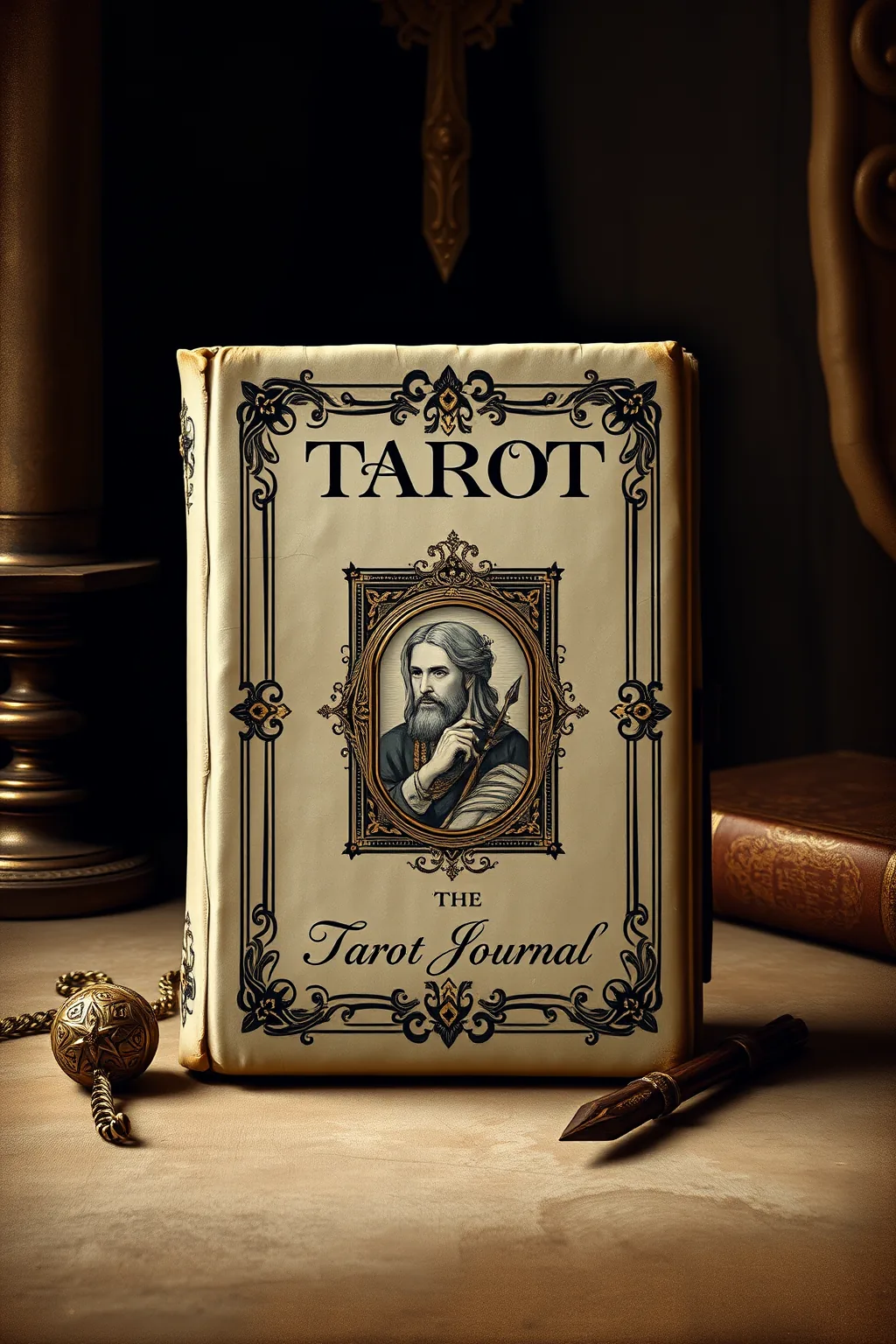
Tarot Journal
 62
62

Tarot Journal



Isolde Whitaker, Sacred Texts Editor: Arroyo Satoko Jacobs' 'Tarot Journal' is an indispensable tool for anyone seeking to deepen their connection with the Tarot's profound esoteric currents. It elegantly bridges the gap between theoretical knowledge and practical application, offering a sacred space for contemplation and personal revelation. The journal's structure thoughtfully guides users through the labyrinthine symbolism of the cards, encouraging insightful journaling that transcends mere record-keeping. Its true strength lies in its ability to foster an intimate, personal relationship with the Tarot, making its ancient wisdom accessible and relevant to the modern seeker. Highly recommended for practitioners aiming for a more profound, integrated understanding of this powerful divinatory art.
📝 Description
62
Arroyo Satoko Jacobs' Tarot Journal, first published in 2019, serves as a practical tool for engaging with Tarot symbolism.
This journal encourages consistent interaction with the Tarot's imagery. It is structured to facilitate personal reflection on the cards drawn each day or during specific readings. The book provides space for noting down impressions, connections, and emerging patterns. It aims to help users move beyond simple card meanings to a more personal understanding of their messages. By regularly recording thoughts and observations, readers can track their progress and gain clarity on how Tarot symbolism relates to their lives.
The journal's design supports a contemplative approach to divination. It guides the user to consider archetypal meanings and their personal resonance. The intention is to make the practice of Tarot reading a more integrated part of one's personal development. Each entry can become a record of introspection, fostering a deeper dialogue with one's own subconscious and the broader symbolic language of the Tarot. This sustained practice supports the development of intuition and self-awareness.
The 'Tarot Journal' fits within the modern esoteric tradition that views Tarot not just as a divinatory tool, but as a system for psychological and spiritual growth. This approach often draws from Jungian archetypes and Hermetic principles, seeing the cards as a mirror to the inner world. It aligns with practices that emphasize personal gnosis and the integration of symbolic wisdom into daily life, moving away from purely predictive interpretations towards a focus on self-understanding and transformation.
💡 Why Read This Book?
Unlock the hidden language of the Tarot and your own soul. This journal provides a sacred space for intuitive exploration, personal insight, and spiritual growth. Ideal for seekers eager to decipher life's mysteries, practitioners wishing to deepen their Tarot practice, and scholars interested in the symbolic power of archetypes. Transform fleeting insights into enduring wisdom and forge a profound connection with the universal currents of divination.
⭐ Reader Reviews
Honest opinions from readers who have explored this book.
❓ Frequently Asked Questions
What makes this Tarot journal unique?
This journal transcends a simple record of readings. It's designed as a contemplative tool, fostering a deep, personal dialogue with Tarot archetypes and your own intuition, transforming each entry into a step toward self-discovery.
Is this journal suitable for beginners?
Absolutely. While rich with esoteric depth, its structure gently guides newcomers through the process of journaling their Tarot explorations, making the cards approachable and their wisdom accessible.
How often should I use the journal?
Consistency is key, but flexibility is paramount. Use it for daily draws, significant readings, or whenever you feel a call to connect with the Tarot's wisdom. The journal adapts to your practice.
Can I use this journal with any Tarot deck?
Yes, this journal is a universal companion for any Tarot deck. Its prompts and reflective spaces are designed to enhance your understanding of the core symbolism and archetypes, regardless of the specific deck's artwork.
What kind of insights can I expect to gain?
Expect to uncover subconscious patterns, gain clarity on life's challenges, deepen your intuition, and foster a more profound understanding of your personal journey and its connection to universal energies.
🔮 Key Themes & Symbolism
Archetypal Resonance
Examine the timeless archetypes that form the bedrock of the Tarot. This journal encourages a deep communion with figures like the Fool, the High Priestess, and the World, exploring their symbolic significance not just as static images, but as dynamic forces that mirror the human psyche and its evolutionary journey. By journaling your encounters with these archetypes, you begin to recognize their presence within your own life, fostering a profound understanding of universal patterns and personal destiny.
Intuitive Cartography
The 'Tarot Journal' serves as a map for working through the intricate terrain of your subconscious. It provides a structured yet fluid framework for recording your intuitive responses to card spreads, encouraging you to trust your inner voice. Through guided prompts and ample space for free association, you will learn to decipher the subtle whispers of intuition, transforming abstract symbols into actionable insights and personal revelations, charting your unique path toward self-awareness.
The Alchemy of Reflection
This journal is an alchemical vessel where raw experience is transmuted into golden wisdom. It promotes a practice of mindful reflection, urging you to move beyond simple interpretation to a deeper integration of Tarot's messages. By consistently engaging with the prompts and dedicating space for personal contemplation, you cultivate a transformative process, turning divinatory insights into profound personal growth and a more conscious, empowered existence.
💬 Memorable Quotes
Direct passages from the work, attributed to the author.
“Each spread is a whispered secret from the cosmos.”
— This highlights the profound, almost sacred nature of a Tarot reading. It implies that the arrangement of cards in a spread is not random but a deliberate, cosmic communication waiting to be deciphered.
“Embrace the silence between the cards; truth often resides there.”
— This encourages a deeper, more meditative approach to Tarot, suggesting that the most clear insights are not always found in the explicit meaning of individual cards but in the spaces, connections, and overall atmosphere of a reading.
“Your intuition is the key that unlocks the Tarot's deepest chambers.”
— This underscores the primacy of personal feeling and inner knowing in Tarot interpretation, positioning intuition as the essential faculty for accessing the full depth of the cards' wisdom.
“To know the cards is to know yourself, and to know yourself is to command your destiny.”
— This powerful statement links Tarot study directly to self-knowledge and personal empowerment, suggesting that understanding the archetypal patterns within the cards leads to self-mastery and the ability to consciously shape one's life path.
💡 Key Ideas
Editorial paraphrase of the work's core concepts — not direct quotes.
The cards are mirrors, reflecting the hidden landscapes of the soul.
This quote emphasizes the Tarot's function as a tool for introspection, suggesting that the images and symbols on the cards act as reflections, revealing aspects of our inner world that might otherwise remain obscured.
🌙 Esoteric Significance
Tradition
This journal is deeply rooted in the Western Esoteric Tradition, particularly drawing from Hermeticism, Kabbalah, and Jungian psychology. It views the Tarot not merely as a fortune-telling tool but as a symbolic language representing universal principles, archetypal forces, and the stages of spiritual development. The practice of journaling within this context is seen as a form of active imagination and soul work, facilitating the integration of unconscious material into conscious awareness.
Symbolism
The core of the Tarot's esoteric significance lies in its wide range of symbolism. Each card, from the Major Arcana's journey of the Fool to the Minor Arcana's unfolding narrative, represents intricate cosmological, psychological, and spiritual concepts. This journal encourages the reader to explore these symbols, understanding their multi-layered meanings, their connection to the Tree of Life, and their power to illuminate the human condition and the subtle energies that govern existence.
Modern Relevance
In an age often characterized by disconnection and superficiality, the 'Tarot Journal' offers a powerful antidote. It provides a tangible method for cultivating mindfulness, deepening intuition, and fostering a profound connection with one's inner life and the subtle realms. Its emphasis on personal reflection and self-exploration makes it an invaluable tool for working through the complexities of modern existence, empowering individuals to find meaning, purpose, and inner guidance through the timeless wisdom of the Tarot.
👥 Who Should Read This Book
This journal is a vital resource for the dedicated Tarot practitioner seeking to move beyond superficial readings into profound self-awareness. Beginners will find it an accessible yet comprehensive guide to initiating their journey, offering structure and encouragement. Spiritual seekers and mystics will appreciate its depth in exploring archetypal energies and the subconscious. Scholars of esotericism will find it a practical tool for documenting and analyzing their understanding of Tarot symbolism. Ultimately, anyone yearning for deeper self-knowledge, intuitive development, and a more meaningful connection with life's mysteries will benefit immensely from its pages.
📜 Historical Context
The practice of keeping journals for divination and personal reflection has roots stretching back to ancient oracular traditions and the Renaissance Hermetic revival. During the 18th and 19th centuries, occult societies and esoteric scholars extensively documented their studies of symbolism, astrology, and cartomancy, often using journals to record dreams, visions, and divinatory insights. The proliferation of Tarot decks and their integration into spiritual practices in the late 19th and early 20th centuries further solidified the journal's role as an essential companion for practitioners. This period saw a surge in interest in the mystical and metaphysical, driven by figures like Eliphas Lévi and the Hermetic Order of the Golden Dawn, who emphasized the Tarot as a codified system of esoteric knowledge. The 'Tarot Journal' by Arroyo Satoko Jacobs draws upon this rich lineage, modernizing the tradition for contemporary seekers by providing a dedicated space for personal engagement with these ancient wisdom traditions.
📔 Journal Prompts
After drawing a card, what immediate feeling or image arises within me? Record it without judgment.
How does this card's archetype resonate with a situation I am currently experiencing?
What is the shadow aspect of this card, and how might it be manifesting in my life?
If this card were advice, what specific action would it suggest I take today?
Consider the colors, numbers, and figures on the card. What hidden messages do they convey to my intuition?
🗂️ Glossary
Archetype
Universal, archaic patterns and images that derive from the collective unconscious and are the psychic counterpart of the instinct. In Tarot, these are embodied by the figures and symbols of the Major Arcana.
Cartomancy
The practice of divining the future or gaining insight through the use of cards, most commonly the Tarot or a standard deck of playing cards.
Esoteric
Intended for or likely to be understood by only a small number of people with a specialized knowledge or interest; relating to or characterized by the occult.
Hermeticism
A philosophical tradition based upon the purported teachings of Hermes Trismegistus, emphasizing divine wisdom, spiritual enlightenment, and the interconnectedness of the macrocosm and microcosm.
Synchronicity
The simultaneous occurrence of events which appear significantly related but have no discernible causal connection, as described by Carl Jung, often observed in divination practices like Tarot.
This book appears in 3 collections
🔮 Readers Also Liked
Browse all →









From the “Tarot” Collection
View all →








More Free Divination & Tarot Books
View all →