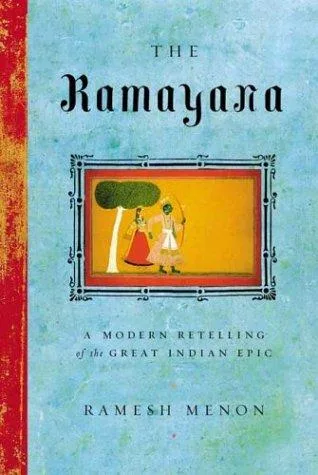
The Ramayana
 81
81

The Ramayana
Ramesh Menon's rendition of the Ramayana, drawing from Valmiki's original and C. Rajagopalachari's earlier prose version, offers a comprehensive, accessible entry into one of humanity's most enduring narratives. The sheer scope of the epic is handled with a clarity that avoids overwhelming the reader, a notable achievement given the sprawling cast and intricate plot. Menon’s translation successfully captures the devotional spirit and the moral quandaries central to Rama's journey. A particular strength lies in the detailed depiction of the forest exile and the siege of Lanka, bringing the ancient conflict to vivid life. However, the sheer length and the traditional, sometimes repetitive, narrative style can present a challenge for modern pacing expectations. Despite this, the work stands as a vital conduit to understanding a cornerstone of Eastern thought and mythology. It is a significant contribution for those seeking immersion in the source material.
📝 Description
81
The Ramayana, traditionally dated between the 5th century BCE and 1st century CE, is a major Sanskrit epic.
This epic poem traces the life of Prince Rama of Ayodhya, beginning with his rightful claim to the throne, his subsequent exile, and the abduction of his wife Sita by Ravana, the Rakshasa king. Rama's determined effort to rescue Sita forms the core of the narrative. The story is deeply intertwined with Hindu dharma, examining concepts of duty, righteousness, and loyalty. Its reach extends far beyond India, influencing the cultures of Southeast Asia for over a thousand years.
The text emerged during a period of significant religious and philosophical growth in ancient India, developing alongside other important texts like the Puranas and the Bhagavad Gita. Its structure and theological ideas likely interacted with developing Brahmanical traditions, particularly those centered on the worship of Vishnu. The epic's spread and adaptations into various regional languages by the medieval era demonstrate its broad cultural impact.
The Ramayana is a central text within the Hindu tradition, illustrating the avatarhood of Vishnu as Rama. It functions as a guide to living a life aligned with dharma, presenting archetypal figures and moral dilemmas. The narrative's exploration of divine intervention, cosmic battles between good and evil, and the pursuit of spiritual liberation through righteous action connects it to broader esoteric discussions on the nature of reality and the soul's journey. Its teachings on duty and devotion have shaped spiritual practices and understanding for countless adherents.
💡 Why Read This Book?
• Gain an understanding of *dharma* through Rama's unwavering commitment to duty, as depicted in his exile and battle against Ravana, offering a framework for ethical decision-making. • Explore the profound concept of *bhakti* (devotion) through the character of Hanuman, whose selfless service to Rama illustrates a path of spiritual surrender. • Grasp the archetypal conflict between good and evil as represented by Rama and Ravana, providing insights into the enduring human struggle against destructive forces.
⭐ Reader Reviews
Honest opinions from readers who have explored this book.
❓ Frequently Asked Questions
What is the historical period when the Ramayana was likely composed?
The Ramayana's composition is traditionally dated between the 5th century BCE and the 1st century CE, emerging during a period of significant religious and philosophical development in ancient India.
Who is the primary antagonist in the Ramayana and what does he represent?
The primary antagonist is Ravana, the Rakshasa king of Lanka. He represents *adharma* (unrighteousness) and the forces of ego, greed, and lust that oppose righteousness and cosmic order.
What is the role of Hanuman in the Ramayana?
Hanuman, the devoted monkey general, plays a crucial role as Rama's loyal ally. He embodies *bhakti* (devotion), strength, and service, undertaking vital missions for Rama, including the search for Sita.
What does the concept of 'dharma' mean in the context of the Ramayana?
Dharma signifies righteous duty, moral law, and virtuous conduct. Rama's life exemplifies dharma, as he consistently prioritizes his obligations and ethical principles, even when facing severe personal suffering.
How does the Ramayana influence Southeast Asian culture?
The Ramayana's influence is profound, with numerous adaptations and retellings across Thailand, Cambodia, Laos, Indonesia, and Malaysia, shaping their art, dance, literature, and religious practices for centuries.
Is the Ramayana considered a religious text or a literary epic?
It is considered both. While it functions as a foundational religious text for many Hindus, it is also revered as a literary masterpiece, an epic poem of profound philosophical and narrative depth.
🔮 Key Themes & Symbolism
Dharma and Duty
The epic is a profound exploration of *dharma*, the principle of righteous living and cosmic order. Rama's life serves as the ultimate exemplar of fulfilling one's duty, regardless of personal cost. His adherence to his father's promise, his loyalty to his kingdom, and his righteous quest to rescue Sita all illustrate the complexities and demands of dharma. The narrative contrasts Rama's adherence to dharma with the destructive actions of Ravana, highlighting the consequences of straying from righteous paths and emphasizing the importance of ethical conduct in personal and societal spheres.
Devotion and Surrender
A powerful current of *bhakti*, or devotional surrender, flows through the Ramayana, most notably embodied by Hanuman. His unwavering loyalty and service to Rama transcend mere duty, representing a spiritual connection based on love and absolute trust. Hanuman's feats, driven by his devotion, are central to the epic's resolution. This theme offers a model for aspirants seeking a path of spiritual realization through selfless service and surrender to the divine, illustrating how profound faith can overcome seemingly insurmountable obstacles.
The Cosmic Struggle
The Ramayana presents a fundamental conflict between forces of good (*dharma*) and evil (*adharma*). Rama, the divine avatar, represents righteousness, order, and virtue, while Ravana, the demon king, embodies ego, lust, anger, and destruction. This epic battle is not merely a physical conflict but a metaphysical struggle for cosmic balance. The narrative explores the consequences of imbalance caused by unchecked negative impulses and celebrates the eventual triumph of virtue, offering a timeless perspective on the human condition and the eternal battle between light and shadow.
Ideal Archetypes
The characters in the Ramayana function as archetypes, embodying virtues and flaws that serve as moral and spiritual guides. Rama represents the ideal king, son, husband, and warrior. Sita embodies purity, fidelity, and resilience. Lakshmana signifies loyal brotherhood, and Hanuman exemplifies selfless devotion and strength. These archetypes provide enduring models for human conduct, reflecting societal ideals and spiritual aspirations. Their interactions and trials offer lessons on virtue, sacrifice, loyalty, and the pursuit of a righteous life.
💬 Memorable Quotes
Direct passages from the work, attributed to the author.
“Where there is dharma, there is victory.”
— This interpretation emphasizes the belief that righteousness and adherence to moral law are intrinsically linked to success and ultimate triumph, suggesting that virtue is its own reward and strength.
“Hanuman's devotion was not a matter of obligation, but of pure love and surrender.”
— This conceptual quote underscores the nature of Hanuman's loyalty, portraying it as stemming from deep affection and spiritual surrender rather than mere duty, thereby elevating the concept of *bhakti*.
“Even the smallest creature, when filled with devotion, can achieve the impossible.”
— This interpretation speaks to the power of faith and service, illustrating that spiritual strength and the capacity for extraordinary feats are not limited by one's station or physical might, as shown by Hanuman.
💡 Key Ideas
Editorial paraphrase of the work's core concepts — not direct quotes.
The path of duty is indeed difficult, but it is the only path that leads to true liberation.
This paraphrased concept highlights the epic's central theme: that adhering to one's righteous obligations (*dharma*), even when arduous, is the means to spiritual freedom and fulfillment.
The abduction of Sita was a transgression against cosmic order, demanding retribution.
This paraphrased idea frames the central conflict as more than a personal grievance; it was an act that disrupted universal harmony, necessitating Rama's intervention to restore balance.
🌙 Esoteric Significance
Tradition
While primarily a foundational text for mainstream Hinduism, the Ramayana contains layers of meaning that resonate with esoteric traditions. Its exploration of divine avatars, cosmic battles between light and shadow, and the attainment of liberation through devotion aligns with broader Indic spiritual philosophies that inform various esoteric practices. The concept of Rama as an embodiment of Vishnu, a supreme consciousness, and the journey towards self-realization can be interpreted through lenses of yogic and Vedanta traditions, focusing on the inner journey mirroring the epic's external narrative.
Symbolism
The Rakshasa king Ravana symbolizes the ego-mind, bound by desire and illusion, representing the internal obstacles to spiritual progress. Sita, often seen as the soul or divine consciousness, embodies purity and virtue, her abduction symbolizing the soul's entanglement in the material world. Hanuman, the monkey general, represents the disciplined mind or life-force (*prana*), whose strength and agility, when directed by pure devotion, become instrumental in overcoming internal demons and reclaiming the divine essence.
Modern Relevance
Contemporary seekers and practitioners in various yogic lineages, Advaita Vedanta study groups, and bhakti yoga traditions often draw upon the Ramayana's narratives for inspiration and ethical guidance. Its archetypal characters and core themes of dharma, karma, and devotion continue to be explored in modern spiritual literature and discourse. Thinkers and gurus frequently reference Rama's journey as a metaphor for the spiritual aspirant's path, emphasizing the universal lessons on righteousness, resilience, and the pursuit of ultimate truth that remain pertinent.
👥 Who Should Read This Book
• Students of comparative mythology and religious studies seeking to understand a cornerstone epic that has shaped global cultures and spiritual thought. • Individuals interested in Eastern philosophies and ethics who wish to explore the concepts of *dharma* and *bhakti* through a compelling narrative. • Readers drawn to epic literature and archetypal stories that examine the fundamental human struggles between good and evil, duty, and personal desire.
📜 Historical Context
The Ramayana emerged from the rich intellectual and spiritual milieu of ancient India, likely between the 5th century BCE and 1st century CE. This era witnessed the flourishing of Vedic traditions, the development of philosophical schools like Vedanta, and the early compilation of the Puranas. It existed alongside and interacted with the philosophical currents that gave rise to texts like the Bhagavad Gita. The epic's narrative and theological framework helped solidify the growing importance of Vishnu as a supreme deity, with Rama increasingly recognized as his avatar. By the medieval period, the Ramayana had been translated and adapted into numerous vernacular languages, such as Tamil and Bengali, demonstrating its pervasive influence and its role in shaping regional identities and religious practices. Its enduring popularity made it a counterpoint to the Mahabharata in terms of epic scope and influence, though with a distinct focus on individual dharma and devotion.
📔 Journal Prompts
Rama's adherence to his father's promise despite immense personal sacrifice.
Hanuman's unwavering loyalty and service to Prince Rama.
The symbolic meaning of Sita's abduction and rescue.
The contrast between Rama's *dharma* and Ravana's *adharma*.
The concept of ideal kingship as embodied by Rama.
🗂️ Glossary
Dharma
In the context of the Ramayana, dharma refers to one's duty, righteous conduct, moral law, and the cosmic order. It is the principle that guides virtuous living and societal harmony, exemplified by Prince Rama.
Bhakti
A path of spiritual devotion and selfless love towards a deity. In the Ramayana, Hanuman's intense loyalty and service to Rama epitomize the practice of bhakti.
Rakshasa
A class of supernatural beings in ancient Indian literature, often depicted as demonic or malevolent. Ravana, the antagonist, is the king of the Rakshasas.
Avatar
The descent or incarnation of a deity on Earth. Rama is considered an avatar of the god Vishnu, appearing to restore cosmic balance and uphold dharma.
Ashrama
A monastic or spiritual hermitage, often located in a forest. Rama, Sita, and Lakshmana spend fourteen years in the forest during their ashrama exile.
Lanka
The island kingdom ruled by Ravana, often identified with modern-day Sri Lanka. It serves as the setting for the climactic battle and Sita's captivity.
Adharma
The opposite of dharma; unrighteousness, injustice, immorality, or chaos. Ravana's actions and rule represent adharma.
🔮 Readers Also Liked
Browse all →









More by Ramesh Menon, Vālmīki, C. Rajagopalachari
All books →
More Free Occult Philosophy Books
View all →