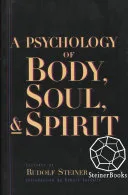
A Psychology of Body, Soul, and Spirit
 71
71

A Psychology of Body, Soul, and Spirit
Steiner's "A Psychology of Body, Soul, and Spirit" offers a challenging but rewarding perspective on human nature, rooted in his unique spiritual-scientific methodology. The core argument—that understanding humanity demands an active, creative cognition, not mere passive observation—is compelling. Steiner posits that our current modes of thinking, developed for the material world, are insufficient for grasping the spiritual dimensions of the self. He delineates the interplay between the physical body, soul, and spirit, proposing that a true psychology must account for these interacting forces. A notable strength is the detailed exploration of how one might cultivate this creative thinking, moving beyond abstract pronouncements. However, the work's dense, specialized terminology, such as references to the "astral body" and "etheric body," can present a significant barrier to entry for newcomers. The lectures, given in Dornach in 1924, reflect a specific intellectual and spiritual milieu that requires careful contextualization. Ultimately, this book is a vital resource for those committed to exploring Anthroposophy's intricate view of human consciousness.
📝 Description
71
Rudolf Steiner delivered eleven lectures in Dornach between September 8th and 19th, 1924, forming "A Psychology of Body, Soul, and Spirit."
This collection of lectures, cataloged as volume CW 318, addresses the fundamental nature of human beings. Steiner argues that a true understanding of humanity requires an active, creative mode of thought, not mere passive observation. He posits that conventional thinking, focused solely on external phenomena, grasps only superficial aspects of human existence, leaving the inner essence untouched.
Steiner's work is for those seeking a comprehension of human nature that goes beyond standard psychological models. It is especially relevant for individuals interested in Anthroposophy, spiritual science, or alternative perspectives on consciousness. Readers dissatisfied with contemporary frameworks for their lack of attention to the spiritual dimensions of life may find Steiner's approach valuable, provided they are ready to engage with a rigorous method of inquiry.
The lectures were given in 1924, a time of significant social and spiritual questioning in post-World War I Europe. Steiner's contributions emerged within the context of early 20th-century esoteric thought, including Theosophy, though he had diverged from that tradition. His work proposed a unique path centered on developing human consciousness through spiritual scientific investigation.
Rudolf Steiner's lectures in "A Psychology of Body, Soul, and Spirit" were delivered during a period of intense esoteric activity in Europe. Emerging from his earlier involvement with Theosophy, Steiner developed Anthroposophy as a distinct spiritual scientific path. This tradition emphasized the development of human consciousness through disciplined inner work and the observation of spiritual realities, which he contrasted with purely materialistic or purely faith-based worldviews. His approach sought to provide a rigorous, observable basis for understanding the spiritual dimensions of existence, resonating with a broader interest in the psyche and consciousness that also characterized figures like Carl Jung, albeit through different methods.
💡 Why Read This Book?
• Gain insight into Rudolf Steiner's concept of "creative thinking" as a method for understanding human consciousness, a departure from passive observation which is central to his lectures from September 1924. • Explore the Anthroposophical model of the human being, differentiating between the physical body, soul, and spirit, as presented in this 1999 publication of lectures. • Understand the role of subtle bodies, like the "etheric body," in Steiner's psychology, offering a spiritual-scientific perspective distinct from materialistic or purely psychological approaches.
⭐ Reader Reviews
Honest opinions from readers who have explored this book.
❓ Frequently Asked Questions
What is the core argument of Rudolf Steiner's "A Psychology of Body, Soul, and Spirit"?
The core argument is that understanding the human being requires an active, "creative" mode of thinking, as opposed to passive observation. Steiner contends that conventional thought processes, suited for the material world, are inadequate for grasping the inner spiritual realities of human existence.
When and where were the lectures in "A Psychology of Body, Soul, and Spirit" originally given?
These lectures were delivered by Rudolf Steiner in Dornach, Switzerland, between September 8th and 19th, 1924. They are part of his extensive collected works, specifically volume CW 318.
What does Steiner mean by "body, soul, and spirit" in this context?
Steiner uses "body, soul, and spirit" to describe distinct yet interconnected aspects of human being. The "body" refers to the physical organism, the "soul" encompasses feelings, intellect, and consciousness, and the "spirit" represents the eternal, developing core of the individual.
Is this book suitable for beginners in esoteric studies?
While it offers foundational concepts, the book assumes some familiarity with Steiner's broader philosophical system (Anthroposophy) and its specialized terminology. Beginners might benefit from introductory texts before engaging with this specific volume.
How does Steiner's approach to psychology differ from modern psychological science?
Steiner's approach integrates spiritual and cosmic dimensions, viewing the human being as a complex interplay of physical, soul, and spiritual forces. Modern psychology typically focuses on observable behavior, cognitive processes, and neurobiology, often excluding spiritual or metaphysical considerations.
What is the significance of the "etheric body" and "astral body" in Steiner's lectures?
Steiner describes the "etheric body" as the life-force or formative forces animating the physical body, and the "astral body" as the seat of consciousness, feeling, and instinct. These are considered subtle, non-physical components of the human organism.
🔮 Key Themes & Symbolism
Creative Cognition
Steiner argues that true knowledge of the human being cannot be achieved through passive, analytical thought alone. Instead, it necessitates a "creative" mode of cognition, where the thinker actively re-creates the subject in their own consciousness. This approach involves developing inner faculties to perceive the spiritual realities underlying physical phenomena, moving beyond empirical observation to a form of imaginative, intuitive understanding. This concept is central to his critique of purely materialistic science and psychology, advocating for a method that can engage with the dynamic, living essence of humanity.
The Tripartite Human Being
The lectures systematically explore the human constitution as comprising body, soul, and spirit. The physical body is the tangible form, the soul encompasses the field of feeling, intellect, and consciousness, and the spirit represents the immortal, individual essence. Steiner details the intricate relationships and mutual influences between these components, emphasizing that a holistic understanding requires acknowledging and investigating all three aspects. This framework provides a foundation for understanding human development, health, and spiritual evolution within his esoteric system.
Subtle Bodies and Forces
Beyond the physical, Steiner introduces the concept of subtle bodies – specifically the etheric (life) body and the astral (soul/consciousness) body – as integral parts of the human organism. The etheric body is associated with life processes, growth, and healing, while the astral body carries consciousness, emotions, and instinctual drives. Understanding these non-physical components is crucial for grasping Steiner's view of human vitality, subjective experience, and the connection between the earthly and spiritual realms.
Spiritual Science as Epistemology
This work is a prime example of Steiner's "spiritual science" (Geisteswissenschaft), which seeks to apply rigorous, methodical inquiry to the spiritual world. He posits that the spiritual is as real and knowable as the physical, but requires different cognitive tools. The lectures themselves serve as a demonstration of this methodology, aiming to equip the reader with the capacity to perceive and understand these higher realities, thereby offering a comprehensive view of human existence.
💬 Memorable Quotes
Direct passages from the work, attributed to the author.
“Humans cannot be known by uncreative thoughts, because by their very nature human beings are creative. One must re-create if one wants knowledge.”
— This core statement highlights Steiner's central thesis: that understanding humanity requires an active, imaginative participation from the observer. It contrasts with passive analysis, suggesting that true insight into human nature emerges when the intellect actively mirrors the creative processes inherent in being human.
“With today's passive thinking, one can understand only the periphery of the human being; one has to ignore the inner being.”
— Steiner critiques the limitations of conventional, passive modes of thought prevalent in his time (and ours). He asserts that such thinking is only capable of grasping superficial aspects, inherently excluding the deeper, inner life and spiritual dimensions of human existence.
“Interpretation: Steiner suggests that the physical body is animated by subtle forces, the etheric and astral bodies, which are crucial for life and consciousness.”
— This interpretation focuses on the Anthroposophical understanding of human constitution. It posits that life and consciousness are not solely products of the physical body but are sustained and expressed through non-physical energetic and conscious principles.
💡 Key Ideas
Editorial paraphrase of the work's core concepts — not direct quotes.
Interpretation: The lectures advocate for a cognitive approach that actively reconstructs the subject in the mind, essential for grasping the dynamic essence of human beings.
This paraphrased concept emphasizes the active role of the intellect in gaining knowledge of the human being. It suggests that by engaging in a form of mental re-creation, one can access a deeper understanding of human nature that remains hidden from purely observational methods.
Interpretation: Genuine knowledge of humanity requires developing faculties that can perceive spiritual realities, going beyond the scope of materialistic science.
This paraphrased concept underscores Steiner's epistemological stance. It asserts that the most profound aspects of human existence are not accessible through purely materialist scientific methods, necessitating the cultivation of higher cognitive capacities for spiritual perception.
🌙 Esoteric Significance
Tradition
Steiner's work draws heavily from the Western Esoteric Tradition, particularly Gnosticism and Hermeticism, while synthesizing them with his unique spiritual-scientific methodology. It departs from earlier Theosophical formulations by emphasizing the independent development of human consciousness and the potential for direct spiritual perception through rigorous inner training, rather than reliance on external Masters or ancient scriptures alone. Anthroposophy positions itself as a path of cognitive spiritual development accessible through conscious effort.
Symbolism
Within Steiner's framework, the human being itself is a profound symbol. The tripartite division into body, soul, and spirit represents a microcosm of cosmic principles. Concepts like the "etheric body" function symbolically, representing the forces of life, growth, and renewal, distinct from the static nature of physical matter. The "astral body" symbolizes consciousness, feeling, and the capacity for subjective experience, linking the individual to the broader field of sentient existence.
Modern Relevance
Contemporary thinkers and practitioners in fields like Waldorf education, biodynamic agriculture, and anthroposophical medicine continue to draw directly from Steiner's extensive corpus, including works like this. His ideas on consciousness, human development, and the energetic nature of life find echoes in holistic health movements and alternative therapeutic modalities seeking to address the whole person—body, mind, and spirit—beyond purely mechanistic or materialistic paradigms.
👥 Who Should Read This Book
["• Students of Anthroposophy seeking a foundational text on Steiner's view of human psychology and spiritual science, particularly those interested in the lectures from 1924.", '• Researchers in comparative spirituality and esoteric traditions looking to understand the specific contributions of Rudolf Steiner to the study of the human constitution.', '• Individuals exploring alternative models of consciousness and well-being who find contemporary psychological frameworks insufficient in addressing spiritual dimensions.']
📜 Historical Context
Delivered in Dornach in September 1924, these lectures by Rudolf Steiner occurred during a period of intense intellectual and spiritual ferment in post-World War I Europe. The continent was seeking new foundations after immense upheaval, and esoteric movements offered alternative frameworks for understanding humanity and the cosmos. Steiner's Anthroposophy, which emerged from his earlier involvement with Theosophy, presented a unique path of spiritual research. His work stood in contrast to prevailing materialistic philosophies and emerging psychological theories, such as those being developed by Carl Jung, who was also exploring the depths of the human psyche but from a different, more analytical perspective. Steiner's lectures aimed to establish a "spiritual science" grounded in observable, albeit super-sensible, realities, seeking to provide a comprehensive understanding of human beings that integrated their physical, soul, and spiritual dimensions.
📔 Journal Prompts
The necessity of "creative thinking" for understanding the human being.
The interplay between the physical body, soul, and spirit.
Developing faculties for perceiving subtle bodies like the etheric and astral.
Re-creating human nature in thought, as discussed in the Dornach lectures.
The limitations of passive observation in grasping inner human realities.
🗂️ Glossary
Anthroposophy
A spiritual philosophy founded by Rudolf Steiner, seeking to understand the spiritual nature of the human being and the cosmos through methods of spiritual science and inner development.
Creative Thinking
A mode of cognition advocated by Steiner, which involves actively re-creating the subject of study in one's consciousness, as opposed to passive observation. It emphasizes imaginative and intuitive faculties.
Etheric Body
In Steiner's cosmology, the life-force or formative forces that animate the physical body, responsible for growth, vitality, reproduction, and healing. It is considered a subtle, non-physical organism.
Astral Body
The vehicle of consciousness, feeling, instinct, and desire in Steiner's system. It is responsible for subjective experience and connects the individual to the sentient world.
Spiritual Science (Geisteswissenschaft)
A term used by Steiner to describe his methodology for investigating the spiritual world with the same rigor and clarity as natural science investigates the material world.
Dornach Lectures (CW 318)
Refers to the specific series of eleven lectures given by Rudolf Steiner in Dornach, Switzerland, from September 8-19, 1924, which form the basis of this book.
Passive Thinking
Steiner's term for conventional modes of thought that observe and analyze external phenomena without actively engaging or transforming the consciousness of the observer.