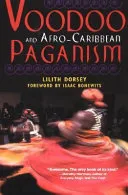
Voodoo and Afro-Caribbean Paganism
 72
72

Voodoo and Afro-Caribbean Paganism
Lilith Dorsey’s "Voodoo and Afro-Caribbean Paganism" confronts the widespread misrepresentation of these vibrant spiritual systems. The book’s strength lies in its detailed anthropological approach, meticulously separating authentic practice from Hollywood caricatures. Dorsey’s discussion of the *lwa* in Haitian Vodou, for instance, provides a nuanced understanding of their roles and relationships, moving beyond simplistic notions of 'deities.' A limitation, however, is that at times the sheer breadth of traditions covered can make the exploration feel somewhat condensed, particularly when contrasting the distinct evolutions of Santería and Candomblé. The section detailing the historical syncretism with Catholicism, showing how enslaved Africans cleverly masked their practices, is particularly illuminating. Dorsey's work provides a vital corrective, presenting these traditions with the respect and depth they deserve.
📝 Description
72
Lilith Dorsey's 2019 book examines Voodoo and Afro-Caribbean Paganism beyond sensationalism.
This book scrutinizes religious and spiritual practices that began in West Africa and developed throughout the Caribbean. It moves past sensationalized stereotypes to show these traditions as complex, living faiths. The text details Voodoo, Yoruba, Candomblé, Shango, Santería, and Obeah, explaining their cosmologies, rituals, and ethical rules.
It is written for students of comparative religion, practitioners wanting to know the origins of Afro-Caribbean spirituality, and scholars of esotericism. It suits those who want to go beyond shallow depictions and understand these religions as they are. Readers interested in the African diaspora's cultural and spiritual history will find a lot of useful information here. The book places these traditions within the historical context of the transatlantic slave trade, which moved millions of Africans. It shows how enslaved people kept and changed their ancestral beliefs under colonial control, often mixing them with Catholicism. This cultural resilience and change is a main idea, showing the inventiveness needed to keep spiritual continuity.
This work fits within the study of Western Esotericism by examining traditions often marginalized or misunderstood by mainstream scholarship. It addresses the ways in which marginalized spiritual systems, particularly those born from diaspora and oppression, maintain their integrity and adapt. By focusing on the internal logic and lived experience of Voodoo, Santería, and related practices, Dorsey contributes to a broader understanding of how spiritual knowledge and practice are transmitted and transformed across cultures and through historical challenges. It highlights the resilience of indigenous and syncretic spiritual paths.
💡 Why Read This Book?
• Gain a nuanced understanding of the *lwa* and *orishas*, moving beyond common misconceptions through specific examples of their attributes and roles as detailed in the text. • Appreciate the historical resilience of African earth religions, understanding how traditions like Voodoo survived and adapted during the era of the transatlantic slave trade. • Learn about the specific ritual elements, such as drumming and dance, that are integral to Afro-Caribbean Pagan practices, as described in the book's exploration of communal worship.
⭐ Reader Reviews
Honest opinions from readers who have explored this book.
❓ Frequently Asked Questions
What is the primary goal of Lilith Dorsey's "Voodoo and Afro-Caribbean Paganism"?
The book aims to demystify and accurately represent Afro-Caribbean spiritual traditions like Voodoo, Yoruba, Candomblé, and Santería, countering widespread misconceptions and sensationalism by presenting their complex religious and cultural frameworks.
How does the book address the syncretism often seen in these traditions?
It explains how enslaved Africans integrated elements of their ancestral religions with Catholicism under colonial rule, a process that preserved indigenous beliefs while adapting them to new circumstances.
Who are the main spiritual entities discussed in the book?
The book focuses on entities such as the *lwa* in Haitian Vodou and the *orishas* in Yoruba-based traditions like Santería and Candomblé, detailing their significance and roles.
What historical period is most relevant to the formation of these traditions?
The period of the transatlantic slave trade and its aftermath is crucial, as it forced the displacement of Africans and led to the adaptation and preservation of their spiritual practices in the Caribbean and Americas.
Beyond religious practices, what other aspects of Afro-Caribbean culture does the book touch upon?
It explores the ethical systems, healing practices, communal worship structures, and the importance of oral traditions, music, and dance within these faiths.
Is this book suitable for beginners interested in Voodoo?
Yes, it provides a foundational, accurate introduction for beginners, moving past stereotypes to offer a respectful and scholarly overview of Voodoo and related Afro-Caribbean religions.
🔮 Key Themes & Symbolism
Spiritual Entities and Pantheons
The work meticulously details the pantheons of Afro-Caribbean religions, distinguishing between the *lwa* of Haitian Vodou and the *orishas* in Yoruba-derived traditions like Santería and Candomblé. It moves beyond simplistic categorization, explaining the complex relationships, domains, and characteristics of these spiritual forces. The book emphasizes their active roles in the lives of practitioners, serving as intermediaries between humans and the divine, and offering guidance, healing, and justice.
Resilience and Syncretism
A central theme is the remarkable resilience of African spiritual traditions in the face of brutal oppression. The book examines how enslaved Africans preserved their ancestral faiths during the transatlantic slave trade and subsequent colonial periods. It highlights the phenomenon of syncretism, where African deities and practices were often blended with Catholic saints and rituals as a means of survival and maintaining cultural identity.
Ritual, Community, and Ethics
Dorsey elaborates on the communal nature of Afro-Caribbean spiritual practices. Rituals involving drumming, dance, chanting, and offerings are presented not merely as performances but as vital mechanisms for connecting with the divine and reinforcing social bonds. The book also explores the ethical frameworks inherent in these traditions, emphasizing concepts of balance, justice, and responsibility within the community and the wider cosmos.
Debunking Misconceptions
A significant objective of the book is to dismantle the negative stereotypes and misinformation surrounding Voodoo and related traditions. It confronts sensationalized portrayals often found in popular media, arguing for a scholarly and respectful understanding of these faiths as legitimate, complex religious systems with rich histories and living traditions.
💬 Memorable Quotes
Direct passages from the work, attributed to the author.
“Few religions are as misunderstood as Afro-Caribbean traditions like Voodoo, Yoruba, Candomble, Shango, Santeria, and Obeah.”
— This opening statement immediately frames the book's purpose: to correct the pervasive misinterpretations and sensationalism that plague these spiritual paths in the Western consciousness.
“Even the most wide-ranging books about Paganism rarely include a discussion of the African earth religions.”
— This highlights a significant gap in esoteric and Pagan literature, asserting the necessity of including Afro-Caribbean traditions to achieve a truly comprehensive understanding of global spiritual diversity.
“The book explores the role of the *lwa* in Haitian Vodou.”
— This indicates a focus on specific spiritual entities, suggesting the work will explore their characteristics, functions, and relationships within the Vodou cosmology, moving beyond generic descriptions.
“Practices were preserved under colonial rule.”
— This points to the theme of cultural resilience, emphasizing how African spiritual traditions endured and adapted despite the oppressive conditions imposed by colonial powers.
“Syncretism with Catholicism allowed for continued practice.”
— This suggests the book will analyze how the blending of African beliefs with Catholic elements served as a strategic survival mechanism for practitioners under duress.
🌙 Esoteric Significance
Tradition
This work significantly contributes to esoteric studies by grounding the often-misunderstood Afro-Caribbean spiritual traditions within a comparative religious and anthropological framework. While not strictly fitting into Western Hermetic, Gnostic, or Kabbalistic lineages, it shares with them an emphasis on hidden knowledge, spirit interaction, and the application of spiritual principles to daily life. It departs from purely intellectual or symbolic systems by foregrounding embodied practice, ecstatic states, and communal participation as central to spiritual realization.
Symbolism
Key symbols explored include the *veve* in Haitian Vodou, intricate chalk drawings representing the *lwa*, acting as spiritual gateways and points of invocation. The concept of the *ase* (or *axé*) in Yoruba traditions signifies the life force or spiritual energy inherent in all things, a fundamental principle guiding ritual and practice. Ancestral altars, often adorned with symbolic objects representing lineage and spirit connection, are also central motifs, underscoring the importance of honoring those who came before.
Modern Relevance
Contemporary practitioners of diverse spiritual paths, particularly those interested in African diasporic religions, draw heavily on foundational works like Dorsey's. Thinkers and artists exploring post-colonial identity, cultural hybridity, and decolonized spirituality find valuable insights here. Modern witchcraft and Neo-Pagan communities increasingly seek to understand and respectfully engage with traditions outside the European mainstream, making this book a crucial resource for comparative study and informed practice.
👥 Who Should Read This Book
• Students of comparative religion and African diaspora studies seeking accurate, scholarly introductions to Voodoo, Santería, and Candomblé. • Esoteric practitioners interested in expanding their understanding beyond Western traditions, particularly those curious about spirit work and ritual from a global perspective. • Cultural historians and anthropologists examining the impact of the transatlantic slave trade on religious and cultural formation in the Americas.
📜 Historical Context
Published in 2005, "Voodoo and Afro-Caribbean Paganism" emerged during a period of increased academic and popular interest in previously marginalized spiritual traditions. The work directly confronts the legacy of the transatlantic slave trade, which began in the 16th century and forcibly displaced millions of Africans, leading to the syncretic development of religions like Voodoo and Santería. These traditions evolved under intense pressure from colonial powers and Christian missionaries, who often sought to eradicate indigenous beliefs. Dorsey’s book arrived at a time when scholars like Robert Farris Thompson were already well-established in highlighting the African roots and artistic expressions within these diasporic faiths. While not facing overt censorship as in earlier eras, these religions still contended with widespread public prejudice and misinformation, making Dorsey's detailed, respectful examination particularly relevant for correcting the historical record and fostering a more accurate understanding.
📔 Journal Prompts
The role of *lwa* and *orishas* in mediating divine-human interaction.
Personal reflections on the concept of spiritual resilience demonstrated by enslaved Africans.
How does the communal aspect of Afro-Caribbean rituals contrast with individualistic spiritual practices?
Consider the ethical implications of syncretism as a survival strategy.
Analyze the function of symbols like the *veve* in spiritual invocation.
🗂️ Glossary
Voodoo
A religion practiced in Haiti and the Haitian diaspora, derived from West African Vodun traditions, indigenous Taino, and European influences, particularly Catholicism. It involves the worship of spirits known as *lwa*.
Yoruba
An ethnic group of Southwestern Nigeria and Southeastern Benin. Their religious system, centered around the worship of *orishas*, heavily influenced traditions like Santería and Candomblé.
Candomblé
An Afro-Brazilian religion that developed from West African traditions, particularly Yoruba, Ewe, and Fon beliefs. It involves the worship of *orishas* and is characterized by music, dance, and ritual offerings.
Santería
A syncretic religion that originated in Cuba among the Yoruba people. It combines traditional Yoruba beliefs and practices with elements of Catholicism, featuring the worship of *orishas*.
Obeah
A system of spiritual and magical beliefs and practices developed among enslaved Africans in the Caribbean. It encompasses healing, divination, and the use of charms and spells.
Lwa
The spirits or deities worshipped in Haitian Vodou. They are intermediaries between humans and Bondye (God) and are invoked through rituals, songs, and dances.
Orishas
Deities or spirits in the Yoruba religion and its diasporic derivatives like Santería and Candomblé. Each *orisha* has distinct characteristics, domains, and associations.