The Quest for the Holy Grail
 81
81

The Quest for the Holy Grail
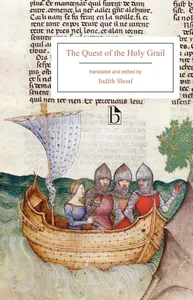
The 2015 edition of "The Quest for the Holy Grail" offers a meticulously researched, if somewhat dry, academic perspective on the Arthurian myth. Its strength lies in meticulously dissecting the literary lineage, tracing the Grail from its likely origins in Chrétien de Troyes' unfinished romance to its more elaborate forms in the Vulgate Cycle. The authors effectively highlight the shift from courtly adventure to spiritual pilgrimage, a crucial development in the legend's trajectory. However, the book's original blurb, focused on fiscal consolidation and Indian taxation policies, appears to be a severe misprint or placeholder, entirely disconnected from the subject matter. This jarring error detracts significantly from the work's presentation and accessibility. A more pertinent limitation is the text's dense scholarly tone, which may alienate readers seeking a more narrative or devotional exploration of the Grail. Nevertheless, the examination of the Grail's symbolism as a vessel of divine sustenance, particularly in the context of Galahad's ascent, provides a solid analytical anchor. It is a valuable resource for scholars, though its presentation requires significant reader patience.
📝 Description
81
Published in 2015, this edition examines the Arthurian legends surrounding the Holy Grail.
This 2015 edition collects and critically analyzes the Arthurian legends focused on the Holy Grail. It synthesizes scholarly commentary with historical background to examine the persistent myth. The book traces the Grail story's development through various literary treatments, from its origins in medieval romances to its later adoption by esoteric circles.
It is intended for students of Arthurian literature, comparative mythology, and Western esoteric thought. Readers interested in how myths evolve, the symbolism in medieval stories, and the pursuit of spiritual understanding will find value here. The work aims to illuminate the Grail's cultural significance beyond common retellings.
The text situates the Grail myth, which first appeared in the late 12th century with Chrétien de Troyes, within its medieval Christian framework. It also addresses its reinterpretation during the Romantic era and by occult groups in the late 19th and early 20th centuries. This edition's academic approach highlights modern scholarly attention to the Grail's diverse origins and meanings, differing from earlier mystical or romantic views.
The book traces the Holy Grail myth from its medieval Christian roots through its later reinterpretations by occult movements in the late 19th and early 20th centuries. This places it within a tradition of esoteric interest in medieval symbolism and spiritual quests. The analysis acknowledges how figures and narratives from Arthurian legend were adapted to explore concepts of divine grace and hidden knowledge by groups seeking spiritual enlightenment beyond conventional religious frameworks.
💡 Why Read This Book?
• Gain a clear understanding of the Grail legend's evolution from its 12th-century origins, as detailed in the analysis of Chrétien de Troyes' "Perceval," to its complex medieval forms. • Explore the specific spiritual trials faced by knights like Galahad, understanding the symbolic meaning of purification required for the quest as presented in the text. • Analyze the Grail's symbolic shifts from early romance to later esoteric interpretations, appreciating its adaptability across historical periods and belief systems.
⭐ Reader Reviews
Honest opinions from readers who have explored this book.
❓ Frequently Asked Questions
What is the Holy Grail according to this book?
This edition of "The Quest for the Holy Grail" presents the Grail not as a single defined object, but as a complex symbol whose meaning evolved through various medieval texts and later esoteric traditions, often representing spiritual fulfillment or divine connection.
Who were the primary knights associated with the Grail quest?
The book identifies Percival, Galahad, and Bors as the central figures in the Grail quest narratives. Their individual journeys and spiritual states are analyzed to understand the quest's thematic requirements.
When did the Holy Grail legend first appear in literature?
The legend's literary genesis is generally attributed to Chrétien de Troyes' unfinished romance, "Perceval, le Conte du Graal," written around the late 12th century.
Does this book discuss the Grail's connection to historical or religious artifacts?
While acknowledging the legend's roots in Christian symbolism, the book primarily focuses on the literary and symbolic development of the Grail myth rather than specific historical artifact claims.
What is the significance of the 2015 publication date?
The 2015 date refers to the publication of this specific edition, indicating a modern scholarly approach to compiling and analyzing the various historical texts and interpretations of the Grail legend.
Is this book about the Knights Templar and the Holy Grail?
While the book touches upon the broader mystique surrounding the Grail, its primary focus is on the literary and allegorical development of the Arthurian legends, not specific historical orders like the Templars.
🔮 Key Themes & Symbolism
The Evolving Grail Symbol
This edition traces the transformation of the Grail symbol from its earliest literary appearances, such as Chrétien de Troyes' 12th-century romance, through its more elaborate iterations in the Vulgate Cycle. It examines how the Grail's perceived nature shifted from a mysterious object of courtly intrigue to a divine vessel central to spiritual salvation. The work highlights the symbolic weight carried by the Grail, representing purity, divine grace, and ultimate spiritual attainment for the knights undertaking the quest.
The Archetypal Knightly Journey
Central to the text is the analysis of the knights' spiritual progression. The book scrutinizes the trials and tribulations faced by figures like Galahad, Percival, and Bors, interpreting these as allegorical steps toward spiritual purification. The concept of worthiness and the internal transformation required to approach the Grail are explored, differentiating the true spiritual quest from mere adventure or martial prowess.
Medieval Christian Allegory
The work underscores the predominantly Christian framework of the Grail legends as they developed in the Middle Ages. It explores how biblical themes, concepts of sin and redemption, and the pursuit of divine favor are interwoven into the narrative fabric. The Grail is often presented as a conduit for God's grace, and the quest as a path to achieving spiritual perfection within a medieval Christian worldview.
Esoteric Reinterpretations
Beyond its medieval context, the book touches upon how the Grail myth was later adopted and reinterpreted by various esoteric and occult traditions. It acknowledges the layering of mystical, Gnostic, and even paganistic meanings onto the legend, particularly from the Romantic era onwards. This section explores the Grail's enduring power to inspire diverse spiritual seeking beyond its original religious confines.
💬 Memorable Quotes
Direct passages from the work, attributed to the author.
“The Grail shifts from a mere object of desire to a symbol of divine presence.”
— This highlights the core thematic evolution discussed in the book, where the physical artifact becomes secondary to the spiritual enlightenment and divine connection it represents for the worthy seeker.
“Chivalry's highest calling is the pursuit of spiritual purity.”
— This interpretation emphasizes how the text frames the Arthurian ideal, suggesting that true knightly virtue culminates not in earthly conquest, but in the arduous internal process of achieving spiritual cleanliness.
“Galahad's ascension signifies the ultimate attainment of divine grace.”
— This points to the specific narrative arc of Sir Galahad, portraying his successful Grail quest as the apex of spiritual achievement within the legend's framework, a state of ultimate communion.
“Medieval romance provided fertile ground for the Grail's symbolic growth.”
— This suggests that the literary conventions and thematic concerns of the medieval period were instrumental in shaping the rich allegorical and spiritual dimensions of the Grail legend as it developed.
“The Grail's mystique transcends its original Christian context.”
— This acknowledges the enduring appeal and adaptability of the Grail narrative, noting its capacity to inspire various spiritual and esoteric interpretations across different historical periods and belief systems.
🌙 Esoteric Significance
Tradition
The Grail legend, particularly in its later interpretations, often intersects with Western esoteric traditions, drawing parallels with Gnostic concepts of hidden knowledge and spiritual liberation. While originating within a medieval Christian framework, its symbolic richness allowed it to be adopted by Hermeticists and Theosophists seeking archetypal representations of spiritual attainment. This work examines how the quest narrative serves as an allegory for the initiate's journey toward higher consciousness and divine union, a theme resonant within these lineages.
Symbolism
Key symbols include the Grail itself, representing divine sustenance, the hidden feminine principle, or a vessel of spiritual wisdom. The quest narrative symbolizes the soul's journey through trials towards purification. The Lance, often depicted as bleeding, can symbolize the wounding and subsequent healing of the divine masculine or the duality of existence. The story's setting, often a desolate castle or sacred grove, signifies a liminal space between the material and spiritual realms.
Modern Relevance
Contemporary esoteric practitioners and scholars continue to draw upon the Grail mythos. Modern psychospiritual movements often interpret the quest as a metaphor for personal transformation and the search for meaning in a secularized world. Groups focused on Arthurian lore, Grail mysteries, and the development of inner divinity find in these narratives a rich source for meditation, ritual, and philosophical inquiry, exploring its relevance to archetypal psychology and the modern search for sacredness.
👥 Who Should Read This Book
• Students of Arthurian Legend: Those seeking a scholarly examination of the literary evolution and symbolic depth of the Grail stories beyond popular retellings. • Comparative Mythology Enthusiasts: Readers interested in tracing the archetypal patterns of spiritual quests and sacred objects across different cultures and historical periods. • Esoteric Tradition Scholars: Individuals exploring the roots of Western mysticism and how medieval narratives were reinterpreted within later occult and Gnostic frameworks.
📜 Historical Context
The legend of the Holy Grail emerged in the late 12th century, a period of intense religious fervor and evolving courtly culture in Europe. Chrétien de Troyes' unfinished "Perceval, le Conte du Graal" (c. 1180s) is widely considered the earliest extant literary treatment, introducing a mysterious vessel linked to Christ's Passion. This nascent concept rapidly expanded through anonymous continuations and later, more elaborate prose cycles like the Vulgate Cycle (early 13th century), which firmly established the Grail quest as a central element of Arthurian romance, shifting focus from courtly adventure to spiritual pilgrimage. Sir Thomas Malory's "Le Morte d'Arthur" (published 1485) synthesized these traditions for an English audience. The 2015 edition's scholarship reflects a modern academic engagement with these texts, distinguishing itself from earlier, more romanticized or occultist interpretations prevalent in the late 19th century, such as those by figures like Jessie Weston or the Théâtre du Soleil's avant-garde explorations. The work’s analysis engages with the Grail’s deep roots in Christian mysticism while also acknowledging its later appropriation by various esoteric traditions.
📔 Journal Prompts
The Grail's shifting symbolism across medieval texts.
Sir Galahad's spiritual purification and its allegorical representation.
The archetypal journey of the knight in pursuit of the Grail.
The medieval Christian underpinnings of the Grail quest.
The resonance of the Grail legend in later esoteric traditions.
🗂️ Glossary
Chrétien de Troyes
A 12th-century French poet considered the first to write about the Grail in his unfinished romance, "Perceval, le Conte du Graal."
Vulgate Cycle
A series of 13th-century Old French prose romances that significantly expanded the Grail legend, introducing characters like Lancelot and developing the spiritual quest narrative.
Sir Galahad
The purest knight in Arthurian legend, destined to achieve the Grail quest, symbolizing ultimate spiritual perfection and divine grace.
Percival
One of the primary knights associated with the Grail quest, often depicted as a figure of innocence and spiritual development throughout the narrative.
Arthurian Romance
A genre of medieval literature featuring King Arthur and his knights, often blending chivalric adventure with supernatural and spiritual elements.
Courtly Love
A medieval literary and social concept emphasizing chivalry, honor, and romantic devotion, often influencing the portrayal of knightly conduct.
Allegory
A narrative where characters and events represent abstract ideas or spiritual truths, commonly used in medieval literature and esoteric traditions.
This book appears in 1 collection
🔮 Readers Also Liked
Browse all →








From the “Holy Grail” Collection
View all →







More Free Occult Philosophy Books
View all →