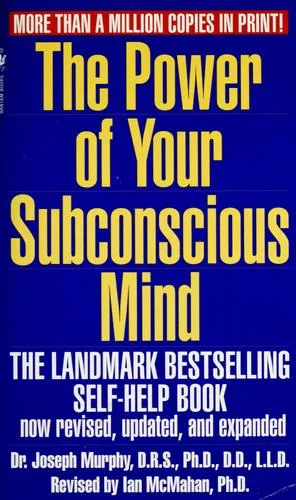
The Power of Your Subconscious Mind
 79
79

The Power of Your Subconscious Mind
Joseph Murphy's "The Power of Your Subconscious Mind" offers a compelling, if sometimes repetitive, argument for the mind's generative capacity. Its strength lies in the sheer volume of anecdotal evidence and straightforward techniques presented, making complex psychological concepts feel immediately applicable. Murphy's insistence on the subconscious as an obedient servant, mirroring our deepest beliefs, is a powerful reframing for many readers. However, the book's singular focus can also be a limitation; it rarely engages with potential counterarguments or the complexities of external circumstances that might impede desired outcomes. The recurring emphasis on prayer and affirmation, while central to its method, sometimes overshadows the nuanced interplay of psychological factors. A particularly striking concept is Murphy's idea of "planting the seed" in the subconscious, which he illustrates with numerous examples of seemingly miraculous manifestations. Ultimately, it's a practical guide that, despite its dated tone, provides a clear framework for mental cultivation.
📝 Description
79
Joseph Murphy's 1963 book proposed that the subconscious mind actively shapes reality.
First published in 1963, Joseph Murphy's "The Power of Your Subconscious Mind" explains how conscious thought and belief can influence the subconscious mind to create desired life outcomes. The book presents practical methods and mental exercises designed to reprogram the subconscious for greater success, improved health, and increased happiness. Murphy's work is for anyone interested in personal growth and applying psychological and spiritual principles to overcome personal limitations and achieve goals. It provides guidance for cultivating a more positive outlook and unlocking one's inner potential.
The central idea is the separation of the conscious and subconscious mind. The conscious mind reasons, while the subconscious holds emotions, habits, and creative power. Murphy argued that subconscious beliefs, whether positive or negative, are mirrored in one's external experience. He detailed how to cultivate constructive beliefs to manifest positive results.
This book emerged from the New Thought movement, a spiritual and philosophical tradition that gained prominence in the late 19th and early 20th centuries. New Thought emphasizes the power of the mind to influence physical reality and well-being, building on earlier ideas from figures like Prentice Mulford and influenced by thinkers such as William James. Murphy synthesized these concepts into accessible advice, focusing on practical application. His work resonated with a public interest in harnessing internal mental states for external results, a theme also found in other self-help literature of the era.
💡 Why Read This Book?
• You will learn a systematic approach to affirmations and visualization, drawing directly from Murphy's 1963 publication, to impress your subconscious with specific goals. This method offers a structured alternative to generic positive thinking. • You will gain an understanding of Murphy's core concept of the subconscious as a "creative intelligence" that responds to your dominant thoughts, a principle he expounds upon throughout the book. • You will discover practical techniques for overcoming mental blocks and fears, as detailed in chapters focusing on achieving wealth, health, and harmonious relationships, providing actionable steps beyond mere theoretical understanding.
⭐ Reader Reviews
Honest opinions from readers who have explored this book.
❓ Frequently Asked Questions
When was Joseph Murphy's The Power of Your Subconscious Mind first published?
The Power of Your Subconscious Mind by Joseph Murphy was first published in 1963, making it a significant work within the mid-20th century New Thought movement.
What is the central premise of The Power of Your Subconscious Mind?
The book's central premise is that the subconscious mind is a powerful creative force that can be directed by conscious thought and belief to manifest desired outcomes in life.
Does the book offer practical exercises for readers?
Yes, Joseph Murphy provides numerous practical exercises, including specific methods of prayer, affirmation, and visualization, designed to reprogram the subconscious mind.
What kind of results does the book claim can be achieved?
The book claims that by harnessing the power of the subconscious, individuals can achieve success in areas such as wealth, health, harmonious relationships, and overall happiness.
Is this book considered part of the New Thought movement?
Absolutely. The Power of Your Subconscious Mind is a key text in the New Thought tradition, which emphasizes the power of thought and belief to shape reality.
Who was Joseph Murphy in relation to this book's publication?
Joseph Murphy was an Irish-American author and New Thought minister, and The Power of Your Subconscious Mind is his most famous and influential work, published in 1963.
🔮 Key Themes & Symbolism
Subconscious as Creative Force
Murphy argues that the subconscious mind is not merely a repository of memories but an active, creative intelligence that mirrors our dominant thoughts and beliefs. It functions like a fertile garden, bringing to fruition whatever is planted within it, whether it be success or failure, health or sickness. This perspective shifts the locus of control inward, suggesting that external circumstances are largely a reflection of our internal mental landscape, a concept central to the book's practical applications.
The Science of Prayer
Murphy reframes prayer not as a supplication to an external deity, but as a scientific technique for impressing the subconscious mind with desired outcomes. He outlines specific methods, such as "feeling the reality of the unseen" and "prayer as a science," emphasizing the importance of emotional conviction and unwavering faith. This approach treats the subconscious as an obedient power that responds directly to the nature and intensity of one's mental and emotional focus.
Manifestation Through Belief
A core tenet is that consistent belief and visualization are the primary mechanisms through which desires are manifested. Murphy provides numerous anecdotes and case studies to illustrate how individuals who deeply believed in their desired outcome, often through focused mental practices, experienced its materialization. This theme underscores the book's practical orientation, offering a roadmap for readers seeking to consciously shape their reality through mental discipline.
Overcoming Mental Obstacles
The book addresses common mental barriers such as fear, doubt, and limiting beliefs, presenting them as impediments to the subconscious mind's creative power. Murphy offers techniques for dismantling these obstacles, advocating for the replacement of negative thought patterns with positive, constructive ones. This process involves cultivating self-awareness and consciously choosing beliefs that align with one's aspirations, thereby clearing the path for the subconscious to operate effectively.
💬 Memorable Quotes
Direct passages from the work, attributed to the author.
“The subconscious mind is the mind of God within you.”
— This statement elevates the subconscious beyond a mere psychological faculty, associating it with divine creative power. It suggests that by accessing and aligning with our subconscious, we tap into a universal, omnipotent intelligence capable of bringing about any desired reality.
“You become what you think about most of the time.”
— This is a concise expression of the book's central principle: that our dominant thoughts and beliefs, whether consciously held or deeply ingrained in the subconscious, shape our identity and our external experiences. It highlights the lasting impact of sustained mental focus.
“The truth is that you are the master of your own destiny.”
— Murphy emphasizes personal agency and responsibility, asserting that individuals have the power to consciously direct their thoughts and beliefs to influence their life's trajectory. This perspective empowers the reader, framing them as the architect of their own reality through mental control.
“The imagination is the most powerful faculty you possess.”
— The book champions the power of the imagination, particularly when imbued with emotion and belief, as the primary tool for impressing the subconscious. Murphy suggests that vividly imagining desired outcomes is a crucial step in their manifestation process.
“Anxiety is the great thief of mental peace.”
— Murphy identifies anxiety as a destructive mental state that actively hinders the positive functioning of the subconscious. He suggests that by releasing anxious thoughts and cultivating inner peace, individuals can create a more receptive state for their subconscious to work constructively.
🌙 Esoteric Significance
Tradition
Murphy's work is deeply rooted in the New Thought tradition, a distinctly American esoteric movement that emphasizes the mind's power to shape reality. While not strictly Hermetic or Kabbalistic, it shares common ground with these traditions in its focus on internal causation and the belief that understanding and manipulating consciousness can alter external circumstances. It departs from more ritualistic or symbolic systems by offering direct, psychological techniques aimed at immediate personal transformation.
Symbolism
While "The Power of Your Subconscious Mind" is less reliant on overt symbolism than many esoteric texts, the concept of the "subconscious mind" itself functions as a potent symbol. It represents the less-obvious layers of the psyche, the source of creative power and innate wisdom, akin to the alchemical concept of the 'prima materia' or the Gnostic 'inner light.' The "seed" is another recurring motif, symbolizing an idea or belief planted in the subconscious that will inevitably grow and manifest.
Modern Relevance
Murphy's ideas continue to resonate strongly in contemporary self-help, personal development, and even in aspects of the mindfulness and manifestation movements. Thinkers and practitioners in fields like positive psychology, neuro-linguistic programming (NLP), and the broader "law of attraction" community often draw upon or echo his core principles. His emphasis on the power of belief and focused intention remains a reference for many seeking to effect personal change and achieve specific life outcomes.
👥 Who Should Read This Book
• Individuals seeking practical, actionable techniques for personal transformation: Readers who want clear instructions on how to use affirmations, visualization, and mental prayer to achieve specific goals like career advancement or improved health will find Murphy's approach direct and effective. • Students of metaphysical and New Thought literature: Those exploring the history and core tenets of movements like New Thought will benefit from engaging with one of its most influential and widely read texts. • Anyone feeling limited by their current circumstances: Readers who believe their current reality is intractable and are looking for a framework to fundamentally shift their mindset and, consequently, their life experiences will find encouragement and methods within this book.
📜 Historical Context
Joseph Murphy's "The Power of Your Subconscious Mind" emerged from the fertile ground of the New Thought movement, a spiritual and philosophical tradition that flourished in the United States from the late 19th century. This movement, influenced by Transcendentalism and earlier metaphysical thinkers, championed the idea that thought could directly influence material reality. Murphy, an ordained minister within this tradition, synthesized and popularized these concepts for a post-war audience increasingly interested in self-improvement and psychological well-being. His work built upon the foundations laid by figures like Phineas Quimby and Emma Curtis Hopkins, offering a more structured, almost scientific approach to harnessing mental power. While figures like Norman Vincent Peale were also promoting positive thinking in the same era, Murphy's focus was more specifically on the mechanics of the subconscious. The book's straightforward, anecdotal style contrasted with more academic explorations of consciousness, contributing to its widespread appeal and enduring status as a foundational text in practical metaphysics.
📔 Journal Prompts
The subconscious mind's capacity for healing: Reflect on a time your body responded to belief, however subconscious.
Visualizing your 'good': How does the imagery of planting a seed in the subconscious apply to your current aspirations?
The power of affirmation: Craft an affirmation based on Murphy's principles for a specific challenge you face.
Your destiny as self-authored: Consider the concept of being the 'master of your own destiny' – what does this imply for your daily choices?
The role of belief: Identify a persistent negative belief and explore how it might be impacting your subconscious.
🗂️ Glossary
Subconscious Mind
The deeper, non-rational part of the mind that stores beliefs, emotions, and habits. Murphy posits it as a creative intelligence that manifests one's dominant thoughts and feelings into external reality.
Conscious Mind
The reasoning, volitional aspect of the mind. It is responsible for thought, logic, and decision-making, and serves as the gatekeeper for impressing the subconscious.
Affirmation
A positive statement, often repeated, designed to impress a desired belief or outcome onto the subconscious mind. Murphy treats affirmations as a form of scientific prayer.
Visualization
The practice of creating vivid mental imagery of desired outcomes as if they have already occurred. This technique is used to evoke the feeling of the wish fulfilled, thereby impressing the subconscious.
New Thought
A spiritual and philosophical movement originating in the 19th century, emphasizing the power of thought and belief to influence reality and promote well-being. Murphy was a prominent proponent.
Mental Alchemy
Murphy's term for the process of transforming one's thoughts and beliefs, particularly negative ones, into positive mental states that yield desired results. It involves consciously directing mental energy.
Feeling the Reality of the Unseen
A key technique described by Murphy, involving immersing oneself in the emotional experience of a desired outcome as if it were already manifest, thereby convincing the subconscious mind of its truth.
🔮 Readers Also Liked
Browse all →








More by Joseph Murphy
All books →





More Free Occult Philosophy Books
View all →