Secrets of the I Ching
 76
76

Secrets of the I Ching
Joseph Murphy's approach to the I Ching in "Secrets of the I Ching" is characteristic of his work: it prioritizes psychological interpretation and practical application over strict adherence to traditional Chinese cosmology. His focus on using the I Ching as a tool for subconscious self-discovery, rather than purely predictive divination, is a notable strength. The integration of simple coin-tossing methods makes the text accessible to beginners. However, this very accessibility might alienate those seeking a deeper, more scholarly engagement with the I Ching's complex philosophical and historical layers.
A passage that exemplifies Murphy's style discusses how a hexagram's meaning can be understood through the lens of one's current mental state, suggesting the book acts as a "mirror to the soul." While this offers a compelling personal application, it sidesteps the richer cosmological framework and historical development of the text that scholars like Richard Wilhelm or Jung explored. Ultimately, Murphy provides a functional, if somewhat simplified, guide to the Book of Changes for the spiritually inclined seeker.
📝 Description
76
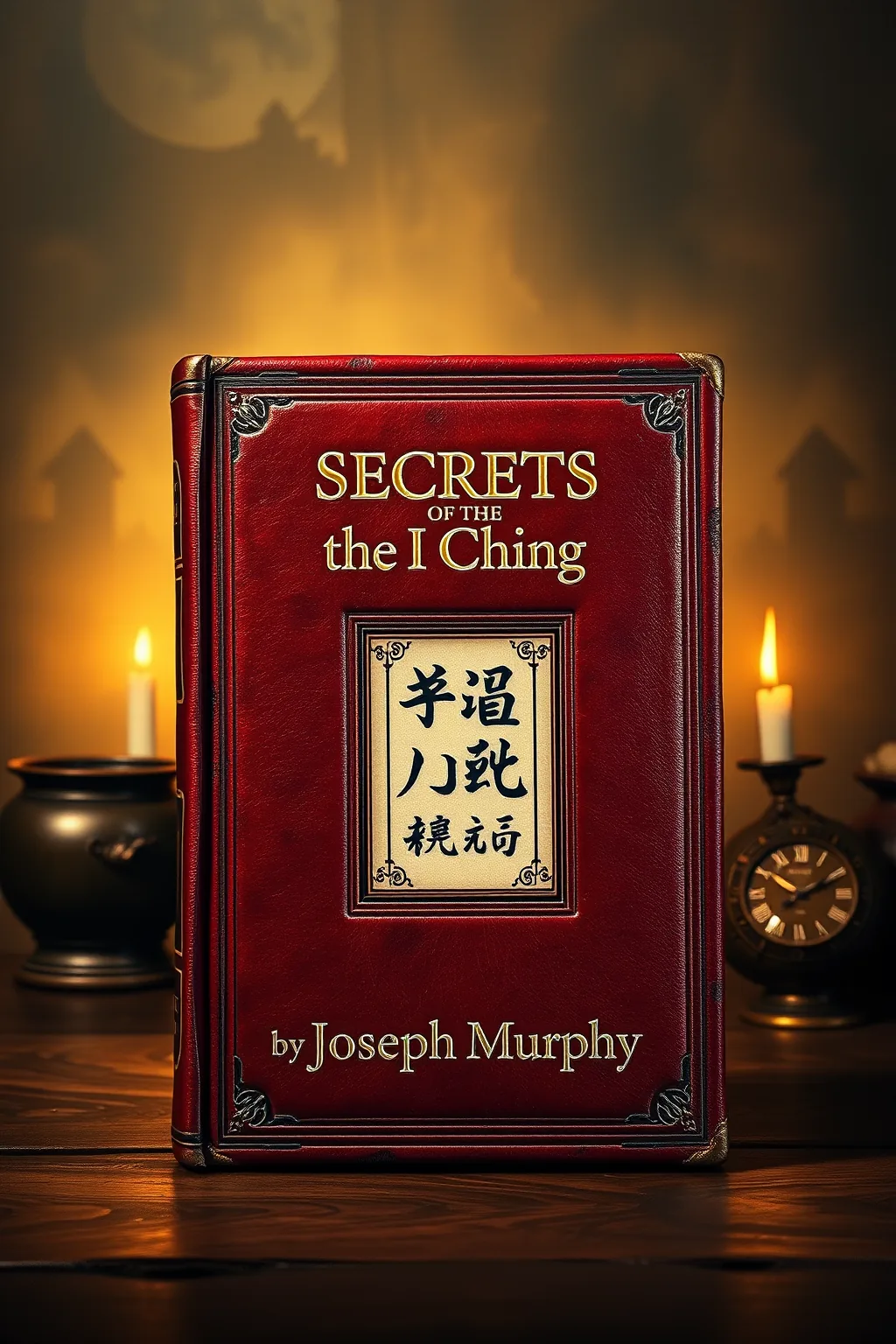
Joseph Murphy's 1999 book, Secrets of the I Ching, adapts the ancient Chinese divination text for modern self-guidance.
Joseph Murphy's "Secrets of the I Ching", published in 1999, offers a practical guide to the ancient Chinese Book of Changes. It translates the I Ching's hexagrams and philosophical principles into actionable advice for individuals seeking direction in contemporary life. The book focuses on using the text's wisdom to understand personal challenges and opportunities, aiming to foster spiritual growth.
This work is suitable for readers interested in applying historical wisdom to their present circumstances, especially those drawn to self-improvement and metaphysical interpretations of divination. Murphy appeals to those who appreciate psychological insights into symbolic systems and who are comfortable using simple methods, like coin tosses, for divinatory inquiry. The text positions the I Ching as a tool for self reflection, encouraging users to see its pronouncements as mirrors of their own inner states and surrounding energies.
The I Ching, with a tradition of over 5,000 years, is one of the world's oldest continuously used texts. Its philosophical ideas profoundly shaped Taoism and Confucianism, attracting scholars and mystics for centuries. Murphy's 1999 adaptation emerged during a period of renewed Western interest in Eastern philosophies and esoteric practices, presenting the I Ching as a psychological and metaphysical tool for contemporary seekers.
💡 Why Read This Book?
• Learn a practical method for using the I Ching for self-reflection, as demonstrated by Joseph Murphy's coin-tossing technique, which he first published in the context of his subconscious studies. • Gain insight into the concept of synchronicity as applied to divination, understanding how the I Ching, according to Murphy, reflects your inner state and external circumstances. • Explore the philosophical interpretations of the I Ching's hexagrams, moving beyond simple fortune-telling to a deeper understanding of life's changes, as presented in the 1999 revised edition.
⭐ Reader Reviews
Honest opinions from readers who have explored this book.
❓ Frequently Asked Questions
What is the I Ching and how does Joseph Murphy interpret it?
The I Ching, or Book of Changes, is an ancient Chinese divination text with over 5,000 years of history. Joseph Murphy interprets it as a tool for understanding one's subconscious mind and the principles of synchronicity, offering practical guidance for life's challenges.
What are the primary tools used in 'Secrets of the I Ching'?
The book primarily utilizes three ordinary coins for divination. By tossing these coins, readers generate hexagrams from the I Ching, which then serve as the basis for Murphy's interpretations and guidance.
When was 'Secrets of the I Ching' by Joseph Murphy first published?
Joseph Murphy's 'Secrets of the I Ching' was first published on December 1, 1999. This edition was revised to appeal to contemporary spiritual seekers.
Does this book focus on traditional Chinese philosophy or a more modern, psychological approach?
While based on the ancient Chinese philosophy of the I Ching, Murphy's work leans heavily towards a modern, psychological, and metaphysical interpretation. He emphasizes self-discovery and subconscious exploration.
Is prior knowledge of the I Ching required to read this book?
No, prior knowledge is not strictly required. Joseph Murphy breaks down the concepts and methods, making 'Secrets of the I Ching' accessible to newcomers interested in divination and self-help.
What distinguishes Joseph Murphy's approach to the I Ching from other interpretations?
Murphy's distinction lies in his focus on the I Ching as a mirror to the subconscious and a tool for manifesting desired outcomes, aligning it with his broader teachings on the power of thought and belief.
🔮 Key Themes & Symbolism
Synchronicity and the Subconscious
Murphy posits that the I Ching operates through the principle of synchronicity, where the timing of the divination and the resulting hexagram align meaningfully with the querent's subconscious state. He argues that the Book of Changes, particularly when consulted using simple coin tosses, acts as a direct conduit to the subconscious mind. This allows individuals to gain awareness of their inner desires, fears, and potential obstacles, offering a unique lens through which to view and influence their life circumstances.
Practical Application of Ancient Wisdom
The core of 'Secrets of the I Ching' lies in its directive to apply the ancient text's wisdom to everyday life. Murphy moves beyond theoretical exposition, providing actionable steps for readers to consult the I Ching for guidance on decisions, relationships, and personal development. The emphasis is on empowering the reader by demonstrating how the I Ching's pronouncements can be interpreted as practical advice for navigating personal challenges and opportunities.
The Book of Changes as a Mirror
Murphy presents the I Ching not as a deterministic oracle, but as a reflective tool. The hexagrams generated through coin tosses are interpreted as mirrors, showing the reader the underlying patterns and energies at play in a situation. This perspective encourages introspection, prompting readers to examine their own thoughts, beliefs, and attitudes in relation to the guidance received from the text. The goal is self-understanding and conscious redirection of one's mental and spiritual focus.
Metaphysical Interpretation of Divination
This work is firmly rooted in Murphy's broader metaphysical philosophy, which champions the power of the mind and belief. He interprets the I Ching within this framework, suggesting that the text's insights can be used to align one's consciousness with desired outcomes. The focus is less on predicting the future and more on understanding the present moment and consciously shaping the future through mental and spiritual alignment, a concept he explored extensively in his other works.
💬 Memorable Quotes
Direct passages from the work, attributed to the author.
“The I Ching is a guide to the possibilities inherent in any situation.”
— This statement highlights Murphy's view of the Book of Changes not as a fixed prophecy, but as a dynamic source of potential outcomes. It suggests that understanding the I Ching's messages can illuminate various paths forward, empowering the reader to make informed choices.
“The ancient text... is rich in revelations.”
— This highlights the depth and enduring relevance of the I Ching. Murphy suggests that despite its age, the Book of Changes continues to offer useful insights applicable to contemporary human experience and spiritual inquiry.
“An eminent expert on the powers of the subconscious, Dr. Joseph Murphy opens the guiding force of this ancient text...”
— This positions Murphy as a bridge between two distinct fields: the psychology of the subconscious and the esoteric wisdom of the I Ching. It suggests his unique contribution lies in interpreting the ancient text through a modern psychological lens.
“Based on the revered Chinese philosophy with a 5,000-year-old tradition, the I Ching...”
— This grounds the book in the historical and cultural significance of its source material. It acknowledges the I Ching's ancient roots and esteemed status within Chinese philosophical traditions, lending weight to Murphy's interpretation.
💡 Key Ideas
Editorial paraphrase of the work's core concepts — not direct quotes.
With the help of three coins... readers will learn to consult the ancient wisdom of the I Ching.
This paraphrased concept from the blurb emphasizes the accessible methodology Murphy employs. The use of ordinary coins makes the profound practice of I Ching divination available to anyone, explaining the process for modern seekers.
🌙 Esoteric Significance
Tradition
Murphy's work places the I Ching within a broader Western esoteric tradition that emphasizes practical application and psychological interpretation, rather than strict adherence to its original Chinese philosophical lineage (Taoism, Confucianism). It aligns with the metaphysical and New Thought movements of the 20th century, which sought to integrate Eastern wisdom with Christian metaphysics and scientific understanding, focusing on the mind's power to influence reality.
Symbolism
The primary symbolic elements are the hexagrams, each composed of six lines (solid for Yang, broken for Yin). Murphy interprets these not just as divinatory symbols but as representations of dynamic forces and states of being. The three coins used for consultation symbolize the interaction of Heaven, Earth, and Humanity, a common motif in Chinese philosophy, which Murphy reinterprets through a lens of conscious choice and subconscious influence.
Modern Relevance
Murphy's approach to the I Ching continues to influence contemporary self-help and spiritual development circles. Thinkers and practitioners interested in synchronicity, positive psychology, and the application of ancient wisdom for personal transformation often draw upon his accessible interpretations. His work provides a bridge for those seeking to engage with divination systems like the I Ching from a psychological and metaphysical perspective, rather than a purely academic or traditional one.
👥 Who Should Read This Book
• Individuals interested in practical divination and self-discovery, particularly those drawn to Joseph Murphy's previous works on the power of the subconscious mind. • Seekers of ancient wisdom who prefer a modern, psychological interpretation of esoteric texts over purely historical or academic approaches. • Aspiring practitioners of Western esoteric traditions looking for accessible methods to integrate divination into their spiritual practice, focusing on personal growth and insight.
📜 Historical Context
Joseph Murphy's "Secrets of the I Ching," published in 1999, emerged during a period of renewed global interest in Eastern philosophies and esoteric practices, a trend notably influenced by figures like Carl Jung, who famously explored the I Ching's concept of synchronicity in his own writings. Murphy's work taps into a late 20th-century desire for practical spiritual guidance, adapting the ancient Chinese Book of Changes for an audience seeking self-help and metaphysical understanding. This era saw many Western authors reinterpreting ancient wisdom traditions, often emphasizing psychological and personal empowerment over strict adherence to original cultural contexts. While competing schools of thought, such as more traditional Confucian or Taoist interpretations of the I Ching, existed, Murphy's approach aligned with the New Age movement's focus on accessible, personal spirituality. His prior success with books like "The Power of Your Subconscious Mind" provided a strong foundation for presenting the I Ching through a similar lens of mental and spiritual influence.
📔 Journal Prompts
The meaning of a generated hexagram in relation to your current subconscious state.
How the principle of synchronicity applies to your I Ching consultations.
The role of ordinary pennies in accessing ancient wisdom.
Interpreting the I Ching's revelations for practical life decisions.
The balance of Yin and Yang energies as reflected in a hexagram.
🗂️ Glossary
I Ching
An ancient Chinese text, also known as the Book of Changes, used for divination and philosophical contemplation. It comprises 64 hexagrams, each representing a specific situation or principle.
Hexagram
A symbol composed of six stacked lines, each either solid (Yang) or broken (Yin). In the I Ching, each of the 64 hexagrams has a specific name, image, and judgment associated with it.
Yang
In I Ching philosophy, Yang represents the active, masculine, light, and positive principle. It is symbolized by a solid line (—).
Yin
In I Ching philosophy, Yin represents the passive, feminine, dark, and negative principle. It is symbolized by a broken line (- -).
Synchronicity
A concept, notably explored by Carl Jung, describing meaningful coincidences that seem to have no causal relationship. Murphy applies this to the I Ching, suggesting the timely appearance of a hexagram is a meaningful coincidence.
Subconscious Mind
The part of the mind that is not currently in focal awareness but can be accessed. Murphy extensively wrote about its power to influence one's reality and experiences.
Divination
The practice of seeking knowledge of the future or the unknown by supernatural means. In this context, it refers to consulting the I Ching for guidance.