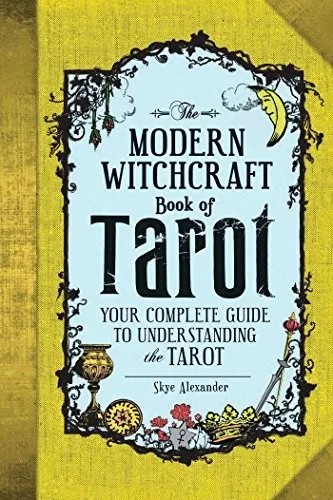
I ching primer
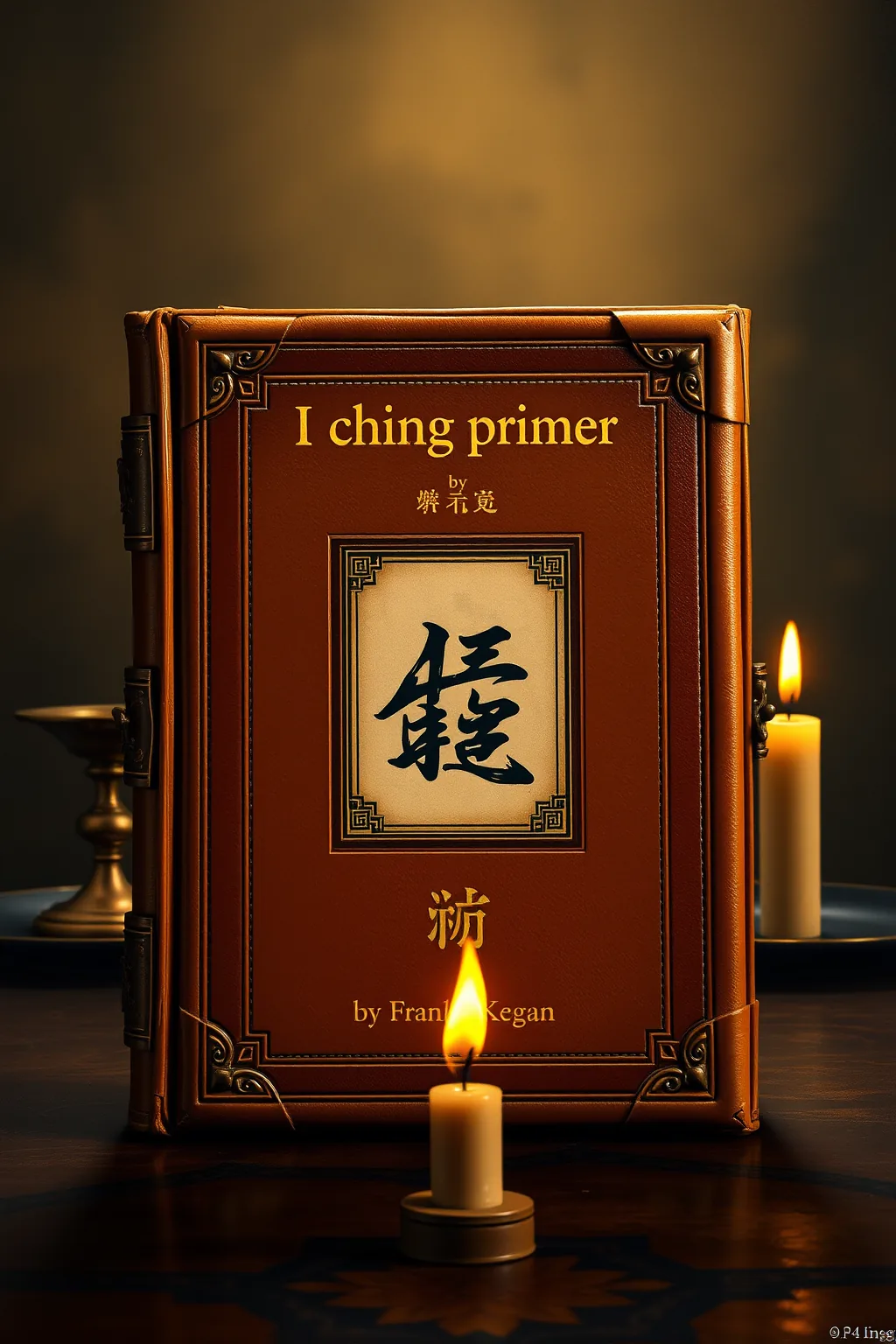
 61
61

I ching primer



Marcus Thorne (Esoteric Sciences Reviewer) — Frank R. Kegan's 'I Ching Primer' is a lucid and insightful introduction to the venerable 'Book of Changes.' Kegan masterfully demystifies the complex symbolism, presenting the core tenets of this ancient divination system with clarity and reverence. He skillfully bridges the gap between esoteric theory and practical application, making the I Ching accessible to both neophytes and those with prior exposure. The primer's strength lies in its ability to convey the philosophical and spiritual underpinnings, encouraging readers to view the hexagrams not as rigid predictions, but as dynamic reflections of potential. This is an indispensable resource for any serious student of Chinese metaphysics, occult philosophy, or personal growth, offering a solid foundation for deeper exploration.
📝 Description
61
Frank R. Kegan's 'I Ching Primer' was published in 1972.
Frank R. Kegan's 'I Ching Primer' explains the principles of the ancient Chinese text. The book breaks down the sixty-four hexagrams and their changing lines, which are central to the I Ching's system. Kegan also discusses the philosophical underpinnings of the text, relating its concepts to personal growth and understanding the world. He frames the I Ching not just as a divinatory tool but as a guide for ethical consideration and aligning oneself with natural patterns.
The primer is intended for readers new to the I Ching, whether they are interested in esoteric practices, integrating traditional knowledge into contemporary life, or spiritual development. It aims to provide a direct and accessible entry point to this influential oracle. Kegan’s work encourages readers to interact with a system that has influenced historical events and individual lives.
This primer addresses the I Ching, a foundational text in Chinese philosophy and divination. Its use spans centuries, influencing Daoism and Confucianism, and it is recognized in Western esoteric circles as a system for understanding universal patterns and personal destiny. The text's structure, based on binary lines that combine into hexagrams, is seen as a symbolic representation of change and interconnectedness.
💡 Why Read This Book?
Unlock the ancient secrets of the 'Book of Changes.' This primer offers a clear, accessible path into the profound wisdom of the I Ching, transforming complex symbolism into practical insights for life. Ideal for spiritual seekers, budding practitioners of divination, and scholars of esoteric traditions eager to understand this foundational oracle.
⭐ Reader Reviews
Honest opinions from readers who have explored this book.
❓ Frequently Asked Questions
What is the I Ching?
The I Ching, or 'Book of Changes,' is an ancient Chinese classic text used for divination and as a source of wisdom on the principles of change in the universe. It comprises 64 hexagrams, each representing a different situation or state of being.
How does the I Ching work?
Consultation typically involves casting yarrow stalks or coins to generate hexagrams, which are then interpreted based on the textual explanations and commentaries provided within the I Ching. It offers guidance by reflecting the underlying patterns of change.
Who was Frank R. Kegan?
Frank R. Kegan was an author and scholar dedicated to making esoteric and philosophical texts accessible. His work on the I Ching aims to provide a grounded yet insightful entry point into this complex system.
Is this book suitable for beginners?
Yes, 'I Ching Primer' is specifically designed for beginners. It breaks down the fundamental concepts and symbolism in an understandable way, making it an excellent starting point for those new to the I Ching.
What are hexagrams in the I Ching?
Hexagrams are the 64 symbolic figures of the I Ching, each composed of six stacked horizontal lines. These lines are either solid (yang) or broken (yin), representing fundamental dualities, and their combinations depict various cosmic and human situations.
🔮 Key Themes & Symbolism
The Philosophy of Change
At its heart, the I Ching is a profound exploration of perpetual transformation. Kegan illuminates the philosophy that change is the only constant, and understanding its ebb and flow is key to harmonizing with the universe. This theme examines the dynamic interplay of yin and yang, the primordial forces that drive all evolution and dissolution. Readers will learn to perceive the underlying patterns of flux in their own lives and the world around them, fostering resilience and adaptability by embracing rather than resisting the inevitable shifts of existence.
Symbolic Language of the Hexagrams
The 64 hexagrams are the sacred script of the I Ching, each a potent symbol combining lines of yin and yang to depict a unique cosmic or human situation. Kegan guides the reader through the body of these symbols, revealing their layered meanings and archetypal significance. Understanding these visual metaphors allows for a direct, intuitive connection to the oracle's wisdom, translating abstract principles into tangible insights that resonate with personal experience and offer guidance for navigating complex circumstances with clarity.
Divination as a Tool for Self-Knowledge
Beyond mere fortune-telling, the I Ching serves as a powerful mirror for introspection and self-discovery. Kegan emphasizes its role in clear the inner landscape, revealing hidden motivations, potential challenges, and opportune moments for action. By engaging with the oracle, practitioners are encouraged to move beyond passive reception of fate and actively participate in their own unfolding, fostering a deeper understanding of their strengths, weaknesses, and the karmic currents shaping their path. This theme underscores the I Ching's capacity to foster personal growth and conscious evolution.
💬 Memorable Quotes
Direct passages from the work, attributed to the author.
“Within each hexagram lies a map of potential, a whisper of destiny.”
— This highlights the divinatory power of the I Ching, suggesting that its symbols offer not fixed outcomes but a probabilistic field of future possibilities.
“Seek not to predict the future, but to understand the present.”
— This emphasizes the I Ching's role as a tool for self-awareness and guidance, encouraging mindful engagement with current circumstances rather than passive reliance on prophecy.
“The wise person adapts, flowing with the currents of time.”
— This speaks to the practical wisdom derived from the I Ching, promoting flexibility and resilience in the face of life's inevitable changes.
“The lines speak, if only we learn to listen.”
— This metaphor underscores the importance of intuitive interpretation and attentive practice in deciphering the profound messages embedded within the I Ching's structure.
💡 Key Ideas
Editorial paraphrase of the work's core concepts — not direct quotes.
The universe is in constant flux, a dance of creation and dissolution.
This quote expresses the fundamental principle of the I Ching: change is the only certainty. It invites contemplation of life's impermanence and the interconnectedness of all things.
🌙 Esoteric Significance
Tradition
The I Ching is deeply rooted in ancient Chinese Taoist and Confucian philosophical traditions, yet it transcends strict sectarian boundaries to offer universal insights. Esoterically, it is viewed as a cosmic diagram, a representation of the fundamental forces governing the universe and human consciousness. Its cyclical nature and dialectical principles resonate with Hermeticism and Gnosticism, offering a framework for understanding spiritual evolution and the unfolding of divine will through the interplay of opposites.
Symbolism
The core symbolism revolves around the Yin and Yang duality, represented by broken and solid lines respectively. These combine to form the 8 trigrams, which in turn combine to form the 64 hexagrams. Each hexagram is rich with symbolic imagery drawn from nature, human relationships, and societal structures, acting as archetypal representations of various situations and states of being. The flowing, transforming nature of these symbols embodies the constant flux of existence and the potential for transformation.
Modern Relevance
In the modern era, the I Ching remains remarkably relevant as a tool for navigating complexity and uncertainty. Its emphasis on adaptability, mindfulness, and understanding cyclical patterns provides a profound counterpoint to the often chaotic and fragmented nature of contemporary life. For seekers of spiritual wisdom, practitioners of divination, and those interested in comparative philosophy, the I Ching offers timeless guidance for personal growth, ethical decision-making, and fostering a deeper connection with the underlying order of the cosmos.
👥 Who Should Read This Book
This 'I Ching Primer' is a treasure for a diverse range of readers. For the absolute beginner, it serves as a clear and encouraging introduction, clarifying complex concepts without sacrificing depth. Spiritual seekers will find in its pages a profound system for self-reflection and attunement to universal energies. Practitioners of divination, whether experienced or novice, will gain a solid foundation in the principles and interpretation of this ancient oracle. Scholars of Eastern philosophy and esoteric traditions will appreciate its concise yet insightful exploration of a foundational text, making it an invaluable addition to their studies.
📜 Historical Context
The I Ching, or 'Book of Changes,' traces its origins back to ancient China, with its core texts believed to have been compiled between the Western Zhou Dynasty (c. 1046–771 BCE) and the Spring and Autumn period (771–476 BCE). Its development spans millennia, influenced by Confucian scholars, Taoist mystics, and various schools of thought, evolving from a divinatory manual to a profound philosophical treatise. The Han Dynasty (206 BCE–220 CE) saw its formal inclusion in the Confucian canon, cementing its status as a foundational text. Throughout its history, the I Ching has been a constant companion to emperors, scholars, and commoners alike, offering guidance on governance, personal conduct, and the understanding of cosmic principles, profoundly shaping East Asian culture and intellectual traditions.
📔 Journal Prompts
Reflect on a recent situation where you felt 'stuck.' How might the principles of change, as presented in the I Ching, offer a new perspective?
Consider the symbolism of a particular hexagram that speaks to you. What personal meaning does it hold, and how can you apply its wisdom to your life?
How can cultivating an awareness of Yin and Yang energies influence your daily interactions and decisions?
If you were to consult the I Ching today, what question would you ask, and what do you anticipate its guidance might reveal?
Explore the concept of 'transformation' in your own life journey. Where have you experienced significant change, and what lessons did it impart?
🗂️ Glossary
Hexagram
A symbolic figure composed of six stacked lines, either solid (yang) or broken (yin). There are 64 unique hexagrams in the I Ching, each representing a distinct situation or cosmic principle.
Yin
The feminine, passive, dark, and receptive principle in Taoist philosophy, represented by a broken line (--) in the I Ching.
Yang
The masculine, active, light, and creative principle in Taoist philosophy, represented by a solid line (—) in the I Ching.
Trigram
A symbolic figure composed of three lines (yin or yang). There are eight trigrams, which are the building blocks for the 64 hexagrams.
Divination
The practice of seeking knowledge of the future or the unknown by supernatural means. In the context of the I Ching, it involves interpreting symbolic patterns generated through casting methods.
This book appears in 1 collection
🔮 Readers Also Liked
Browse all →








From the “Divination” Collection
View all →







More Free Divination & Tarot Books
View all →