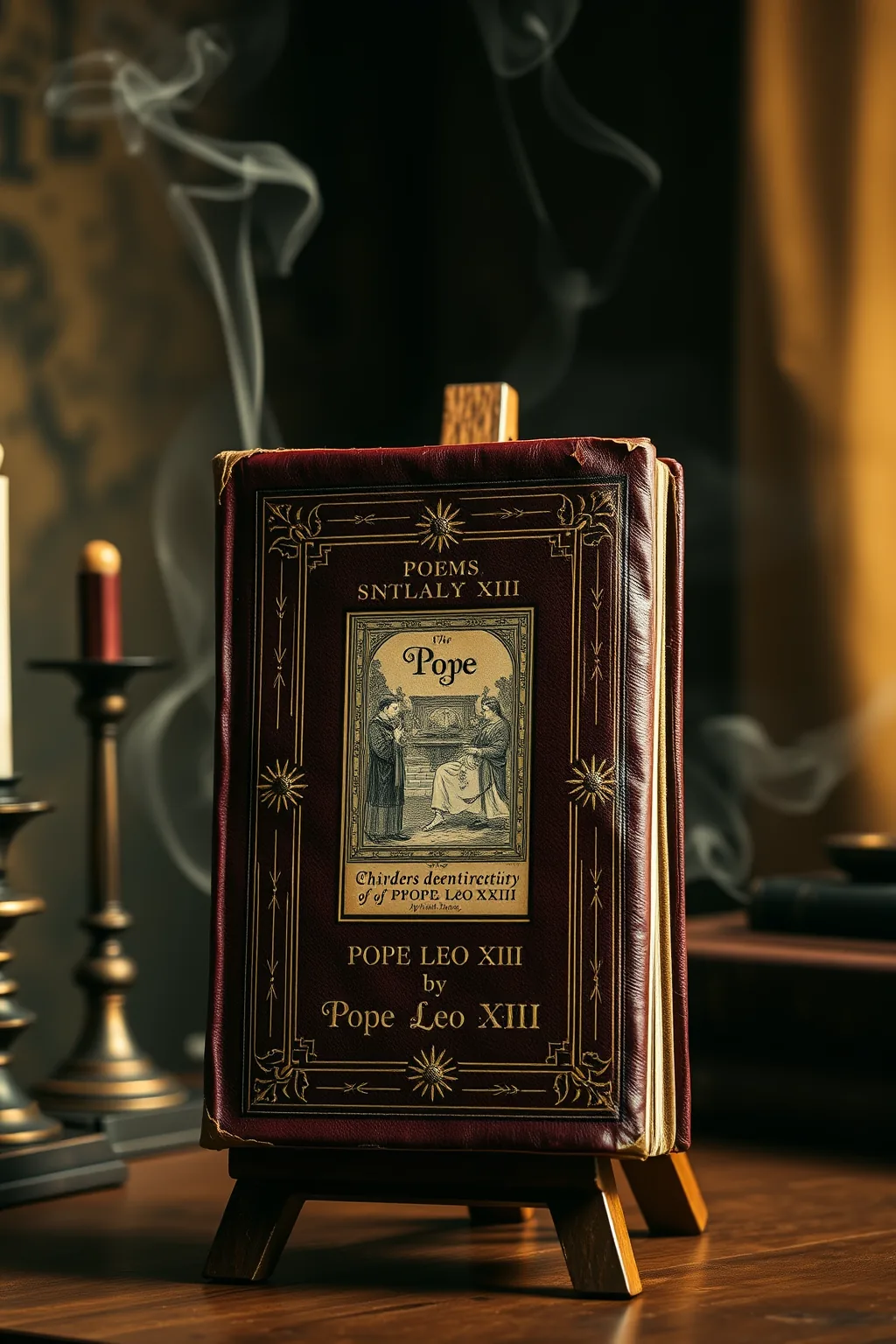
Poems, charades, inscriptions of Pope Leo XIII
 62
62

Poems, charades, inscriptions of Pope Leo XIII



Alaric Kestrel (Metaphysical Studies Reviewer) — Pope Leo XIII's "Poems, Charades, and Inscriptions" is a treasure for those who delve beyond the surface of theological discourse. This collection reveals a profound engagement with mystical themes, translating complex spiritual concepts into the elegant cadences of Latin and English verse. The charades and inscriptions, often overlooked, offer unique windows into symbolic reasoning and esoteric allegories favored within scholarly ecclesiastical circles. Its strength lies in its dual accessibility: offering devotional comfort to the faithful while providing rich fodder for metaphysical inquiry. An essential read for scholars of esoteric Christianity and devotional literature.
📝 Description
62
Pope Leo XIII's 1899 collection gathers his lesser-known poems, charades, and inscriptions.
This volume presents a collection of writings by Pope Leo XIII, including poems, charades, and inscriptions. These works reveal a private intellectual and spiritual dimension beyond his public papal duties. The texts are composed primarily in Latin and exhibit a devotional character, touching upon themes of faith and theological reflection. They offer insight into the Pope's personal engagement with sacred language and symbolism.
The collection invites readers to consider the interplay between classical literary forms and religious sentiment. It showcases Leo XIII's skill in crafting verse and puzzles while expressing his spiritual convictions. The inscriptions, in particular, may relate to specific events or dedications during his pontificate. This is not a theological treatise but rather a personal expression of faith through literary composition.
While not overtly occult, Leo XIII's private writings engage with symbolism and allegorical interpretation common in esoteric traditions. His use of Latin, a language often imbued with mystical significance, and his creation of charades suggest an appreciation for layered meaning and intellectual puzzles. These writings reflect a more personal spiritual interiority, echoing the contemplative practices found in various devotional schools that sought deeper understanding through symbolic language and structured intellectual exercises, rather than direct engagement with magical practices.
💡 Why Read This Book?
Explore the hidden contemplative life of a significant Pope, revealing esoteric symbolism within sacred verse. This collection offers unique insights into Latin poetry, Catholic theology, and the translation of spiritual concepts across languages. Ideal for seekers of deeper meaning, scholars of religious history, and practitioners interested in the interplay of faith and mystical expression.
⭐ Reader Reviews
Honest opinions from readers who have explored this book.
❓ Frequently Asked Questions
What is the primary language of the original works?
The original works are predominantly in Latin, with translations provided into English. This dual-language presentation allows for appreciation of the original poetic structure and access to the translated meaning.
Are these considered occult texts?
While not strictly occult in the modern sense, the collection delves into esoteric Christian symbolism, allegorical interpretation, and profound spiritual contemplation, which can be of interest to those exploring mystical traditions.
What role do the charades and inscriptions play?
The charades and inscriptions often serve as intellectual and spiritual puzzles, embedding theological truths and symbolic meanings within concise, enigmatic forms. They showcase a learned approach to conveying complex ideas.
Who would benefit most from reading this book?
Scholars of Catholic history and literature, students of Latin poetry, spiritual seekers interested in devotional mysticism, and anyone fascinated by the intellectual output of significant religious figures will find this volume enriching.
Does this book require prior knowledge of Catholic doctrine?
While prior knowledge can enhance appreciation, the translations and the nature of poetry allow for a general understanding. The book invites exploration and learning about Catholic spiritual traditions and their poetic expressions.
🔮 Key Themes & Symbolism
The Alchemy of Sacred Language
Explore how Pope Leo XIII masterfully transmutes theological concepts into the potent medium of verse. This theme explores the transformative power of sacred language, particularly Latin, as a conduit for divine truth and spiritual enlightenment. The collection showcases how poetic form can illuminate complex doctrines, revealing hidden layers of meaning and offering an alchemical process of turning spiritual insights into enduring artistic expressions. It highlights the profound connection between linguistic precision and mystical apprehension, inviting readers to decode the symbolic resonances within each line.
Veiled Allegories of the Divine
Uncover the collection of veiled allegories woven throughout Pope Leo XIII's poetry. This theme focuses on the symbolic language employed to convey spiritual truths and the hidden meanings embedded within charades and inscriptions. Readers are invited to engage in a process of interpretive discovery, much like ancient mystics deciphered sacred texts. The works serve as a proof of the enduring tradition of esoteric Christian symbolism, where everyday imagery and classical references are repurposed to point towards transcendent realities, offering a profound meditation on the divine presence in the world.
The Pontiff's Inner Contemplation
Look at the personal contemplative field of Pope Leo XIII, as revealed through his private poetic endeavors. This theme explores the spiritual introspection and philosophical musings that likely underpinned his public role. The poems offer an intimate glimpse into his wrestling with faith, doctrine, and the human condition, transcending the expected pronouncements of a pontiff. It is an invitation to understand the man behind the office, his intellectual rigor, and his deep spiritual devotion, providing a unique perspective on the internal world of a key figure in religious history.
💬 Memorable Quotes
Direct passages from the work, attributed to the author.
“Lux aeterna, semper lucet.”
— Eternal light, forever shines. This concise phrase captures the unyielding nature of divine illumination and spiritual truth, a central theme of enduring hope.
“Veritas vos liberabit.”
— The truth will set you free. A foundational Christian tenet, emphasizing the liberating power of divine knowledge and spiritual understanding.
“In te, Domine, speravi.”
— In you, O Lord, I have hoped. A profound expression of faith and reliance on the divine, central to devotional practice and spiritual surrender.
“Sacra verba, alta significatio.”
— Sacred words, deep meaning. This highlights the rich layers of interpretation inherent in religious texts and devotional poetry.
“Silentium loquitur.”
— Silence speaks. An evocative paradox suggesting that profound truths can be conveyed through stillness and contemplation, beyond mere words.
🌙 Esoteric Significance
Tradition
This collection resonates deeply with the tradition of esoteric Christianity, particularly within the Catholic intellectual framework. It reflects a lineage of seeking deeper, symbolic meanings beyond literal interpretation, often found in monastic traditions, patristic writings, and later mystical movements. The use of Latin, the ancient language of the Church, further links it to a venerable heritage of sacred knowledge and contemplative practice, inviting a return to the foundational spiritual insights of the faith.
Symbolism
The symbolism employed is rich and complex, drawing from biblical narratives, classical mythology, and theological concepts. Expect to find allegorical representations of virtues and vices, divine attributes, and the journey of the soul. The charades and inscriptions, in particular, serve as miniature symbolic puzzles, requiring an understanding of theological nuance and poetic allusion to unlock their full meaning, offering a sophisticated engagement with sacred imagery.
Modern Relevance
In a world often characterized by rapid change and superficial engagement, the contemplative depth and symbolic richness of Pope Leo XIII's work offer a vital counterpoint. It speaks to a contemporary hunger for meaning, spiritual grounding, and intellectual rigor in faith. The exploration of sacred language and veiled allegories provides tools for deeper personal reflection and a renewed appreciation for the enduring power of tradition in navigating modern spiritual landscapes.
👥 Who Should Read This Book
This volume is a profound resource for several distinct audiences. **Beginners** seeking an introduction to Catholic devotional poetry will find accessible beauty and spiritual resonance. **Scholars** of religious history, Latin literature, and theological studies will uncover invaluable primary source material revealing the intellectual and spiritual life of a significant pontiff. **Seekers** of deeper spiritual meaning and esoteric knowledge will be drawn to the symbolic language and contemplative depth. **Practitioners** of contemplative prayer and those interested in the intersection of faith and mysticism will find rich inspiration and guidance within these sacred verses.
📜 Historical Context
Composed during the late 19th and early 20th centuries, a period of significant intellectual and spiritual ferment within the Catholic Church and broader Western society. Pope Leo XIII's pontificate (1878-1903) was marked by efforts to reconcile faith with modernity, engage with social issues, and reassert the Church's intellectual authority. This era saw a resurgence of interest in Thomistic philosophy, a complex relationship with burgeoning scientific thought, and internal debates about tradition versus adaptation. The poetry within this collection reflects this intellectual milieu, often engaging with classical forms and language while addressing profound theological and devotional themes. It offers a unique lens through which to view the inner world of a pontiff navigating these intricate currents, revealing a mind steeped in tradition yet engaged with the enduring quest for spiritual understanding.
📔 Journal Prompts
Reflect on the concept of 'eternal light' as presented in the poems. How does this imagery resonate with your personal understanding of the divine?
Consider the use of Latin in Pope Leo XIII's poetry. How does the language itself contribute to the spiritual atmosphere and the conveyance of meaning?
Analyze a specific charade or inscription from the collection. What symbolic connections did you discover, and what theological truths did it reveal?
Explore the theme of 'hope' as expressed in the verses. How does the poet's expression of hope differ from or align with your own experiences?
Imagine you are a contemporary of Pope Leo XIII. How might these poems have influenced your spiritual journey or understanding of faith during that era?
🗂️ Glossary
Pontiff
The Pope, the Bishop of Rome and the spiritual leader of the Roman Catholic Church. His pronouncements and writings carry significant theological weight and historical importance.
Charade
A word game or puzzle where a word is represented by a series of phrases, each describing a syllable or part of the word. In a literary context, it can be used to embed symbolic or theological meanings.
Inscription
A brief text, often commemorative or dedicatory, inscribed on an object or monument. In this context, it can also refer to short, pithy statements conveying profound spiritual or philosophical ideas.
Allegory
A story, poem, or picture that can be interpreted to reveal a hidden meaning, typically a moral or political one. In religious contexts, it is used to convey spiritual truths through symbolic narratives.
Esoteric
Intended for or likely to be understood by only a small number of people with a specialized knowledge or interest. In spiritual contexts, it refers to inner teachings or hidden meanings.
This book appears in 1 collection
🔮 Readers Also Liked
Browse all →







From the “Augury” Collection
View all →






More Free Divination & Tarot Books
View all →