The poetry of Kabbalah
 83
83

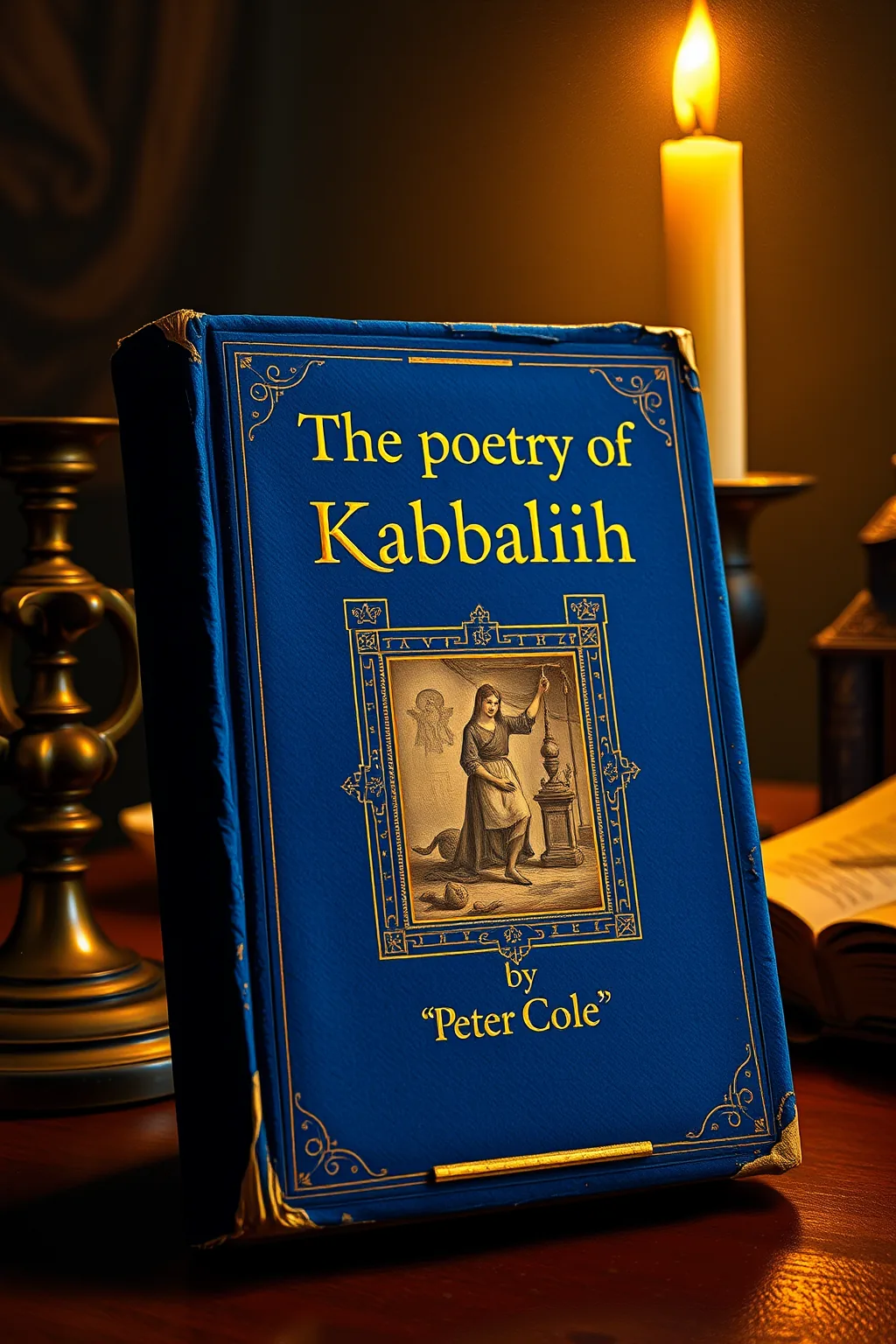
The poetry of Kabbalah
Cole and Dykman's *The Poetry of Kabbalah* offers a welcome sonic dimension to a tradition often perceived as purely intellectual or arcane. The strength of this collection lies in its careful selection of verses that highlight the emotional and aesthetic dimensions of Kabbalistic thought. The translations themselves possess a clarity that makes the often-dense concepts accessible without sacrificing their inherent mystery. A particular passage describing the divine light's emanation through the Sefirot, rendered with a striking, almost visual lyricism, stands out. However, the collection could benefit from more extensive annotations explaining the specific Kabbalistic allusions within each poem, which might otherwise leave readers unfamiliar with the tradition grasping for deeper context. It is a valuable, if sometimes demanding, introduction to the lyrical soul of Kabbalah.
📝 Description
83
Published in 2012, The Poetry of Kabbalah translates Hebrew mystical verses on the divine and creation.
Peter Cole and Aminadav Dykman translated this collection of Hebrew mystical poetry, first published in 2012. The verses focus on core Kabbalistic themes: the nature of God, the creation of the world, and the human desire for spiritual connection. This volume moves past abstract theological discussion to highlight the lyrical and emotional aspects of Kabbalah, demonstrating its aesthetic qualities.
The book is suited for those interested in the contemplative and mystical dimensions of religion and philosophy. Students of Kabbalah will find accessible primary source material, as will readers interested in comparative mysticism or the history of religious verse. Anyone who values the connection between spirituality and art, and wishes to grasp esoteric traditions through their artistic expression, will find this book rewarding.
Kabbalah, a body of Jewish mystical thought, has roots stretching back to the medieval period. Its complex ideas and symbolic language developed over centuries, shaping Jewish philosophy, religious practice, and mystical methods. Foundational texts like *The Zohar* appeared in the 13th century and influenced later Kabbalists. This collection engages with that long tradition, making specific poetic expressions available to contemporary readers.
💡 Why Read This Book?
• Gain direct exposure to the lyrical expressions of Kabbalistic concepts like *Ein Sof* and the *Sefirot*, understanding their spiritual weight beyond abstract definitions. • Appreciate the aesthetic dimension of Jewish mysticism, learning how the tradition uses poetry to explore the divine-human relationship, a perspective often overlooked. • Connect with the historical development of Kabbalistic thought by encountering verse forms that have been part of its contemplative practice since at least the medieval period.
⭐ Reader Reviews
Honest opinions from readers who have explored this book.
❓ Frequently Asked Questions
What is the primary focus of the poetry in this Kabbalah collection?
The poetry focuses on mystical and spiritual themes within Kabbalah, exploring concepts like the divine, creation, and the soul's journey towards unity with God.
Who are the translators of 'The Poetry of Kabbalah'?
The translators are Peter Cole and Aminadav Dykman, and the book was first published in 2012.
Does this book explain Kabbalistic concepts in detail?
While the poetry itself expresses Kabbalistic ideas, the book primarily offers the verses. Deeper conceptual explanations are implied rather than explicitly detailed, requiring some prior familiarity or further study.
What is the significance of the term 'Sefirot' in Kabbalistic poetry?
The Sefirot, often translated as divine emanations or attributes, are central to Kabbalistic cosmology. The poetry uses them to describe how the infinite God interacts with and manifests within the finite world.
Is 'The Poetry of Kabbalah' suitable for beginners?
It can be suitable for beginners interested in the poetic and mystical aspects of Kabbalah, but some background knowledge of Jewish mysticism or comparative religion will enhance comprehension.
What historical period does the poetry generally represent?
The poetry draws from a tradition with roots in medieval Jewish mysticism, reflecting centuries of spiritual thought and practice within Kabbalah.
🔮 Key Themes & Symbolism
Divine Emanation
The poetry frequently explores the concept of divine emanation, often represented through the ten *Sefirot*. These verses articulate how the infinite, unknowable *Ein Sof* manifests and interacts with creation through these distinct, yet interconnected, divine attributes. The language used attempts to bridge the gap between the transcendent and the immanent, illustrating the divine presence woven into the fabric of existence. This theme is central to understanding Kabbalistic cosmology and the structured unfolding of the divine will into the manifest world.
The Soul's Ascent
A recurring motif is the journey of the human soul. The poetry often depicts the soul's descent into the material realm and its subsequent yearning for return to its divine source. This spiritual trajectory is frequently described through metaphors of longing, purification, and ecstatic striving. The verses capture the internal spiritual struggle, the process of self-discovery, and the ultimate aim of achieving unity or communion with the divine, reflecting a core tenet of mystical traditions worldwide.
Creation and Contraction
The paradoxical nature of creation, often linked to the concept of *Tzimtzum* (divine contraction), is explored through evocative imagery. These poems grapple with how an infinite God could create a finite world, implying a divine act of making space for existence. The verses study the inherent tension between divine totality and the apparent separation of the created order, reflecting a sophisticated theological and philosophical inquiry into the origins of the cosmos and the nature of being.
Hiddenness and Revelation
The poetry engages with the mystery of God's hiddenness (*Tzimtzum*) while simultaneously celebrating moments of divine revelation. Verses often speak of seeking the divine presence in veiled forms, acknowledging that God's true nature remains ultimately beyond human comprehension. Yet, through prayer, contemplation, and the study of sacred texts, moments of profound spiritual insight and connection are depicted, highlighting the dynamic interplay between concealment and unveiling in the divine-mystical relationship.
💬 Memorable Quotes
Direct passages from the work, attributed to the author.
“My soul, a captive bird, longs for the boundless sky.”
— This expresses the mystical yearning of the soul, which feels confined by its earthly existence and seeks liberation and return to its divine, infinite origin.
“In the void, a whisper of Being began.”
— This phrase alludes to the cosmological concept of creation ex nihilo, or from a state of divine potentiality. It speaks to the mysterious origin of the world from the infinite, suggesting a subtle, almost imperceptible beginning.
“Seeking the Name in the silence between words.”
— This highlights the Kabbalistic emphasis on finding divine presence not just in explicit teachings but in the subtle, ineffable spaces of contemplation and meditative silence.
“The shattered mirror reflects all the heavens.”
— An interpretation of the concept of divine sparks or fragmented holiness, suggesting that even in a broken or dispersed state, the divine essence is present and capable of reflecting the totality of the divine realm.
💡 Key Ideas
Editorial paraphrase of the work's core concepts — not direct quotes.
The light that shines from the Hidden One, refracted through the vessels.
This line poetically expresses the Kabbalistic idea of divine emanation, where the infinite divine light is perceived as being filtered or broken through the *Sefirot* (vessels) to become comprehensible or interactable within creation.
🌙 Esoteric Significance
Tradition
This work belongs to the lineage of Kabbalah, a mystical tradition within Judaism. It specifically draws from and presents expressions of Lurianic Kabbalah and earlier ecstatic traditions, focusing on the sefirotic cosmology and the processes of divine emanation and cosmic repair (*Tikkun*). It departs from purely philosophical interpretations by emphasizing the affective, poetic, and experiential dimensions of engaging with the divine, positioning itself within esoteric devotional practices.
Symbolism
Key symbols include the *Sefirot*, representing the ten divine attributes or emanations through which God interacts with creation, often depicted as a tree or a diagram. Another potent symbol is *Ein Sof*, the Infinite or Limitless Godhead, representing a reality utterly beyond human conception. The concept of *Tzimtzum*, divine contraction, is also symbolically represented, signifying the self-limitation of God to create space for existence, a paradox central to Kabbalistic cosmology.
Modern Relevance
Contemporary practitioners of Jewish mysticism, as well as scholars of comparative religion and esoteric studies, engage with this poetry. Its lyrical quality makes Kabbalistic concepts accessible to a broader audience interested in spiritual literature. Modern esoteric movements, particularly those influenced by Jewish mysticism, find in these verses a direct connection to the source material, informing practices related to meditation, divine contemplation, and understanding the structure of consciousness.
👥 Who Should Read This Book
• Students of Jewish mysticism seeking primary source material in an accessible poetic form, to deepen their understanding of concepts like *Ein Sof* and the *Sefirot*. • Comparative religion scholars interested in the expressive and lyrical traditions within esoteric thought, offering insights into how spiritual concepts are conveyed poetically. • Contemplative practitioners looking for verses that inspire reflection on the divine, the soul's journey, and the nature of creation, moving beyond purely intellectual study.
📜 Historical Context
The Kabbalah, as a systematized mystical tradition within Judaism, saw significant development from the medieval period onwards. While its roots are ancient, the emergence of texts like the *Zohar* in the late 13th century, attributed to Moses de León, marked a central moment, influencing subsequent generations of mystics across Europe. This volume engages with that rich lineage, presenting poetic expressions that echo centuries of contemplative practice. During the period when Kabbalistic thought was flourishing, it coexisted with, and sometimes reacted against, dominant rationalist philosophical schools like those influenced by Maimonides. The reception of Kabbalah was complex, sometimes embraced by scholars and practitioners, and at other times viewed with suspicion or relegated to esoteric circles, a dynamic that continued through figures like Isaac Luria in the 16th century.
📔 Journal Prompts
The divine light's refraction through the Sefirot, as described in the poetry.
The soul's longing for the boundless sky, echoing the captive bird metaphor.
Moments of divine hiddenness versus revelation explored in the verses.
The void and the whisper of Being: contemplating cosmic origins.
Reflecting on the shattered mirror and its fragmented divine reflection.
🗂️ Glossary
Ein Sof
Literally 'Without End' or 'Infinite'. Refers to the Kabbalistic concept of God in His absolute, unknowable essence, beyond all description or limitation.
Sefirot
The ten divine emanations or attributes through which God creates, sustains, and interacts with the universe. Often depicted as a Tree of Life.
Tzimtzum
A Hebrew term meaning 'contraction' or 'condensation'. In Kabbalah, it refers to the divine act of self-limitation, creating a void or space for the existence of the created world.
Kabbalah
A system of Jewish mysticism that explores the nature of God, creation, and the human soul, often through symbolic interpretation of religious texts and esoteric cosmology.
Lurianic Kabbalah
The mystical teachings of Rabbi Isaac Luria (1534–1572), which introduced key concepts such as Tzimtzum, Shevirat haKelim (shattering of the vessels), and Tikkun (rectification).
Zohar
The foundational work of Kabbalah, a mystical commentary on the Torah, traditionally attributed to Rabbi Shimon bar Yochai (2nd century CE) but primarily written in 13th-century Spain.
Tikkun
Meaning 'rectification' or 'repair'. In Kabbalah, it refers to the cosmic process of restoring harmony and wholeness to creation, often involving human actions and spiritual efforts.
🔮 Readers Also Liked
Browse all →







More Free Mysticism & Contemplation Books
View all →