Kabbala
 82
82

Kabbala
Erich Bischoff's "Kabbala" offers a commendably direct approach to a subject often shrouded in dense prose. The question-and-answer format, a significant strength, strips away much of the potential intimidation for beginners. Bischoff clearly outlines historical progression, core doctrines, and even practical aspects like talismans. However, this very directness can sometimes feel reductive. For instance, the discussion on "magical methods" provides a functional overview but lacks the experiential depth that practitioners might seek. The work's primary limitation is its survey nature; it describes the landscape without always immersing the reader in its profound, mystical currents. Nevertheless, for establishing a solid conceptual framework, Bischoff's "Kabbala" is a competent and valuable primer.
📝 Description
82
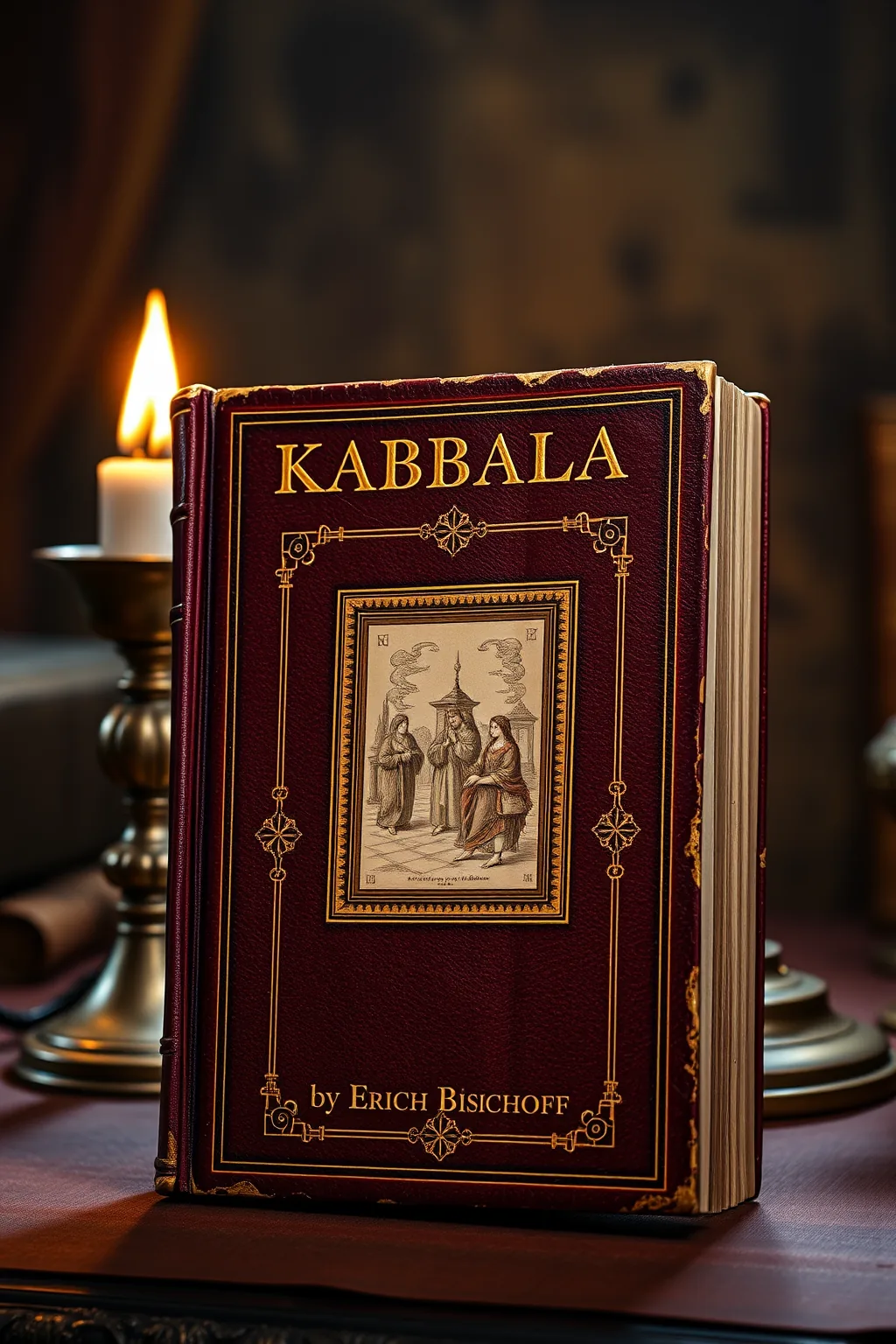
Erich Bischoff's 1985 book "Kabbala" breaks down Kabbalistic thought using a question-and-answer format.
Erich Bischoff's "Kabbala" is an introductory text designed to make the complexities of Kabbalistic thought accessible. Published in 1985, it uses a question-and-answer structure to systematically present core concepts. This pedagogical approach aims to provide a clear foundation for those new to the subject, allowing for a more structured engagement with its ideas.
The book addresses students of esoteric traditions, comparative religion, and anyone interested in the historical development and fundamental beliefs of Kabbalah. Bischoff synthesized existing scholarship to demystify doctrines that might otherwise seem obscure. The work aims to offer a coherent overview within the broader context of esoteric movements that gained attention in the late 20th century.
Bischoff's "Kabbala" emerged during a period of increased Western engagement with Jewish mysticism. While not a primary Kabbalistic text, it functions as a guide to the tradition's core teachings for a general audience interested in esoteric subjects. The book situates Kabbalah within this broader interest, translating its complex doctrines and practices into a more digestible format for those exploring various spiritual and mystical paths.
💡 Why Read This Book?
• Gain a structured understanding of Kabbalistic history and doctrines, starting with the specific "question and answer" format Bischoff employs to demystify the subject. • Learn about the anthropological views within Kabbalah and the practical applications of magical methods and talismans as presented in the text. • Trace the growth and change within the Kabbalistic movement since its early stages, as detailed by Bischoff's historical overview.
⭐ Reader Reviews
Honest opinions from readers who have explored this book.
❓ Frequently Asked Questions
What is the primary method Erich Bischoff uses to explain Kabbalah in his book?
Erich Bischoff utilizes a question-and-answer format to present basic background information for studying Kabbalah, making complex topics more accessible to beginners.
What historical aspects of Kabbalah does Bischoff cover?
The book covers the history of Kabbalah, detailing its growth and changes over time, providing context for its development as a movement.
Are practical Kabbalistic techniques discussed in "Kabbala"?
Yes, the book includes information on magical methods and the use of talismans within the Kabbalistic tradition.
Is Bischoff's "Kabbala" suitable for advanced students?
While it provides a solid foundation, "Kabbala" is best suited for beginners and intermediate students due to its introductory and survey nature.
When was Erich Bischoff's "Kabbala" first published?
Erich Bischoff's "Kabbala" was first published on April 1, 1985.
What kind of anthropological views are explored in the book?
The work examines Kabbalistic anthropology, focusing on how the tradition views humanity's place within the cosmos and its spiritual nature.
🔮 Key Themes & Symbolism
Foundational Kabbalistic Knowledge
Bischoff's work functions as a systematic primer, breaking down the intricate world of Kabbalah into digestible segments. Through its question-and-answer structure, the book addresses essential elements such as the historical trajectory of Kabbalistic thought, its core doctrines, and its unique perspective on anthropology. It aims to equip the reader with a fundamental understanding, facilitating further exploration into more specialized texts and practices within this esoteric tradition.
Magical Applications and Symbolism
Beyond theoretical underpinnings, "Kabbala" touches upon the practical dimensions of the tradition. It details various magical methods that have been associated with Kabbalistic study, including the creation and use of talismans. This exploration offers insight into how Kabbalistic principles are applied in tangible ways, bridging the gap between abstract concepts and their manifestation in ritual or symbolic practice.
Evolution of the Movement
A significant aspect of Bischoff's study involves charting the development and transformation of Kabbalah as a spiritual and intellectual movement. By examining its growth over centuries, the book provides context for understanding the diverse interpretations and branches that have emerged. This historical perspective is crucial for appreciating the dynamic nature of Kabbalistic tradition and its adaptation through different eras.
Anthropological Dimensions
The book looks at the Kabbalistic understanding of humanity, exploring its place within the divine order and the cosmos. This anthropological facet examines concepts of the soul, divine sparks, and the human potential for spiritual ascent. Bischoff's approach clarifies how Kabbalah views the individual's role and purpose in the grander scheme of existence.
💬 Memorable Quotes
Direct passages from the work, attributed to the author.
“The work uses a question and answer format to provide basic background information for the study of Kabbalah.”
— This highlights the book's pedagogical approach, emphasizing its role as an accessible entry point rather than an exhaustive treatise.
“Includes history, doctrines, anthropology, magical methods, talismans.”
— This concise summary points to the comprehensive scope of the book's introductory survey, covering both theoretical and practical elements of Kabbalah.
“Shows the growth and change within the movement.”
— This indicates the book's focus on the historical dynamism of Kabbalah, illustrating its evolution and adaptation over time.
“The book provides basic background information for the study of Kabbalah.”
— This statement underscores the text's function as a foundational resource, designed to prepare readers for more advanced engagement with the subject.
“Explores anthropological views within Kabbalah.”
— This points to the book's examination of Kabbalah's perspective on human nature and its place in the spiritual universe.
🌙 Esoteric Significance
Tradition
Bischoff's "Kabbala" fits within the Western Esoteric tradition's engagement with Jewish mysticism. It acts as a bridge, translating Kabbalistic concepts—often deeply embedded in Hebrew language and religious context—into a format understandable to non-Jewish or non-specialist esoteric students. It departs from purely academic or strictly traditional religious interpretations by focusing on accessibility and including aspects like magical methods, aligning with a broader Hermetic or occult interest in Kabbalah's symbolic systems.
Symbolism
The work likely touches upon core Kabbalistic symbols such as the Sephiroth, often depicted in the Tree of Life. This diagrammatic representation of divine emanations is central to understanding the structure of the cosmos and the path of spiritual ascent. Bischoff would also likely discuss the significance of Hebrew letters and their potential for mystical interpretation, a fundamental aspect of practical Kabbalah and its use in talismans and magical operations.
Modern Relevance
Contemporary practitioners of Hermeticism, ceremonial magic, and modern paganism frequently draw upon Kabbalistic frameworks. Bischoff's accessible introduction can serve as an initial gateway for individuals exploring these paths, providing foundational knowledge before they engage with more complex texts or practices influenced by Kabbalah, such as those found in Golden Dawn traditions or contemporary magical orders.
👥 Who Should Read This Book
• Beginning students of Western Esotericism seeking a structured overview of Kabbalistic history and core beliefs. • Comparative religion scholars interested in understanding a key mystical tradition within Judaism and its influence on other spiritual movements. • Individuals curious about the practical applications of Kabbalah, including magical methods and talismanic practices, presented in an introductory format.
📜 Historical Context
Erich Bischoff's "Kabbala," first published in 1985, emerged during a period of significant Western resurgence in occult and esoteric studies. The late 20th century saw increased interest in mystical traditions, partly fueled by counter-cultural movements and a growing academic engagement with comparative religion. Bischoff’s work aimed to explain Kabbalah, a tradition often perceived as arcane, making its complex doctrines and historical trajectory accessible to a broader audience. This contrasted with more specialized or academic treatments and offered a synthesis for general esoteric enthusiasts. While Bischoff engaged with established Kabbalistic concepts, his work was part of a broader trend of popularizing esoteric knowledge, distinct from the highly rigorous academic scholarship of figures like Gershom Scholem, whose seminal works had already reshaped the understanding of Kabbalah decades prior.
📔 Journal Prompts
The growth and change within the Kabbalistic movement as described by Bischoff.
Kabbalistic anthropology: what is humanity's role?
The function of talismans within Kabbalistic magical methods.
Initial impressions of the question-and-answer format for learning complex subjects.
Comparing the historical context of Kabbalah's development with the 1985 publication date.
🗂️ Glossary
Kabbalah
A body of Jewish mysticism and esoteric teaching that deals with the nature of God and creation, often involving complex symbolic interpretations of scripture and divine emanations.
Doctrine
A belief or set of beliefs held and taught by the Church, a political party, or another group; in this context, referring to the fundamental teachings of Kabbalah.
Anthropology (Kabbalistic)
The study of humanity within the Kabbalistic framework, focusing on concepts of the soul, divine image, and humanity's relationship to the divine.
Magical Methods
Techniques and practices derived from Kabbalistic principles believed to influence supernatural forces or achieve specific outcomes, often involving ritual and symbolic language.
Talismans
Objects inscribed with magical symbols or religious texts, believed to possess protective or auspicious powers, often created using specific Kabbalistic principles.
Movement
Refers to Kabbalah as a developing religious and intellectual tradition, encompassing its historical evolution, various schools, and changing adherents over time.
Question and Answer Format
A didactic method used in the book where information is presented through a series of queries and their corresponding responses, designed for clarity and ease of learning.