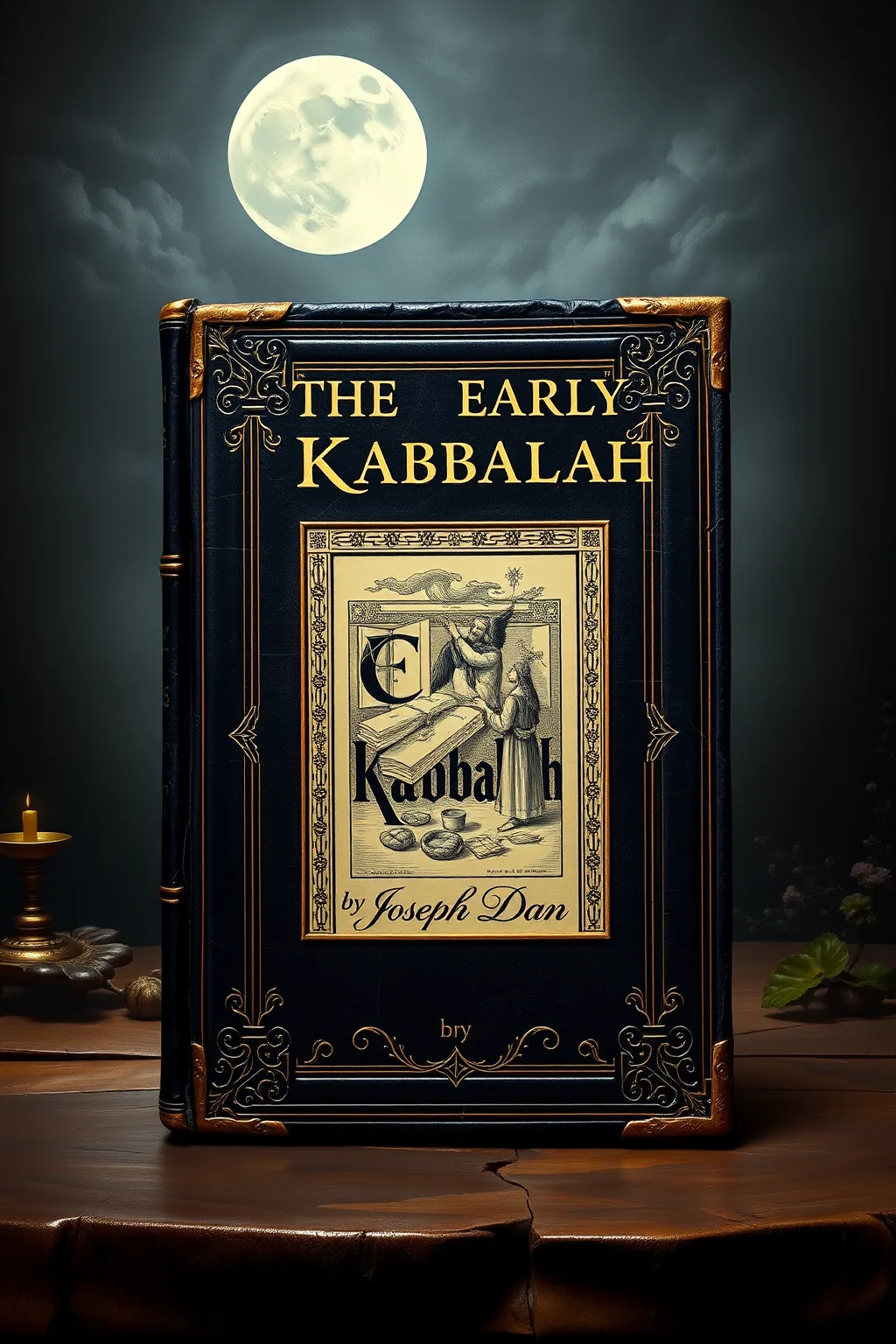
The Early Kabbalah
 75
75

The Early Kabbalah
Joseph Dan's The Early Kabbalah offers a dense, academic dissection of a spiritual tradition too often shrouded in romanticized myth. The work excels in its precise charting of the intellectual landscape that birthed Kabbalah, moving beyond the later, more widely known Zoharic corpus to focus on the crucial formative centuries. Dan's strength lies in his ability to analyze obscure texts and trace the lineage of ideas, particularly his nuanced exploration of the *Shi'ur Qomah* traditions and their influence. However, the book's uncompromising academic tone can be a barrier. It lacks the accessibility that might draw a broader audience interested in mystical experience. A particularly illuminating section details the transition from ecstatic, visionary mysticism to a more theosophical system. While indispensable for scholars, its density makes it less suitable for those seeking a gentle entry into Kabbalistic thought. It serves as a vital, albeit demanding, scholarly resource.
📝 Description
75
Joseph Dan's 1986 book examines early Jewish mysticism before the Zohar.
Joseph Dan's The Early Kabbalah provides a rigorous academic study of the texts and ideas that formed early Jewish mysticism. Dan, a leading scholar in the field, traces the development of Kabbalistic thought from its beginnings through the medieval period, focusing specifically on the era preceding the widespread influence of the Zohar. This book is not a simple introduction; instead, it offers a deep examination of the textual and historical foundations of this complex spiritual tradition, looking at mystical experiences and writings from earlier times.
This work is suited for dedicated students and researchers of Kabbalah, Jewish mysticism, and comparative religion. Scholars, graduate students, and advanced practitioners who seek a thorough understanding of Kabbalah's origins will find it particularly valuable. It assumes a working knowledge of Hebrew and some familiarity with Jewish religious and philosophical thought. Readers looking for a devotional guide or an introduction to Kabbalistic practices might find its academic approach challenging.
This book situates early Kabbalistic writings within the historical context of Ashkenazi Jewry in the 12th and 13th centuries. It engages with scholarly debates on the evolution of Jewish mysticism, particularly challenging earlier views on the linearity of Kabbalistic development. Dan's research reinterprets findings from scholars like Gershom Scholem, offering new perspectives on the connections between Kabbalah and preceding Jewish mystical movements. The focus is on understanding these mystical traditions through their primary textual sources and historical circumstances.
💡 Why Read This Book?
• Gain a precise understanding of the pre-Zohar Kabbalistic landscape, distinguishing early visionary practices from later systematic theology, as explored in chapters discussing the 12th and 13th centuries. • Uncover the historical development of core Kabbalistic concepts like *devekut* and the *sefirot* before they were widely codified, providing a crucial foundation for understanding the tradition's evolution. • Engage with scholarly analysis of foundational texts and movements, such as the *Shi'ur Qomah*, offering a critical perspective distinct from popular interpretations of Jewish mysticism.
⭐ Reader Reviews
Honest opinions from readers who have explored this book.
❓ Frequently Asked Questions
What is the primary focus of Joseph Dan's The Early Kabbalah?
The book focuses on the foundational texts, concepts, and historical development of Jewish mysticism during the period preceding the widespread influence of the Zohar, primarily the 12th and 13th centuries.
Is The Early Kabbalah suitable for beginners interested in Kabbalah?
No, it is written for advanced students and scholars. It assumes a familiarity with Hebrew and Jewish religious traditions, and its academic rigor can be challenging for those new to the subject.
What historical period does the book cover?
The book primarily covers the early development of Kabbalah, focusing on the medieval period, particularly the 12th and 13th centuries in the Ashkenazi world.
What are some key concepts discussed in The Early Kabbalah?
Key concepts include divine ascent, celestial realms, esoteric biblical interpretation, the development of the *sefirot*, and the mystical experience of *devekut*.
How does this book relate to the work of Gershom Scholem?
Joseph Dan's work engages with and often revises the scholarship of Gershom Scholem, offering new perspectives on the origins and evolution of Kabbalistic thought.
What is the significance of the *Shi'ur Qomah* in the context of this book?
The book explores the *Shi'ur Qomah* traditions as an important precursor and influence on early Kabbalistic cosmology and mystical anthropomorphism.
🔮 Key Themes & Symbolism
Pre-Zoharic Mystical Texts
This work meticulously examines the literature that predates the Zohar, the foundational text of later Kabbalah. It investigates sources such as the Sefer Bahir and early Heikhalot literature, charting the evolution of mystical ideas before the 13th century. Dan highlights how these earlier texts reveal a more fluid and diverse mystical landscape, emphasizing visionary experiences and ecstatic practices that laid the groundwork for later Kabbalistic systems, distinguishing them from the more theosophical orientation that would emerge.
The Development of the Sefirot
A central theme is the emergence and early conceptualization of the *sefirot*, the ten divine emanations central to Kabbalistic cosmology. The book traces how these concepts evolved from earlier notions of divine attributes or manifestations. Dan explores the different ways early Kabbalists understood the relationship between the hidden God (Ein Sof) and the manifest world through these emanations, showcasing the intellectual journey from abstract divine presence to a structured, dynamic divine realm.
Mystical Experience and Ascent
The book examines the nature of mystical experience in early Kabbalah, focusing on themes of divine ascent and visionary journeys. Dan analyzes accounts of mystics seeking direct communion with the divine, often through meditative or ecstatic practices. The work explores the phenomenology of these experiences, including encounters with angelic hierarchies and the apprehension of divine mysteries, providing insight into the subjective core of early Jewish mystical practice.
The Ashkenazi Context
The Early Kabbalah situates the development of mystical thought within the specific socio-historical context of medieval Ashkenaz (northern France and Germany). Dan examines how the intellectual and spiritual currents of this region, including its legalistic and pietistic traditions, influenced the emergence of Kabbalistic ideas. This geographical and cultural anchoring provides crucial context for understanding the unique characteristics of early Kabbalistic speculation.
💬 Memorable Quotes
Direct passages from the work, attributed to the author.
“The history of Kabbalah is not a simple linear development.”
— This interpretation highlights Dan's critical approach, suggesting that Kabbalah emerged from a complex interplay of various mystical streams rather than a single, traceable line of transmission.
“Early Kabbalists were concerned with the divine throne and the Merkabah.”
— This points to the influence of earlier Jewish mystical traditions, particularly those focused on visionary experiences of God's chariot (Merkabah) and the heavenly throne, which formed a significant substrate for later Kabbalistic thought.
“The concept of *devekut* evolved significantly in early Kabbalistic circles.”
— This emphasizes the dynamic nature of key Kabbalistic concepts; *devekut*, or cleaving to God, was not static but underwent reinterpretation and integration into new mystical frameworks during its formative period.
“The Sefer Bahir represents a crucial, albeit enigmatic, early Kabbalistic text.”
— This acknowledges the importance and the interpretive challenges posed by the Sefer Bahir, identifying it as a key source for understanding the initial stages of Kabbalistic doctrine and symbolism.
“Understanding the esoteric interpretation of biblical narratives is vital.”
— This underscores the method employed by early Kabbalists, who sought hidden, mystical meanings within the Torah and other scriptural texts, a practice central to the development of their theological system.
🌙 Esoteric Significance
Tradition
This work sits squarely within the study of Kabbalah, a major lineage of Jewish mysticism. It specifically addresses the early, formative phase of this tradition, predating the widespread acceptance of the Zohar. Dan's scholarship examines the roots of Kabbalistic thought, tracing its connections to earlier Jewish mystical practices and exploring how it diverged and developed into a distinct esoteric system.
Symbolism
Key symbols explored include the divine chariot (Merkabah), representing visionary ascent and the structure of the celestial realms, and the burgeoning concept of the *sefirot*, the ten divine emanations that structure the Kabbalistic cosmos. The book also touches upon anthropomorphic symbolism related to the divine form, particularly as influenced by earlier *Shi'ur Qomah* traditions, offering insights into how Kabbalists visualized and related to the divine.
Modern Relevance
Contemporary scholars of Jewish mysticism continue to rely on Dan's foundational research for understanding Kabbalah's origins. His work informs modern discussions on the diversity of mystical experiences within Judaism and comparative studies of esoteric traditions. Researchers investigating the historical development of concepts like divine emanations and mystical communion find his analysis essential for contextualizing later Kabbalistic developments and their influence on Western esotericism.
👥 Who Should Read This Book
• Advanced students of Jewish mysticism: Those seeking a rigorous, scholarly examination of Kabbalah's origins, moving beyond popular introductions to engage with primary textual analysis and historical context. • Comparative religion scholars: Researchers interested in the evolution of esoteric thought and the development of mystical traditions within Abrahamic religions will find Dan's work useful for understanding a crucial medieval European phenomenon. • Serious practitioners of Kabbalah: Individuals aiming for a deep, historically informed understanding of Kabbalistic concepts like the *sefirot* and *devekut* before their later systematization will benefit from this foundational work.
📜 Historical Context
The Early Kabbalah emerged in 1986, a period when academic study of Jewish mysticism, significantly advanced by scholars like Gershom Scholem in the mid-20th century, was maturing. Joseph Dan's work contributed to a more nuanced understanding of Kabbalah's origins, moving beyond earlier monolithic views. The book was published at a time when interest in esoteric traditions was growing globally, yet it remained firmly within the area of specialized scholarship. It engaged with ongoing debates about the relationship between Kabbalah and earlier Jewish mystical movements, such as the Merkabah and Heikhalot traditions. Dan's analysis often challenged interpretations prevalent in the field, offering a more complex picture of the 12th and 13th-century Ashkenazi milieu where much of early Kabbalah took shape, distinguishing it from the later, more widespread influence of the Zohar.
📔 Journal Prompts
The evolution of the *sefirot* in early Kabbalistic texts.
Mystical ascent narratives and their structure.
The influence of the *Shi'ur Qomah* on early Kabbalistic cosmology.
The concept of *devekut* prior to the Zohar.
Comparing early Kabbalistic texts with later developments.
🗂️ Glossary
Kabbalah
A body of Jewish esoteric teachings and mystical practice, traditionally seeking to understand the hidden nature of God and the universe, and the relationship between the divine and the created world.
Sefirot
The ten divine emanations or attributes through which God, in Kabbalistic cosmology, interacts with and sustains the created universe. They form a central element of Kabbalistic theosophy.
Devekut
A Hebrew term meaning 'cleaving' or 'adherence,' referring to a state of intense communion or intimacy with God sought through mystical practices.
Merkabah Mysticism
An early form of Jewish mysticism focused on visionary ascents to the divine throne (Merkabah or Chariot), often involving ecstatic experiences and detailed descriptions of heavenly palaces.
Shi'ur Qomah
Literally 'Measure of the Height,' referring to early Jewish mystical texts that describe the immense, anthropomorphic dimensions and divine body of God, influencing later Kabbalistic thought.
Ein Sof
A Kabbalistic term meaning 'Without End' or 'Infinite,' referring to God in God's absolute, unknowable essence, beyond all finite comprehension.
Ashkenazi
A term referring to Jews and Jewish culture originating from Central and Eastern Europe, particularly Germany, France, and Eastern European countries. Early Kabbalah had significant roots in this region.
🔮 Readers Also Liked
Browse all →








More by Joseph Dan
All books →

More Free Mysticism & Contemplation Books
View all →