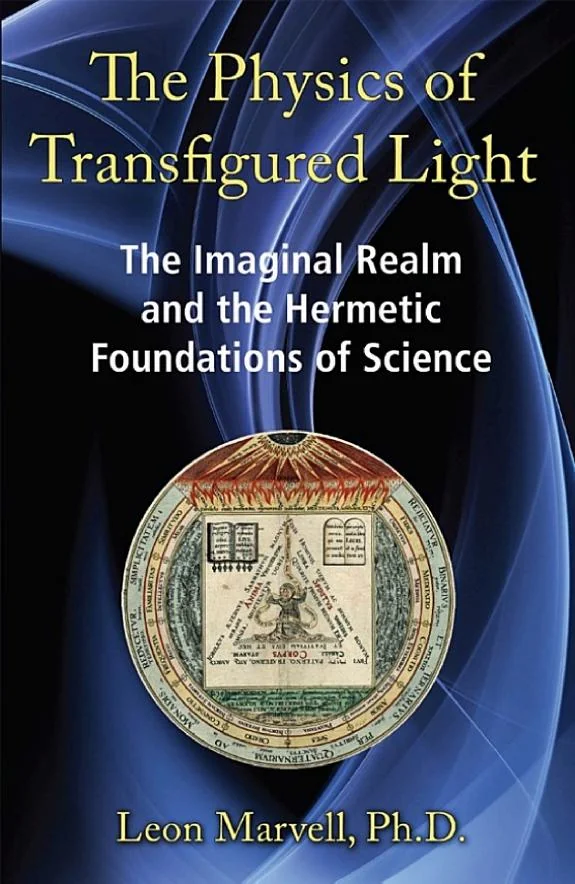
The Physics of Transfigured Light
 84
84

The Physics of Transfigured Light
Leon Marvell's "The Physics of Transfigured Light" attempts a bold synthesis, arguing that Hermeticism is not merely a historical curiosity but a vital undercurrent in the evolution of modern science. The book excels in drawing surprising parallels, such as linking Gurdjieff's cosmology with cybernetic principles or exploring the Platonic-Hermetic roots of artificial intelligence. Marvell's examination of how concepts like the Tibetan Bardo might inform Einstein's relativistic universe is particularly inventive. However, the sheer breadth of the claims sometimes strains credulity; the connections, while intriguing, can occasionally feel more like suggestive associations than rigorously demonstrated causal links. The strength lies in its expansive re-reading of scientific history through a metaphysical lens, challenging the reader's assumptions about the origins of knowledge. A limitation is the occasional density, requiring sustained attention to follow the intricate arguments across disparate fields. Ultimately, Marvell offers a compelling, albeit speculative, case for the enduring influence of esoteric thought on materialist paradigms.
📝 Description
84
Leon Marvell's 2016 book argues that modern physics echoes ancient metaphysical systems.
The Physics of Transfigured Light re-examines the history of science, suggesting that core ideas in physics and technology are not purely secular inventions. Marvell proposes that these principles carry traces of older esoteric traditions, particularly Hermetic philosophy. The book traces these hidden influences from Isaac Newton's time to current fields like artificial intelligence. It posits that a continuous Hermetic current has shaped scientific paradigms, even when not acknowledged by mainstream thought.
This work is for readers who question the sharp division between the spiritual and material, or the mystical and scientific. It will interest those studying the history of ideas and how ancient philosophies might inform our current view of the universe. Scholars of Hermeticism, Neoplatonism, and comparative mysticism will find new links drawn between historical figures and contemporary concepts. The book also appeals to anyone curious about the philosophical foundations of technology, from early computing to the internet.
Published in 2016, this book emerged during a time of renewed interest in integrating science and spirituality. It engages with intellectual movements that seek to overcome Enlightenment divisions. The work implicitly questions strict positivism, which dominated much of 20th-century science. It suggests that intuition and metaphysical frameworks have played a role in scientific discovery. Marvell draws parallels to earlier eras, like the 17th century with natural philosophers such as Robert Fludd, where scientific inquiry and spiritual exploration were closely linked.
💡 Why Read This Book?
• Understand how Hermetic doctrine, a system of thought originating in antiquity, may have subtly shaped foundational scientific concepts, offering a fresh perspective on figures like Newton and Einstein. • Explore the philosophical underpinnings of modern technology, such as artificial intelligence and the internet, through the lens of Neoplatonism and Rosicrucianism, as discussed in chapters concerning technology. • Gain a new appreciation for the historical relationship between science and metaphysics, challenging the strict separation often imposed since the Enlightenment and reconsidering scientific history from a Platonic-Hermetic viewpoint.
⭐ Reader Reviews
Honest opinions from readers who have explored this book.
❓ Frequently Asked Questions
What is the primary thesis of 'The Physics of Transfigured Light' regarding science and Hermeticism?
The book's central argument is that Hermetic philosophy provides essential, often unacknowledged, underpinnings for many modern scientific theories and technological developments. It proposes a continuous esoteric influence from figures like Newton to contemporary cybernetics.
Which historical scientific figures are re-examined in the book?
The work re-examines figures such as Isaac Newton, Albert Einstein, and explores connections with philosophers and mystics like Gurdjieff, Robert Fludd, and Marsilio Ficino.
How does the book connect esoteric thought to modern technology?
It examines Hermetic resonances in areas like cybernetics and artificial intelligence, and explores the connection between Rosicrucianism and the development of the internet, suggesting a metaphysical basis for technological progress.
What is the 'Platonic-Hermetic perspective' mentioned in the book's description?
This perspective interprets scientific history and modern technology through the combined philosophical frameworks of Plato's ideas and the esoteric teachings of Hermeticism, emphasizing interconnectedness and underlying spiritual principles.
When was 'The Physics of Transfigured Light' first published?
The book was first published on May 7, 2016.
What historical scientific movements or eras does the book engage with?
The book offers a reconsideration of the history of science from Isaac Newton's era to the present day, engaging with the intellectual currents that shaped modern physics and technology.
🔮 Key Themes & Symbolism
Hermeticism in Modern Science
The book posits that Hermetic principles, emphasizing the unity of the macrocosm and microcosm and the hidden correspondences in nature, are foundational to modern scientific theories. It suggests that concepts from alchemy and the Emerald Tablet have subtly informed physics and chemistry. This perspective challenges the purely materialistic view of science by highlighting an esoteric lineage influencing figures from Newton to Einstein, revealing a hidden philosophical architecture behind scientific discovery.
Platonic-Hermetic Technology
Marvell explores how Platonic and Hermetic philosophies offer a framework for understanding modern technologies like artificial intelligence and the internet. This includes examining Neoplatonic ideas of emanation and consciousness in relation to AI development, and Rosicrucian concepts of universal interconnectedness as a precursor to understanding the internet's global network. The work suggests technology's evolution is not solely empirical but influenced by metaphysical archetypes.
Reinterpreting Scientific History
The book undertakes a comprehensive re-evaluation of the history of science, proposing a Platonic-Hermetic lens through which to view developments from the 17th century onwards. It examines how figures like Gurdjieff and Robert Fludd, alongside scientific pioneers, engaged with or were influenced by esoteric traditions. This approach seeks to reveal recurring patterns and a consistent, albeit often suppressed, metaphysical dimension within the scientific narrative.
Esoteric Resonances
Marvell identifies specific Hermetic resonances across diverse thinkers and fields. This includes connections between Einstein's theories and the Tibetan Bardo, exploring shared concepts of space, time, and consciousness. It also links the mystical cosmology of Gurdjieff with the principles of cybernetics, and the intellectual heritage of Rosicrucianism with the structure and impact of the internet, demonstrating the pervasive influence of esoteric thought.
💬 Memorable Quotes
Direct passages from the work, attributed to the author.
“Einstein and the Tibetan Bardo share conceptual space.”
— This points to the book's exploration of potential parallels between Albert Einstein's theories of relativity, particularly concerning space and time, and the concepts of intermediate states and consciousness described in the Tibetan Bardo teachings.
“Neoplatonism informs artificial intelligence.”
— This suggests the work examines how ancient Neoplatonic ideas about the soul, intellect, and divine emanation might offer a philosophical precursor or framework for understanding the development and potential consciousness of artificial intelligence.
“Rosicrucianism and the internet exhibit Hermetic resonances.”
— This highlights the book's argument that the interconnectedness and informational flow inherent in the internet mirror the Rosicrucian ideal of universal brotherhood and the hidden network of knowledge central to Hermetic doctrine.
“The history of science requires a Platonic-Hermetic perspective.”
— This conveys the book's core methodological approach: re-examining scientific history not just through empirical observation but through the philosophical lens of Plato's idealism and Hermetic symbolism to uncover deeper meanings and connections.
💡 Key Ideas
Editorial paraphrase of the work's core concepts — not direct quotes.
Modern scientific theories carry Hermetic underpinnings.
This paraphrased concept suggests that the fundamental ideas driving contemporary physics and technology are not entirely novel but echo ancient Hermetic philosophies, implying a continuity of metaphysical thought within scientific progress.
🌙 Esoteric Significance
Tradition
The book firmly situates itself within the Hermetic tradition, drawing heavily on its core tenets of correspondence, microcosm/macrocosm unity, and hidden universal laws. It extends this tradition by applying its principles to modern scientific and technological paradigms, suggesting Hermeticism is not a relic but a living philosophical framework. Marvell's work departs from purely historical accounts by asserting the ongoing relevance and explanatory power of Hermetic doctrine for contemporary understanding of reality.
Symbolism
Key symbols explored include the concept of 'transfigured light,' representing a shift in understanding from purely material to metaphysically informed perception. The Emerald Tablet's aphorism 'As above, so below' serves as a recurring motif, underscoring the book's argument for macrocosm-microcosm correspondence in both nature and technology. The interconnectedness implied by Rosicrucianism also functions symbolically, prefiguring the networked structure of the internet.
Modern Relevance
Contemporary thinkers and movements in consciousness studies, integral theory, and certain branches of transhumanism find resonance with Marvell's work. Researchers exploring the philosophical implications of artificial intelligence and quantum physics through non-materialistic lenses often reference the book's ideas. Its reinterpretation of scientific history also appeals to those seeking alternative narratives that integrate spiritual or metaphysical dimensions into understanding human progress and technological development.
👥 Who Should Read This Book
• Students of Western Esotericism: Those seeking to understand the historical development and enduring influence of Hermeticism, particularly its impact on scientific thought and philosophy of science. • Philosophers of Science: Individuals interested in challenging conventional narratives of scientific progress and exploring how metaphysical or esoteric ideas might have shaped or can inform scientific inquiry. • Technologists and Futurists: Readers curious about the deeper philosophical and historical roots of modern technology, seeking to understand the potential esoteric dimensions behind artificial intelligence, cybernetics, and the internet.
📜 Historical Context
Published in 2016, 'The Physics of Transfigured Light' emerged in an intellectual climate increasingly open to interdisciplinary and cross-cultural dialogues, seeking to bridge the perceived chasm between science and spirituality. This period saw a resurgence of interest in non-dualistic thinking and critiques of strict scientific materialism. The book implicitly engages with the legacy of the Enlightenment's emphasis on reason, proposing that esoteric traditions, often marginalized by figures like Francis Bacon or the Royal Society in the 17th century, continued to exert a subtle influence. It offers an alternative narrative to the standard progression of scientific thought, drawing parallels to earlier periods like the Renaissance, where figures such as Marsilio Ficino actively synthesized Platonic philosophy with esoteric traditions. The work's reception, while not marked by major public events, resonated within circles exploring the philosophical underpinnings of consciousness and cosmology.
📔 Journal Prompts
The Hermetic underpinnings of modern scientific theories.
Platonic-Hermetic perspectives on artificial intelligence.
Reconsider Newton's place within the history of science.
Resonances between Gurdjieff's ideas and cybernetics.
The internet through the lens of Rosicrucianism.
🗂️ Glossary
Hermeticism
A religious and philosophical tradition based on writings attributed to Hermes Trismegistus. It emphasizes divine wisdom, the interconnectedness of all things (macrocosm and microcosm), and the pursuit of spiritual enlightenment through understanding universal laws.
Platonic-Hermetic
A synthesis or perspective that integrates the philosophical idealism of Plato, particularly his theory of Forms, with the esoteric and alchemical doctrines of Hermeticism.
Cybernetics
The scientific study of control and communication in animals and machines. It explores systems, feedback loops, and information processing, often overlapping with artificial intelligence and systems theory.
Tibetan Bardo
In Tibetan Buddhism, the intermediate state between death and rebirth. It encompasses various stages of consciousness and experience, often described in detail in texts like the Tibetan Book of the Dead.
Neoplatonism
A school of Hellenistic philosophy founded by Plotinus, heavily influenced by Plato. It posits a hierarchical structure of reality emanating from a supreme, ineffable 'One,' with the intellect and soul playing key roles.
Rosicrucianism
A mystical and esoteric movement that emerged in Europe in the early 17th century. It combines elements of Hermeticism, Kabbalah, alchemy, and Christian mysticism, emphasizing spiritual enlightenment and universal reform.
Transfigured Light
A concept within the book representing a mode of perception or understanding that moves beyond the purely material or mundane, revealing deeper, often metaphysical, structures and connections in reality.
This book appears in 1 collection
🔮 Readers Also Liked
Browse all →






From the “Hermetic Alchemy” Collection
View all →









More Free Alchemy & Hermeticism Books
View all →