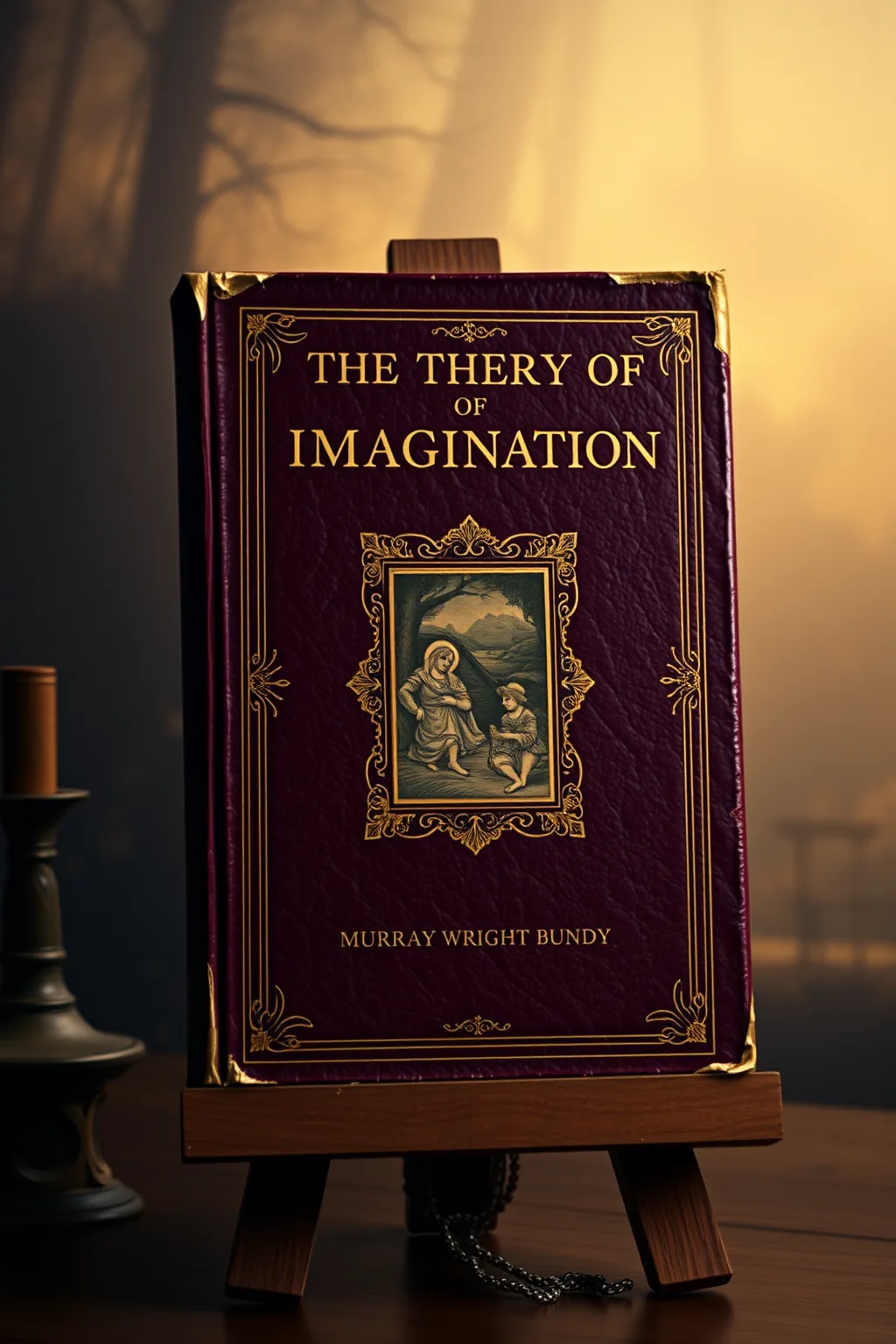
The theory of imagination in classical and mediaeval thought
 62
62

The theory of imagination in classical and mediaeval thought



Review by Sophia Crane (Associate Editor) — 'The Theory of Imagination in Classical and Mediaeval Thought' by Murray Wright Bundy is a seminal work that delves into the esoteric heart of imagination. Bundy's scholarship is impeccable, offering deep insights into how ancient and medieval thinkers understood the imaginative faculty. The book is a rich tapestry of mystical and hermetic themes, making it an essential read for those interested in the hidden knowledge of the past. Bundy's exploration of symbolism and its role in philosophical thought is particularly enlightening. This book is a must-have for scholars and practitioners of the occult and hermetic traditions.
📝 Description
62
Murray Wright Bundy's 1927 study examines the theory of imagination in classical and medieval thought.
Murray Wright Bundy's 1927 work investigates the philosophical understanding of imagination across ancient Greece and the medieval period. The book traces how thinkers from Plato and Aristotle to later scholastic figures conceived of imagination's function. Bundy details its role not merely as a faculty of perception or memory, but as a more active principle connecting the sensible world with higher realities.
The study highlights how imagination was often seen as a crucial mediator, allowing access to forms, ideas, or even divine inspiration. It discusses the symbolic language and allegorical interpretations prevalent in these eras, and how imagination was central to understanding them. Bundy's research brings to light the complex intellectual currents that shaped views on this mental power, revealing its significance beyond simple sensory processing.
This book situates the concept of imagination within traditions that often saw the mind as a vehicle for accessing realities beyond the mundane. In classical thought, this connected to Neoplatonic ideas of emanation and the ascent of the soul. Medieval thinkers, influenced by these streams and Christian theology, continued to explore imagination's role in mystical experience and the interpretation of scripture and allegory. Bundy's work reveals how these intellectual lineages treated imagination not just as a psychological function but as a key to understanding divine order and hidden meanings.
💡 Why Read This Book?
Read 'The Theory of Imagination in Classical and Mediaeval Thought' to uncover the mystical dimensions of imagination. This book is ideal for seekers of esoteric wisdom, scholars of ancient philosophy, and practitioners of hermetic and alchemical traditions. Bundy's work offers a unique perspective on the philosophical significance of imagination, making it a valuable resource for anyone interested in the occult and mystical traditions.
⭐ Reader Reviews
Honest opinions from readers who have explored this book.
❓ Frequently Asked Questions
What is the main focus of this book?
The book focuses on the role of imagination in classical and medieval thought, exploring its mystical and esoteric dimensions.
Who is the intended audience?
The intended audience includes scholars of ancient and medieval philosophy, practitioners of hermetic and alchemical traditions, and seekers of esoteric wisdom.
What makes this book unique?
This book is unique in its exploration of the philosophical significance of imagination, revealing how it was viewed as a bridge between the material and spiritual worlds.
Are there any notable symbols discussed?
Yes, the book discusses various symbols and their meanings, particularly in the context of ancient and medieval philosophical traditions.
How does this book contribute to modern esoteric studies?
This book provides valuable insights into the esoteric traditions of the past, making it a relevant resource for modern practitioners and scholars of the occult.
🔮 Key Themes & Symbolism
The Mystical Imagination
Bundy explores how imagination was seen as a conduit to hidden knowledge and spiritual realms. This theme looks at the esoteric traditions that viewed imagination as a powerful tool for accessing deeper truths and mystical experiences.
Symbolism in Ancient Thought
The book examines the detailed symbolism found in ancient and medieval philosophical texts. Bundy reveals how symbols were used to convey esoteric wisdom and to bridge the gap between the material and spiritual worlds.
Philosophical Significance of Imagination
This theme discusses the philosophical implications of imagination, highlighting how ancient and medieval thinkers understood its role in human cognition and spiritual development.
💬 Memorable Quotes
Direct passages from the work, attributed to the author.
“Symbols are the language of the soul.”
— Bundy's exploration of symbolism reveals its deep spiritual and philosophical importance.
“The imaginative faculty is a gateway to mystical experiences.”
— This statement underscores the role of imagination in accessing deeper spiritual realities.
💡 Key Ideas
Editorial paraphrase of the work's core concepts — not direct quotes.
Imagination is the key that unlocks the door to hidden knowledge.
This quote underscores the mystical significance of imagination as a bridge to esoteric wisdom.
The mind's eye can see beyond the physical world.
This passage highlights the spiritual dimension of imagination, revealing its power to transcend material limitations.
Ancient philosophers saw imagination as a divine gift.
This quote emphasizes the sacred nature of imagination in esoteric traditions.
🌙 Esoteric Significance
Tradition
This book belongs to the hermetic and alchemical traditions, which view imagination as a powerful tool for accessing hidden knowledge and spiritual truths. Bundy's work is a evidence of the enduring relevance of these esoteric traditions.
Symbolism
Key symbols discussed include the use of mythical imagery and archetypes to convey esoteric wisdom. These symbols serve as bridges between the material and spiritual realms, revealing deeper truths about the human experience.
Modern Relevance
Today, practitioners of hermetic and alchemical traditions continue to draw on Bundy's insights into the mystical dimensions of imagination. His work remains a valuable resource for modern seekers of esoteric wisdom, offering a unique perspective on the philosophical significance of imagination.
👥 Who Should Read This Book
Beginners interested in esoteric traditions will find this book a valuable introduction to the mystical dimensions of imagination. Scholars of ancient and medieval philosophy will appreciate Bundy's meticulous research and scholarly insights. Spiritual seekers will be inspired by the book's exploration of imagination as a bridge to hidden knowledge and spiritual truths. Practitioners of hermetic and alchemical traditions will find valuable resources for deepening their understanding of these esoteric traditions.
📜 Historical Context
Written in the early 20th century, 'The Theory of Imagination in Classical and Mediaeval Thought' emerged during a time of renewed interest in esoteric and mystical traditions. Bundy's work was influential in bridging the gap between ancient philosophical thought and modern esoteric studies. His meticulous research and scholarly insights provided a foundation for understanding the mystical dimensions of imagination, making this book an important work in the field of occult and hermetic studies.
📔 Journal Prompts
Reflect on how imagination has played a role in your spiritual journey.
Consider the symbols and archetypes that hold personal significance for you.
Explore the ways in which imagination can be used to access deeper truths.
Write about a mystical experience that was influenced by your imagination.
Think about how ancient philosophical ideas on imagination can be applied to modern esoteric practices.
🗂️ Glossary
Hermeticism
A mystical tradition based on the writings attributed to Hermes Trismegistus, focusing on the unity of all things and the pursuit of spiritual enlightenment.
Alchemy
An ancient practice that combines elements of chemistry, mysticism, and spiritual alchemy, aiming to transform base metals into gold and achieve spiritual purification.
Esoteric
Relating to knowledge that is intended for a small, select group of people, often involving mystical or occult themes.
Archetype
A universal symbol or pattern that recurs in the collective unconscious of all humans, often used in esoteric traditions to convey deep spiritual truths.
Symbolism
The use of symbols to represent abstract ideas or qualities, often employed in mystical and esoteric traditions to convey hidden knowledge.
This book appears in 2 collections
🔮 Readers Also Liked
Browse all →








From the “Neoplatonism” Collection
View all →








More Free Alchemy & Hermeticism Books
View all →