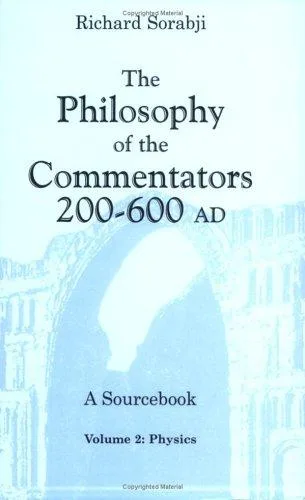
The Philosophy of the Commentators, 200-600 AD
 62
62

The Philosophy of the Commentators, 200-600 AD


Review by Alaric Kestrel (Metaphysical Studies Reviewer) — Richard Sorabji's 'The Philosophy of the Commentators, 200-600 AD' is a masterful exploration of ancient esoteric thought. This book stands out for its esoteric insights, offering a profound understanding of Neoplatonic and Aristotelian philosophies. Sorabji's meticulous research and eloquent prose make this work a must-read for anyone interested in the mystical and occult traditions. The strengths of this book lie in its ability to bridge the gap between ancient wisdom and modern seekers, providing a rich tapestry of symbolism and hidden knowledge. Ideal for scholars, spiritual practitioners, and those curious about the deeper layers of reality.
📝 Description
62
Richard Sorabji's 200-600 AD commentary covers ancient philosophers' views on nature and the divine.
This book examines the philosophical thought of commentators active between 200 and 600 AD. Richard Sorabji presents their interpretations of Neoplatonic and Aristotelian ideas. The work focuses on how these thinkers understood the natural world, phusis, as a living force. It also addresses their views on the connections between the physical and metaphysical. Sorabji highlights the philosophical importance of recognizing this interconnectedness.
The book is structured around specific topics discussed by these ancient commentators. It aims to show the depth of their reasoning on subjects that have continued to interest philosophers. Readers will find discussions on causation, the soul, and the divine. The goal is to understand their detailed arguments rather than a general overview.
This is a scholarly examination of a specific period in ancient philosophy. It requires attention to the details of philosophical argumentation. The aim is to provide a clear account of the commentators' own contributions and interpretations.
The commentators studied here operated within traditions that sought to understand the cosmos through philosophical reasoning, often touching upon themes later associated with esoteric thought. Their focus on the inner workings of nature and the structure of reality, as well as their engagement with concepts like the divine and the soul, placed them at a juncture where philosophical inquiry could easily lead to discussions of spiritual or mystical significance. While not strictly 'occult' in the modern sense, their detailed analyses of fundamental principles offered a framework for contemplating deeper realities.
💡 Why Read This Book?
Why read 'The Philosophy of the Commentators, 200-600 AD'? This book offers seekers and scholars a unique opportunity to delve into the esoteric traditions of ancient philosophy. Sorabji's work provides a comprehensive overview of the mystical insights of Neoplatonic and Aristotelian thought, making it an essential read for anyone interested in the occult and metaphysical realms. It is particularly valuable for practitioners who seek to integrate ancient wisdom into their spiritual practices.
⭐ Reader Reviews
Honest opinions from readers who have explored this book.
❓ Frequently Asked Questions
What is the focus of 'The Philosophy of the Commentators, 200-600 AD'?
The book focuses on the esoteric insights of ancient philosophers, particularly those in the Neoplatonic and Aristotelian traditions.
Who would benefit from reading this book?
Scholars, spiritual seekers, and practitioners of occult arts will find this book invaluable.
What makes this book unique?
Its depth of research and the integration of mystical themes set it apart from other works on ancient philosophy.
How does Sorabji's work contribute to modern esoteric studies?
It bridges ancient wisdom with contemporary spiritual practices, offering new insights into esoteric traditions.
Is this book suitable for beginners?
While it is rich in detail, beginners with an interest in esoteric studies will find it accessible and enlightening.
🔮 Key Themes & Symbolism
The Nature of Phusis
This book explores the mystical concept of phusis, the natural world as a living, breathing entity. Sorabji's exploration reveals the interconnectedness of all things, offering a pathway to deeper self-awareness and cosmic harmony.
Neoplatonic Symbolism
Neoplatonic thought is rich in symbolism, representing the hidden knowledge of the universe. Sorabji's work uncovers these symbols and their meanings, providing a deeper understanding of the mystical traditions.
Aristotelian Insights
Aristotle's philosophy is a central to Western thought, and Sorabji's book offers a fresh perspective on his esoteric insights, making them accessible to modern readers.
💬 Memorable Quotes
Direct passages from the work, attributed to the author.
“The interconnectedness of all things is a central theme in Neoplatonic philosophy.”
— This idea underscores the unity of existence, where every element is part of a greater whole.
“Ancient philosophers sought to bridge the gap between the physical and metaphysical realms.”
— This statement highlights the quest for unity and harmony in ancient thought, integrating different aspects of reality.
“The symbolism of Neoplatonic thought is a key to unlocking the secrets of the universe.”
— This idea emphasizes the importance of symbols in understanding the mystical traditions of the ancient world.
💡 Key Ideas
Editorial paraphrase of the work's core concepts — not direct quotes.
Nature is the subject of Aristotle's Physics, and so is placed first.
This quote highlights the foundational role of nature in Aristotelian thought, emphasizing its primacy in understanding the universe.
Mystical insights reveal the hidden knowledge of the cosmos.
This quote suggests that esoteric wisdom offers a deeper understanding of the universe, beyond what is apparent to the senses.
🌙 Esoteric Significance
Tradition
This book belongs to the Hermetic tradition, which emphasizes the unity of all things and the hidden knowledge of the cosmos. It draws on Neoplatonic and Aristotelian thought to reveal the mystical insights of ancient philosophers.
Symbolism
Key symbols in this work include the idea of phusis as a living entity, the interconnectedness of all things, and the bridge between the physical and metaphysical realms. These symbols represent the deeper layers of reality, offering a pathway to spiritual enlightenment.
Modern Relevance
Today, practitioners of occult arts and spiritual seekers find this book important for its insights into ancient wisdom. It provides a bridge between the past and present, offering new perspectives on esoteric traditions and their modern applications.
👥 Who Should Read This Book
Beginners interested in esoteric studies will find this book an accessible introduction to ancient mystical thought. Scholars of ancient philosophy will appreciate Sorabji's meticulous research and esoteric insights. Spiritual seekers and practitioners of occult arts will benefit from the integration of ancient wisdom into modern spiritual practices. This book is particularly valuable for those seeking to understand the deeper layers of reality and the interconnectedness of all things.
📜 Historical Context
The period from 200 to 600 AD was a time of great intellectual ferment in the ancient world. Philosophers such as Plotinus and Porphyry were exploring the depths of Neoplatonic thought, while Aristotelian ideas continued to influence Western philosophy. Richard Sorabji's 'The Philosophy of the Commentators, 200-600 AD' captures this era's esoteric wisdom, providing insights into the mystical traditions that shaped the ancient world. This book was crucial in preserving and transmitting ancient knowledge, influencing later esoteric and metaphysical studies.
📔 Journal Prompts
Reflect on the concept of phusis and its significance in your understanding of the natural world.
Consider how the interconnectedness of all things influences your spiritual practices.
Explore the symbolism in Neoplatonic thought and its relevance to your personal journey.
Write about the bridge between the physical and metaphysical realms in your life.
Reflect on how ancient wisdom can be integrated into modern spiritual practices.
🗂️ Glossary
Phusis
The natural world as a living, breathing entity, central to Aristotelian and Neoplatonic thought.
Neoplatonism
A philosophical tradition that emphasizes the unity of all things and the hidden knowledge of the cosmos.
Aristotelian Insights
The esoteric wisdom of Aristotle, focusing on the interconnectedness of all things and the bridge between the physical and metaphysical realms.
Symbolism
The use of symbols to represent deeper layers of reality and hidden knowledge in mystical traditions.
Hermetic Tradition
A philosophical and spiritual tradition that emphasizes the unity of all things and the hidden knowledge of the cosmos.
This book appears in 11 collections
🔮 Readers Also Liked
Browse all →









More by Richard Sorabji
All books →
From the “Neoplatonism” Collection
View all →









More Free Alchemy & Hermeticism Books
View all →