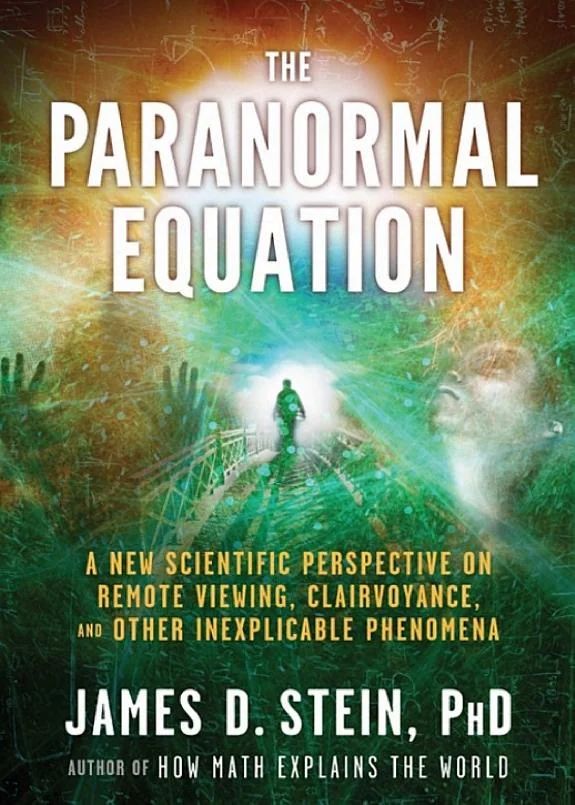
The Paranormal Equation
 76
76

The Paranormal Equation
James Stein’s "The Paranormal Equation" attempts a bold reconciliation, positing that science’s current inability to document supernatural phenomena like ESP or telekinesis doesn’t invalidate their existence. The book’s strength lies in its willingness to question the boundaries of established scientific dogma and to highlight historical instances of noted scientists holding unconventional beliefs. Stein’s argument that our scientific models might be fundamentally incomplete to encompass certain experiences is compelling, particularly when referencing the historical skepticism surrounding concepts now integrated into physics. However, the work sometimes struggles to move beyond assertion, often leaving the reader wanting more concrete analytical frameworks rather than purely speculative arguments. A particularly interesting section explores how subjective experience might challenge objective measurement. Ultimately, "The Paranormal Equation" offers a valuable perspective for those seeking to expand their understanding of consciousness and reality beyond conventional scientific limitations, even if it doesn't provide definitive answers.
📝 Description
76
James Stein's 2012 book, The Paranormal Equation, challenges scientific dismissal of unexplained phenomena.
Published in 2012, The Paranormal Equation questions the limitations of current scientific paradigms when faced with phenomena like telekinesis, precognition, and spectral encounters. James Stein examines why some scientists have historically remained open to the supernatural, even without strict empirical proof. The book is for readers interested in the unexplained and scientific inquiry, particularly those unsatisfied with standard dismissals of paranormal events.
It aims to provide a more structured, though speculative, way to understand these occurrences. The work is suited for students of consciousness studies and parapsychology, and anyone questioning solely materialist explanations of reality. Stein's book emerged during a period of continued tension between scientific advancements and popular fascination with the paranormal.
The Paranormal Equation engages with the long-standing historical tension between empirical scientific methods and anecdotal accounts of phenomena that defy conventional explanation. It follows in a tradition that includes early investigations into spiritualism, like those conducted by the Society for Psychical Research, and the work of figures such as Carl Jung, who explored concepts like synchronicity. Stein's contribution appears in an era where digital media amplifies personal experiences of the paranormal, while academic institutions often remain cautious.
💡 Why Read This Book?
• Gain a structured argument for why scientific models may be insufficient to explain phenomena like ESP, directly challenging materialist explanations as detailed in the book's exploration of scientific limitations. • Understand the historical context of scientific openness to the paranormal, referencing figures and movements that pursued empirical study of the supernatural, as discussed in the book's historical overview. • Develop a critical lens on the definition of 'evidence' in relation to consciousness and the unexplained, learning how "The Paranormal Equation" proposes a new framework for evaluating extraordinary experiences.
⭐ Reader Reviews
Honest opinions from readers who have explored this book.
❓ Frequently Asked Questions
What is the core argument of "The Paranormal Equation"?
The book argues that current scientific frameworks are insufficient to explain supernatural phenomena like ghosts, ESP, or telekinesis, suggesting that science needs a new 'equation' to account for these experiences.
Who is James Stein and what is his background?
James Stein is the author of "The Paranormal Equation," first published in 2012. Specific biographical details beyond his authorship of this work are not widely available, positioning him as an independent investigator of paranormal subjects.
Does the book provide scientific proof for paranormal events?
No, the book does not offer scientific proof. Instead, it argues for the *possibility* of these phenomena by questioning the limitations of current scientific methodology and advocating for an expanded understanding of reality.
What types of paranormal phenomena are discussed?
The book covers a range of phenomena including ghosts, communication with the dead, extrasensory perception (ESP), precognition, and telekinesis, examining why they are often dismissed by science.
When was "The Paranormal Equation" originally published?
"The Paranormal Equation" was first published on December 26, 2012, making it a relatively contemporary work in the field of paranormal studies.
Is this book suitable for skeptics?
It can be, as it directly addresses scientific skepticism. However, it aims to persuade skeptics by challenging the completeness of current scientific paradigms rather than by providing conventional evidence.
🔮 Key Themes & Symbolism
Limits of Scientific Paradigm
Stein's central thesis is that the prevailing scientific method, while powerful, is inherently limited when confronting phenomena that do not fit existing physical laws. The book critiques the scientific community's tendency to dismiss the unexplained rather than expand its models. It posits that concepts like telekinesis or precognition might become explainable if our understanding of physics and consciousness evolves, much like quantum mechanics revolutionized earlier physics. The work encourages a re-evaluation of what constitutes 'evidence' and 'proof' in the context of subjective experience and extraordinary claims.
Consciousness and Non-Local Interaction
A significant portion of the book is dedicated to exploring consciousness not merely as a product of brain activity but as a potentially fundamental aspect of reality capable of interaction beyond physical constraints. Stein examines how phenomena like ESP or remote viewing could be facilitated by a non-local aspect of consciousness, challenging the Cartesian dualism that often separates mind and matter. This theme invites readers to consider consciousness as a bridge between the material world and the unexplained, suggesting it holds the 'equation' to paranormal events.
Historical Scientific Openness
The work highlights that skepticism towards the paranormal is not a universal or historical constant within science. Stein brings attention to numerous respected scientists throughout history—from the late 19th century onwards—who openly investigated or believed in phenomena like spiritualism or psychic abilities. By referencing figures who dared to explore beyond conventional boundaries, the book aims to legitimize the inquiry into the paranormal and demonstrate that such exploration has often been a part of scientific progress, not an antithesis to it.
The Nature of Belief vs. Evidence
"The Paranormal Equation" grapples with the tension between anecdotal belief and empirical evidence. It acknowledges that while personal experiences of the paranormal are widespread, they often lack the rigorous documentation science demands. Stein explores why this gap exists and suggests that the demand for specific types of evidence might be inherently biased against certain types of phenomena. The book encourages readers to consider the validity of subjective experience and to ponder whether current scientific standards are too narrow.
💬 Memorable Quotes
Direct passages from the work, attributed to the author.
“Scientists are generally highly skeptical of the existence of such phenomena because of the lack of the rigorous documentation that science requires.”
— This statement captures the core conflict the book addresses: the scientific demand for verifiable proof versus the subjective, often undocumented, nature of paranormal experiences. It sets the stage for Stein's argument that the issue might lie with the documentation methods, not the phenomena themselves.
“Nevertheless, many great scientists have believed—and do believe—in the supernatural.”
— This highlights Stein's strategy of referencing historical figures to legitimize the study of the paranormal. It challenges the notion that scientific rationality is inherently antithetical to belief in the supernatural, suggesting a more nuanced historical relationship.
“The Paranormal Equation presents an argument for...”
— This incomplete sentence from the blurb signifies the book's primary purpose: to construct a reasoned case for reconsidering paranormal phenomena within a broader, possibly expanded, scientific or logical framework.
“Most of us think science is incapable of explaining supernatural phenomena.”
— This reflects the common societal perception that science and the supernatural are mutually exclusive. The book aims to question this dichotomy and explore potential bridges between the two domains.
“This would include everything from ghosts and communication with the dead to extrasensory perception (ESP), precognition, and telekinesis.”
— This enumerates the specific types of phenomena the book intends to address, providing concrete examples of what the 'paranormal equation' might seek to quantify or explain.
🌙 Esoteric Significance
Tradition
While not strictly adhering to a single lineage, "The Paranormal Equation" draws from the broader Western Esoteric tradition's interest in consciousness beyond the physical. It echoes themes found in Hermeticism and Neoplatonism regarding the interconnectedness of mind and cosmos, and the potential for human awareness to transcend material limitations. The book departs from traditional occultism by framing its arguments through a lens that attempts to engage with scientific language and logic, seeking to build a bridge rather than operate entirely outside established intellectual frameworks.
Symbolism
The central 'equation' itself serves as a potent symbol, representing the elusive formula that could reconcile the observable, physical world with the unexplainable. It symbolizes the human drive to find order and understanding, even in the face of phenomena that defy current rationalization. The book’s focus on phenomena like telekinesis and precognition can also be seen as symbolic of the latent potential within human consciousness, suggesting that our perceived limitations are not inherent but rather a function of our current conceptual and scientific models.
Modern Relevance
Contemporary thinkers exploring consciousness studies, the intersection of quantum physics and awareness, and even certain branches of transhumanism might find resonance in Stein's arguments. His questioning of scientific paradigms anticipates later discussions about the hard problem of consciousness and the limitations of reductionist approaches. The book’s call for a broader definition of evidence and inquiry remains relevant in online communities and fringe scientific circles that continue to explore anomalous phenomena outside of mainstream acceptance.
👥 Who Should Read This Book
• Individuals interested in comparative studies of consciousness, particularly those seeking to understand how paranormal experiences are viewed through a lens attempting scientific reconciliation. • Researchers and students of parapsychology and anomalous phenomena who are looking for arguments that challenge standard skeptical viewpoints and explore theoretical frameworks. • Skeptics who are open to examining the philosophical underpinnings of scientific methodology and questioning the absolute boundaries of what is considered scientifically possible.
📜 Historical Context
Published in December 2012, "The Paranormal Equation" emerged during a period of intense digital dissemination of anecdotal paranormal accounts, juxtaposed with persistent mainstream scientific skepticism. The early 21st century saw advancements in fields like neuroscience and quantum physics, yet these often reinforced a materialist worldview, making the book’s subject matter appear even more fringe. Stein’s work implicitly engages with the legacy of parapsychological research, which saw significant investigation from institutions like the Society for Psychical Research beginning in the late 19th century. Unlike the more mystical or philosophical explorations of consciousness prevalent in earlier eras, Stein attempts to frame the discussion within a quasi-scientific logic, directly confronting the empirical requirements that had long been a barrier. The book’s release predates the widespread popularization of concepts like the simulation hypothesis in mainstream discourse, offering a unique perspective on the limits of perception and reality.
📔 Journal Prompts
The concept of the 'paranormal equation' itself: how might it redefine scientific inquiry?
Examining the historical openness of scientists to the supernatural: what lessons can be drawn for contemporary research?
Challenges in documenting subjective paranormal experiences: how does this impact their acceptance?
The role of consciousness in the potential for non-local interaction: personal reflections on awareness beyond the physical.
Reconciling belief and empirical evidence: where do you draw the line in evaluating extraordinary claims?
🗂️ Glossary
Paranormal Equation
A conceptual framework proposed by James Stein, representing the missing scientific or logical principles needed to explain phenomena currently deemed supernatural, such as ESP or telekinesis.
Extrasensory Perception (ESP)
The purported ability to acquire information not through the recognized senses but through extrasensory means, encompassing telepathy, clairvoyance, and precognition.
Precognition
The claimed ability to perceive or know future events before they happen, often considered a form of ESP.
Telekinesis
The alleged ability to move or influence objects with the mind alone, without physical contact.
Scientific Skepticism
An approach that questions or doubts claims lacking empirical evidence or rigorous scientific validation, often demanding reproducible results.
Materialism
The philosophical belief that matter is the fundamental substance in nature, and that all phenomena, including consciousness, are results of material interactions.
Non-local Interaction
In physics and metaphysics, interactions that are not limited by distance, suggesting a connection or influence that transcends spatial separation.
This book appears in 1 collection
🔮 Readers Also Liked
Browse all →








From the “Remote Viewing” Collection
View all →






More Free Occult Philosophy Books
View all →