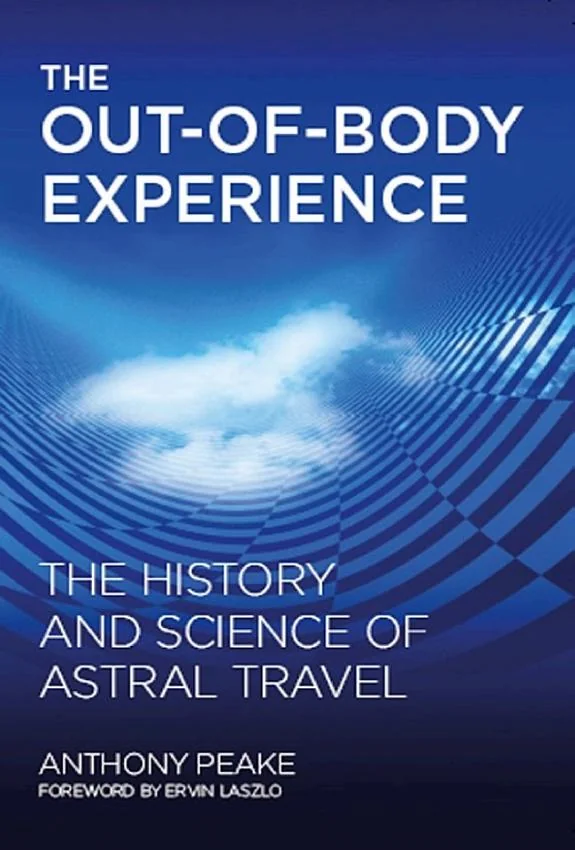
The Out-of-body Experience
 76
76

The Out-of-body Experience
Anthony Peake's "The Out-of-body Experience" tackles a notoriously slippery subject with commendable rigor. The author effectively synthesizes personal accounts with scientific research, presenting a compelling case for viewing OOBEs as significant conscious events rather than mere neurological glitches. A particular strength lies in the detailed case studies, which ground the more speculative theories in lived experience. However, the sheer breadth of topics Peake touches upon, from quantum physics to comparative religion, can sometimes feel overwhelming, leading to a density that might challenge less dedicated readers. The section discussing the linkage between OOBEs and psychic phenomena like remote viewing, while fascinating, occasionally feels underdeveloped, leaving the reader wanting more concrete evidence or a clearer articulation of the proposed mechanisms. Despite this, the book offers a substantial contribution to the literature on consciousness, encouraging a more open-minded investigation into these profound subjective states. It presents a valuable perspective for anyone seeking to understand the furthest reaches of human experience.
📝 Description
76
Anthony Peake's 2014 book investigates the out-of-body experience as a genuine phenomenon.
Anthony Peake's "The Out-of-body Experience" examines altered states of consciousness, with a specific focus on OOBEs. The author analyzes numerous reported experiences, drawing on case studies and interviews to build a framework for understanding these events outside of purely neurological explanations. Peake structures his argument logically, beginning with basic ideas and progressing to more complex theories.
The book is for anyone curious about consciousness, particularly those interested in OOBEs. It will appeal to readers of esoteric literature, parapsychology, and those seeking different views on subjective reality. Readers who appreciate detailed analysis, combining personal accounts with theoretical concepts, will find value here. It addresses the intersection of consciousness, psychic abilities, and scientific thought.
Peake's work connects to a long history of exploring non-ordinary states of consciousness, a field with recurrent interest in the 20th century. Early work by the Society for Psychical Research and later parapsychological research consistently challenged conventional views. Peake places his research within this ongoing discussion, referencing earlier researchers and contemporary developments to support his theories.
💡 Why Read This Book?
• Gain an understanding of how Anthony Peake connects out-of-body experiences to documented psychic phenomena like remote viewing, offering specific theoretical models presented in the book's later chapters. • Explore detailed case studies of OOBEs, providing concrete examples that support Peake's broader arguments about consciousness, as featured throughout the book's empirical sections. • Discover alternative scientific and esoteric explanations for out-of-body phenomena, moving beyond common neurological interpretations, a central thesis Peake develops since the book's 2011 publication.
⭐ Reader Reviews
Honest opinions from readers who have explored this book.
❓ Frequently Asked Questions
What is Anthony Peake's primary argument in 'The Out-of-body Experience'?
Peake argues that out-of-body experiences are genuine phenomena that offer insights into the nature of consciousness, linking them to psychic abilities and suggesting they are not solely products of the brain.
How does Peake connect OOBEs to other psychic phenomena?
The book explores correlations between out-of-body experiences and phenomena such as lucid dreaming and remote viewing, proposing shared underlying mechanisms or states of consciousness.
What kind of evidence does Peake use to support his theories?
Peake utilizes a combination of anecdotal evidence from case studies and interviews, alongside references to recent scientific developments and existing parapsychological research.
When was 'The Out-of-body Experience' first published?
The book was first published on January 1, 2011.
Is this book suitable for beginners in esoteric studies?
Yes, while dense, it provides a thorough introduction to OOBEs and their connections to other esoteric concepts, making it accessible to those new to the subject but seeking depth.
Does the book offer practical guidance for inducing an OOBE?
While primarily analytical and theoretical, the book examines the conditions and reported methods associated with OOBEs, indirectly informing readers interested in personal exploration.
🔮 Key Themes & Symbolism
The Nature of Consciousness
This theme centers on the idea that consciousness is not solely a product of the physical brain but an independent entity or field that can operate independently. Peake uses out-of-body experiences as primary evidence for this assertion, examining how individuals report perceiving external reality while their physical body remains stationary. The work explores various theoretical models, including those that suggest consciousness interfaces with subtle energies or dimensions, challenging purely materialistic explanations and opening avenues for exploring subjective realities and their objective correlates.
Psi Phenomena Integration
A core aspect of the book is the interconnectedness of various psychic phenomena. Peake posits that out-of-body experiences share fundamental mechanisms with lucid dreaming, remote viewing, and precognition. By examining case studies and theoretical frameworks, he suggests that these abilities are not isolated but rather manifestations of a broader spectrum of consciousness capabilities. This integrated approach aims to provide a more unified understanding of anomalous mental phenomena, moving beyond siloed research and toward a holistic view of the mind's potential.
Scientific and Esoteric Synthesis
Peake endeavors to bridge the gap between empirical scientific investigation and esoteric traditions. The book references contemporary scientific research in neuroscience and quantum physics while also drawing upon historical occult and metaphysical literature. This synthesis seeks to validate esoteric concepts through a modern lens and, conversely, to interpret scientific findings within a broader, often mystical, framework. The goal is to create a more comprehensive understanding of phenomena that lie at the edge of current scientific paradigms.
Subjective Reality and Perception
The book critically examines how we perceive reality, particularly during altered states like OOBEs. It questions the reliability of sensory input and the brain's role in constructing our experience of the world. By analyzing detailed accounts of OOBEs, Peake explores the possibility that subjective experiences can reflect an underlying objective reality beyond our normal sensory apparatus. This theme encourages readers to reconsider their assumptions about the limitations of human perception and the potential for consciousness to access information directly.
💬 Memorable Quotes
Direct passages from the work, attributed to the author.
“The out-of-body experience is a window into the true nature of consciousness.”
— This interpretation highlights Peake's central thesis: OOBEs are not mere illusions but significant events that reveal the non-local and potentially independent character of consciousness, offering wide implications for our understanding of reality.
“Lucid dreaming and remote viewing appear to operate on similar principles to OOBEs.”
— This concept suggests a unifying theory for various psychic phenomena, implying that states like lucid dreaming and abilities like remote viewing are closely related to out-of-body experiences, possibly stemming from a common underlying mechanism or conscious capacity.
“The brain may act as a receiver or interface rather than the sole generator of consciousness.”
— This interpretation proposes a model where the brain is not the origin of consciousness but rather a tool that allows consciousness to manifest or interact within the physical realm, a perspective supported by many OOBE accounts.
“Case studies provide crucial empirical data for understanding anomalous consciousness.”
— This highlights the importance Peake places on personal testimonies and documented experiences as valid sources of information for scientific and philosophical inquiry into consciousness, especially when conventional methods fall short.
“Science is gradually catching up to the insights found in esoteric traditions regarding consciousness.”
— This reflects Peake's view that ancient wisdom and mystical traditions often contained accurate observations about consciousness that modern science is now beginning to validate or explore through new research avenues.
🌙 Esoteric Significance
Tradition
Peake's work draws heavily from the Western Esoteric Tradition, particularly its modern manifestations in parapsychology and consciousness studies. While not strictly adhering to Hermeticism, Gnosticism, or Theosophy, it engages with their underlying themes of consciousness as fundamental and capable of transcending physical limitations. The book fits within a lineage that seeks to empirically investigate claims often found in these traditions, attempting to bridge subjective experience with objective inquiry, thereby updating and validating esoteric concepts for a contemporary audience.
Symbolism
While "The Out-of-body Experience" focuses more on phenomena than explicit symbolic systems, the concept of the "astral body" or "subtle body" serves as a key motif. This represents consciousness's capacity to separate from the physical form, often depicted as a luminous or ethereal double. Another symbolic element is the "threshold" or "veil" between physical and non-physical realities, which the OOBE experience is seen to pierce, granting access to different states or dimensions of awareness.
Modern Relevance
Peake's work remains highly relevant for contemporary thinkers and practitioners exploring consciousness, lucid dreaming, and altered states. It informs discussions within communities interested in non-ordinary experiences, biofeedback, and meditation techniques aimed at expanding awareness. Modern researchers in fields like neurotheology and the science of consciousness, as well as practitioners of various contemplative and energy-based modalities, find resonance in Peake's synthesis of subjective experience and theoretical frameworks.
👥 Who Should Read This Book
• Individuals fascinated by the subjective nature of consciousness and seeking explanations beyond conventional neuroscience, particularly those who have had or are curious about OOBEs. • Researchers and students of parapsychology and anomalous mental phenomena interested in synthesized case studies and theoretical models connecting OOBEs with other psi abilities. • Readers of esoteric literature looking for a bridge between mystical traditions and contemporary scientific inquiry, aiming to understand how ancient concepts of consciousness are being re-examined.
📜 Historical Context
Published in 2011, Anthony Peake's "The Out-of-body Experience" emerged during a period of renewed interest in consciousness studies, partly fueled by advancements in neuroscience and quantum physics that seemed to challenge traditional materialistic paradigms. The field of parapsychology, though often on the fringes, continued to produce research, with figures like Dean Radin publishing significant works on psi phenomena around the same time. Peake's work positioned itself within this ongoing exploration, seeking to integrate anecdotal evidence from OOBEs with emerging scientific theories. While not directly engaging in public debate with a specific contemporary author in the way some earlier works did, Peake's approach implicitly contrasted with the more strictly empirical, often skeptical, stance of mainstream neuroscience. The reception of such works typically occurs within specialized communities, where they are seen as valuable contributions to a continuing dialogue about the nature of mind and reality, distinct from the more public discourse surrounding cognitive science.
📔 Journal Prompts
The mechanics of psychic phenomena as explored in Peake's work.
The brain as a receiver for consciousness, as presented in the book.
Connecting lucid dreaming experiences with potential OOBE characteristics.
The implications of subjective reality access described in case studies.
The integration of esoteric concepts with scientific investigation in Peake's approach.
🗂️ Glossary
Out-of-Body Experience (OOBE)
A subjective sensation of perceiving one's body from an elevated or external vantage point, often accompanied by a feeling of consciousness separating from the physical form.
Psi Phenomena
A broad category of anomalous mental phenomena, including telepathy, clairvoyance, precognition, psychokinesis, lucid dreaming, and out-of-body experiences, which are not explained by conventional scientific principles.
Lucid Dreaming
A state of dreaming in which the dreamer is aware that they are dreaming and may be able to exert some control over the dream's content or narrative.
Remote Viewing
The purported ability to perceive information about a distant or unseen target using extrasensory perception (ESP), often involving visual or spatial data.
Materialism
The philosophical belief that matter is the fundamental substance in nature, and that all phenomena, including consciousness, are results of material interactions.
Subtle Body
In esoteric traditions, a non-physical or energetic body that is considered to be a vehicle for consciousness, often associated with astral projection or out-of-body experiences.
Parapsychology
The study of alleged psychic phenomena and other paranormal claims, including ESP and psychokinesis, often through scientific investigation.
This book appears in 1 collection
🔮 Readers Also Liked
Browse all →









From the “Astral Projection” Collection
View all →







More Free Occult Philosophy Books
View all →