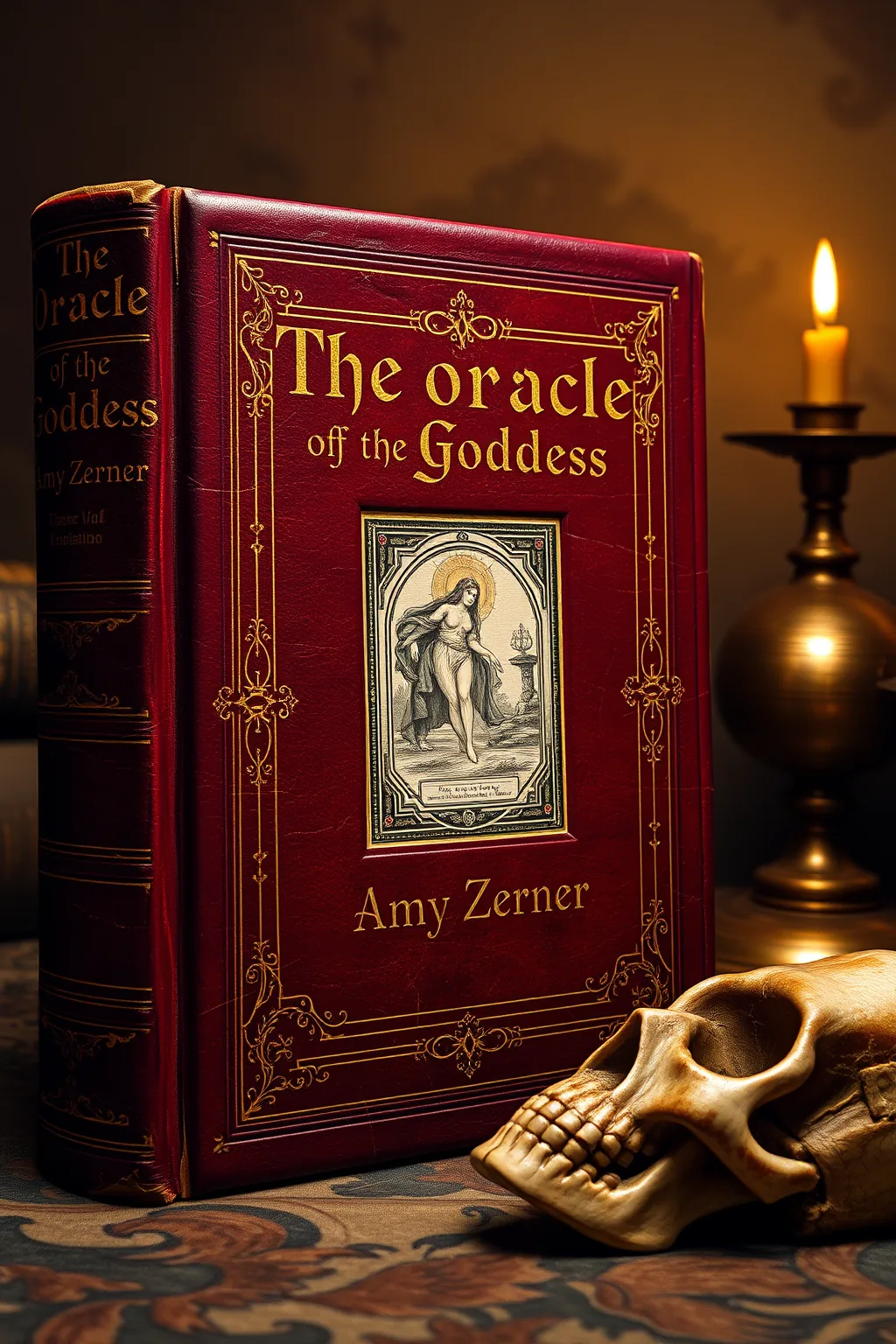
The oracle of the goddess
 72
72

The oracle of the goddess
Amy Zerner and Monte Farber's "The Oracle of the Goddess" offers a visually striking and introspective method for divination that moves beyond simple question-and-answer formats. The integration of Zerner's distinctive art with Farber's insightful text creates a compelling system for self-inquiry. The strength lies in its emphasis on archetypal feminine energies, providing a rich framework for understanding personal challenges and growth. However, the system's reliance on the accompanying oracle cards (which are essential for its full function but not described as included here) means the book alone acts more as a manual and interpretation guide than a standalone tool. A particularly effective aspect is the way the oracle prompts reflection on the "Wheel of the Year" archetypes, connecting personal cycles to natural rhythms. While the book provides a solid foundation, its ultimate efficacy is tied to the physical oracle deck, making its standalone utility somewhat limited for immediate divination.
Verdict: A beautifully illustrated and conceptually deep guide to an archetypal oracle system, best utilized with its companion deck.
📝 Description
72
Amy Zerner and Monte Farber's 1998 book, 'The Oracle of the Goddess,' presents a unique divination system.
Published in 1998, 'The Oracle of the Goddess' by Amy Zerner and Monte Farber offers a structured approach to divination and self-reflection. It is not simply a book for predicting the future but a tool designed to foster a connection with one's inner wisdom. The system uses archetypal feminine energies to guide users through a series of oracle readings. The authors provide both an explanation of their oracle system and practical instructions for its use.
This work is suited for individuals looking for a more personal and inward-focused method of divination, moving beyond superficial fortune-telling. It will particularly attract those interested in feminine archetypes, goddess imagery, and the psychological aspects of intuition. Readers who value artistic elements will appreciate Zerner's illustrations, which are integral to the oracle's design. The book serves well for both solitary practice and as a companion for journaling or meditation.
Emerging in 1998, 'The Oracle of the Goddess' arrived during a period of renewed interest in goddess spirituality and Jungian psychology's focus on archetypes. While many divination and self-help tools appeared then, this work stood out for its integration of art and its specific focus on feminine archetypes. It aligns with a broader trend of exploring the feminine psyche through myth, offering a more direct divinatory application than some academic works.
💡 Why Read This Book?
• Gain a structured method for exploring feminine archetypes, moving beyond generic divination by engaging with specific Goddess Oracle images and their meanings as detailed in the book. • Develop a more personal divinatory practice by learning to interpret the interplay between archetypal energies and your own life circumstances, as guided by the book's interpretive framework. • Understand the cyclical nature of personal and spiritual growth through the lens of the "Wheel of the Year" concept, directly referencing the archetypal phases presented in the oracle system.
⭐ Reader Reviews
Honest opinions from readers who have explored this book.
❓ Frequently Asked Questions
What is the primary purpose of 'The Oracle of the Goddess'?
Its primary purpose is to serve as a divinatory tool and guide for self-exploration, focusing on archetypal feminine energies. It facilitates a personal dialogue with inner wisdom through a unique system developed by Amy Zerner and Monte Farber, first published in 1998.
Does the book come with the oracle cards?
The book 'The Oracle of the Goddess' details the system and interpretations for the oracle. However, it is typically sold separately from the physical deck of oracle cards, which are essential for performing readings as described.
Who are Amy Zerner and Monte Farber?
Amy Zerner is an artist whose distinctive artwork forms the visual basis of the oracle, while Monte Farber is a writer and co-creator of the system. They have collaborated on several esoteric and divination-focused works since the late 20th century.
What kind of archetypes are featured in the oracle?
The oracle features archetypes of the divine feminine, often linked to the "Wheel of the Year" and its seasonal cycles. These represent various aspects of female energy and experience, providing symbolic guidance.
Is this book suitable for beginners in divination?
Yes, the book provides clear explanations and a structured approach, making it accessible for beginners interested in archetypal divination. It guides users through the system's concepts and application.
What is the 'Wheel of the Year' concept in this context?
In 'The Oracle of the Goddess,' the 'Wheel of the Year' refers to the cyclical progression of seasons and their associated archetypal energies, particularly those of the feminine. The oracle uses these phases to frame divinatory insights.
🔮 Key Themes & Symbolism
Archetypes of the Divine Feminine
The core of "The Oracle of the Goddess" lies in its exploration of archetypal feminine energies. These are not abstract concepts but are embodied in distinct imagery, representing various facets of the Goddess. Zerner and Farber present these archetypes as dynamic forces that influence human experience, offering a framework for understanding personal growth, intuition, and the cyclical nature of life. The system encourages users to connect with these energies for guidance, seeing them as reflections of inner potentials and universal patterns.
The Wheel of the Year
Central to the oracle's structure is the "Wheel of the Year," a concept that maps the eight seasonal festivals of the pagan calendar onto archetypal stages of life and spiritual development. Each point on the Wheel corresponds to specific Goddess archetypes and energies relevant to that time. This cyclical understanding provides a temporal and symbolic context for divination, linking personal journeys to the broader rhythms of nature and the cosmos. It offers a powerful lens for examining transitions and the unfolding of potentials throughout the year.
Intuitive Divination System
Zerner and Farber's work offers a structured yet deeply intuitive system for divination. It moves beyond simple fortune-telling by emphasizing personal interpretation and connection with the archetypal imagery. The oracle is designed to facilitate a dialogue between the user and their subconscious, using symbolic language to illuminate inner states and potential pathways. The system encourages a contemplative approach, where the act of engaging with the oracle itself becomes a practice of self-discovery and wisdom.
Art as Esoteric Tool
The visual component of "The Oracle of the Goddess" is integral to its function. Amy Zerner's distinctive artwork is not merely decorative; it serves as the medium through which the archetypal energies are conveyed. The images are imbued with symbolic meaning, designed to evoke specific feelings and intuitive responses. This integration of art and esoteric practice highlights the belief that visual symbolism can directly access deeper layers of consciousness, making the artwork a potent tool for divination and spiritual insight.
💬 Memorable Quotes
Direct passages from the work, attributed to the author.
“The oracle is a mirror to the soul.”
— This interpretation suggests the primary function of the oracle system is not to predict external events, but to reflect the user's inner landscape, subconscious thoughts, and emotional states, facilitating self-awareness.
“Goddess energies flow through the cycles of the year.”
— This highlights the connection between the divine feminine archetypes presented in the oracle and the natural, seasonal rhythms of the "Wheel of the Year," framing personal experience within cosmic and earthly cycles.
“Each image holds a unique message for the seeker.”
— This emphasizes the personalized nature of the oracle's guidance. The artwork and symbols are intended to communicate specific, relevant insights tailored to the individual's current situation and questions.
“The oracle invites a dialogue, not a decree.”
— This interpretation underscores the interactive and collaborative nature of the divination process. The oracle is presented as a partner in exploration, offering perspectives rather than absolute pronouncements.
💡 Key Ideas
Editorial paraphrase of the work's core concepts — not direct quotes.
Understanding the archetypes unlocks inner wisdom.
This paraphrase points to the pedagogical aspect of the oracle system, suggesting that by studying and internalizing the meanings of the various Goddess archetypes, users can access and develop their own innate intuitive knowledge.
🌙 Esoteric Significance
Tradition
The work draws heavily from Western esoteric traditions, particularly those influenced by Jungian archetypal psychology and the goddess revival movements of the late 20th century. It synthesizes elements of nature-based spirituality, archetypal symbolism, and personal divination, offering a system that feels both ancient in its roots and contemporary in its application. It can be seen as an evolution of symbolic systems used for spiritual insight, adapting them for modern self-exploration.
Symbolism
Key symbols include the archetypal feminine figures themselves, each representing distinct energies and life stages. The "Wheel of the Year" serves as a crucial symbolic map, integrating the cycles of nature with human spiritual development. Other symbols often found within Zerner's art, such as celestial bodies, natural elements, and sacred geometry, further enrich the symbolic language, providing layers of meaning for interpretation.
Modern Relevance
Contemporary practitioners of modern paganism, ecofeminism, and Jungian-oriented psychology often engage with "The Oracle of the Goddess." Its emphasis on archetypal feminine energies and cyclical living continues to resonate with those seeking to reconnect with nature-based spirituality and explore embodied feminine wisdom in a post-2000 spiritual landscape.
👥 Who Should Read This Book
• Aspiring diviners and spiritual seekers interested in a system that emphasizes the divine feminine and archetypal wisdom. • Art enthusiasts and collectors who appreciate the integration of unique artistic expression with esoteric practice. • Individuals exploring Jungian psychology and archetypes, particularly the feminine aspects, seeking a practical tool for self-reflection.
📜 Historical Context
Published in 1998, "The Oracle of the Goddess" emerged during a vibrant period for esoteric and spiritual literature, characterized by a resurgence of interest in goddess spirituality, Jungian psychology, and diverse forms of divination. The late 20th century saw many authors exploring the feminine psyche and its archetypal manifestations, often drawing inspiration from mythology and cross-cultural traditions. Zerner and Farber's work contributed to this milieu by offering a visually integrated system that specifically focused on feminine archetypes, presented through Zerner's distinctive artistic style. This period also witnessed the popularization of various oracle decks and tarot systems, competing with and complementing more traditional divinatory practices. While not directly engaging with academic discourse, the book tapped into a cultural current that sought alternative frameworks for understanding self and spirit, influenced by thinkers like Carl Jung and movements such as the feminist spirituality movement.
📔 Journal Prompts
The archetypal feminine energies as depicted in the oracle.
Reflect on the "Wheel of the Year" and your personal connection to its cycles.
Interpreting the symbolic language within a chosen oracle image.
How the oracle's guidance aligns with your current life path.
The dialogue between your intuition and the oracle's message.
🗂️ Glossary
Archetype
In Jungian psychology and esoteric thought, a universal, archaic pattern and image that derives from the collective unconscious and is the structural component of the collective unconscious.
Goddess Oracle
The specific divinatory system created by Amy Zerner and Monte Farber, utilizing a deck of cards featuring Zerner's artwork, each card representing an archetype of the divine feminine.
Wheel of the Year
A cyclical calendar representing the eight major pagan festivals, symbolizing the annual progression of seasons and the associated archetypal energies and life stages.
Divination
The practice of seeking knowledge of the future or the unknown by supernatural means; in this context, often used for self-understanding and guidance rather than strict prediction.
Feminine Energy
Refers to qualities and archetypes traditionally associated with the feminine principle, such as intuition, creativity, nurturing, and cyclical power, as explored within the oracle system.
Symbolic Language
A system of communication using symbols, images, and metaphors to convey deeper meanings, often accessed intuitively, as employed by the oracle's artwork.
Self-Exploration
The process of examining one's own thoughts, feelings, and motivations to gain greater self-awareness and personal understanding, facilitated by the oracle's reflective nature.
🔮 Readers Also Liked
Browse all →









More by Amy Zerner, Monte Farber
All books →
More Free Occult Philosophy Books
View all →