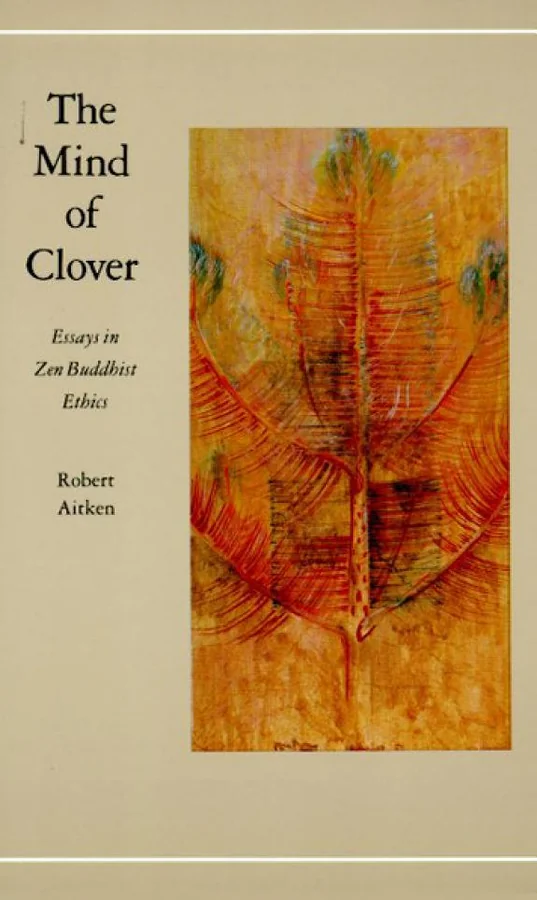
The Mind of Clover
 80
80

The Mind of Clover
Robert Aitken’s 1984 exploration of Zen ethics, "The Mind of Clover," offers a refreshing perspective on the Ten Grave Precepts. He masterfully reframes these principles not as unyielding dictates but as living inspirations, comparing them to water rather than stone. The book's strength lies in its layered approach, allowing for deep contemplation of how ethical behavior can be a generative force. A particular strength is Aitken’s consistent metaphor of spiritual growth as an act of ecological enrichment, mirroring the way clover nourishes the soil. While the prose is generally clear, some passages might benefit from further elaboration for readers entirely new to Zen concepts. The work’s consistent focus on the interconnectedness of personal ethics and environmental well-being remains compelling. "The Mind of Clover" successfully argues for an expansive, nurturing view of ethical living.
📝 Description
80
Robert Aitken's 1984 book, The Mind of Clover, reinterprets the Ten Grave Precepts of Zen.
First published in 1984, The Mind of Clover examines the Ten Grave Precepts of Zen Buddhism. Robert Aitken does not present these precepts as strict rules, but as living inspirations that, like water, can flow and nourish. He uses the metaphor of clover enriching the soil to show how ethical actions grow from and support spiritual life.
The book is for anyone interested in putting Buddhist philosophy into practice, especially within the Zen tradition. It speaks to those who want to understand ethics as more than just a set of commands, and who are looking for contemplative ways to develop spiritually. Readers familiar with mindfulness, ethics, and the connection between personal behavior and overall well-being will find this work valuable.
Aitken's writing places Zen ethics within a broader context of Western interest in Eastern thought that grew in the late 20th century. It offers a clear way to approach the core ethical ideas of Zen for both secular and spiritual readers. The work discusses the importance of "right livelihood" and how individual actions impact the community and the environment.
The Mind of Clover sits within the tradition of Soto Zen Buddhism's engagement with ethical practice. Robert Aitken, a prominent Zen teacher, aimed to make the foundational ethical principles of Zen accessible beyond monastic settings. This work connects with a lineage that emphasizes the integration of ethical conduct into everyday life, viewing precepts not as prohibitions but as guides for cultivating mindfulness and compassion in the world. It reflects a broader movement in the late 20th century to translate esoteric Buddhist concepts into practical applications for Western practitioners.
💡 Why Read This Book?
• Gain a practical understanding of Zen ethics beyond dogma, grounded in Aitken's discussion of the Ten Grave Precepts as fluid expressions, not rigid commands. • Cultivate a sense of ethical action as a generative force, inspired by the book's central metaphor of clover enriching the soil for wider benefit. • Explore the concept of right livelihood and interconnectedness through Aitken's accessible interpretations, offering a holistic view of spiritual practice.
⭐ Reader Reviews
Honest opinions from readers who have explored this book.
❓ Frequently Asked Questions
What are the Ten Grave Precepts of Zen as discussed in 'The Mind of Clover'?
Aitken presents the Ten Grave Precepts not as commandments, but as fluid expressions of inspiration. He explores them from multiple angles, encouraging readers to see them as guidelines for ethical conduct that nurtures spiritual growth and the surrounding environment.
When was 'The Mind of Clover' first published?
Robert Aitken's 'The Mind of Clover' was first published in 1984, a period of growing Western engagement with Eastern spiritual traditions.
What is the central metaphor used in 'The Mind of Clover'?
The central metaphor is clover, used to illustrate how ethical actions can be as nurturing to the spiritual and environmental 'soil' as clover is to the earth, enriching it as it grows.
Is this book suitable for beginners in Zen?
Yes, Aitken's approach is clear and accessible, making 'The Mind of Clover' suitable for those new to Zen who are interested in its ethical dimensions, presented without overly complex jargon.
What is the author's approach to ethical guidelines in Zen?
Aitken emphasizes that Zen ethics, exemplified by the Ten Grave Precepts, are dynamic and fluid, not fixed rules. He views them as inspirations that guide conduct and foster a beneficial impact on one's surroundings.
Does the book discuss the environmental aspect of ethics?
Yes, the book uses the metaphor of clover to highlight how ethical living benefits the environment and the wider community, suggesting an interconnectedness between personal conduct and ecological well-being.
🔮 Key Themes & Symbolism
Ethical Cultivation
The work posits that ethical principles, particularly the Zen Ten Grave Precepts, are not rigid commandments but living guides. Aitken likens their application to the way clover enriches the soil, suggesting that right action naturally nourishes the spiritual and communal environment. This perspective moves ethical development from a place of obligation to one of organic growth and positive contribution, emphasizing the beneficial ripple effects of mindful conduct.
The Fluidity of Precepts
A central theme is the reinterpretation of the Ten Grave Precepts. Aitken stresses their non-dogmatic nature, describing them as 'expressions of inspiration written in something more fluid than water.' This challenges static interpretations of religious or ethical rules, advocating for an understanding that adapts to context and fosters genuine understanding rather than blind adherence.
Interconnected Well-being
Aitken extends the scope of ethical consideration beyond the individual. The book explores how personal conduct impacts the broader community and environment. This holistic view connects spiritual practice with responsible livelihood and ecological awareness, suggesting that a truly ethical life is one that contributes to the flourishing of all interconnected systems.
Nurturing the Inner Landscape
The mind itself is presented as a landscape capable of cultivation. By engaging with ethical principles in a flexible and nurturing way, individuals can foster a more positive inner state, analogous to how clover enhances the earth. This theme emphasizes the potential for personal transformation through mindful ethical practice and a compassionate outlook.
💬 Memorable Quotes
Direct passages from the work, attributed to the author.
“Our minds can be as nurturing as clover, which enriches the soil and benefits the environment as it grows.”
— This central metaphor illustrates how ethical conduct, when approached with intention and flexibility, can have a profoundly positive and expansive effect. It suggests that inner cultivation directly benefits the outer world, fostering a sense of interconnected responsibility.
“Aitken approaches these precepts... from several perspectives, offering many layers of interpretation.”
— This highlights the book's method of deconstructing complex ethical ideas. By examining the precepts through various lenses, Aitken allows readers to engage with them on multiple levels, fostering a deeper and more personal understanding of Zen ethics.
“Like ripples in...”
— Though the original blurb cuts off, this phrase suggests the far-reaching and spreading influence of ethical actions. It evokes the image of a stone dropped in water, where the initial act creates ever-widening circles of impact.
💡 Key Ideas
Editorial paraphrase of the work's core concepts — not direct quotes.
The Ten Grave Precepts are 'not commandments etched in stone but expressions of inspiration written in something more fluid than water.'
This quote expresses Aitken's core argument: Zen ethics are dynamic and adaptable, not rigid rules. It highlights the importance of understanding the spirit behind the precept, allowing for nuanced application and personal growth rather than mere obedience.
The work explores how our minds can cultivate ethical awareness.
This paraphrased concept emphasizes the active role of the practitioner in developing ethical understanding. It frames ethics not as an external imposition but as an internal capacity that can be consciously nurtured and expanded.
🌙 Esoteric Significance
Tradition
While rooted in Zen Buddhism, a specific Mahayana tradition, "The Mind of Clover" transcends purely sectarian boundaries. Its emphasis on ethics as a transformative, interconnected force aligns with broader esoteric principles found in various spiritual paths that focus on the cultivation of consciousness and its outward manifestation. It engages with the practical application of spiritual insight, a common thread in traditions like Hermeticism and Theosophy, though its specific framework is distinctly Zen.
Symbolism
The primary symbol is clover, representing the nurturing and enriching quality of ethical action. It symbolizes natural growth, benefit to the environment (both inner and outer), and the idea that virtue is not imposed but arises organically. The comparison of precepts to water versus stone is also symbolic, highlighting fluidity, adaptability, and the dynamic nature of spiritual principles over rigid dogma.
Modern Relevance
Aitken's work continues to inform contemporary discussions on mindfulness, applied ethics, and compassionate action. Thinkers and practitioners in secular mindfulness movements, eco-spirituality, and engaged Buddhism draw on his approach. His emphasis on the interconnectedness of personal ethics with societal and environmental well-being resonates strongly with current concerns about sustainability and social justice.
👥 Who Should Read This Book
• Individuals exploring Zen Buddhist ethics, seeking to understand the Ten Grave Precepts beyond rigid rules. • Practitioners of mindfulness and meditation looking for practical guidance on integrating ethical conduct into daily life. • Readers interested in the intersection of personal development, environmental consciousness, and spiritual philosophy.
📜 Historical Context
Published in 1984, "The Mind of Clover" emerged during a period of significant Western engagement with Zen Buddhism. While Zen masters like D.T. Suzuki had been influential since the mid-20th century, Aitken's work offered a clear, accessible exploration of Zen ethics at a time when interest in contemplative practices was growing. This era saw a burgeoning dialogue between Western psychology and Eastern philosophies, with figures like Joseph Campbell popularizing comparative mythology and spiritual traditions. Aitken's contribution stood out for its focus on the ethical dimension, differentiating it from purely meditative or philosophical introductions. Unlike some more academic treatments, Aitken's work was rooted in his extensive practice and teaching within the Zen tradition, making it a practical guide for practitioners and a thoughtful resource for scholars interested in applied ethics within Buddhism.
📔 Journal Prompts
The clover metaphor and its relation to ethical cultivation.
Interpreting the Ten Grave Precepts as fluid inspirations rather than fixed commands.
How does the concept of 'enriching the soil' apply to your own spiritual practice?
The interconnectedness of personal conduct and the wider environment.
Reflecting on the dynamic nature of ethical guidance in your life.
🗂️ Glossary
Ten Grave Precepts
Core ethical guidelines within Zen Buddhism, traditionally understood as fundamental principles for practice. Aitken reinterprets them as fluid inspirations rather than rigid commandments.
Zen Ethics
The ethical framework derived from Zen Buddhist philosophy and practice, emphasizing mindfulness, compassion, and the interconnectedness of all beings.
Right Livelihood
One of the Eightfold Path elements in Buddhism, referring to engaging in work that does not harm oneself or others, aligning one's profession with ethical principles.
Precepts
In a religious or ethical context, rules or guidelines for conduct. Aitken emphasizes the 'inspiration' aspect over strict adherence.
Nurturing
Providing care and encouragement for growth. Aitken uses this to describe the beneficial effect of ethical actions on the self and the environment.
Fluidity
The quality of being able to flow or change easily. Aitken applies this to ethical principles, contrasting them with rigid or fixed rules.
Spiritual Soil
A metaphorical concept representing the inner state or foundation upon which spiritual growth occurs. Ethical actions are seen as enriching this 'soil'.
This book appears in 1 collection
🔮 Readers Also Liked
Browse all →









From the “Zen Buddhism” Collection
View all →









More Free Occult Philosophy Books
View all →