Eyes to see
 80
80

Eyes to see
Nassise's "Eyes to See" presents a compelling argument for the active cultivation of perceptive faculties, moving beyond passive observation to a more engaged form of knowing. The strength of the work lies in its clear articulation of how ingrained cognitive habits act as barriers to deeper understanding. Nassise avoids esoteric jargon where possible, making complex ideas about consciousness accessible. However, the book sometimes feels overly theoretical, lacking concrete exercises or historical examples that could have further illuminated its points. A particularly insightful passage discusses the 'echo chamber' effect of confirmation bias, illustrating how even well-intentioned seekers can become trapped by their own preconceptions. While the conceptual framework is robust, a more direct engagement with specific esoteric traditions might have provided additional depth. "Eyes to See" offers a valuable intellectual framework for enhancing one's perceptual acuity.
📝 Description
80
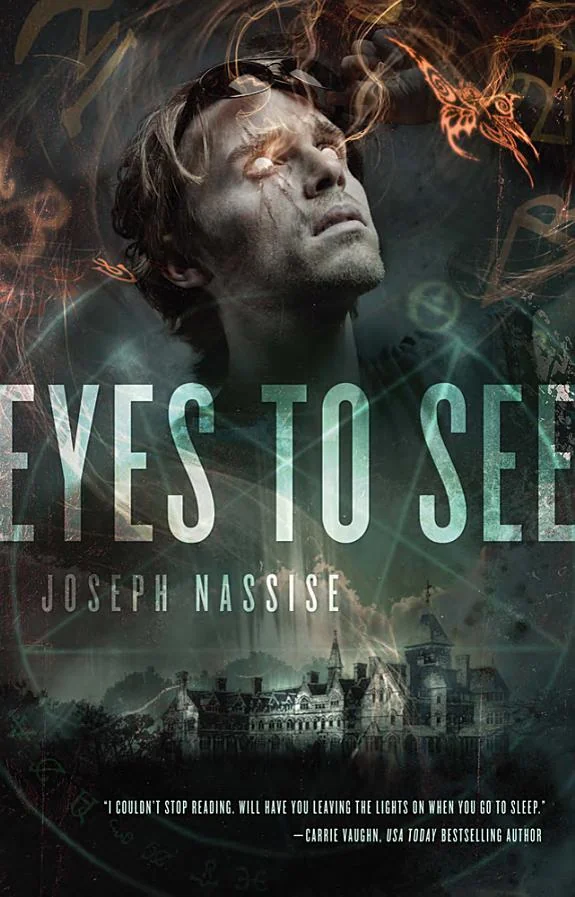
Joseph Nassise's 2018 book, 'Eyes to See,' argues that true sight is an acquired skill.
Published in 2018, 'Eyes to See' by Joseph Nassise examines how we perceive reality. The book posits that our understanding is shaped by ingrained mental structures and biases, which Nassise calls 'perceptual filters.' It is not a guide to developing psychic abilities, but rather a method for sharpening one's inner awareness. Nassise suggests that questioning common viewpoints and paying close attention are key to this process. The work is for those who feel that materialist explanations of existence are insufficient and who seek a more thorough grasp of the world. It suits readers interested in philosophical discussion, religious studies, or the early stages of esoteric learning. Those who enjoy intellectual engagement with difficult topics will find value here. It challenges readers to reconsider their assumptions about what is real and knowable.
This book connects to a tradition that questions the limits of empirical science, tracing back to Neoplatonism and later Hermeticism and Transcendentalism. These movements also sought truths beyond the physical world. Nassise's work enters contemporary discussions on perception and epistemology, offering a modern perspective on accessing realities beyond immediate sensory experience.
💡 Why Read This Book?
• You will learn to identify and deconstruct your own perceptual filters, a concept central to the book's argument, enabling a more objective assessment of information than generic mindfulness texts offer. • You will gain practical strategies for cultivating 'intentional awareness,' a method discussed in detail that encourages active discernment of reality, moving beyond passive sensory input. • You will understand the role of 'inner dialogue' as a potential obstacle or tool, a specific concept explored in "Eyes to See," offering a unique perspective on self-awareness not commonly found in general psychology.
⭐ Reader Reviews
Honest opinions from readers who have explored this book.
❓ Frequently Asked Questions
What is the primary goal of Joseph Nassise's "Eyes to See"?
The primary goal is to demonstrate that perception is not merely a passive reception of data, but an active, learned skill. It aims to equip readers with the tools to question their own assumptions and see beyond superficial appearances.
Is "Eyes to See" a practical guide with exercises?
While it offers conceptual frameworks and encourages a shift in perspective, "Eyes to See" is more of an intellectual exploration than a step-by-step practical manual. It focuses on understanding the principles behind altered perception.
What philosophical ideas does "Eyes to See" engage with?
The book engages with epistemology and the philosophy of mind, questioning the reliability of sensory experience and exploring how cognitive biases shape our understanding of reality, drawing parallels to classical philosophical concerns.
Who would benefit most from reading this book?
Individuals interested in consciousness studies, philosophy, comparative religion, and those seeking to deepen their understanding of perception and reality beyond conventional explanations would find it beneficial.
What is the significance of the title "Eyes to See"?
The title signifies the book's central theme: that true understanding requires more than physical sight. It refers to developing an inner or spiritual vision capable of perceiving deeper truths and realities.
Does the book discuss specific esoteric traditions?
While not exclusively focused on one tradition, "Eyes to See" touches upon themes and concepts found within various esoteric and philosophical lineages that explore the nature of consciousness and reality.
🔮 Key Themes & Symbolism
Perceptual Filters
Nassise identifies how ingrained mental frameworks, shaped by culture, education, and personal history, act as filters that color our perception of reality. These filters can obscure objective truth, leading to misunderstandings and a limited worldview. The book argues that recognizing these filters is the first step toward genuine insight, moving beyond simplistic interpretations of experience to a more nuanced apprehension of the world.
Intentional Awareness
This theme centers on the practice of conscious, focused attention. It is presented not as mere mindfulness, but as an active cultivation of one's perceptive faculties. Intentional awareness allows individuals to engage with their environment and inner states with greater clarity and discernment, actively shaping their understanding rather than passively receiving impressions. It's about directing one's gaze with purpose.
The Nature of Reality
The work challenges the reader to question the assumed solidity and objectivity of external reality. It suggests that our experience of reality is a construction, heavily influenced by our internal state and perceptive apparatus. By altering one's perceptual filters, one can begin to apprehend different layers or aspects of reality that are typically inaccessible to ordinary consciousness.
Inner Dialogue
Nassise explores the pervasive nature of internal chatter and its impact on perception. He posits that this continuous stream of thought, often automatic and unexamined, reinforces existing filters and prevents clear observation. The book suggests methods for observing and potentially quieting this inner dialogue to create space for more direct and authentic perception.
💬 Memorable Quotes
Direct passages from the work, attributed to the author.
“The world we perceive is not the world as it is, but the world as we are.”
— This statement captures the core idea that our experience of reality is subjective and heavily mediated by our internal states, biases, and learned patterns of perception.
“True sight is not a gift, but a discipline.”
— This emphasizes that developing a deeper, more insightful way of perceiving the world requires conscious effort, practice, and a commitment to self-observation, rather than being an innate ability.
“Our assumptions are the walls of our prison.”
— This metaphor highlights how deeply held beliefs and unquestioned assumptions can limit our perspective and prevent us from exploring alternative viewpoints or realities.
“To see differently is to become different.”
— This suggests a direct correlation between a transformation in one's perception and a fundamental change in one's being or identity.
“The noise of the mind drowns out the whispers of truth.”
— This points to the constant activity of our thoughts as a barrier to subtle insights and intuitive understanding, advocating for a quieting of mental chatter.
🌙 Esoteric Significance
Tradition
While not strictly adhering to a single named tradition, "Eyes to See" draws heavily from the philosophical underpinnings of Western Esotericism, particularly Hermeticism and Gnosticism, which emphasize the power of inner knowledge and the transformative potential of altered perception. It shares with these traditions a skepticism towards purely materialist explanations and a focus on the inner workings of the human mind as the key to understanding reality. The work departs by presenting these ideas in a secular, philosophical language accessible to a contemporary audience.
Symbolism
The 'eyes' in the title function as a potent symbol for perception itself, representing both physical sight and the inner 'eye' of intuition or gnosis. The concept of 'filters' can be understood symbolically as veils or veils obscuring a deeper reality, akin to the Gnostic concept of ignorance. 'Inner dialogue' acts as a symbol for the mundane consciousness that must be transcended to achieve higher awareness, mirroring the Hermetic principle of "As Above, So Below" applied to the internal landscape.
Modern Relevance
Contemporary thinkers in consciousness studies and transpersonal psychology often engage with concepts similar to those presented in "Eyes to See," particularly regarding the malleability of perception and the impact of cognitive biases. Modern practitioners of various contemplative traditions, whether Buddhist meditation or Western occult practices, find resonance in the emphasis on intentional awareness and the critique of unexamined thought patterns as essential for spiritual or psychological development.
👥 Who Should Read This Book
• Students of philosophy and epistemology seeking to understand subjective experience and the limitations of sensory data in constructing reality. • Individuals interested in consciousness studies and the mind sciences who wish to explore non-dualistic or esoteric perspectives on perception. • Seekers and practitioners of contemplative disciplines looking for a theoretical framework to deepen their understanding of inner work and awareness.
📜 Historical Context
Published in 2018, Joseph Nassise's "Eyes to See" emerged in an era marked by a growing public interest in consciousness, mindfulness, and the limitations of purely empirical scientific frameworks. It aligns with a broader intellectual current that seeks to reintegrate subjective experience and philosophical inquiry into discussions about reality, a trend influenced by thinkers like Daniel Dennett and ongoing debates in cognitive science. The work can be seen as a modern echo of earlier esoteric and philosophical movements, such as Transcendentalism in the 19th century, which also emphasized direct experience and intuition over established dogma. While not directly engaging with specific historical figures, its exploration of perception and hidden realities echoes themes found in Hermetic philosophy and Gnosticism. The book's publication coincided with increased accessibility to diverse philosophical and spiritual texts online, allowing for a cross-pollination of ideas that Nassise's work taps into, offering a contemporary perspective on perennial questions about seeing beyond the veil of ordinary perception.
📔 Journal Prompts
The limitations of your perceptual filters.
Observing your inner dialogue during a mundane task.
The distinction between passive reception and intentional awareness.
Identifying a core assumption shaping your worldview.
How 'seeing differently' might alter your actions.
🗂️ Glossary
Perceptual Filters
Internalized mental frameworks, biases, and assumptions that shape how an individual interprets sensory information and experiences reality. These filters can limit or distort understanding.
Intentional Awareness
A state of conscious, focused, and discerning attention directed towards one's perceptions, thoughts, and surroundings, as opposed to passive or automatic reception.
Inner Dialogue
The continuous stream of thoughts, self-talk, and internal commentary that occurs within an individual's mind, often running unconsciously.
Epistemology
The branch of philosophy concerned with the theory of knowledge, investigating its nature, scope, and how it is acquired.
Cognitive Bias
A systematic pattern of deviation from norm or rationality in judgment, leading to a distorted perception of reality, often influenced by personal beliefs or experiences.
Subjective Experience
An individual's personal perception and consciousness of events, feelings, and thoughts, which is inherently unique and internal.
Materialism
A philosophical stance that asserts that matter is the fundamental substance in nature, and that all phenomena, including mental states and consciousness, are results of material interactions.
🔮 Readers Also Liked
Browse all →







More by Joseph Nassise
All books →

More Free Occult Philosophy Books
View all →