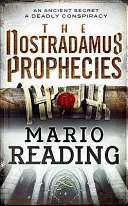
The Nostradamus Prophecies
 80
80

The Nostradamus Prophecies
Mario Reading's "The Nostradamus Prophecies" is a commercial thriller that, while undeniably a page-turner, leans heavily on the allure of its central mystery: the missing quatrains of Nostradamus. The author effectively crafts a high-octane plot, following two determined men on a global hunt for these suppressed verses, which are portrayed as holding world-altering secrets. The narrative’s strength lies in its pacing and its ability to tap into enduring public fascination with Nostradamus's cryptic predictions. However, the book's primary limitation is its reliance on a fictional premise that, while entertaining, offers little substantive exploration of Nostradamus's actual work or the historical context beyond what serves the thriller plot. For instance, the depiction of the lost verses as containing overtly dangerous, actionable foreknowledge feels more like a plot device than an organic extension of Nostradamus's known method. Ultimately, "The Nostradamus Prophecies" succeeds as a suspenseful adventure but falls short as a serious examination of prophetic literature.
📝 Description
80
Mario Reading's 2009 novel, The Nostradamus Prophecies, centers on the mystery of 58 lost quatrains.
Published in 2009, Mario Reading's novel "The Nostradamus Prophecies" imagines a world where not all of Michel de Nostredame's predictions have survived. The story focuses on 58 "lost" quatrains, verses that are not among the 942 known prophecies. The novel posits that these missing verses contain secrets of great power, leading to a conflict between characters who wish to control them and those who aim to suppress them.
The narrative is set against the historical backdrop of Nostradamus, the 16th-century French apothecary and seer. His quatrains have long been subject to interpretation, often connected to significant world events. Reading updates this tradition by placing the alleged lost prophecies within a modern thriller. The book contrasts the archaic nature of Nostradamus's predictions with contemporary geopolitical concerns, showing how historical enigmas can stir present-day anxieties.
This book appeals to readers interested in historical puzzles, clandestine organizations, and the idea of unseen forces influencing global affairs. It offers a fictional exploration for those who doubt official accounts and ponder the impact of ancient texts on current events.
This novel engages with the tradition of prophetic literature, particularly the legacy of Michel de Nostredame. His quatrains, written in the 16th century, have inspired centuries of speculation and interpretation, often linked to major historical turning points. "The Nostradamus Prophecies" takes this established esoteric phenomenon and embeds it within a contemporary thriller narrative. It imagines a hidden dimension to Nostradamus's work, suggesting deliberate suppression of certain predictions, thereby creating a fictional conflict around the control of esoteric knowledge and its potential to shape reality.
💡 Why Read This Book?
• Understand the narrative surrounding Nostradamus's purportedly suppressed prophecies, exploring the fictional implications of "missing quatrains" that were not published. • Experience a fast-paced thriller that uses the historical figure of Michel de Nostredame and his 16th-century prophecies as a foundation for a modern-day conspiracy. • Engage with the concept of hidden historical texts driving contemporary conflict, offering a fictional lens on how ancient predictions might be perceived as dangerous today.
⭐ Reader Reviews
Honest opinions from readers who have explored this book.
❓ Frequently Asked Questions
What is the central mystery of "The Nostradamus Prophecies"?
The book centers on the mystery of Nostradamus's missing quatrains – 58 prophecies believed to have been lost or suppressed from the 942 known verses published by Michel de Nostredame.
Who is Mario Reading and when was this book published?
Mario Reading is the author of "The Nostradamus Prophecies," which was first published in 2009. The book is a commercial thriller, not a direct historical or academic analysis of Nostradamus.
Is "The Nostradamus Prophecies" based on real lost prophecies?
The book uses the concept of lost prophecies as a fictional premise. While Nostradamus did write 942 quatrains, the idea of 58 specifically 'missing' ones driving a modern conspiracy is a narrative device created by Mario Reading.
What kind of reader would enjoy this book?
Readers who enjoy conspiracy thrillers, historical mysteries, and stories involving secret knowledge and hidden agendas will likely find this book engaging. It's for those who appreciate a fast-paced plot rooted in esoteric lore.
Does the book provide actual translations or interpretations of Nostradamus's prophecies?
While the book is about Nostradamus's prophecies, its primary focus is on a fictional thriller narrative. It uses the idea of the prophecies, particularly the supposed lost ones, as plot elements rather than offering scholarly translations or interpretations.
How does this book compare to Raymond Khoum's "The Last Templar"?
The book is recommended for readers of Raymond Khoum's "The Last Templar," suggesting a similar blend of historical mystery, conspiracy, and fast-paced action centered around ancient secrets.
🔮 Key Themes & Symbolism
The Lost Quatrains
The central theme revolves around the existence and pursuit of 'missing quatrains' from Nostradamus's body of work. The narrative posits that these suppressed verses contain foreknowledge so significant or dangerous that they have been deliberately removed from historical record. This concept fuels the plot's urgency and the clandestine nature of the characters' quest, exploring the power inherent in hidden or suppressed knowledge and its potential to destabilize or control.
Conspiracy and Hidden Agendas
The book examines the world of shadowy organizations and powerful individuals vying for control over prophetic knowledge. It explores the idea that history is shaped by secret societies with hidden agendas, manipulating events from behind the scenes. The pursuit of the lost quatrains becomes a proxy for a larger struggle for power and influence, where knowledge is the ultimate weapon.
Nostradamus's Legacy
The enduring mystique of Michel de Nostredame and his enigmatic prophecies forms the backdrop. The work capitalizes on the popular fascination with Nostradamus's alleged ability to predict future events, framing his 16th-century verses as potent tools in a contemporary thriller. It examines how historical oracles continue to capture the imagination and are interpreted through the lens of modern anxieties and geopolitical concerns.
The Nature of Prophecy
Beyond Nostradamus specifically, the book touches upon the broader concept of prophecy itself – its interpretation, its power, and the human desire to know the future. It questions who has the right to possess such knowledge and the ethical implications of wielding foreknowledge, presenting a fictional scenario where prophetic texts are not merely passive predictions but active agents in shaping destiny.
💬 Memorable Quotes
Direct passages from the work, attributed to the author.
“What happened to the missing quatrains?”
— This question expresses the core mystery of the novel. It's the driving force behind the protagonists' quest, hinting at a deliberate suppression of specific prophetic verses and suggesting they hold crucial, perhaps dangerous, secrets.
“Only 942 have survived.”
— This statement establishes a factual premise within the fictional narrative – that a portion of Nostradamus's original prophecies is unaccounted for. It sets the stage for the exploration of what these missing verses might contain.
“A deadly conspiracy...”
— This phrase signals the thriller genre and the high stakes involved. It implies that the search for the prophecies is not a mere academic pursuit but a dangerous undertaking, fraught with peril from unseen adversaries.
“Two men who will do anything to discover their secrets.”
— This highlights the central conflict and the driven nature of the characters. It suggests a relentless pursuit where morality and safety are secondary to uncovering the hidden truths within Nostradamus's lost works.
“An ancient secret...”
— This points to the deep historical roots of the narrative. It frames the mystery not as a contemporary invention but as a long-buried truth connected to the esoteric legacy of Nostradamus.
🌙 Esoteric Significance
Tradition
While not strictly adhering to a single lineage, "The Nostradamus Prophecies" draws heavily from the Western Esoteric tradition's fascination with oracular pronouncements and hidden knowledge. It appeals to the Hermetic principle of "as above, so below," suggesting that cosmic patterns and future events can be encoded in symbolic language. The work plays on the idea of a hidden canon or Gnostic-like suppressed truths, aligning with a broader esoteric desire to uncover veiled wisdom outside mainstream understanding.
Symbolism
The primary symbol is the 'quatrain' itself – a four-line verse used by Nostradamus. These are presented not just as poetic forms but as encoded vessels of destiny. The 'missing quatrains' symbolize suppressed knowledge or truths deemed too dangerous for public consumption, akin to forbidden texts in various mystical traditions. The act of 'deciphering' these verses represents the esoteric quest for enlightenment and understanding of cosmic patterns.
Modern Relevance
Contemporary interest in predictive texts and conspiracy narratives continues to fuel engagement with works like this. Thinkers and groups exploring Jungian archetypes, synchronicity, and the collective unconscious may find parallels in how Nostradamus's cryptic verses are perceived to tap into a shared, albeit subconscious, human foreknowledge. The book's theme of powerful entities controlling information also echoes modern discussions about disinformation and the manipulation of knowledge in the digital age.
👥 Who Should Read This Book
• Readers of contemporary conspiracy thrillers who enjoy fast-paced plots involving historical mysteries and secret societies. • Enthusiasts of Nostradamus's work who are curious about fictional explorations of his prophecies, particularly the concept of lost verses. • Individuals interested in how esoteric lore and ancient predictions are adapted into modern entertainment, offering a fictional take on hidden historical narratives.
📜 Historical Context
Mario Reading's "The Nostradamus Prophecies" emerged in 2009, a period marked by a resurgence of interest in conspiracy theories and apocalyptic narratives, amplified by the looming end of the Mayan calendar in 2012. This zeitgeist provided fertile ground for a thriller centered on hidden prophecies. Michel de Nostredame, a 16th-century French apothecary, published his "Prophecies" in 1555, creating a body of work that has since spawned endless interpretations, often linking his quatrains to major historical events. While academic scholarship on Nostradamus, such as that by James S. Ackerman, tends to focus on his historical context and rhetorical strategies, popular culture has consistently embraced a more literal, predictive interpretation. Reading's novel taps directly into this latter vein, positioning itself within a tradition of popular esoteric thrillers that often compete with more rigorous historical analysis for public attention.
📔 Journal Prompts
The pursuit of the "missing quatrains" as a metaphor for uncovering suppressed historical truths.
The role of the apothecary-turned-seer: how Michel de Nostredame’s profession might inform his predictive methods.
The tension between literal interpretation and symbolic reading of prophecies.
If you were part of a secret society, what lost text would you seek to protect or reveal?
The ethical implications of possessing foreknowledge in a world driven by unpredictable events.
🗂️ Glossary
Quatrain
A stanza or poem consisting of four lines. Michel de Nostredame famously used quatrains for his prophecies, often employing a rhyming scheme and cryptic language.
Nostradamus
The common name for Michel de Nostredame (1503-1566), a French apothecary and reputed seer whose book 'Les Propheties' contains a series of almanacs filled with predictions.
Lost Quatrains
A fictional concept within the book referring to prophecies written by Nostradamus that are believed to have gone missing or been deliberately suppressed from the published collections.
Esoteric
Intended for or likely to be understood by only a small number of people with a specialized knowledge or interest. In this context, referring to hidden or mystical knowledge.
Commercial Thriller
A genre of fiction characterized by suspense, excitement, and fast-paced plot development, designed to appeal to a broad audience and achieve significant sales.
Clandestine
Kept secret or done secretively, especially because illicit. Used to describe the operations of secret societies or those pursuing hidden knowledge.
Apocalypse
A prophetic disclosure or revelation, often concerning the end of the world. Nostradamus's prophecies are frequently interpreted in this context.