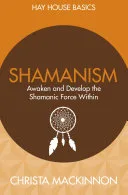
Shamanism
 76
76

Shamanism
Christa Mackinnon’s *Shamanism* avoids the pitfalls of romanticizing or oversimplifying its subject. Instead, it presents a grounded exploration of a practice that has sustained human communities for tens of thousands of years. The author’s strength lies in her clear articulation of complex concepts, particularly the mechanics of trance journeying and the ethics of interacting with spirit realms. A particularly effective section details the role of the drum in facilitating altered states, explaining its function as a sonic vehicle. However, the book occasionally feels more like an introductory manual than a deep critique, sometimes glossing over the significant cultural variations and potential dangers inherent in shamanic practice. Despite this, it serves as a valuable primer for those unfamiliar with the subject, offering practical entry points without resorting to sensationalism. It is a competent guide to an ancient, vital tradition.
📝 Description
76
Christa Mackinnon's 2016 book, Shamanism, examines humanity's oldest spiritual framework.
This book presents shamanism not as a historical artifact but as a living practice relevant to contemporary life. Mackinnon details how shamanic methods, grounded in animism and the belief that spirits inhabit all things, can address modern feelings of alienation. The work is intended for those seeking a stronger connection to the natural world and their own internal lives. It also speaks to individuals experiencing spiritual or psychological fragmentation and looking for complete healing approaches. Readers interested in comparative spirituality, indigenous traditions, or practical techniques for altered states will find valuable material.
Shamanism forms the basis of spiritual practice for many cultures globally, predating organized religions by thousands of years. Its core principles, including ecstatic trance and soul retrieval, have shaped numerous later spiritual movements. Mackinnon places this ancient knowledge within the current context of a global psycho-spiritual awakening, emphasizing its significance today. The book focuses on the reciprocal relationship between humans and the spirit world, managed by the shaman. This involves recognizing spirit allies, understanding different states of consciousness, and using tools like drumming and ritual for healing and insight. A central idea is the fundamental connection of all beings and the crucial role of nature in spiritual pursuits.
Shamanism represents one of the earliest forms of human spirituality, characterized by direct interaction with non-ordinary reality. This tradition predates many formalized religious structures and has influenced diverse spiritual paths throughout history. Mackinnon connects these ancient practices to modern concepts of psycho-spiritual awakening, highlighting their potential to counter feelings of disconnection in the 21st century. The book emphasizes the animistic worldview, where spirits are seen as present in all things, forming the basis for a holistic approach to healing and understanding.
💡 Why Read This Book?
• You will learn practical techniques for entering altered states of consciousness, such as trance journeying, directly from the text, offering a hands-on approach distinct from purely theoretical works. • The book clarifies the concept of 'spirit allies' and how to engage with them ethically, providing specific guidance on building these relationships which is crucial for understanding shamanic cosmology. • You will gain an understanding of how ceremonies and nature work, as detailed in the text, can foster a sense of wholeness and connection, addressing a common modern malaise that other spiritual texts may not tackle as directly.
⭐ Reader Reviews
Honest opinions from readers who have explored this book.
❓ Frequently Asked Questions
What is the primary focus of Christa Mackinnon's book on Shamanism?
The book introduces shamanism as the world's oldest spiritual tradition, focusing on its capacity to offer connection and wholeness in a fragmented modern world. It details practical shamanic tools and approaches like ceremony, trance journeying, and nature work.
When was Christa Mackinnon's Shamanism first published?
Christa Mackinnon's book 'Shamanism' was first published on May 3, 2016. This publication date places it within contemporary discussions on psycho-spiritual awakening.
Does the book explain how to perform shamanic ceremonies?
Yes, the book introduces readers to a range of shamanic tools and approaches, including detailed explanations and guidance on how to engage with practices like ceremony, trance journeying, and vision quests.
Is this book suitable for beginners in spiritual studies?
Absolutely. The book is designed to introduce readers to the fundamentals of shamanism, making it accessible for beginners interested in esoteric traditions and psycho-spiritual development.
What distinguishes shamanism from other spiritual traditions according to the book?
According to the book, shamanism's distinction lies in its direct experiential approach to reality and its emphasis on reciprocal relationships with the spirit world, making it the most enduring spiritual wisdom tradition globally.
How does the book address the modern need for connection?
It posits that shamanism, with its focus on animism and interconnectedness, offers a powerful means to counter modern feelings of disconnection and fragmentation, restoring a sense of wholeness through its practices.
🔮 Key Themes & Symbolism
Direct Spiritual Experience
The work emphasizes shamanism as a path defined by direct, personal encounters with spiritual realities, rather than through dogma or intermediaries. It details methods like trance journeying, where practitioners intentionally alter consciousness to access non-ordinary states for healing, guidance, and connection with the spirit world. This experiential core is presented as fundamental to shamanic practice across cultures and time, distinguishing it from faith-based systems.
Animism and Interconnectedness
A central theme is animism – the belief that spirits inhabit all natural phenomena. Mackinnon explores how this worldview fosters a profound sense of interconnectedness between humans, animals, plants, and the environment. The book illustrates how shamanic practices reinforce this understanding, encouraging respect for all life and promoting ecological awareness through spiritual engagement with nature.
Healing and Wholeness
Shamanism is presented as a potent modality for psycho-spiritual healing in the modern era. The book details techniques such as soul retrieval and working with spirit allies, aimed at restoring balance and completeness to individuals suffering from fragmentation and disconnection. It argues that these ancient practices offer tangible solutions for contemporary psychological and spiritual ailments.
Ceremony and Ritual
The text dedicates significant attention to the role of ceremony and ritual in shamanic work. It explains how structured practices, including drumming, dancing, and vision quests, serve as vehicles for accessing altered states and facilitating communication with the spirit world. These rituals are depicted not as mere performance, but as essential tools for transformation and maintaining spiritual equilibrium.
💬 Memorable Quotes
Direct passages from the work, attributed to the author.
“Shamanism is the oldest and most enduring spiritual wisdom tradition.”
— This statement positions shamanism as the foundational spiritual practice of humanity, predating formalized religions and offering a continuous thread of connection to ancestral wisdom and direct experience.
“In today's disconnected, fragmented world, shamanism has the power to offer us the connection and wholeness we so need.”
— This highlights the book's central thesis: that the ancient practices of shamanism provide relevant and potent solutions for contemporary psychological and spiritual alienation, offering a path back to integration.
“The book introduces... a range of shamanic tools and approaches – including ceremony, trance journeying, vision quests, nature work, drumming, dancing.”
— This outlines the practical, experiential focus of the work, indicating that it moves beyond theory to offer readers concrete methods and techniques for engaging with shamanic principles themselves.
“Shamanism is playing a major part in the psycho-spiritual awakening and movement we see now all across the globe.”
— This frames shamanism not as a niche interest, but as a significant force in contemporary global spiritual trends, suggesting its growing influence and relevance in the 21st century.
“The work explores shamanism as the oldest and most enduring spiritual wisdom tradition.”
— This emphasizes the deep historical roots and persistent nature of shamanic practices, underscoring their foundational role in human spiritual development across vast stretches of time.
🌙 Esoteric Significance
Tradition
While shamanism itself predates most formal esoteric traditions, Mackinnon's work connects it to contemporary neo-shamanic movements that often draw parallels with Western Hermeticism and Gnosticism in their emphasis on direct experience and altered states of consciousness. It departs from strict anthropological definitions by focusing on the psychological and spiritual utility of these practices for modern individuals, aligning with the Hermetic principle of 'As Above, So Below' through its focus on inner and outer spiritual worlds.
Symbolism
The book frequently engages with symbols central to shamanic cosmology. The 'spirit allies,' often appearing as animals or ancestral figures, symbolize aspects of the self, guides, or forces of nature that offer wisdom and power. The concept of 'non-ordinary reality' or the 'spirit world' itself functions as a symbolic landscape representing the subconscious, the collective unconscious, and realms beyond empirical perception, accessible through altered states.
Modern Relevance
Contemporary thinkers and practitioners in fields like ecopsychology, transpersonal psychology, and somatic experiencing draw on shamanic principles for healing and understanding consciousness. Groups focused on indigenous rights and ecological activism also find resonance in the animistic worldview presented. Mackinnon's work contributes to this by making shamanic concepts more accessible, fostering a dialogue between ancient wisdom and modern therapeutic and ecological concerns.
👥 Who Should Read This Book
• Individuals feeling disconnected from nature and seeking to re-establish a reciprocal relationship with the Earth, guided by animistic principles. • Aspiring practitioners of esoteric or spiritual disciplines interested in understanding the roots of direct spiritual experience and altered states of consciousness. • Those undergoing personal transformation or seeking holistic healing methods that address psychological fragmentation through engagement with inner spiritual resources.
📜 Historical Context
Published in 2016, Christa Mackinnon's *Shamanism* emerged during a period of resurgent global interest in indigenous spiritualities and alternative healing modalities. This era saw figures like Michael Harner's Foundation for Shamanic Studies popularizing neo-shamanic practices, often synthesized from various traditions. Mackinnon's work engages with this contemporary movement, positioning shamanism as a vital component of the widespread psycho-spiritual awakening occurring globally. Unlike purely academic studies or anthropological accounts, her book aims to provide accessible tools and understanding for modern practitioners. It arrived in a landscape where New Age spirituality was increasingly incorporating elements of animism and nature-based practices, sometimes drawing criticism for cultural appropriation but also fueling genuine spiritual seeking. Mackinnon's contribution lies in its clear articulation of core shamanic concepts and practices for a broad audience.
📔 Journal Prompts
Reflect on the concept of spirit allies and potential forms they might take in your own life.
Consider the role of ceremony in modern life and how it could foster connection.
Explore personal experiences of disconnection and how the idea of wholeness applies.
Analyze the significance of nature work as detailed in the book for spiritual grounding.
Document initial impressions of trance journeying and its potential for insight.
🗂️ Glossary
Shaman
An individual who acts as an intermediary between the physical and spirit worlds, typically by entering altered states of consciousness to facilitate healing, divination, or spiritual guidance.
Trance Journeying
A core shamanic practice involving entering an altered state of consciousness, often induced by drumming, to travel to non-ordinary reality for information, healing, or connection with spirit allies.
Spirit Allies
Entities from the spirit world—often perceived as animals, ancestors, or nature spirits—that a shaman can call upon for assistance, wisdom, protection, and guidance.
Animism
The belief that spirits inhabit inanimate objects, plants, animals, and natural phenomena, and that a reciprocal relationship exists between humans and these spirits.
Non-Ordinary Reality
A term used in shamanism to describe realms or states of consciousness accessible through altered states, distinct from everyday consensus reality, where spirits and spiritual energies reside.
Vision Quest
A solitary ritual, often undertaken in nature and involving fasting and isolation, designed to elicit spiritual insights, guidance, or revelations from the spirit world.
Psycho-spiritual Awakening
A contemporary term describing a broad movement towards increased self-awareness, spiritual exploration, and psychological integration, often involving a questioning of conventional norms and a search for deeper meaning.