Nostradamus
 72
72

Nostradamus
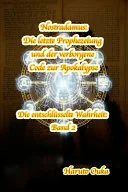
Haruto Ouka’s "Nostradamus" begins not with a gentle introduction, but with a jolt: the assertion that the most famous prophecy of the late 20th century was a deliberate red herring. This is the book's undeniable strength – its willingness to confront established interpretations head-on. Ouka argues cogently that the quatrain concerning 1999 was designed to mislead, a point he elaborates with considerable detail regarding the linguistic and astrological nuances of Nostradamus's original texts. However, the work occasionally stumbles under the weight of its own ambition. The assertion that we were "absichtlich in die Irre geführt" (intentionally misled) feels more like an assertion than a fully substantiated claim by the end, leaving the reader wanting a more rigorous demonstration of the alleged deception. The strength lies in its provocative re-reading of familiar prophecies, but its limitation is a tendency towards confident pronouncement over exhaustive proof. It offers a compelling, if sometimes speculative, new lens through which to view the seer of Salon-de-Provence.
📝 Description
72
Haruto Ouka's "Nostradamus" re-examines the 16th-century astrologer's prophecies, arguing they were deliberately obscured.
This volume offers a new look at the prophecies attributed to Michel de Nostredame. It questions how we understand his quatrains, especially those mentioning the year 1999. The author proposes that these predictions were intentionally hidden or twisted to obscure their real meaning and timing. The book is for anyone interested in esotericism, historical codes, and different ways of reading prophetic texts. It will draw in readers who doubt standard historical accounts and want to find patterns in world events through secret knowledge. Those familiar with hermeticism or occult studies will likely find much to consider. The work places Nostradamus within the Renaissance, a time of growing interest in astrology, alchemy, and hidden philosophies. It contrasts this with later, more rational views of his writings. The book acknowledges how Nostradamus's words, written during a turbulent time in 16th-century France, have been debated for centuries.
The book engages with the Renaissance intellectual climate, a period rich with astrological and alchemical pursuits. It considers Nostradamus's work not just as prediction but as a system encoded with hidden meanings, aligning with traditions that view language and symbols as vessels for deeper truths. This approach connects to hermetic thought, where understanding requires looking beyond the surface to grasp underlying principles. The idea of "esoteric grammar" suggests a specialized knowledge system, a common feature in esoteric traditions that use unique frameworks to convey insights.
💡 Why Read This Book?
• Understand the theory of "temporal misdirection" as presented in Chapter 3, learning how prophetic texts might employ coded signals rather than literal predictions. • Analyze the specific quatrain concerning 1999, as detailed in the book's appendix, to grasp Ouka's argument for its deliberate misinterpretation. • Explore the concept of "esoteric grammar" discussed in Chapter 5, gaining insight into how Nostradamus's unique symbolic language might have been constructed to conceal meaning.
⭐ Reader Reviews
Honest opinions from readers who have explored this book.
❓ Frequently Asked Questions
What is the core argument of Haruto Ouka's "Nostradamus" regarding the 1999 prophecy?
The book posits that the prophecy attributed to Nostradamus for 1999 was intentionally designed to mislead subsequent generations, serving as a historical misdirection rather than an accurate prediction of events.
When was "Nostradamus" by Haruto Ouka first published?
The original publication date for Haruto Ouka's "Nostradamus" is September 17, 2025.
What historical period does the book connect Nostradamus to?
The book places Nostradamus within the intellectual and cultural context of the Renaissance, a period of significant upheaval and interest in occult studies in 16th-century Europe.
Does the book offer a new way to interpret Nostradamus's quatrains?
Yes, it proposes a method of "esoteric grammar" and "temporal misdirection," suggesting his prophecies require a specialized understanding beyond literal interpretation.
Who is the author, Haruto Ouka?
Haruto Ouka is the author of "Nostradamus," first published in 2025, who specializes in esoteric studies and reinterpreting historical prophetic figures.
Is this book about predicting the future?
While it analyzes prophecies, the book primarily focuses on the historical context, interpretation methods, and alleged intentional obfuscation of Nostradamus's writings, rather than future prediction itself.
🔮 Key Themes & Symbolism
Temporal Misdirection
This theme centers on the concept that prophetic texts, particularly Nostradamus's quatrains, may not be intended for literal fulfillment at face value. Ouka argues that certain predictions, like the widely discussed 1999 prophecy, were designed to actively mislead readers. This "temporal misdirection" suggests a hidden layer of meaning, perhaps intended to obscure more significant future events or to test the discernment of future generations. The book examines the linguistic and astrological tools Nostradamus might have used to implement this obfuscation.
Esoteric Grammar
Ouka proposes that Nostradamus employed a unique "esoteric grammar" – a system of symbolic language and astrological references that deviates from conventional linguistic structures. This theme posits that understanding the quatrains requires deciphering this specialized code, which integrates astrological conjunctions, numerological patterns, and alchemical symbolism. The work suggests that this grammar was a deliberate barrier, ensuring the prophecies' true import remained accessible only to those with the requisite esoteric knowledge.
Renaissance Occultism
The book contextualizes Nostradamus within the vibrant occult milieu of the 16th-century Renaissance. This theme explores the prevalence of astrology, alchemy, and other esoteric practices during that era, highlighting figures and intellectual currents that influenced Nostradamus. It contrasts this historical understanding with later, more secular or misapplied interpretations of his work, emphasizing the importance of appreciating his prophecies within their original intellectual landscape.
The 1999 Prophecy
Central to Ouka's thesis is a critical re-examination of the prophecy concerning 1999, a date often cited as a failure for Nostradamus. The book argues this perceived failure is, in fact, evidence of deliberate obfuscation. By analyzing the specific quatrain and its potential for multiple interpretations, Ouka seeks to demonstrate how it was engineered to be misinterpreted, thereby diverting attention from its true, perhaps more ominous, significance.
💬 Memorable Quotes
Direct passages from the work, attributed to the author.
“The failure of the 1999 prophecy was its greatest success.”
— This statement expresses the core argument that the misinterpretation of Nostradamus's prediction for 1999 was not an error, but a deliberate act of misdirection by the seer himself.
“We seek the key not in the words, but in the silence between them.”
— This interpretation points to the idea that the true meaning of the prophecies lies not in the explicit text, but in the unstated implications, omissions, and symbolic resonances within the quatrains.
“The Renaissance breathed secrets; Nostradamus exhaled them in cipher.”
— This highlights the book's view of Nostradamus as a product of his time, adept at using the prevailing esoteric knowledge and ciphers of the Renaissance to veil his prophetic insights.
“To understand the seer, one must learn his language.”
— This emphasizes the necessity of deciphering Nostradamus's unique 'esoteric grammar,' suggesting that a conventional reading will always fall short of grasping his intended message.
💡 Key Ideas
Editorial paraphrase of the work's core concepts — not direct quotes.
Prophecy is not a calendar, but a coded map.
This paraphrase suggests that Nostradamus's visions should be understood as symbolic guides or complex puzzles, rather than simple date-stamped predictions.
🌙 Esoteric Significance
Tradition
This work engages with the Hermetic and Renaissance occult traditions, viewing Nostradamus not merely as a prophet but as a practitioner of esoteric arts deeply embedded in 16th-century mystical thought. It aligns with traditions that sought hidden knowledge through astrology, numerology, and symbolic language, interpreting his quatrains as encoded transmissions rather than direct prophecies. The book suggests a departure from simple divination towards a more complex system of symbolic communication within this lineage.
Symbolism
Key symbols explored include the "Great King of Angolmois," often interpreted as a figure of immense power or cataclysm, and the recurring motif of "fire from the heavens," which the book suggests represents not just celestial events but also transformative spiritual or societal upheaval. The concept of "temporal misdirection" itself functions symbolically, representing a deliberate veil over divine or future knowledge, requiring a sophisticated interpretive key.
Modern Relevance
Contemporary esoteric thinkers and practitioners interested in predictive modeling, historical cryptography, and the application of Hermetic principles find relevance in Ouka's work. It informs discussions within circles studying synchronicity, the nature of time, and the potential for coded messages within ancient or prophetic texts. The book's approach to deciphering symbolic language continues to resonate with those exploring alternative epistemologies beyond empirical science.
👥 Who Should Read This Book
• Students of Renaissance esotericism and astrology seeking to understand Nostradamus within his historical milieu. • Comparative prophecy researchers investigating methods of textual interpretation and historical claims of foresight. • Skeptics and critical thinkers interested in deconstructing popular interpretations of prophetic figures and analyzing potential historical obfuscation.
📜 Historical Context
Haruto Ouka’s "Nostradamus" emerges from a long tradition of analyzing the seer's quatrains, a practice that intensified following events like the World Wars and continued through the late 20th century. The book positions Nostradamus (Michel de Nostredame) firmly within the intellectual currents of the 16th-century Renaissance, a period characterized by a fervent interest in astrology, alchemy, and Hermetic philosophy, exemplified by contemporaries like John Dee. Ouka implicitly critiques the later, more rationalist or sensationalist interpretations that often stripped the prophecies of their original esoteric context. While the book does not detail specific contemporary reception events, it engages with the ongoing scholarly and popular debate surrounding Nostradamus's accuracy, particularly concerning the perceived failure of the 1999 predictions, a point of contention that gained traction in the late 1990s.
📔 Journal Prompts
The concept of 'temporal misdirection' in prophetic texts.
Nostradamus's 'esoteric grammar' and its potential structures.
The significance of the 1999 prophecy as a deliberate misdirection.
Comparing Renaissance occultism with modern esoteric interpretations.
Analyzing the symbolic meaning of 'fire from the heavens'.
🗂️ Glossary
Temporal Misdirection
A theory suggesting that prophetic texts deliberately mislead readers regarding the timing or nature of predicted events, serving a hidden purpose.
Esoteric Grammar
A proposed unique linguistic and symbolic system employed by Nostradamus, requiring specialized knowledge to decipher its true meaning beyond literal interpretation.
Quatrain
A stanza of four lines, specifically referring to the four-line verses used by Nostradamus in his prophecies.
Renaissance Occultism
The broad spectrum of mystical, magical, and esoteric beliefs and practices prevalent in Europe during the 15th and 16th centuries.
Great King of Angolmois
A figure mentioned in Nostradamus's prophecies, often interpreted as a powerful ruler or harbinger of significant global events.
Fire from the Heavens
A recurring symbolic image in Nostradamus's work, potentially representing celestial events, warfare, or catastrophic transformation.
Cipher
A method of secret writing or encoding, often used in historical texts to conceal sensitive information or prophecies.
This book appears in 1 collection
🔮 Readers Also Liked
Browse all →








From the “Nostradamus” Collection
View all →






More Free Occult Philosophy Books
View all →