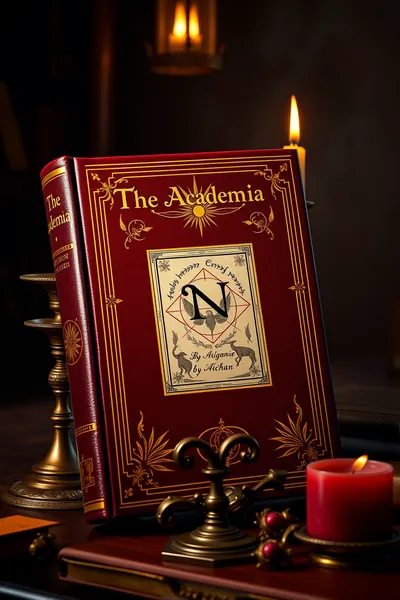
A Time of Angels

 80
80

A Time of Angels
Patricia Schonstein’s A Time of Angels, from its 2010 publication, offers a broad survey of spiritual concepts, aiming to find common ground between disparate traditions. The work’s strength lies in its ambitious scope, attempting to connect ideas from Gnosticism to modern psychological archetypes. Schonstein’s handling of the 'Divine Feminine' across cultures is particularly well-researched, providing a nuanced perspective. However, the book occasionally suffers from a lack of definitive focus; its wide-ranging approach can sometimes feel more like a compilation than a cohesive argument. A passage discussing the symbolic interpretation of angelic encounters, for instance, feels underdeveloped, leaving the reader wanting deeper analysis. Despite this, the book serves as a valuable primer for those new to comparative esoteric studies, though seasoned practitioners might find it introductory. It is a competent, if not groundbreaking, exploration of its subject matter.
📝 Description
80
Patricia Schonstein's 2010 book examines esoteric thought and practice.
Published in 2010, A Time of Angels by Patricia Schonstein examines various spiritual and philosophical traditions. The book does not propose a single doctrine, but instead presents a collection of ideas from historical texts and contemporary spiritual movements. It discusses concepts of consciousness, the nature of reality, and the human spiritual path, aiming to give readers a way to understand these complex subjects. This work is for those interested in comparative religion, mysticism, and the history of esoteric ideas. It suits readers who approach spirituality with an investigative mindset, wanting to grasp the core principles of different traditions without committing to one belief system. People curious about the links between psychology, philosophy, and spirituality will find much to consider. The book rewards those who engage with dense, idea-rich material that prompts critical thought about established ideas. A Time of Angels appeared in 2010, a time of growing interest in esoteric studies and alternative spiritualities. The early 2000s saw many online resources and groups dedicated to Gnosticism, Hermeticism, and New Age philosophies. Schonstein's work adds to this ongoing discussion with a synthesized viewpoint. It acknowledges the influence of figures like Carl Jung and his analytical psychology, which studied archetypes and the collective unconscious, ideas found throughout many esoteric traditions.
Emerging in 2010, A Time of Angels entered a period where esoteric studies and alternative spiritualities saw renewed attention. The early 21st century witnessed a rise in online communities focused on Gnosticism, Hermeticism, and various New Age philosophies. Schonstein's work contributes to this discourse by offering a synthesized perspective. It acknowledges influences from thinkers like Carl Jung, whose work on archetypes and the collective unconscious resonates deeply within many esoteric traditions. The book is situated within a lineage of scholarship that seeks to connect disparate mystical and philosophical systems.
💡 Why Read This Book?
• Gain insight into the historical evolution of the 'Divine Feminine' concept, understanding its varied expressions and reinterpretations across different spiritual lineages, as detailed by Schonstein. • Explore the symbolic significance of angelic figures, not just as theological beings but as archetypal representations of consciousness, offering a new lens for personal introspection. • Understand the foundational principles of 'sacred geometry' and its potential connections to universal structures, as presented through examples from ancient traditions and natural forms.
⭐ Reader Reviews
Honest opinions from readers who have explored this book.
❓ Frequently Asked Questions
When was A Time of Angels first published?
A Time of Angels by Patricia Schonstein was first published in 2010. This places it within the early 21st century, a period marked by increased interest in esoteric studies and comparative spiritualities.
What esoteric traditions does A Time of Angels explore?
The book touches upon a range of traditions, including Gnosticism and Hermeticism, while also drawing parallels with analytical psychology and concepts of the Divine Feminine.
Does the book present a single religious or spiritual path?
No, A Time of Angels does not advocate for a single path. Instead, it examines commonalities and differences across various belief systems, aiming for a synthesized understanding.
Who is Patricia Schonstein?
Patricia Schonstein is the author of A Time of Angels. Her work in this book focuses on comparative esoteric studies and the exploration of spiritual symbolism.
What is a key concept discussed in A Time of Angels?
A significant concept explored is the 'Divine Feminine,' examining its historical manifestations and symbolic meanings across diverse cultures and spiritual frameworks.
Is A Time of Angels suitable for beginners in esoteric studies?
Yes, the book is generally accessible to beginners interested in comparative religion and mysticism, offering a broad overview and foundational concepts.
🔮 Key Themes & Symbolism
The Divine Feminine
Schonstein's work extensively investigates the concept of the Divine Feminine, tracing its presence and perceived suppression throughout various historical epochs and cultural narratives. It examines how this powerful archetype, representing creation, intuition, and nurturing, has been understood and often sidelined within patriarchal religious and social structures. The book seeks to reclaim and re-evaluate its significance, drawing examples from ancient goddess worship, Gnostic texts, and even modern psychological interpretations, suggesting its universal importance for spiritual balance and wholeness.
Angelic Archetypes
Beyond literal interpretations, 'angels' in A Time of Angels are presented as potent symbolic entities or archetypal forces that embody higher consciousness and divine communication. Schonstein explores how these beings function in esoteric thought and mythology as messengers, guides, or aspects of the soul's journey. The book examines their representation in different traditions, suggesting they offer insights into humanity's connection to the transcendent and the unseen realms, serving as focal points for spiritual aspiration and transformation.
Sacred Geometry and Cosmology
The book examines the idea that underlying the material universe is a structured, geometric order. Schonstein discusses 'sacred geometry' not merely as an artistic principle but as a fundamental aspect of creation, present in natural forms, ancient architecture, and cosmological diagrams. This theme connects the micro and macrocosm, suggesting that understanding these patterns can unlock deeper comprehension of reality's underlying principles and the interconnectedness of all things. It invites readers to see the universe as an intricate, divinely ordered design.
Comparative Spiritual Narratives
A central pillar of the book is its comparative approach to spiritual and creation myths. Schonstein analyzes foundational narratives from diverse cultures and esoteric traditions, highlighting recurring themes, archetypes, and philosophical inquiries. By examining these stories side-by-side, the work aims to reveal universal human spiritual quests and the shared underlying truths that transcend specific doctrines, encouraging a more inclusive and unified understanding of the spiritual landscape.
💬 Memorable Quotes
Direct passages from the work, attributed to the author.
“Angels are not merely winged messengers but potent archetypes of consciousness.”
— This concept suggests that angelic figures in esoteric traditions should be understood less as literal beings and more as symbolic representations of higher mental states or divine principles within the human psyche and the cosmos.
“The suppression of the Divine Feminine has distorted humanity's spiritual vision.”
— This interpretation posits that historical and cultural marginalization of feminine principles in spiritual and societal structures has led to an imbalance and an incomplete understanding of the divine and human nature.
“Sacred geometry reveals the blueprint of creation.”
— This idea highlights the belief that geometric patterns are fundamental to the structure of the universe, acting as a divine code or blueprint that underlies all physical and metaphysical reality.
“Mythologies often share common roots, pointing to universal truths.”
— This reflects the idea that despite surface differences, the core narratives and symbols found in various religious and esoteric myths stem from a shared source of human spiritual experience and understanding.
“The journey inward mirrors the journey outward.”
— This concept suggests a profound connection between internal spiritual exploration and the understanding of external reality, implying that self-discovery is intrinsically linked to comprehending the universe.
🌙 Esoteric Significance
Tradition
A Time of Angels draws primarily from Western Esotericism, particularly Gnostic and Hermetic currents, while also incorporating elements of Jungian psychology and comparative mythology. It fits within the tradition of esoteric scholarship that seeks to uncover universal spiritual principles underlying diverse religious and philosophical systems. The work departs from strict adherence to any single lineage by synthesizing ideas, aiming for a more holistic and accessible understanding of esoteric concepts for a modern audience, bridging historical lore with contemporary spiritual inquiry.
Symbolism
Key symbols explored include the 'Divine Feminine,' representing creative, intuitive, and nurturing cosmic forces often obscured in patriarchal traditions. 'Angels' are interpreted not just as literal beings but as archetypal energies or aspects of higher consciousness, acting as intermediaries between the material and spiritual realms. 'Sacred Geometry' is presented as the underlying structural language of the cosmos, a divine blueprint found in nature and ancient design, connecting the micro and macrocosm.
Modern Relevance
Contemporary thinkers and practitioners in fields like depth psychology, comparative religion, and New Age spirituality continue to draw upon the ideas presented in A Time of Angels. Its re-examination of the Divine Feminine speaks to modern feminist spiritual movements, while its interpretation of archetypes aligns with Jungian-influenced therapeutic practices. The book's synthesis of diverse traditions also informs current trends in eclectic spiritual paths and interfaith dialogue, making its concepts relevant for those seeking unified understandings of the spiritual landscape.
👥 Who Should Read This Book
• Students of comparative religion and mythology seeking to understand the common threads and symbolic language across diverse spiritual traditions. • Individuals interested in Jungian psychology and archetypal symbolism, particularly regarding the 'Divine Feminine' and the interpretation of spiritual figures. • Explorers of Western Esotericism, including Gnosticism and Hermeticism, who appreciate a synthesized approach that connects historical concepts to contemporary spiritual thought.
📜 Historical Context
Published in 2010, Patricia Schonstein's A Time of Angels arrived during a period of significant public engagement with esoteric subjects, a trend amplified by the internet. The early 21st century saw a resurgence of interest in Gnosticism, Hermeticism, and Jungian psychology, with figures like Manly P. Hall continuing to influence occult studies. Schonstein's work engages with this milieu by synthesizing diverse spiritual concepts, a practice common among authors seeking to bridge traditional esoteric lore with contemporary consciousness studies. It followed in the wake of influential works that popularized comparative mythology and symbolism. The book's exploration of the Divine Feminine and angelic archetypes aligns with ongoing academic and spiritual discussions that challenge traditional patriarchal interpretations within Western religions, contributing to a broader discourse on spiritual inclusivity and psychological depth in understanding ancient texts and symbols.
📔 Journal Prompts
Reflect on personal encounters with symbols of the 'Divine Feminine' in art, nature, or personal relationships.
Consider the symbolic meaning of 'angels' in your own life, beyond literal interpretations.
How might the principles of 'sacred geometry' be observed in natural patterns around you?
Compare a creation myth from one tradition with a concept presented in A Time of Angels.
Explore the idea of a 'spiritual vision' being distorted by societal norms.
🗂️ Glossary
Divine Feminine
An archetypal concept representing the creative, nurturing, intuitive, and receptive aspects of the divine, often contrasted with or historically suppressed by patriarchal religious structures.
Archetype
In Jungian psychology and esoteric thought, a universal, archaic pattern and image that derives from the collective unconscious and is the psychic counterpart of an inherited structure.
Sacred Geometry
The study of geometric forms and proportions believed to be inherent in the structure of the universe, often associated with divine creation and cosmological order.
Gnosticism
An ancient philosophical and religious movement characterized by a belief that salvation comes through esoteric knowledge (gnosis) of the divine, often involving a dualistic worldview.
Hermeticism
A religious, philosophical, and esoteric tradition based primarily upon writings attributed to Hermes Trismegistus, emphasizing principles like 'As above, so below'.
Esotericism
Belief systems and practices that are concerned with 'inner' knowledge or wisdom, often accessible only to a select group of initiated individuals, contrasting with exoteric or public teachings.
Cosmology
The study of the origin, evolution, and eventual fate of the universe, encompassing both scientific and philosophical or spiritual perspectives on its structure and order.
🔮 Readers Also Liked
Browse all →








More by Patricia Schonstein
All books →
More Free Occult Philosophy Books
View all →