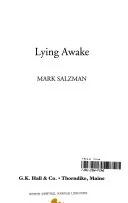
Lying Awake
 81
81

Lying Awake
Mark Salzman's "Lying Awake" offers a nuanced exploration of faith and physical affliction, eschewing easy answers. The central premise – a nun's visionary experiences coinciding with debilitating headaches – is immediately engaging. Salzman excels at depicting the internal landscape of Sister John, rendering her spiritual ecstasies and physical suffering with palpable intensity. The delicate balance between divine grace and neurological distress is the novel's strongest suit, creating a genuine dilemma for both the character and the reader. However, the narrative occasionally feels constrained by its monastic setting, limiting the scope of external conflict and philosophical debate. A particularly striking passage involves Sister John's internal struggle to articulate the ineffable quality of her visions while simultaneously battling the crushing pain, a moment that encapsulates the book’s core tension. Ultimately, "Lying Awake" is a quiet, introspective novel that offers a compelling portrayal of spiritual endurance.
📝 Description
81
Mark Salzman’s 2001 novel centers on Sister John of the Cross, a Carmelite nun experiencing intense spiritual visions.
Set in a modern Carmelite monastery near Los Angeles, Mark Salzman's "Lying Awake" (2001) follows Sister John of the Cross, a nun whose profound visions of divine insight elevate her standing among her community. These are not passive experiences but are perceived as direct channels of spiritual understanding. The narrative contrasts these intense inner states with debilitating physical pain, specifically severe headaches, prompting questions about their origin. Are they purely spiritual, psychosomatic, or a combination of both?
The novel is suited for readers interested in the intersection of faith, consciousness, and physical health. It examines existential questions, the nature of spiritual gifts, and the potential conflicts when inner mystical experiences meet external medical evaluation. Those who contemplate themes of asceticism, mysticism, and the phenomenology of religious experience will find substance here. Published at the turn of the millennium, the book emerged during a time of growing interest in contemplative practices alongside increased scientific explanations for previously spiritual phenomena. Its setting grounds the exploration of intense spiritual experience within a recognizable contemporary reality.
This novel engages with Christian contemplative traditions, particularly Carmelite mysticism, which historically emphasizes direct experience of the divine. It touches upon themes common in esoteric Christianity, such as the nature of divine revelation, the role of suffering in spiritual growth, and the challenges of integrating profound spiritual states with ordinary life and physical reality. The book questions the boundary between divine intervention and psychological or physical phenomena, a dialogue present in various mystical traditions that seek to understand the source and manifestation of spiritual gifts.
💡 Why Read This Book?
• Gain insight into the phenomenology of religious experience, specifically how Sister John of the Cross perceives and interprets her visions and the accompanying headaches, offering a unique perspective on the mind-body connection in spiritual practice. • Understand the complex ethical and personal dilemma faced by Sister John when a medical diagnosis threatens her spiritual gifts, providing a case study in the potential conflict between physical healing and divine inspiration. • Explore the unique challenges of monastic life in a contemporary setting, as depicted through the Carmelite monastery outside Los Angeles, offering a glimpse into a secluded spiritual community grappling with modern realities.
⭐ Reader Reviews
Honest opinions from readers who have explored this book.
❓ Frequently Asked Questions
What is the primary conflict in Mark Salzman's "Lying Awake"?
The central conflict revolves around Sister John of the Cross's profound spiritual visions, which are accompanied by debilitating headaches. She faces a difficult choice when a doctor suggests a treatment that might cure her pain but also extinguish her divine insights.
When was "Lying Awake" first published?
Mark Salzman's novel "Lying Awake" was first published in 2001, marking its entry into contemporary literary discussions on spirituality and consciousness.
What kind of setting does "Lying Awake" take place in?
The novel is set in a Carmelite monastery located outside present-day Los Angeles, providing a cloistered and contemplative backdrop for the unfolding spiritual and physical drama.
Who is Sister John of the Cross in the novel?
Sister John of the Cross is the protagonist of "Lying Awake." She is a Carmelite nun renowned within her community for experiencing powerful spiritual visions, considered by many to be a sign of her mastery.
What are the main themes explored in "Lying Awake"?
The book explores themes of divine inspiration, the nature of spiritual gifts, the relationship between physical suffering and spiritual experience, faith versus medicine, and the challenges of maintaining spiritual authenticity.
Does "Lying Awake" offer a definitive answer about the source of Sister John's experiences?
No, the novel deliberately leaves the source of Sister John's visions and headaches ambiguous, allowing for interpretations that range from the purely spiritual to the psychosomatic or neurological.
🔮 Key Themes & Symbolism
The Phenomenology of Visionary Experience
The work meticulously details the subjective experience of Sister John of the Cross's visions. These are not presented as mere supernatural events but as deeply felt, often overwhelming, states of consciousness that provide useful insights. The narrative emphasizes the sensory and emotional impact of these experiences, contrasting their ecstatic nature with the sharp, physical pain of her headaches. This focus on the internal, lived reality of the visionary makes the spiritual tangible and relatable, even as it remains mysterious.
Faith vs. Medical Intervention
A central tension arises when Sister John's physical ailments are diagnosed by a doctor, leading to the potential for medical intervention. The novel probes the conflict between the spiritual realm and the scientific/medical approach to health. Sister John fears that a 'cure' for her headaches might sever her connection to the divine insights she receives, questioning whether true spiritual gifts can coexist with conventional healing, and what constitutes a more authentic path.
The Nature of Spiritual Gifts
The book questions the origin and essence of spiritual gifts. Are Sister John's visions divine communication, a manifestation of a psychological condition, or a complex psychosomatic phenomenon? The narrative respects the perceived authenticity of her experiences by the Carmelite community, yet simultaneously introduces the possibility of a physiological basis for her suffering. This ambiguity invites contemplation on how we define and validate spiritual phenomena in the modern world.
Asceticism and Embodiment
Set within a Carmelite monastery, the novel touches upon the principles of asceticism – the rigorous spiritual and often physical discipline undertaken to achieve spiritual goals. Sister John's experience highlights the paradox where extreme spiritual states are intertwined with profound physical distress. The work explores how the body can be both a vessel for divine experience and a source of impediment, challenging the notion of a simple separation between the spiritual and the material self.
💬 Memorable Quotes
Direct passages from the work, attributed to the author.
“To lose the pain might mean losing the path.”
— This interpretation reflects Sister John's fear that a medical cure for her headaches could simultaneously extinguish the spiritual insights she receives. It speaks to her perceived connection between suffering and divine revelation.
“The monastery was a world apart, yet the world's problems found their way in.”
— This concept suggests that even within the seclusion of a Carmelite monastery, the universal struggles of faith, doubt, and the intersection of the spiritual and material realms are unavoidable.
“The doctor spoke of nerves and pressure; she spoke of God.”
— This interpretation contrasts the medical, scientific language used to explain Sister John's condition with her own spiritual framework, emphasizing the fundamental divergence in their perspectives and the challenge of bridging that gap.
💡 Key Ideas
Editorial paraphrase of the work's core concepts — not direct quotes.
The visions were like light, but the pain was like a hammer.
This paraphrased concept captures the stark contrast Sister John experiences: the luminous, insightful quality of her divine encounters versus the brutal, physical agony of her headaches. It highlights the core dilemma of the novel – the intertwining of ecstasy and suffering.
She prayed for understanding, but received only more questions.
This paraphrased idea illustrates the intellectual and spiritual quandary Sister John faces. Her quest for clarity leads not to simple answers but to deeper, more complex uncertainties about her experiences and their meaning.
🌙 Esoteric Significance
Tradition
While not strictly adhering to a single esoteric lineage, "Lying Awake" engages with themes common in Christian mysticism, particularly within the Carmelite tradition's emphasis on contemplative prayer and the direct experience of the divine. It reflects the spiritual struggles and ecstatic utterances found in figures like Teresa of Ávila and John of the Cross, the namesake of the protagonist. The novel explores the internal range of a mystic, a common subject in esoteric literature, focusing on the subjective experience of heightened consciousness and divine encounter.
Symbolism
The primary symbols are the visions themselves, representing direct divine apprehension or profound spiritual insight, and the headaches, symbolizing the physical cost or potential obstacle to that connection. Light often symbolizes divine presence or understanding, contrasted with the crushing physical pain. The monastery acts as a symbol of spiritual discipline and separation from the mundane world, a crucible for intense inner development.
Modern Relevance
In an era increasingly focused on mindfulness, consciousness studies, and the mind-body connection, "Lying Awake" offers a literary exploration of these themes through a spiritual lens. Contemporary thinkers and practitioners interested in the phenomenology of religious experience, the integration of spiritual practice with psychological well-being, and the potential for non-ordinary states of consciousness to yield insight find resonance in Sister John's struggle.
👥 Who Should Read This Book
• Individuals interested in contemplative traditions, particularly Christian mysticism, who seek fictional explorations of saintly lives and spiritual challenges. • Readers of literary fiction who appreciate character-driven narratives that explore complex psychological and existential questions about faith and suffering. • Those exploring the intersection of spirituality and medicine, curious about how profound inner experiences might interact with or be perceived by scientific or clinical perspectives.
📜 Historical Context
Mark Salzman's "Lying Awake," published in 2001, arrived during a period marked by a growing interest in contemplative practices and a concurrent societal drive to explain all phenomena through scientific lenses. The novel's exploration of intense spiritual experiences within a contemporary Carmelite monastery resonated with readers seeking depth beyond superficial materialism. At the time, figures like Andrew Newberg were pioneering the use of neuroimaging to study the brain activity of mystics, offering a scientific counterpoint to traditional faith-based interpretations of religious experience. Salzman's work, however, leans into the subjective reality of faith and the potential limitations of purely empirical approaches, particularly when dealing with profound personal revelation. The novel’s depiction of a nun grappling with visions and pain sidestepped the more overtly mystical or esoteric movements of the late 20th century, grounding its spiritual inquiry in a recognizable, albeit enclosed, modern religious context.
📔 Journal Prompts
Sister John's visions and headaches: Explore the perceived connection between profound spiritual insight and physical pain.
The doctor's diagnosis: Reflect on the tension between external medical assessment and internal spiritual knowing.
The Carmelite monastery setting: Consider the role of disciplined environments in fostering or challenging spiritual development.
The choice before Sister John: Analyze the ethical implications of potentially sacrificing physical comfort for spiritual gifts.
The nature of God's communication: Contemplate how divine presence might manifest through both ecstatic experience and suffering.
🗂️ Glossary
Carmelite
A member of the Order of Our Lady of Mount Carmel, a Catholic contemplative religious order founded in the 12th century, known for its emphasis on prayer, asceticism, and mystical experience.
Visions
In a spiritual context, supernatural or extraordinary perceptions of divine realities, figures, or events, often considered a direct form of communication or revelation.
Asceticism
A lifestyle characterized by severe self-discipline and abstention from all forms of indulgence, typically for religious or spiritual reasons.
Spiritual Master
An individual recognized within a spiritual tradition for their profound wisdom, deep connection to the divine, and ability to guide others on a spiritual path.
Phenomenology
The philosophical study of the structures of experience and consciousness from the first-person point of view, focusing on how things appear to us.
Psychosomatic
Relating to physical symptoms or illness that arises or isaggravated from mental or emotional stress.
Divine Inspiration
The belief that a higher power or divine entity influences or guides human thought, creativity, or spiritual understanding.
This book appears in 1 collection
🔮 Readers Also Liked
Browse all →









From the “Visions” Collection
View all →

More Free Occult Philosophy Books
View all →