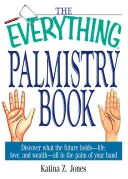
The Everything Palmistry Book
 83
83

The Everything Palmistry Book
Katina Z Jones's "The Everything Palmistry Book" presents a refreshingly direct approach to a practice often shrouded in mystique. Unlike many texts that employ overly florid language, Jones grounds her explanations in clear, actionable steps for interpreting hand features. The book's strength lies in its systematic breakdown of complex information, particularly its thorough treatment of the major and minor lines, which even experienced practitioners might find a useful reference. A notable limitation, however, is its 2003 publication date, which means it doesn't engage with more recent scholarship or digital-age reinterpretations of divination. For instance, the section on hand shapes, while standard, could benefit from contemporary cross-cultural comparisons. Nevertheless, the book effectively demystifies chiromancy for the earnest beginner.
This volume serves as a capable, if conventional, primer on palmistry.
📝 Description
83
Katina Z Jones's 2003 book demystifies palmistry for modern readers.
Published in 2003, Katina Z Jones's "The Everything Palmistry Book" serves as a guide to understanding chiromancy. The author breaks down the practice into manageable parts, explaining how to interpret the lines, mounts, and shapes of the hand. The goal is to give readers the basic knowledge needed to read their own palms and those of others.
This book is aimed at people interested in learning about themselves through esoteric methods. It is a good starting point for beginners new to palmistry. It also benefits those with some experience who want to organize their knowledge. Readers who enjoy divination, personal development, and understanding the body's symbolic language will find this book useful. Jones's work presents a contemporary view of these ancient divinatory arts, appearing at a time when interest in esotericism has grown.
Palmistry, also known as chiromancy, has a history spanning over a thousand years. Its roots are found in ancient India, China, and Greece. The practice became more common in Europe during the Renaissance, often connected with astrology and physiognomy. Jones's 2003 book emerges in a period where interest in esoteric traditions has seen renewed attention, offering a contemporary perspective on these age-old divinatory techniques.
💡 Why Read This Book?
• Gain practical skills in interpreting the major palm lines (Heart, Head, Life) and their variations, directly from Jones's structured guidance, allowing for immediate application to your own hands. • Understand the significance of the five major hand shapes (Earth, Air, Fire, Water, and Mixed) as detailed in Chapter 3, providing a foundational framework for personality analysis. • Learn to identify and interpret the minor lines and mounts of the palm, as presented in Chapters 5 and 6, offering a more nuanced and detailed approach to palm reading beyond the basics.
⭐ Reader Reviews
Honest opinions from readers who have explored this book.
❓ Frequently Asked Questions
When was The Everything Palmistry Book first published?
The Everything Palmistry Book by Katina Z Jones was first published on July 1, 2003. This makes it a relatively modern guide to the ancient practice of palmistry, offering contemporary perspectives on traditional techniques.
What are the main lines of the hand discussed in the book?
The book focuses on the four primary lines: the Heart Line, the Head Line, the Life Line, and the Fate Line. It explains their meanings and how variations in their appearance can be interpreted.
Does the book cover hand shapes and mounts?
Yes, beyond the lines, The Everything Palmistry Book details the significance of different hand shapes (like Earth, Air, Fire, and Water hands) and the fleshy mounds known as mounts on the palm.
Is this book suitable for absolute beginners in palmistry?
Absolutely. The book is designed as a comprehensive guide for novices, breaking down the practice step-by-step and explaining core concepts in an accessible manner.
What is the historical origin of palmistry as discussed by Katina Z Jones?
The book notes that palmistry, or chiromancy, has ancient roots, with origins traceable to India and China over 1,000 years ago, and later significant development in ancient Greece.
What distinguishes palmistry from other forms of divination?
Palmistry is unique in that it uses the physical characteristics of a person's hand—lines, shapes, and mounts—as the basis for interpretation, directly linking physical form to potential life paths and personality traits.
🔮 Key Themes & Symbolism
Interpreting Palm Lines
The book meticulously details the primary lines of the palm: the Heart, Head, and Life lines, alongside the Fate line. Each is explored for its various appearances, breaks, and curves, offering insights into emotional disposition, intellectual capacity, vitality, and life path. Jones guides readers to identify these lines on their own hands and understand their potential meanings, emphasizing that these are indicators, not deterministic prophecies.
Hand Shapes and Mounts
Beyond lines, Jones dedicates sections to the classification of hand shapes—categorized traditionally as Earth, Air, Fire, and Water—and their associated personality traits. The fleshy pads on the palm, known as mounts (e.g., Mount of Venus, Mount of Jupiter), are also examined. The book explains how the development and prominence of these mounts can further illuminate aspects of character and potential.
The Art of Chiromancy
Positioning palmistry as a serious, albeit esoteric, art form, Jones emphasizes its historical depth and systematic nature. The work frames chiromancy not as mere fortune-telling but as a tool for self-understanding and personal development. It encourages a thoughtful, analytical approach to interpreting the hand's features as a reflection of the individual's inner landscape.
Personal Development Through Palmistry
A central theme is the application of palmistry for personal growth. By understanding the patterns and potentials revealed in the hand, readers are encouraged to make conscious choices, address challenges, and leverage their inherent strengths. The book suggests that self-awareness gained through palmistry can empower individuals to shape their future more effectively.
💬 Memorable Quotes
Direct passages from the work, attributed to the author.
“The lines on your hand are as distinctive as the DNA that sets you apart as an individual.”
— This opening statement frames palmistry as a deeply personal science, akin to genetics, suggesting that our palms hold unique information about our identity and destiny.
“Palmistry is the study of the lines, texture, shapes, and idiosyncrasies of the hand.”
— This definition offers a concise and functional overview of what palmistry entails, moving beyond simplistic fortune-telling to present it as a systematic field of observation.
“A practice that dates back more than 1,000 years.”
— This historical note grounds palmistry in antiquity, emphasizing its enduring relevance and the vast tradition from which its methods derive, lending it an air of established wisdom.
“The major lines of the hand – and the meaning of each one.”
— This highlights the book's core pedagogical approach: breaking down complex interpretations into understandable segments, focusing on the most significant palm features for beginners.
“Providing insights into who you are.”
— This interpretation of palmistry's function emphasizes its role in self-discovery and psychological understanding, rather than solely predictive outcomes.
🌙 Esoteric Significance
Tradition
The Everything Palmistry Book operates within the broad Western esoteric tradition, drawing heavily on the established practices of chiromancy that have evolved over centuries. While not explicitly aligning with Hermeticism or Kabbalism, it shares the hermetic principle of 'As Above, So Below,' viewing the hand as a microcosm reflecting the macrocosm of the individual's life and destiny. It represents a modern, accessible iteration of a divinatory art historically interwoven with astrology and physiognomy.
Symbolism
Key symbols include the major palm lines: the Heart line representing emotional capacity and romantic life, the Head line signifying intellect and mental processes, and the Life line denoting vitality and physical well-being. The four classical hand shapes (Earth, Air, Fire, Water) serve as archetypal representations of personality types, while the mounts (e.g., Venus, Jupiter, Saturn) symbolize specific human drives and potentials, such as love, ambition, and wisdom.
Modern Relevance
This work finds relevance today among practitioners of modern divination, self-help enthusiasts, and those exploring mindfulness and personal development through alternative means. Its clear, systematic approach makes it a foundational text for individuals interested in contemporary esoteric studies who seek practical skills. The emphasis on self-awareness and potential continues to resonate with current trends in psychology and personal growth.
👥 Who Should Read This Book
• Novices curious about self-discovery through palmistry, seeking a clear, step-by-step introduction to reading hand lines and shapes. • Individuals interested in comparative divination practices, looking to understand the historical and symbolic underpinnings of chiromancy. • Personal development practitioners aiming to integrate new tools for self-awareness and understanding human nature, beyond conventional psychological models.
📜 Historical Context
Published in 2003, The Everything Palmistry Book entered a cultural landscape where interest in esoteric practices had seen a notable resurgence, partly fueled by New Age movements and a growing dissatisfaction with purely materialistic worldviews. Palmistry, with roots stretching back to ancient India and Greece, had a long and varied history, experiencing periods of intense popularity, particularly during the Renaissance and in 19th-century Europe with figures like Cheiro (Count Louis Hamon). Jones's work arrived in an era where online resources were beginning to democratize access to such information, though it predates the widespread social media influence seen today. It offered a structured, accessible alternative to older, often more arcane texts, and positioned itself against the backdrop of contemporary comparative spirituality. While not directly engaging with a specific contemporary critic or rival school in its text, it implicitly competed with both traditional occultists and more modern, psychologically-oriented divination guides.
📔 Journal Prompts
The variations in your Heart Line, as described in Chapter 4.
Your dominant hand shape and its correlation to the 'Earth Hand' characteristics.
The appearance and meaning of the Mount of Jupiter on your palm.
Interpreting the length and curvature of your Head Line.
The significance of any breaks or islands found on your Life Line.
🗂️ Glossary
Chiromancy
The practice of divination by the examination of the hand, particularly the lines, mounts, and shapes of the palm and fingers. It is synonymous with palmistry.
Heart Line
The palm line that typically runs horizontally across the upper palm, generally interpreted as relating to emotional capacity, romantic relationships, and heart health.
Head Line
The palm line usually situated below the Heart Line, extending across the palm, interpreted as representing intellectual abilities, communication style, and learning approaches.
Life Line
The curved palm line encircling the base of the thumb, commonly associated with vitality, physical health, and significant life events, rather than lifespan duration.
Fate Line
A vertical line on the palm, often originating near the wrist and extending upwards towards the fingers, believed to indicate influences and experiences related to career and destiny.
Mounts
The fleshy, raised pads on the palm, named after classical gods (e.g., Venus, Jupiter, Mars), each believed to represent specific character traits, desires, and potentials.
Hand Shapes
Categorizations of hands based on their overall proportions (e.g., length of palm vs. fingers), traditionally classified into elemental types like Earth, Air, Fire, and Water, each linked to distinct personality profiles.
This book appears in 1 collection
🔮 Readers Also Liked
Browse all →








From the “Palmistry” Collection
View all →







More Free Occult Philosophy Books
View all →