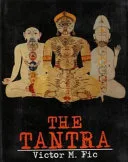
The Tantra
 84
84

The Tantra
Victor M. Fic's "The Tantra" offers a clear, if somewhat dry, exposition of core Tantric doctrines. The work's strength lies in its systematic presentation of the theory of creation, emphasizing the universe as a continuous projection of divine energy. Fic's explanation of Shakti as the ubiquitous animating force is particularly lucid. However, the book's presentation of techniques and rituals feels more like a summary than an immersive guide, lacking the experiential depth one might expect. The section on the cyclical nature of existence, while intellectually sound, could benefit from more illustrative examples. Ultimately, "The Tantra" serves as a valuable theoretical primer but falls short of being a complete practical manual.
📝 Description
84
Victor M. Fic's The Tantra outlines a cosmology of divine energy and cyclical creation.
This text details a sophisticated cosmological framework and associated practices. It describes the universe as a dynamic, cyclical projection of divine energy, called Shakti, which animates all existence without a clear beginning or end. The book challenges linear, temporal views of creation, proposing instead a constant emanation from a singular source. It is intended for serious students of Indian philosophy and esoteric cosmology who wish to grasp the theoretical basis for practices that engage subtle energies. Readers interested in comparative religion, mythology, and the philosophical underpinnings of meditation and ritual will find its content particularly relevant.
The work situates itself within the historical development of Tantra, which has roots stretching back to at least the 5th century CE in India and has distinct traditions within Hinduism and Buddhism. Its theories offer an alternative perspective to more orthodox Vedic interpretations. The core concepts include Shakti, identified as the divine feminine energy responsible for all manifestation, and the cyclical nature of time and existence, contrasting with linear Western models. The rituals and techniques described are presented as methods to access and align with this fundamental creative energy, ultimately aiming for spiritual realization.
The Tantra emerges from a tradition with textual evidence dating to the 5th century CE in India, developing distinct forms within both Hindu and Buddhist contexts. It offers a counterpoint to prevailing Vedic interpretations by positing a cosmology centered on Shakti, the active, creative feminine divine energy. This energy is seen as the source of all manifestation, flowing in perpetual cycles rather than a linear progression. The practices detailed aim to align the individual with this cosmic flow, fostering spiritual realization through direct engagement with subtle energies.
💡 Why Read This Book?
• Understand the concept of Shakti as the fundamental creative energy, as detailed in the theories of creation presented, offering a unique perspective on cosmic origins. • Grasp the cyclical model of universal manifestation, contrasting with linear Western timelines, which provides a new framework for understanding existence. • Learn about Tantrik techniques and rituals as presented in the text, serving as a theoretical foundation for accessing divine energy and achieving spiritual realization.
⭐ Reader Reviews
Honest opinions from readers who have explored this book.
❓ Frequently Asked Questions
What is the central theory of creation presented in "The Tantra"?
The book posits that the universe is a continuous projection of divine energy, with no beginning or end. All manifestations are seen as emanations of this singular creative force, challenging linear notions of time and origin.
What is Shakti in the context of "The Tantra"?
Shakti is described as the fundamental divine energy that animates all existence. It is the active, dynamic principle responsible for the universe's manifestation and is central to understanding Tantric cosmology.
When was "The Tantra" by Victor M. Fic first published?
Victor M. Fic's "The Tantra" was first published in 2003, making it a relatively modern scholarly work on ancient traditions.
Does "The Tantra" focus on practical application or theory?
The book primarily focuses on the theoretical aspects of Tantra, particularly its cosmology and the nature of divine energy. While it mentions techniques and rituals, its emphasis is on explaining the underlying philosophical framework.
What is the historical origin of Tantra as discussed in the book?
The text places the origins of Tantra in ancient India, with significant development occurring around the 5th century CE. It acknowledges Tantra's presence within both Hindu and Buddhist traditions.
How does Fic's "The Tantra" differ from typical Western creation narratives?
Fic's work contrasts with Western linear creation narratives by presenting a cyclical, emanationist model where the universe is a perpetual projection of divine energy, lacking a singular starting point.
🔮 Key Themes & Symbolism
Cyclical Creation Theory
The work meticulously details an understanding of the cosmos as a continuous cycle of emanation and dissolution, rather than a singular event. This perspective, rooted in ancient Indian thought, posits that the universe perpetually projects from and withdraws into a singular divine energy. Fic explains this as a dynamic process without a discernible beginning or end, challenging conventional linear temporal frameworks prevalent in many Western philosophies and religions. The implications for understanding existence and consciousness are explored through this lens.
Divine Energy as Manifestation
Central to the text is the concept that all reality is a manifestation of a singular, omnipresent divine energy, often associated with Shakti. This energy is not static but is the active, creative force behind every aspect of existence, from the subtlest thought to the grandest cosmic structure. The book elucidates how this energy, in its various forms, underlies the perceived diversity of the universe, suggesting a profound interconnectedness of all phenomena.
Tantrik Techniques and Rituals
While primarily theoretical, "The Tantra" outlines the purpose behind Tantrik practices. These techniques and rituals are presented as systematic methods designed to facilitate an individual's conscious access to and alignment with the fundamental divine energy. The goal is described as spiritual realization, achieved by understanding and working with the universal creative forces rather than merely observing them. The book frames these practices as essential tools for spiritual development.
The Nature of Existence
Fic's work probes the fundamental nature of existence through the lens of Tantric philosophy. It suggests that the perceived separation between the individual, the universe, and the divine is an illusion. By understanding the universe as a projection of divine energy, practitioners can begin to realize their own inherent connection to this source. This perspective encourages a shift in consciousness towards unity and interconnectedness.
💬 Memorable Quotes
Direct passages from the work, attributed to the author.
“The universe has no beginning and no end.”
— This statement captures the cyclical cosmology presented in the book, contrasting sharply with linear creation myths and emphasizing the eternal, dynamic nature of existence as a perpetual flow of divine energy.
“All its manifestations are merely the projections of divine energy.”
— This highlights the core metaphysical principle that the diversity of the universe arises from a single, unified source. It implies that understanding these projections is key to understanding reality itself.
“Performance of Tantrik techniques and rituals facilitates access to this divine energy.”
— This emphasizes the practical aspect of Tantra as outlined in the work, suggesting that specific methods are employed to directly engage with and experience the fundamental creative force of the cosmos.
“The universe is a body of theories, techniques and rituals developed in India.”
— This positions "The Tantra" as an exposition of a comprehensive system originating from India, encompassing both philosophical understanding and practical application aimed at spiritual evolution.
“Shakti is the divine energy of its Creator.”
— This defines the central concept of Shakti as the active, feminine principle of divinity responsible for the creation and ongoing sustenance of the cosmos, framing it as the ultimate source of all phenomena.
🌙 Esoteric Significance
Tradition
This work fits within the broad umbrella of Indian esoteric traditions, specifically focusing on Tantra, which is distinct from but often intersects with Hindu yogic and Buddhist Vajrayana lineages. It departs from purely devotional or ascetic paths by emphasizing the immanent divine energy (Shakti) within all phenomena and the potential for liberation through direct engagement with it, often utilizing practices that integrate the material world rather than renouncing it.
Symbolism
The concept of Shakti itself is a primary symbol, representing the dynamic, creative, and often feminine aspect of the divine that animates the cosmos. The cyclical nature of creation described symbolizes the eternal dance of manifestation and dissolution, a core motif in Indic thought. The book implicitly discusses the symbolism of energy flow and transformation as central to spiritual realization.
Modern Relevance
Contemporary practitioners of yoga and meditation, as well as scholars of comparative religion and consciousness studies, continue to draw upon the theoretical frameworks of Tantra. Thinkers exploring non-dual philosophies and the integration of spiritual practice with everyday life find resonance in Tantra's emphasis on immanent divinity and the potential for transformation through direct energetic engagement.
👥 Who Should Read This Book
• Students of comparative religion and philosophy seeking to understand the theoretical underpinnings of ancient Indian esoteric systems. • Practitioners of yoga and meditation interested in the metaphysical cosmology that informs certain practices, particularly those focused on energy work. • Scholars of mysticism and religious studies looking for a structured overview of Tantric creation theories and their philosophical implications.
📜 Historical Context
Victor M. Fic's "The Tantra," first published in 2003, engages with a tradition whose textual roots can be traced back to approximately the 5th century CE in India. Tantra emerged and flourished within both Hindu and Buddhist philosophical landscapes, often presenting itself as a distinct path from the more orthodox Vedic traditions. During its formative centuries, it coexisted with and influenced various philosophical schools, including Advaita Vedanta and certain Mahayana Buddhist doctrines. While Fic's work is a modern scholarly synthesis, it addresses concepts that have been debated and practiced for over fifteen hundred years. The reception of Tantra itself has varied; sometimes embraced for its esoteric insights, at other times criticized or misunderstood, particularly by colonial-era scholars and later by Western popularizers who often sensationalized its practices. Fic's approach appears to be a more academic and theoretical engagement with the subject matter.
📔 Journal Prompts
The projection of divine energy as the source of all manifestations: How does this concept alter your perception of reality?
The cyclical nature of existence: Reflect on how this contrasts with linear time and its impact on your understanding of purpose.
Shakti as the animating force: Explore the implications of viewing the universe as a dynamic expression of divine feminine energy.
Tantrik techniques and rituals: Consider the theoretical framework for accessing divine energy presented in the text.
The universe as a body of theories, techniques, and rituals: How does this holistic view of Tantra shape your approach to esoteric study?
🗂️ Glossary
Tantra
A body of theories, techniques, and rituals developed in ancient India, characterized by its focus on divine energy (Shakti) and cyclical cosmology.
Shakti
The fundamental divine energy that animates the universe, understood as the active, creative, and often feminine principle of the divine.
Theory of Creation
The Tantric cosmological model positing the universe as a continuous projection of divine energy, without a definitive beginning or end.
Manifestations
The various forms and phenomena that arise from the projection of divine energy, encompassing all aspects of the perceived universe.
Tantrik Techniques
Specific methods and practices described within Tantra aimed at accessing and aligning with divine energy for spiritual realization.
Rituals
Ceremonial acts performed within Tantric traditions, designed to engage with divine energies and facilitate spiritual transformation.
Divine Energy
The fundamental, omnipresent force underlying all existence, considered the source from which the universe and its components emerge.