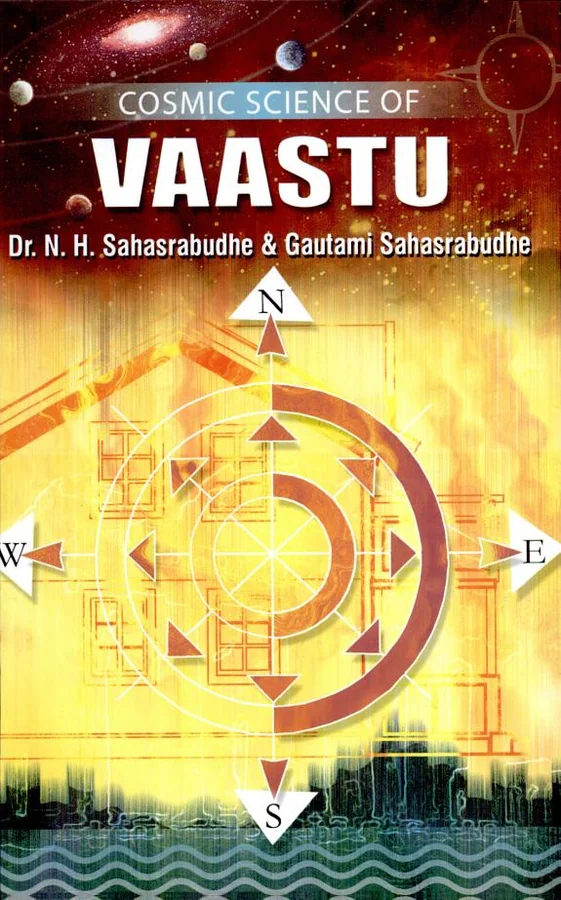
Cosmic Science of Vaastu
 82
82

Cosmic Science of Vaastu
The Sahasrabudhes' 'Cosmic Science of Vaastu' offers a commendable effort to translate the intricate principles of ancient Indian architecture into a framework understandable by modern practitioners. Its strength lies in its systematic approach, attempting to quantify and explain the 'cosmic effects' of spatial arrangements. The discussion on the "five great elements" and their directional virtues provides a solid foundation for understanding the energetic dynamics at play. However, the book's ambition to "bridge the gap" occasionally leads to a density of information that might overwhelm readers unfamiliar with either Vaastu or advanced architectural theory. A more focused exploration of specific case studies demonstrating the "remedial approaches" would have enhanced its practical utility. Nevertheless, for those seeking a detailed, scientifically-oriented exploration of Vaastu, this work is a valuable resource.
📝 Description
82
Published in 2005, Cosmic Science of Vaastu examines Vaastushastra beyond mere architectural rules.
This work presents Vaastushastra not simply as architectural guidelines but as a science connected to cosmic energies. Authors N. H. Sahasrabudhe and Gautami N. Sahasrabudhe aim to connect ancient Vedic principles with modern architectural practices. The book discusses how the arrangement and orientation of spaces affect inhabitants' well-being and prosperity, carefully detailing the governing principles behind these effects.
The book targets architects, interior designers, and students of Indian sciences and modern building design. It also appeals to individuals curious about the subtle energetic influences in their living and working spaces. Those seeking to align their environments with natural cosmic flows, and practitioners of disciplines like astrology and yogshastra looking for a scientific framework, will find this volume useful.
It emerged during a time of growing global interest in ancient wisdom traditions and their practical uses. Vaastushastra, originating in India thousands of years ago, was being reevaluated to align with modern scientific understanding and architectural standards. The Sahasrabudhes' book adds to this discussion with a synthesized approach that considers both the spiritual and material aspects of built environments.
Vaastushastra, an ancient Indian system of design and architecture, traditionally seeks to harmonize human dwellings with the natural energies of the cosmos. Its principles are rooted in Vedic cosmology, which views the universe as a dynamic interplay of forces. This book places Vaastu within that tradition, exploring its scientific underpinnings and connections to concepts like the Panchamahabhutas (five great elements) and directional energies. It aims to bridge the gap between these age-old practices and contemporary architectural thought.
💡 Why Read This Book?
• Understand the energetic impact of your surroundings by learning about the "virtues of directions" and the "five great elements," offering a new perspective on space beyond mere aesthetics. • Explore the "two stream theory" and "Ind flying stars" to discover how ancient Vaastu concepts can be applied to modern architectural challenges, providing unique solutions. • Gain practical knowledge of "remedial approaches" for existing spaces, enabling you to implement specific adjustments for better cosmic alignment and personal well-being.
⭐ Reader Reviews
Honest opinions from readers who have explored this book.
❓ Frequently Asked Questions
What is the 'two stream theory' as discussed in 'Cosmic Science of Vaastu'?
The book explains the 'two stream theory' as a concept within Vaastushastra that addresses the interplay of opposing energetic flows within a space, crucial for maintaining balance and harmony.
When was 'Cosmic Science of Vaastu' first published?
'Cosmic Science of Vaastu' by N. H. Sahasrabudhe and Gautami N. Sahasrabudhe was first published on January 1, 2005.
Does the book cover remedies for existing Vaastu defects?
Yes, the book extensively discusses "remedial approaches" for the "cosmic effects of a wrong vaastu," offering solutions for correcting imbalances in existing structures.
What traditional disciplines are integrated with modern architecture in this book?
The work integrates concepts from astrology, yogshastra, and traditional Vaastushastra to correlate them with modern architectural principles and their cosmic influences.
Who are the authors of 'Cosmic Science of Vaastu'?
The authors are N. H. Sahasrabudhe and Gautami N. Sahasrabudhe. N. H. Sahasrabudhe is noted for his work in this field.
What is the significance of the 'five great elements' in the book?
The book details the "analysis of the five great elements" (Panchamahabhutas) and their role in Vaastu, explaining how their balance and directional placement affect the environment.
🔮 Key Themes & Symbolism
Cosmic Energy and Architecture
The book posits that architecture is not merely about shelter but about engaging with and channeling cosmic energies. It explores how the orientation of buildings, the placement of rooms, and the selection of materials can either amplify or disrupt these natural flows. The "virtues of directions" are analyzed not as arbitrary rules but as principles derived from the Earth's magnetic field and celestial influences, impacting inhabitants' psychological and physical states.
Elemental Balance in Space
Central to the work is the "analysis of the five great elements" (Panchamahabhutas): Earth, Water, Fire, Air, and Ether. The book details how each element is associated with specific directions and qualities, and how their balanced presence within a built environment is crucial for well-being. Imbalances, such as an excess of water in a fire-dominant zone, are presented as causes of disharmony and misfortune.
Bridging Ancient and Modern
A primary goal of the Sahasrabudhes is to reconcile traditional Vaastushastra with contemporary architectural practices and scientific understanding. They present Vaastu as a "cosmic science," aiming to provide a rational basis for its principles. The book examines concepts like the "two stream theory" and "Ind flying stars" to offer a more nuanced, analytical approach that appeals to modern sensibilities and professional architects.
Nature-Individual Correlation
The text emphasizes the profound "relation between Nature and Individual," suggesting that our living spaces act as mediators between the macrocosm (universe) and the microcosm (human being). By aligning our built environments with natural cosmic rhythms, individuals can achieve greater harmony, health, and prosperity. The book explores how subtle energetic shifts in architecture can manifest as significant changes in personal life.
💬 Memorable Quotes
Direct passages from the work, attributed to the author.
“The cosmic effects of a wrong vaastu and the remedial approaches are discussed at length.”
— This highlights the book's practical focus, moving beyond theoretical discussions to address the tangible consequences of spatial imbalances and offering actionable solutions.
“This book covers all the concepts, theories and correlations of various disciplines like astrology, yogshastra, modern architecture and tradi[tional Vaastu].”
— This statement underscores the interdisciplinary nature of the work, aiming to synthesize knowledge from seemingly disparate fields into a cohesive understanding of harmonious living spaces.
“This book attempts to bridge the gap between traditional Vaastushastra and modern architecture.”
— This clearly states the authors' primary objective: to make ancient architectural wisdom accessible and applicable within the context of contemporary building design and scientific inquiry.
💡 Key Ideas
Editorial paraphrase of the work's core concepts — not direct quotes.
Virtues of directions, analysis of the five great elements, two stream theory, Ind flying stars and the relation between Nature and Individual are also discussed in detail.
This summarizes the core conceptual framework, indicating the breadth of topics covered, from directional energies and elemental science to specific theories and the macrocosm-microcosm connection.
The work explores the cosmic effects of a wrong vaastu and the remedial approaches.
This paraphrased concept emphasizes the book's dual focus on diagnosing energetic problems in built environments and providing practical, science-informed solutions.
🌙 Esoteric Significance
Tradition
This work draws heavily from the Vedic tradition of India, specifically Vaastushastra, which is considered a component of the ancient Indian system of architecture and design. It positions Vaastu as a science intrinsically linked to cosmic energies and natural laws, aligning it with broader esoteric principles of universal interconnectedness and the influence of subtle forces on the material world.
Symbolism
Key symbols and motifs include the cardinal directions, each imbued with specific 'virtues' and energetic qualities. The five great elements (Panchamahabhutas) are central, representing fundamental forces of nature whose balance is crucial. The concept of 'cosmic effects' itself acts as a symbolic representation of the unseen forces that govern physical spaces and human experience.
Modern Relevance
Contemporary thinkers and practitioners in fields like sustainable architecture, Feng Shui (which shares conceptual parallels), and holistic interior design often reference or draw inspiration from the principles explored in this book. The emphasis on the relationship between environment and well-being speaks to modern wellness trends and the growing recognition of biophilic design principles.
👥 Who Should Read This Book
['• Architects and designers seeking to incorporate ancient principles of spatial harmony into their modern projects, gaining a framework beyond purely aesthetic or functional considerations.', '• Students of esoteric traditions and comparative architecture interested in the scientific and cosmic underpinnings of Vaastushastra, as presented through a 21st-century lens.', '• Homeowners and individuals looking to understand and improve the energetic quality of their living or working spaces, with a focus on practical, scientifically-informed adjustments.']
📜 Historical Context
Published in 2005, 'Cosmic Science of Vaastu' arrived during a resurgence of interest in ancient Indian sciences, seeking to integrate them with contemporary thought. The early 21st century saw numerous authors attempting to bridge traditional esoteric knowledge with modern understanding, a trend exemplified by this work's effort to present Vaastushastra as a "cosmic science." This period also witnessed increased dialogue between practitioners of traditional systems and academics in fields like comparative religion and architectural history. While Vaastushastra has ancient roots, its systematic reinterpretation for modern audiences gained momentum in the late 20th century, with works like this contributing to a growing body of literature that aimed to provide rational explanations for traditional practices, sometimes in contrast to purely spiritual or mystical interpretations that dominated earlier discourse.
📔 Journal Prompts
Reflect on the "virtues of directions" in your current living space.
Analyze the balance of the "five great elements" within your primary dwelling.
Consider how the "relation between Nature and Individual" might be influenced by your home's layout.
Explore the potential "cosmic effects of a wrong vaastu" in a space you frequent.
How might the "two stream theory" apply to the energetic flow of your workspace?
🗂️ Glossary
Vaastushastra
An ancient Indian system of architecture and design that aims to create harmonious living spaces by aligning structures with cosmic energies and natural laws.
Panchamahabhutas
The five great elements in Indian philosophy: Earth (Prithvi), Water (Jal), Fire (Agni), Air (Vayu), and Ether/Space (Akasha), considered the fundamental building blocks of the universe.
Virtues of Directions
The specific energetic qualities, influences, and auspicious characteristics associated with each of the cardinal and sub-cardinal directions in Vaastu.
Two Stream Theory
A concept discussed in the book concerning the interplay and balance of opposing energetic flows within a space to maintain harmony and well-being.
Ind Flying Stars
A system, often associated with Feng Shui but discussed here in a Vaastu context, that uses cyclical patterns and celestial influences to analyze and predict energy flows in a space.
Cosmic Effects
The influences and impacts that celestial bodies, natural energies, and universal forces have on built environments and their inhabitants, as explained by Vaastu principles.
Remedial Approaches
Methods and techniques suggested within Vaastushastra to correct or mitigate negative energetic influences arising from imbalances or defects in a building's design or layout.
This book appears in 1 collection
🔮 Readers Also Liked
Browse all →








From the “Geomancy” Collection
View all →








More Free Occult Philosophy Books
View all →