Ancient Astronauts

 74
74

Ancient Astronauts
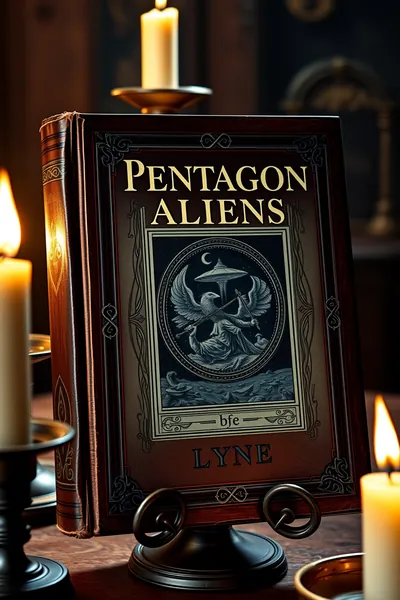
Jeffrey Seeburger’s Ancient Astronauts presents a curious, if at times opaque, poetic inquiry into humanity’s place among the stars. The division into three parts offers a structural framework for exploring what can feel like a vast, untamed subject. A particular strength lies in Seeburger’s ability to evoke a sense of cosmic scale, transforming abstract notions of ancient visitors into tangible, if fleeting, images. However, the very nature of poetic abstraction can also be a limitation; the reader is often left to decipher the precise intention behind a given stanza, a task that may prove arduous for those expecting direct thematic development. The poem “Echoes in the Void,” for instance, powerfully suggests a lingering presence from beyond, yet its ultimate meaning remains tantalizingly out of reach. It is a work that demands patience and a willingness to embrace the enigmatic.
📝 Description
74
Published in 2016, Jeffrey Seeburger's Ancient Astronauts uses verse to ponder humanity's cosmic origins.
Ancient Astronauts is a collection of lyrical meditations, structured in three parts, that examines facets of the human experience. Seeburger does not present a narrative; instead, the work offers a contemplative lens on existence through poetry. The book invites readers to engage with complex themes introspectively and metaphorically, appreciating symbolic language and ambiguity over direct exposition.
This collection speaks to those interested in how poetry can address philosophical and existential questions, particularly concerning humanity's place in the universe. It probes ideas of cosmic origins, the nature of consciousness, and our perceived connection or isolation within the cosmos. Seeburger uses imagery that suggests advanced, non-terrestrial intelligence interacting with early human societies, treating the concept of ancient visitors as a potent metaphor for seeking meaning, rather than a historical event to be proven.
Emerging in 2016, Seeburger's work engages with speculative cosmology and the discourse surrounding potential extraterrestrial influence on early human history. Unlike pseudoscientific or archaeological arguments, this book uses poetic interpretation to address these themes. It aligns with esoteric traditions that explore humanity's connection to the cosmos and the search for meaning beyond conventional historical or scientific frameworks.
💡 Why Read This Book?
• Gain a unique poetic perspective on the ancient astronaut hypothesis, moving beyond literal interpretations to explore its metaphorical weight, as seen in the symbolic language of "Echoes in the Void". • Experience how verse can contemplate humanity's cosmic origins and potential extraterrestrial influences, fostering a sense of wonder and existential reflection absent in scientific texts. • Discover a lyrical approach to themes of consciousness and our place in the universe, offering a contemplative alternative to the direct arguments presented in works like Erich von Däniken's Chariots of the Gods?.
⭐ Reader Reviews
Honest opinions from readers who have explored this book.
❓ Frequently Asked Questions
What is the primary focus of Jeffrey Seeburger's Ancient Astronauts?
Ancient Astronauts is a three-part book of poetry that explores aspects of human life and our place in the cosmos, using the concept of ancient visitors as a metaphorical lens.
When was Ancient Astronauts first published?
The book by Jeffrey Seeburger was first published on July 8, 2016, positioning it within contemporary discussions on speculative cosmology.
Is Ancient Astronauts a historical or scientific text?
No, Ancient Astronauts is a work of poetry. It uses the ancient astronaut concept for metaphorical and philosophical exploration rather than presenting historical or scientific evidence.
What kind of reader would appreciate Ancient Astronauts?
Readers who appreciate introspective, symbolic, and lyrical explorations of existential themes, particularly those interested in speculative cosmology and the poetic interpretation of myths, would find this book engaging.
How does Ancient Astronauts relate to earlier ancient astronaut theories?
While informed by the broader discourse on ancient astronauts, Seeburger's poetic work treats the subject metaphorically, offering a different kind of engagement than the more literal or pseudoscientific approaches found in earlier works.
What are the main sections of the book?
Ancient Astronauts is divided into three parts, each examining different facets of human existence and cosmic connection through verse.
🔮 Key Themes & Symbolism
Cosmic Origins and Humanity
The poetry in Ancient Astronauts grapples with fundamental questions about where humanity originates and its relationship to the wider universe. It uses the idea of ancient visitors not as a literal historical claim, but as a symbolic framework to ponder our existence. The verses often evoke a sense of awe and mystery surrounding our past, suggesting that answers to our deepest questions might lie beyond conventional terrestrial understanding. This theme encourages a re-evaluation of human history through a speculative, almost mythic, lens.
Metaphorical Extraterrestrial Contact
Rather than arguing for the physical presence of aliens in Earth's past, Seeburger employs the 'ancient astronaut' concept as a rich metaphor. This literary device allows for an exploration of themes like consciousness, advanced knowledge, and the yearning for connection. The poems suggest that the idea of external intelligence influencing early human development speaks to our own internal search for meaning and transcendence, a powerful undercurrent in many esoteric traditions.
Poetic Exploration of Existentialism
Fundamentally, Ancient Astronauts is an existential inquiry presented through poetic language. It examines human consciousness, isolation, and the search for purpose against a backdrop of potentially vast, indifferent cosmic forces. The book invites contemplation on what it means to be human when faced with the immensity of space and time, and the possibility of realities far beyond our current comprehension.
Symbolism of Ancient Visitors
The recurring motif of 'ancient astronauts' functions as a potent symbol within the work. These figures represent not just potential extraterrestrial influence, but also the archetypal 'stranger' or 'wise elder' figure found in mythology and esoteric lore. They symbolize lost knowledge, advanced understanding, and the impetus for human development, prompting reflection on the origins of civilization and consciousness itself.
💬 Memorable Quotes
Direct passages from the work, attributed to the author.
“The void remembers.”
— This evocative phrase suggests that cosmic spaces hold inherent memory or knowledge, hinting at a universe far more sentient and interconnected than typically perceived. It implies that past events, even those seemingly lost to time, leave an indelible mark on the fabric of existence.
“Three parts, holding the questions.”
— This refers directly to the book's structure, framing each section not as an answer, but as a container for ongoing inquiry. It highlights the author's intent to provoke thought and contemplation rather than provide definitive conclusions about humanity's cosmic context.
“Seeds from another sky.”
— This poetic image conveys the idea of origins or influences arriving from an external, possibly extraterrestrial, source. It speaks to the potential for life and consciousness to have been seeded or guided by forces beyond Earth, a central theme in ancient astronaut speculation.
“Whispers across millennia.”
— This phrase captures the notion that ancient astronaut theories represent faint echoes or transmissions from a distant past. It suggests that clues to profound truths about our origins may be subtle and require careful listening to discern across vast stretches of time.
💡 Key Ideas
Editorial paraphrase of the work's core concepts — not direct quotes.
We looked up, and saw ourselves reflected.
This line offers an interpretation of the ancient astronaut concept, framing it as a projection of humanity's own aspirations and deep-seated desires for meaning and origin. It suggests that our fascination with extraterrestrial contact might reveal more about our own psyche than about actual cosmic visitors.
🌙 Esoteric Significance
Tradition
While not explicitly tied to a single esoteric lineage, Ancient Astronauts speaks to Gnostic themes of cosmic origins and the search for hidden knowledge (gnosis). The idea of external beings imparting wisdom to early humanity echoes Gnostic narratives of divine messengers or demiurges. It also aligns with broader Hermetic principles concerning the interconnectedness of the macrocosm and microcosm, suggesting that our understanding of the universe reflects our inner state and vice versa.
Symbolism
The 'ancient astronaut' serves as a primary symbol, representing not just potential extraterrestrial visitors but also archetypal figures of wisdom, guidance, and the unknown. The 'void' symbolizes the vast, mysterious expanse of space and consciousness, potentially holding forgotten truths. 'Seeds' can symbolize the origin of life, consciousness, or knowledge, implying a source beyond terrestrial evolution.
Modern Relevance
Contemporary thinkers and artists exploring transhumanism, consciousness studies, and alternative histories often engage with similar themes of advanced intelligence and cosmic origins. The poetic, metaphorical approach of Seeburger’s work appeals to those seeking to understand these complex ideas through intuition and imagination, rather than purely empirical frameworks. It provides a lyrical counterpoint to the more technical discussions in fields like astrobiology and SETI.
👥 Who Should Read This Book
• Readers interested in speculative cosmology and ancient mysteries who seek a metaphorical rather than literal interpretation. • Poetry enthusiasts who appreciate lyrical explorations of philosophical and existential themes, particularly those touching on humanity's place in the universe. • Individuals exploring esoteric thought who are drawn to symbolic language and the re-imagining of historical narratives through mythic lenses.
📜 Historical Context
Jeffrey Seeburger’s Ancient Astronauts, published in 2016, arrived amidst a persistent cultural fascination with extraterrestrial influence on early human history. This interest, significantly amplified by Erich von Däniken's 1968 book *Chariots of the Gods?*, continued to thrive in popular literature and media. Seeburger’s work engages this ongoing discourse but distinguishes itself by employing poetry rather than pseudoscientific or archaeological argumentation. Unlike the direct, often sensationalist claims made by proponents of the ancient astronaut theory in the late 20th century, Seeburger uses the concept as a springboard for lyrical and philosophical reflection. The era saw continued academic skepticism towards ancient astronaut theories, often categorized as pseudoscience, while simultaneously witnessing a growing popular appetite for exploring alternative cosmologies and histories. Seeburger’s contribution lies in offering an artistic, rather than empirical, interpretation of these speculative ideas, placing it within a tradition of esoteric literature that uses myth and symbol to explore profound questions.
📔 Journal Prompts
The concept of 'seeds from another sky' in your own life.
Reflections on the symbolic meaning of the 'void' in Seeburger's poetry.
How does the idea of 'whispers across millennia' relate to personal or collective memory?
Exploring the human impulse to seek external origins, as suggested by 'We looked up, and saw ourselves reflected.'
The significance of the three-part structure in holding complex questions.
🗂️ Glossary
Ancient Astronauts
A concept suggesting that intelligent extraterrestrial beings visited Earth in antiquity or prehistory, influencing human culture, technology, or religion. Seeburger uses this concept poetically.
Void
In this context, refers to the vast emptiness of space, but also metaphorically to the unknown, the source of creation, or the subconscious mind.
Cosmic Origins
The fundamental questions concerning the beginnings of the universe and humanity's place within it, explored through poetic contemplation.
Metaphorical Interpretation
Understanding concepts like ancient astronauts not as literal events but as symbolic representations of deeper human ideas or aspirations.
Lyrical Meditations
Poetic pieces focused on expressing personal emotions, thoughts, and contemplations, often on abstract or philosophical subjects.
Existentialism
A philosophical approach emphasizing individual existence, freedom, and choice, often grappling with themes of meaning and purpose in a vast universe.
Symbolic Language
The use of symbols and imagery to convey deeper meanings, often employed in poetry and esoteric traditions to explore abstract concepts.
This book appears in 1 collection
🔮 Readers Also Liked
Browse all →









From the “Ancient Astronauts” Collection
View all →



More Free Occult Philosophy Books
View all →