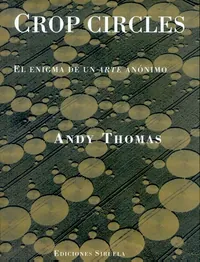
Beyond the Book of Shadows

 73
73

Beyond the Book of Shadows
Lynden Clarke's "Beyond the Book of Shadows" tackles the often-underdeveloped aspect of advanced ritual circle building in Wicca. The book's strength lies in its methodical approach, presenting complex ideas with clarity, particularly in its detailed explanations of energetic containment and directional attunements. Clarke avoids overly mystical jargon, opting for practical, actionable advice. A notable limitation, however, is the occasional lack of concrete examples illustrating the application of some more abstract theoretical concepts. For instance, the section on "Resonant Frequencies" could benefit from more tangible case studies. Despite this, the work offers a valuable expansion on foundational Wiccan practice. It is a focused and useful addition for serious practitioners.
📝 Description
73
Lynden Clarke's 2010 book examines advanced ritual circle construction for contemporary Wiccans.
Beyond the Book of Shadows, published in 2010, focuses on advanced ritual circle construction within modern Wicca. It moves beyond basic practices to offer methods for Witches looking to expand their ceremonial frameworks. The book serves as a practical guide for increasing ritual effectiveness and deepening personal magical expression. Clarke details specific techniques and considerations for building potent sacred spaces.
This work is intended for practitioners of Witchcraft who have progressed beyond novice levels and engage in regular ritual practice. It suits those ready to refine their craft, examine more complex magical structures, and incorporate new approaches into their personal or coven rituals. Individuals interested in the theoretical basis of circle casting, as well as those seeking concrete methods to enhance ritual power, will find this book valuable.
Published in 2010, Clarke's book emerged during a time of growing diversity and academic interest in modern Paganism and Wicca. While many practitioners followed established "Book of Shadows" traditions, this work addressed a demand for specialized, advanced knowledge. It contributes to the evolution of Wiccan ritual by building on earlier texts and meeting the needs of experienced practitioners who seek to innovate within established forms.
💡 Why Read This Book?
• Gain specific techniques for constructing complex ritual circles, moving beyond basic geometric forms as detailed in Chapter 3, "Advanced Geometry." • Understand the energetic principles behind circle casting, enabling you to create more potent and stable sacred spaces for advanced workings. • Explore Lynden Clarke's unique approach to "ritual architecture," offering a distinct perspective on circle building not commonly found in introductory Wiccan texts.
⭐ Reader Reviews
Honest opinions from readers who have explored this book.
❓ Frequently Asked Questions
What specific advanced ritual techniques does "Beyond the Book of Shadows" cover?
The book details advanced methods for ritual circle building, including energetic containment, resonant frequencies, and the application of elemental correspondences in construction, extending beyond basic foundational practices.
Is this book suitable for beginners in Wicca?
No, "Beyond the Book of Shadows" is intended for practitioners who already have experience in Witchcraft and wish to explore advanced techniques beyond their current ritual style.
When was "Beyond the Book of Shadows" first published?
The book was first published on April 20, 2010, by Lynden Clarke.
What is the primary focus of Lynden Clarke's "Beyond the Book of Shadows"?
Its primary focus is on advanced techniques for building and utilizing ritual circles within the tradition of modern Wicca, aiming to enhance ritual practice beyond introductory levels.
Does the book explain how to build a circle from scratch?
While it builds upon foundational principles, the book is geared towards those already familiar with basic circle casting and seeking to elevate their practice to more advanced levels of ritual architecture.
What distinguishes this book from a standard "Book of Shadows"?
Unlike a typical "Book of Shadows" which may contain foundational spells and rituals, this work specifically develops and explains advanced ritual circle techniques, going beyond where standard texts often conclude.
🔮 Key Themes & Symbolism
Ritual Architecture
This theme posits the magic circle as a complex, constructed space rather than a simple boundary. Clarke explores the principles of designing and building this sacred architecture with intent, detailing how specific geometric configurations and energetic placements can influence the ritual's efficacy and safety. It encourages practitioners to view circle casting as an act of deliberate magical construction, adaptable to various ritual needs.
Energetic Containment and Flow
Beyond mere demarcation, the book emphasizes the circle's role in containing and directing magical energy. Clarke explores methods for fortifying the circle's energetic integrity, preventing unwanted intrusions, and channeling power effectively towards the ritual's purpose. This involves understanding the subtle interplay of elemental forces and intent within the consecrated space.
Advanced Elemental Integration
This theme moves past basic invocations of the elements. Clarke presents methods for deeply integrating the energies of Earth, Air, Fire, and Water into the very fabric of the ritual circle. This integration is crucial for grounding rituals, raising power, and directing magical forces with greater precision and potency, enhancing the practitioner's control.
Personalized Ritual Frameworks
The work encourages practitioners to move beyond prescribed rituals and develop their own sophisticated frameworks for circle building. By understanding the underlying principles, Witches can adapt and innovate, creating personalized sacred spaces that resonate more deeply with their individual paths and magical goals, fostering greater autonomy in practice.
💬 Memorable Quotes
Direct passages from the work, attributed to the author.
“The circle is not merely a defense, but a crucible.”
— This statement highlights the dynamic nature of the ritual space, suggesting it functions not just to keep unwanted energies out, but also as a focused environment where magical transformation and energetic work actively occur.
“Understand the geometry, and you command the space.”
— This conveys the author's emphasis on the foundational importance of precise structure in magical workings. It suggests that mastery of the circle's form directly translates to control over the energies and events within it.
“Resonant frequencies shape the ritual's outcome.”
— This points to the idea that the energetic vibrations established within the circle, influenced by intention and construction, directly impact the success and nature of the magical work performed.
“Each element, when properly integrated, adds a unique layer of power.”
— This interpretation emphasizes the additive and synergistic effect of incorporating elemental forces into circle building. It suggests a methodical approach where each elemental contribution builds upon the others for greater magical potency.
“The Book of Shadows provides the foundation; this work builds the temple.”
— This metaphor clearly positions Clarke's book as an advanced guide that takes the practitioner beyond basic knowledge, enabling them to construct more elaborate and sacred magical structures, akin to building a temple upon an existing foundation.
🌙 Esoteric Significance
Tradition
This work fits within the broad stream of modern Western Esotericism, specifically developing practices within the lineage of Wicca. It departs from purely inspirational or historical accounts by focusing on the practical, almost architectural, application of magical principles. While rooted in Wiccan traditions, it emphasizes a more technical, less dogma-bound approach to ritual construction, drawing on universal concepts of sacred space and energetic manipulation.
Symbolism
Key symbols include the circle itself, representing wholeness, infinity, and the sacred container; elemental symbols (pentagrams, runes, etc.) integrated into the circle's construction to invoke specific energies; and geometric patterns, which are treated not just aesthetically but as energetic conduits influencing the ritual space's power and stability.
Modern Relevance
Contemporary practitioners interested in high-magic, ceremonial magic, and advanced energy work within Pagan and Wiccan contexts often reference Clarke's methodical approach. Thinkers and groups focusing on ritual efficiency, energetic hygiene, and the development of personal magical systems find value in its detailed guidance on constructing potent sacred spaces.
👥 Who Should Read This Book
• Experienced Wiccan practitioners seeking to refine their circle casting and ritual construction skills beyond introductory levels. • Magicians and ritualists interested in the architectural and energetic principles of creating potent sacred spaces for advanced workings. • Students of comparative religion and esotericism looking for detailed examples of specialized ritual techniques within modern Pagan traditions.
📜 Historical Context
Lynden Clarke's "Beyond the Book of Shadows," published in 2010, arrived during a period where modern Paganism, particularly Wicca, was well-established yet continuously evolving. The early 21st century saw a surge in specialized literature catering to practitioners seeking to deepen their craft beyond introductory texts. While foundational works like Gerald Gardner's "Book of Shadows" provided core tenets, Clarke's book addressed a growing segment of experienced Witches looking for advanced ritual architecture. This era also saw increased academic engagement with Pagan traditions, with scholars like Ronald Hutton examining their historical development. Clarke’s work can be seen as part of a trend towards more sophisticated and technique-focused magical literature, responding to a practitioner base that had moved beyond initial explorations and sought greater mastery.
📔 Journal Prompts
The concept of the circle as a "crucible" suggests transformation; describe a ritual where you felt actively changed within the circle.
Reflect on the specific geometric configurations mentioned in Chapter 3 and their potential energetic implications for your practice.
How can the principle of "resonant frequencies" be applied to enhance the focus of your personal meditations?
Consider the "temple building" metaphor: what foundational elements from your current practice need strengthening before advanced construction?
Analyze the integration of elemental forces in your current circle casting; where could "Beyond the Book of Shadows" offer new approaches?
🗂️ Glossary
Ritual Architecture
The conceptualization and construction of sacred space, particularly the magic circle, as a deliberate, designed structure with specific energetic properties and functions.
Energetic Containment
Techniques used to establish and maintain a stable energetic boundary within the ritual circle, preventing unwanted external influences and retaining internal magical energy.
Resonant Frequencies
The specific vibrational patterns established within the circle, influenced by intent, construction, and invocation, which affect the nature and outcome of the ritual.
Elemental Integration
The process of actively incorporating the energies and symbolism of the four classical elements (Earth, Air, Fire, Water) into the design and function of the ritual circle.
Sympathetic Magic
The principle that "like affects like"; applying this concept to circle building means using correspondences and structure to create an energetic environment that mirrors the desired magical outcome.
Sacred Space
An area consecrated and set apart for religious or magical purposes, characterized by a heightened sense of the divine or potent magical energy.
Wicca
A modern, neopagan religious movement that draws upon a diverse range of ancient European pagan and 20th-century astrological and ceremonial magic traditions.
This book appears in 1 collection
🔮 Readers Also Liked
Browse all →








From the “Book of Shadows” Collection
View all →





More Free Occult Philosophy Books
View all →