What is Wicca?
Wicca is a contemporary Pagan religion with roots in early 20th-century European witchcraft. It typically involves the worship of a Goddess and a God, the practice of magic, and adherence to a code of ethics, often summarized as 'An it harm none, do what ye will'. While diverse, many traditions share commonalities in ritual structure, seasonal celebrations (Sabbats), and the use of tools like athames and wands.
Best Books for Complete Beginners
For those new to Wicca, "The Complete Guide To Wicca And Witchcraft" by Leocosmos provides a broad overview of core beliefs and practices. "Lid Off The Cauldron" by Patricia Crowther offers practical advice and spells from a well-known practitioner. "Wicca Girl" by R. Allen Leider (2009) presents a modern, accessible perspective. "Philosophy: Wicca" by Amber Laine Fisher (2002) explores the underlying ethical and spiritual frameworks. These texts introduce fundamental concepts without overwhelming detail.
Intermediate Reading
Building on foundational knowledge, "Doreen Valiente Rebirth Of Witchcraft" offers crucial historical context from a key figure. "WINNING WITH WITCHCRAFT" by Finbarr Books provides further practical applications and magical techniques. Nick Farrell's "Making Talismans - Living Entities of Power" (2001) guides readers through advanced magical object creation. "The Complete Magicians Tables" by Stephen Skinner (2007) is essential for understanding complex magical systems and correspondences.
Classical / Advanced Texts
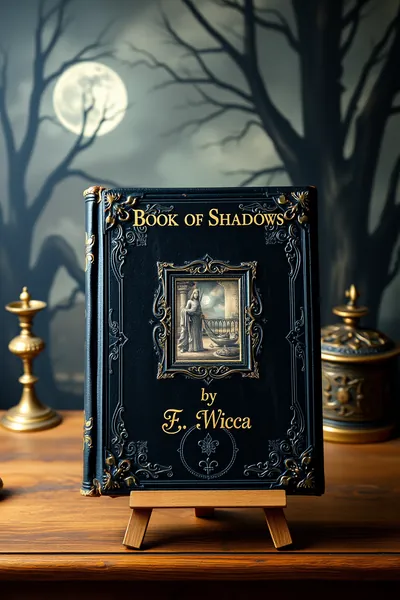
Margaret Alice Murray's "The Witch-cult in Western Europe" is a seminal, though controversial, anthropological study that influenced early Wicca. "Secrets of a Golden Dawn Temple - Book 1 - Creating Magical Tools" by Chic Cicero & Sandra Tabatha Cicero (2004) explores ceremonial magic tools relevant to some Wiccan practices. The "Book Of Shadows" serves as a primary source for many covens, containing rituals and spells, though specific editions vary widely.
Reading Order — Step by Step
Begin with introductory texts like "The Complete Guide To Wicca And Witchcraft" and "Wicca Girl" (Weeks 1-2). In Month 2, look at "Lid Off The Cauldron" and "Philosophy: Wicca" for practical and ethical insights. By Month 3, explore historical context with "Doreen Valiente Rebirth Of Witchcraft" and practical magic with "Making Talismans". For advanced study, engage with "The Witch-cult in Western Europe" and "Secrets of a Golden Dawn Temple" thereafter.
Frequently Asked Questions
Which Wicca book should I read first?
For a comprehensive introduction, start with 'The Complete Guide To Wicca And Witchcraft' by Leocosmos. It covers essential concepts clearly. Alternatively, 'Wicca Girl' by R. Allen Leider offers a more contemporary and personal perspective suitable for beginners.
Is Margaret Murray's 'The Witch-cult in Western Europe' still considered accurate?
Murray's work is historically significant for influencing early Wicca, but modern scholars widely dispute its anthropological conclusions. It's valuable for understanding Wicca's intellectual history rather than as a factual account of historical witch-cults.
What is the difference between Wicca and Witchcraft?
Wicca is a specific modern Pagan religion, while witchcraft is a broader term encompassing various magical practices. Many Wiccans practice witchcraft, but not all witchcraft practitioners identify as Wiccan.
Are there different traditions within Wicca?
Yes, Wicca has evolved into numerous traditions, such as Gardnerian, Alexandrian, and various eclectic paths. While sharing core principles, they differ in their specific rituals, structures, and interpretations.
What is a Book of Shadows?
A Book of Shadows is a personal or coven grimoire containing spells, rituals, correspondences, and other magical information. It serves as a record and guide for a practitioner's magical journey.
Do I need to buy specific tools to practice Wicca?
While many traditions use tools like athames, wands, and chalices, they are primarily symbolic and aid in focusing intent. Beginners can start by understanding the principles and gradually incorporate tools as they feel drawn to them.
Where can I find information on Wiccan ethics?
Key ethical principles are often found in introductory texts like 'Philosophy: Wicca' by Amber Laine Fisher. The Wiccan Rede, particularly the phrase 'An it harm none, do what ye will,' is a central ethical guideline.