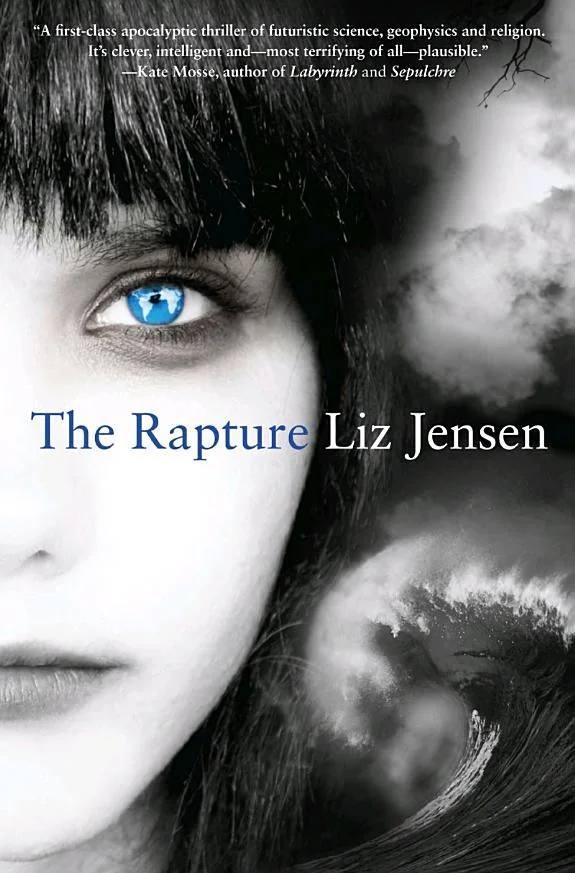
The Rapture
 73
73

The Rapture
Jensen crafts a narrative that is as unsettling as it is intellectually stimulating. The dynamic between Ruth and Hannah is the novel's potent engine, a claustrophobic exploration of trust and manipulation within the sterile confines of a psychiatric ward. Hannah’s chillingly accurate prophecies of seismic and meteorological events lend a potent speculative edge, making the reader question the very fabric of reality alongside Ruth. A particular strength lies in the novel’s refusal to offer easy answers, leaving the reader adrift in a sea of ambiguity. However, the sheer intensity of the psychological pressure cooker, while effective, occasionally verges on relentless, potentially alienating readers seeking moments of narrative respite. The chilling passages describing Hannah’s visions, such as her premonition of a specific volcanic eruption, are masterfully rendered. *The Rapture* is a stark, disquieting examination of prophecy and paranoia.
📝 Description
73
Liz Jensen's 2009 novel, *The Rapture*, concerns a therapist and her patient who predicts natural disasters.
Dr. Ruth van der Meer, a therapist, treats Hannah, a sixteen-year-old patient in a psychiatric hospital. Hannah's mother was murdered, and the girl exhibits a disturbing ability to predict natural disasters. This faculty blurs the lines between delusion and prescience, driving the narrative's psychological drama.
The novel questions the nature of reality and sanity when faced with impending doom. It taps into widespread anxieties about climate change and global instability that grew in the early 2000s. Jensen's work engages with contemporary concerns about environmental collapse and societal anxieties.
Published in 2009, *The Rapture* engages with apocalyptic literature traditions by grounding prophetic visions within a modern psychological framework. The novel examines 'disaster fantasy' as a potential form of precognition, exploring the therapist-patient dynamic when confronted with perceived supernatural abilities. Jensen's work can be seen as a contemporary iteration of how anxieties about the future and the unknown manifest through fictional narratives.
💡 Why Read This Book?
• Gain a nuanced perspective on the psychological impact of environmental anxieties, as explored through Hannah’s unsettling prophetic abilities concerning geological events. • Understand the complex therapist-patient relationship when confronted with potentially world-altering phenomena, particularly Ruth van der Meer’s struggle with Hannah’s visions. • Engage with a literary exploration of apocalyptic themes that critiques both religious eschatology and secular denial, offering a unique take on societal end-time anxieties.
⭐ Reader Reviews
Honest opinions from readers who have explored this book.
❓ Frequently Asked Questions
What is the primary setting for Liz Jensen's 'The Rapture'?
The novel is primarily set within a British psychiatric hospital where the young patient Hannah is incarcerated, creating a claustrophobic atmosphere for the unfolding psychological drama and prophetic revelations.
What specific type of disaster does Hannah predict in 'The Rapture'?
Hannah possesses a disturbing ability to predict geological and meteorological upheavals, including seismic events and extreme weather patterns, which form a core element of the novel's unnerving plot.
Who are the two main characters in 'The Rapture'?
The central figures are Dr. Ruth van der Meer, a therapist, and her sixteen-year-old patient, Hannah, whose alleged psychic abilities drive the narrative's central conflict and exploration of reality.
When was Liz Jensen's novel 'The Rapture' first published?
Liz Jensen's novel 'The Rapture' was first published on August 11, 2009, placing it within a period of heightened global environmental and societal anxieties.
What core psychological concept does 'The Rapture' explore through Hannah?
The book examines the concept of 'disaster fantasy,' questioning whether Hannah's visions are purely psychological delusions or possess a genuine, albeit terrifying, precognitive element.
Does 'The Rapture' offer a religious interpretation of an end-time event?
While the title evokes religious eschatology, the novel recontextualizes the idea of a 'rapture' into a more secular, potentially ecological, end-time scenario, focusing on societal and environmental collapse.
🔮 Key Themes & Symbolism
Prophetic Anxiety
The novel dissects the burden of precognition, particularly when the visions concern widespread destruction. Hannah's ability to foresee geological and meteorological calamities transforms her into a figure of both fear and desperate hope. This theme challenges the reader to consider how society might react to verifiable prophecies of doom, moving beyond simple sensationalism to explore the psychological toll on the individual seer and those around them.
Therapeutic Boundaries and Belief
Dr. Ruth van der Meer's professional skepticism is systematically eroded as Hannah's predictions begin to manifest with alarming accuracy. This raises profound questions about the nature of mental illness versus genuine psychic ability. The work probes the ethical and emotional challenges faced by a therapist when confronted with phenomena that defy conventional psychiatric understanding, blurring the lines between objective analysis and subjective experience.
Ecological and Existential Dread
Jensen taps into contemporary fears surrounding environmental degradation and potential societal collapse. The 'rapture' of the title is framed not as a divine ascension but as a potential, terrifying end to the current world order, driven by natural forces. The novel serves as a potent allegory for collective anxiety about the future, exploring humanity's capacity for denial and its response to existential threats.
The Nature of Reality
Through Hannah's fractured psyche and prophetic insights, the book questions the perceived stability of reality. Is the world as we understand it truly solid, or are there underlying currents of chaos and foresight that conventional science cannot grasp? The narrative invites contemplation on the subjective experience of reality, particularly within the confines of a psychiatric institution where perceptions are already questioned.
💬 Memorable Quotes
Direct passages from the work, attributed to the author.
“The girl's paranoid disaster fantasies have some basis in reality.”
— This core premise highlights the novel's central tension: the blurring of psychological delusion and genuine precognition, suggesting that perceived madness might hold a terrifying kernel of truth about impending global events.
“She is able to predict instances of geological and meteorological upheaval.”
— This points to the specific nature of Hannah's unsettling visions, grounding the supernatural element in tangible, physical catastrophes that mirror contemporary anxieties about the planet's stability.
“The intense and unnerving relationship between a troubled therapist and her patient.”
— This captures the narrative's focus on the psychological intimacy and inherent power dynamics within the therapeutic setting, amplified by the extraordinary circumstances of Hannah's alleged abilities.
“Hannah's confinement within a British psychiatric hospital.”
— This detail establishes the isolated, controlled environment where the central drama unfolds, creating a sense of claustrophobia and intensifying the psychological stakes for both characters.
“The patient's mother's brutal murder.”
— This shocking event serves as the catalyst for Hannah's incarceration, adding a layer of personal tragedy and mystery that underpins her psychological state and prophetic pronouncements.
🌙 Esoteric Significance
Tradition
While not overtly tied to a single lineage like Hermeticism or Gnosticism, *The Rapture* engages with the broader esoteric concept of prophecy and divination. It reinterprets the 'rapture' from its Christian eschatological context into a secular, possibly ecological, end-time event. The novel explores the archetype of the seer or oracle, traditionally figures who hold forbidden knowledge, but places this within a modern psychological framework, questioning whether such insight stems from a divine source, an innate psychic ability, or a profound, albeit disturbed, connection to the Earth's 'unconscious'.
Symbolism
The psychiatric hospital itself functions as a potent symbol, representing societal attempts to contain or rationalize aberrant knowledge and disruptive truths. Hannah's prophecies act as symbols of repressed ecological anxieties and the planet's potential 'voice' breaking through human denial. The recurring motif of geological and meteorological upheaval symbolizes the uncontrollable, primal forces that underscore the fragility of human civilization and the illusion of control.
Modern Relevance
Contemporary interest in eco-anxiety, climate change denial, and the psychological impact of global crises makes *The Rapture* highly relevant. Thinkers and practitioners exploring transpersonal psychology, earth-based spirituality, and the intersection of mental health with ecological awareness find resonance in Jensen's work. The novel's exploration of 'disaster fantasies' as potentially valid forms of perception speaks to ongoing debates about consciousness, intuition, and alternative ways of knowing in an increasingly uncertain world.
👥 Who Should Read This Book
• Readers interested in speculative fiction that merges psychological thrillers with apocalyptic themes, particularly those drawn to the exploration of precognition and its consequences. • Students of comparative religion and esotericism seeking modern literary interpretations of prophetic archetypes and end-time narratives outside traditional religious frameworks. • Individuals concerned with contemporary issues of environmental anxiety and societal collapse, looking for fictional explorations that connect personal psychology to global threats.
📜 Historical Context
Liz Jensen's *The Rapture*, published in 2009, arrived at a moment of heightened global anxiety concerning climate change and potential societal collapse. The early 21st century saw scientific consensus on environmental issues solidifying, fueling a wave of speculative fiction that grappled with these themes. Jensen's novel shares thematic ground with works like Margaret Atwood's *Oryx and Crake* (2003), which also explored ecological disaster and its human cost. *The Rapture* distinguishes itself by framing these anxieties through the lens of a specific psychological condition—prophetic 'disaster fantasies'—and exploring them within the contained, intense environment of a psychiatric hospital. This approach grounds potentially world-altering events in the intimate, unsettling dynamics of a therapist-patient relationship. The novel's reception engaged with contemporary discussions about mental health, environmentalism, and the human response to existential threats, positioning it as a significant contribution to late-2000s speculative literature.
📔 Journal Prompts
Hannah's disaster prophecies and Dr. van der Meer's response.
The nature of reality as perceived within the psychiatric hospital setting.
Ruth van der Meer's struggle with belief versus professional skepticism.
The symbolic meaning of geological and meteorological upheaval in the narrative.
The concept of a secular 'rapture' as presented in the novel.
🗂️ Glossary
Disaster Fantasy
A psychological concept referring to intrusive thoughts or imagined scenarios involving catastrophic events. In *The Rapture*, this term is central as it questions whether such fantasies are purely delusional or possess a degree of genuine precognition.
Precognition
The purported ability to perceive or know future events. The novel hinges on the possibility that Hannah possesses this ability, challenging conventional understandings of time and consciousness.
Psychiatric Hospital
An institution dedicated to the treatment of mental health disorders. Its sterile, controlled environment in the book serves to heighten the psychological tension and isolate the characters.
Geological Upheaval
Refers to major disturbances in the Earth's crust, such as earthquakes or volcanic eruptions. Hannah's predictions of these events form a key element of the plot's speculative nature.
Meteorological Upheaval
Pertains to extreme or unusual weather phenomena, like hurricanes, blizzards, or floods. These predictions add another layer to the catastrophic visions plaguing the novel's characters.
Eschatology
The branch of theology concerned with the final events of history, or the ultimate destiny of humanity. The novel engages with this concept but reinterprets it in a secular, potentially ecological, context.
Therapist-Patient Dynamic
The complex relationship between a mental health professional and their client. This dynamic is central to *The Rapture*, exploring trust, manipulation, and belief under extraordinary circumstances.
This book appears in 1 collection
🔮 Readers Also Liked
Browse all →








From the “Precognition” Collection
View all →






More Free Occult Philosophy Books
View all →