Nostradamus
 79
79

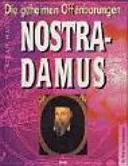
Nostradamus
Fontbrune’s approach to Nostradamus in this 1995 study is commendably grounded, attempting to anchor the seer’s pronouncements in the astrological and historical realities of the 16th century. The author’s strength lies in meticulously dissecting the quatrains, presenting them not as isolated oracles but as products of a specific intellectual and celestial framework. One particularly illuminating section discusses the astronomical calculations underpinning Nostradamus's predictive system, moving the analysis away from pure speculation. However, the work occasionally falters in its accessibility; the dense astrological detail, while accurate, can become overwhelming for the casual reader. A more pronounced effort to bridge the gap between esoteric scholarship and broader historical narrative would have enhanced its impact. Still, for those invested in understanding the mechanics of prophecy, Fontbrune’s analysis offers a valuable, if demanding, perspective.
📝 Description
79
Jean-Charles de Fontbrune's 1995 book re-examines Nostradamus's prophecies, focusing on their astrological and historical roots.
This 1995 study by Jean-Charles de Fontbrune revisits the prophecies attributed to Michel de Nostredame. It moves past simple prediction to investigate the astrological and historical foundations of Nostradamus's quatrains. Fontbrune presents Nostradamus not just as a prophet, but as a man shaped by his 16th-century environment, deeply involved with Renaissance humanism and the astrological practices of his era.
The book is intended for serious students of esotericism, history, and prophecy. It offers substantial material for readers interested in the connections between celestial observation, historical occurrences, and predictive writing. The work appeals to those who wish to grasp the methods behind interpreting prophecy, rather than solely its pronouncements. It is for individuals ready to engage with primary sources and academic analysis of a figure whose legacy still sparks discussion.
Published in 1995, Fontbrune's work emerged during a time of renewed academic interest in esoteric traditions and historical figures like Nostradamus. The late 20th century saw academic fields begin to examine subjects previously considered marginal, such as occultism and prophecy. This book situates Nostradamus within the intellectual framework of the Renaissance, a period where astrology was a recognized, though sometimes contested, area of study. It offers a contrast to later interpretations that tend to remove the prophecies from their original setting.
💡 Why Read This Book?
• Gain insight into the astrological methods employed by Nostradamus, moving beyond mere prediction to understand the 16th-century framework of celestial influence as detailed in the book's analysis of planetary conjunctions. • Learn to interpret prophetic verses by examining the structure and potential coding within Nostradamus's 'quatrains,' a specific literary form discussed extensively. • Understand the historical backdrop of Nostradamus's prophecies, connecting his visions to the turbulent socio-political climate of 16th-century Europe as explored through documented events of the era.
⭐ Reader Reviews
Honest opinions from readers who have explored this book.
❓ Frequently Asked Questions
What is the primary focus of Jean-Charles de Fontbrune's book on Nostradamus?
Fontbrune's work, published in 1995, focuses on analyzing the astrological and historical context behind Nostradamus's prophecies, viewing them as products of 16th-century thought rather than isolated predictions.
Does the book offer new interpretations of specific Nostradamus quatrains?
Yes, the book offers detailed interpretations by examining the astrological charts and historical events contemporary to Nostradamus, aiming to decipher the layered meanings within his quatrains.
What is the historical period discussed in relation to Nostradamus's work?
The book primarily discusses the Renaissance period, specifically the 16th century, highlighting the intellectual currents, astrological practices, and socio-political climate that influenced Michel de Nostredame.
Is prior knowledge of astrology required to understand this book?
While prior knowledge of astrology is beneficial, Fontbrune's work attempts to explain the core concepts. However, the detailed astrological analysis might be more readily grasped by those familiar with the subject.
What makes this book different from other books about Nostradamus?
Unlike purely speculative works, Fontbrune's book emphasizes rigorous analysis of astrological data and historical context from the 16th century, aiming for a scholarly approach to understanding the quatrains.
When was the original publication date of this edition?
The original publication date for Jean-Charles de Fontbrune's Nostradamus is 1995.
🔮 Key Themes & Symbolism
Astrological Determinism
The work explores the 16th-century belief that celestial bodies exert a profound influence on earthly events and human destiny. Fontbrune meticulously reconstructs the astrological charts and planetary configurations that Nostradamus likely consulted, arguing that these celestial alignments formed the very blueprint for his prophecies. This theme explores how cosmic patterns, as understood in the Renaissance, were believed to preordain or at least strongly indicate future occurrences, making astrology a crucial tool for divination and understanding the unfolding of history.
The Quatrain as Predictive Form
Central to Fontbrune's analysis is the 'quatrain,' the four-line verse structure Nostradamus famously employed. The book examines this specific literary device not just as a poetic choice but as a deliberate method for encoding prophetic information. It explores the potential for ambiguity, symbolism, and layered meanings within each quatrain, suggesting that their power lies in their adaptability to multiple interpretations across different historical periods. Understanding the quatrain's construction is presented as key to unlocking Nostradamus's predictive intent.
Renaissance Hermeticism
Fontbrune positions Nostradamus within the broader intellectual movement of Renaissance Hermeticism, a revival of ancient esoteric philosophies attributed to Hermes Trismegistus. This theme investigates how Hermetic principles, such as the correspondence between the macrocosm and microcosm ('as above, so below'), informed Nostradamus's worldview and predictive methods. The book suggests that his prophecies are not isolated mystical outpourings but are deeply rooted in a philosophical tradition that sought hidden knowledge through symbolic interpretation and divine inspiration.
Historical Event Correlation
A significant aspect of the book involves correlating Nostradamus's quatrains with documented historical events, particularly those of the 16th century and beyond. Fontbrune attempts to demonstrate how specific verses might allude to particular wars, political shifts, or significant figures. This theme explores the challenging task of aligning prophetic language with empirical history, questioning whether Nostradamus was predicting specific future events or offering commentary on the cyclical nature of human conflict and power struggles observed throughout history.
💬 Memorable Quotes
Direct passages from the work, attributed to the author.
“The quatrains are not isolated prophecies but are connected to astrological data.”
— This interpretation highlights Fontbrune's central thesis: that Nostradamus's prophetic verses are intrinsically linked to the celestial mechanics and astrological calculations of his time, suggesting a systematic rather than purely intuitive approach to prediction.
“Nostradamus's work reflects the intellectual milieu of the Renaissance.”
— This concept emphasizes that Nostradamus was a product of his era, deeply influenced by the prevailing philosophical, scientific, and esoteric currents, particularly Hermeticism and humanist thought, rather than an anomaly.
“Understanding the astrological chart is key to deciphering the quatrains.”
— This points to the methodological core of Fontbrune's analysis, suggesting that the symbolic language and predictive content of the quatrains can only be fully grasped by first comprehending the astrological framework within which they were conceived.
“The quatrains possess a deliberate ambiguity allowing for multiple interpretations.”
— This interpretation underscores the flexible nature of Nostradamus's verse, suggesting that their prophetic power stems partly from their capacity to be applied to various events across different historical epochs, a key element in their enduring relevance.
“Prophecy is viewed as a consequence of cosmic influences on earthly affairs.”
— This reflects the cosmological perspective of the 16th century, where events on Earth were seen as directly or indirectly influenced by the movements and configurations of celestial bodies, a foundational belief for Nostradamus's predictive system.
🌙 Esoteric Significance
Tradition
This work engages primarily with the Western Esoteric tradition, specifically its roots in Renaissance Hermeticism and Renaissance astrology. It positions Nostradamus not as a singular prophet, but as a practitioner operating within an established, albeit evolving, framework of divination influenced by ancient Neoplatonic and Hermetic thought. Fontbrune's analysis seeks to place the prophetic method within this lineage, suggesting a continuity of symbolic interpretation and celestial mapping that characterized esoteric practices from antiquity through the Renaissance.
Symbolism
The 'quatrain' itself is a central symbolic form, representing a condensed, potent vessel of divinatory knowledge, designed for cryptic yet resonant communication. Beyond this literary structure, the book explores the symbolism of planetary conjunctions and astrological houses as direct conduits of cosmic will or influence, framing celestial bodies as potent actors in the unfolding of human history. These astrological symbols are interpreted as a language through which the divine or natural order communicates future events.
Modern Relevance
Contemporary practitioners of traditional astrology and students of Western Esotericism find value in Fontbrune's detailed examination of 16th-century astrological methodologies. Thinkers exploring the history of prophecy and divination, as well as those interested in the intersection of literature and occult traditions, draw upon his contextual analysis. The book serves as a reference for understanding how historical figures like Nostradamus integrated complex symbolic systems with empirical observation (of the stars) to construct predictive frameworks, influencing modern approaches to historical divination and esoteric interpretation.
👥 Who Should Read This Book
• Students of Renaissance history interested in the role of astrology and prophecy in 16th-century intellectual life, gaining a grounded perspective on a controversial figure. • Esoteric practitioners seeking to understand the technical underpinnings of historical prophetic systems, particularly the astrological calculations used by Nostradamus. • Comparative religion scholars examining the evolution of divination and predictive literature across different historical epochs and cultural contexts.
📜 Historical Context
Jean-Charles de Fontbrune's 1995 study on Nostradamus emerged in an era marked by both academic curiosity towards esoteric subjects and a burgeoning popular interest in prophecy. The late 20th century witnessed a re-evaluation of historical figures previously relegated to the fringes of serious study. This book situates Michel de Nostredame within the intellectual field of the 16th-century Renaissance, a period where astrology was still considered a legitimate, albeit sometimes controversial, field of inquiry, intertwined with medicine and philosophy. Unlike the more sensationalist popular interpretations that often detached the quatrains from their original context, Fontbrune's work emphasizes their grounding in specific astrological calculations and historical events of that time. Contemporary thinkers like Frances Yates were exploring Renaissance esotericism, providing a scholarly backdrop for such re-examinations. While Nostradamus himself faced scrutiny, Fontbrune's approach sought to understand the seer through the lens of his own era's scientific and philosophical frameworks, rather than through the anachronistic perspectives of later centuries.
📔 Journal Prompts
The astrological charts underpinning Nostradamus's quatrains: How do they differ from modern astrological interpretations?
Nostradamus's use of the quatrain form: What advantages does this structure offer for prophetic writing?
The concept of celestial influence on earthly events: How did 16th-century beliefs compare to modern scientific understanding?
Identifying historical events correlated with quatrains: What challenges arise in this process?
Renaissance Hermeticism's influence: How might the principle of 'as above, so below' manifest in Nostradamus's predictions?
🗂️ Glossary
Quatrain
A verse consisting of four lines, famously used by Nostradamus for his prophecies. These verses are often cryptic and subject to multiple interpretations, forming the core of his predictive work.
Hermeticism
A philosophical and religious tradition based on writings attributed to Hermes Trismegistus, emphasizing divine knowledge, astrology, alchemy, and the interconnectedness of the cosmos (macrocosm and microcosm).
Astrological Chart
A diagram representing the positions of the planets, Sun, and Moon at a specific moment in time, used in astrology to interpret character, predict events, or understand influences.
Renaissance
The period in European history marking the transition from the Middle Ages to modernity, characterized by a flourishing of art, science, and philosophy, and a revival of classical learning.
Divination
The practice of seeking knowledge of the future or the unknown by supernatural means, such as astrology, tarot, or prophecy.
Celestial Influence
The belief, prevalent in pre-modern times, that the positions and movements of celestial bodies (planets, stars) directly affect events and individuals on Earth.
Mundane Astrology
A branch of astrology focused on predicting or analyzing world events, such as political shifts, wars, natural disasters, and economic trends, often through the study of charts for nations or significant historical moments.